

 Preview
 Send
Send Share
Share
 Details

 Download
 Similars
 X-Ray
X-Ray Diaporama
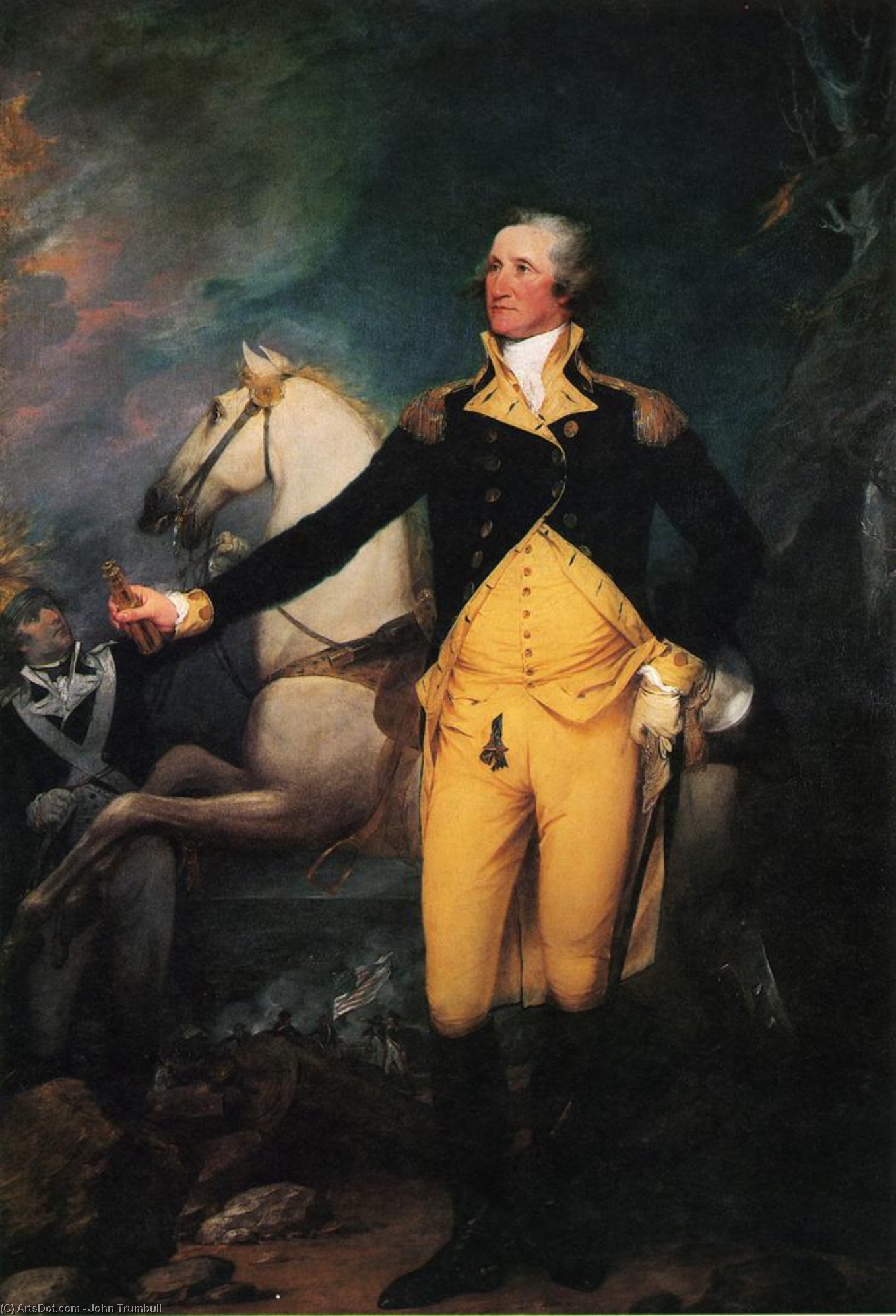
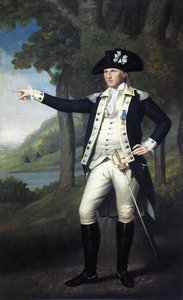
George Washington before the Battle of Trenton
 Oil On Canvas
- WallArt
- Neoclassical Historical Painting
 1792
1792- 19th Century
 235.0 x 160.0 cm
 Yale University Art Gallery
 Read More
Purchase a high-resolution, enhanced digital image, far superior to the online preview.
Each file is meticulously prepared by our in-house specialists using advanced tools and expert manual retouching. We ensure every image has exceptional clarity, precise color accuracy, and fine detail.
The final file is delivered via email within 72 hours, optimized for immediate use in professional, editorial, and print environments. This is the same quality trusted by top-tier design studios, publishers, and galleries.
Digital Image
Download a high-resolution file for personal display, printing, and creative projects. ( Buy Print Buy Hand Made Painting)
Included in Every Digital Image Order
Expert Digital Delivery, Guaranteed
When you choose ArtsDot.com, you're not just getting an image - you're receiving a professionally enhanced digital artwork, crafted with precision and backed by a satisfaction guarantee. Here's everything that comes with your order, automatically:

Fast Email Delivery
Your high-resolution digital image file will be emailed to you within 72 hours of ordering - ready for immediate use.

AI-Enhanced Digital File
Your artwork is professionally optimized using advanced AI tools and manual editing, ensuring maximum detail, clarity, and color accuracy.

Free Lifetime Re-Delivery
Accidentally deleted or lost your file? No worries - we'll resend it to you anytime, free of charge.

No Import Fees - Ever
Enjoy your artwork instantly with zero customs, duties, or delivery fees - digital downloads are always tax-free.

Color Accuracy Guarantee
We ensure your digital image reflects the original colors as closely as possible using professional tools and color management.

60-Day Satisfaction Guarantee
If you're not satisfied with your digital image, we'll revise it or refund 100% within 60 days - no questions asked.

100% Money-Back Guarantee
Not satisfied? Get a full refund within 60 days of receiving your digital file - no questions asked.

Bulk Order Discounts
Buy 3 images, save 10% - Buy 5, save 15% - Buy 10+, save 20%. Great for creative projects, galleries, and agencies.
Collectible Description
A Portrait of Resolve: John Trumbull’s *George Washington before the Battle of Trenton*
John Trumbull's 1792 painting, *George Washington before the Battle of Trenton*, transcends mere portraiture; it is a meticulously crafted embodiment of leadership, courage, and the nascent spirit of a nation. This monumental canvas, measuring 235 x 160 cm, housed within the Yale University Art Gallery, offers an unparalleled glimpse into a pivotal moment in American history – Washington’s strategic preparation for the decisive victory that secured his army's survival during the harsh winter of 1776.
- Subject: The painting centers on George Washington himself, depicted with unwavering resolve as he addresses his troops. His posture exudes authority and confidence, a visual representation of the burden of command and the weighty responsibility he bore for the fate of the American Revolution.
- Composition: Trumbull masterfully employs a triangular composition, drawing the viewer’s eye directly to Washington at its apex. The inclusion of his horse, positioned deliberately on the left, adds dynamism and reinforces the theme of military preparedness. Two indistinct figures in the background subtly underscore Washington's central role as the commander-in-chief.
- Setting: The backdrop – a dramatic interplay of trees and clouds – isn’t merely decorative; it serves to heighten the sense of tension and anticipation, mirroring the precarious situation facing Washington and his men. The natural elements contribute significantly to the painting's emotional impact.
The Artist’s Vision: Trumbull’s Style and Technique
John Trumbull was a pivotal figure in American art, renowned for his historical paintings that captured the essence of revolutionary ideals. His style, characterized by bold colors, dynamic compositions, and an almost theatrical use of light and shadow, aligns with the Neoclassical movement prevalent during the late 18th century. Trumbull’s meticulous attention to detail – evident in the rendering of Washington's uniform and the horse’s musculature – speaks to his dedication to realism and historical accuracy. The oil-on-canvas technique allows for rich color saturation and subtle gradations, contributing to the painting’s dramatic effect.
Notably, Trumbull’s use of light is particularly effective. It dramatically illuminates Washington's face and upper body, emphasizing his determination while casting a shadow over the background, creating depth and a sense of impending action. This skillful manipulation of light and shadow elevates the painting beyond a simple portrait, transforming it into a powerful narrative scene.
Symbolism and Historical Context
*George Washington before the Battle of Trenton* is laden with symbolic meaning. It represents more than just a military leader; it embodies the virtues of courage, perseverance, and selflessness – qualities essential to the success of the American Revolution. The painting was created during a time of immense uncertainty for the fledgling nation, reflecting the anxieties and hopes of a people determined to secure their independence.
The scene itself is deeply significant. Washington’s decision to lead his troops into battle against overwhelming odds at Trenton demonstrated extraordinary leadership and strategic brilliance. Trumbull's portrayal immortalizes this moment, solidifying Washington's legacy as the “Father of His Country.”
Emotional Impact and Artistic Legacy
The painting’s enduring power lies in its ability to evoke a profound sense of admiration for Washington’s character and leadership. The composition, combined with Trumbull’s masterful technique, creates an image that resonates with viewers across generations. It is a testament to the artist's skill and his understanding of how to capture not just a likeness, but also the spirit of a nation at a critical juncture in its history.
Reproductions of *George Washington before the Battle of Trenton* offer an exceptional opportunity to own a piece of American art history. Each hand-painted reproduction meticulously recreates Trumbull’s original vision, ensuring that this iconic image continues to inspire and captivate audiences for years to come.
Related Artworks

Artist Biography
A Life Etched in Revolution: The World of John Trumbull
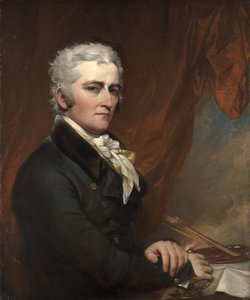
John Trumbull, a name synonymous with the visual narrative of America’s birth, was more than just a painter; he was a witness, a soldier, and a chronicler of a nation forging its identity. Born in Lebanon, Connecticut, in 1756, into a family steeped in patriotic fervor – his father, Jonathan Trumbull, served as governor throughout the Revolutionary War – young John’s destiny seemed intertwined with the unfolding drama of independence. A childhood accident tragically cost him the use of one eye, yet this perceived limitation may have paradoxically sharpened his observational skills, contributing to the meticulous detail that would become a hallmark of his artistic style. His early education at Harvard College further cultivated a mind primed for both intellectual rigor and creative expression. Even before fully embracing his calling as an artist, Trumbull’s life was already imbued with a sense of duty and service, sketching fortifications during the Siege of Boston – a foreshadowing of his future role in immortalizing the Revolution on canvas.From Battlefield to Brushstroke: Artistic Formation and Influences
The path to becoming “the Painter of the Revolution” wasn’t immediate. Financial constraints initially led Trumbull down various avenues, but the pull towards art proved irresistible. In 1780, he embarked on a journey to London, seeking tutelage under the esteemed Benjamin West, an American expatriate who had achieved prominence as a history painter. West recognized Trumbull’s potential and encouraged him to focus on scenes from the War of Independence, suggesting smaller-scale works and miniature portraits – a practical approach that allowed Trumbull to hone his skills while establishing a clientele. Over the course of his career, he produced approximately 250 miniatures, demonstrating remarkable versatility and precision. However, West’s influence extended beyond technique; he instilled in Trumbull an appreciation for classical history painting, inspiring him to imbue his work with dramatic composition and allegorical depth. This fusion of historical accuracy and artistic grandeur would define Trumbull's mature style. The experience wasn't without hardship; a brief but alarming arrest on suspicion of espionage – retaliation for the execution of Major André – forced a temporary retreat from British society, yet ultimately solidified his commitment to portraying the American cause.Immortalizing Independence: Masterpieces and Historical Significance
Trumbull’s most enduring legacy lies in his monumental historical paintings, particularly those that now grace the Capitol Rotunda. The Declaration of Independence, perhaps his most iconic work, is a carefully constructed tableau depicting the momentous occasion with remarkable fidelity. It's not merely a record of who was present but an attempt to capture the gravity and solemnity of the event. Famously, this painting found its way onto the reverse of the two-dollar bill, cementing its place in American iconography. Other significant works include The Surrender of Cornwallis at Yorktown, The Surrender of General Burgoyne, and George Washington before the Battle of Trenton. These paintings weren’t simply artistic endeavors; they were acts of national commemoration, designed to inspire patriotism and solidify a shared historical narrative. Trumbull meticulously researched each scene, consulting with veterans and studying contemporary accounts to ensure accuracy. His preparatory sketches, like the Study for Surrender of Cornwallis at Yorktown, reveal his painstaking planning process and dedication to detail. In an era devoid of photographic documentation, Trumbull’s paintings served as invaluable visual records, shaping public understanding of the Revolution and its key figures.A Lasting Legacy: Collections and Enduring Influence
John Trumbull's contributions extend beyond his celebrated canvases. He was a staunch advocate for the arts in America, serving as president of the American Academy of Fine Arts from 1816 to 1835, tirelessly working to foster a vibrant artistic community within the young nation. His paintings are now held in prestigious institutions across the country, including Yale University Art Gallery, the Smithsonian American Art Museum, and the Virginia Museum of Fine Arts, ensuring their accessibility for generations to come. The prominent display of his works within the United States Capitol serves as a lasting tribute to his dedication to both art and history.- His paintings continue to inspire artists and historians alike.
- They offer invaluable insights into the aesthetics and ideals of the early American republic.
- Trumbull’s commitment to historical accuracy set a precedent for future generations of American historical painters.
John Trumbull
1756 - 1843 , United Kingdom
Quick Facts
- Artistic Movement Or Style: Historical painting
- Artists Who Influenced This Artist: ['Benjamin West']
- Date Of Birth: June 6, 1756
- Date Of Death: 1843
- Full Name: John Trumbull
- Nationality: American
- Notable Artworks:
- Declaration of Independence
- Surrender of Cornwallis
- George Washington at Trenton
- Place Of Birth: Lebanon, USA

