

![Poedua [poetua], Daughter Of Oreo, Chief Of Ulaietea, One Of The Society Isles — John Webber](/media/artworks/images-full/7e/7a/7e7a27a084a9e7a9d077f93d051c9c72.jpg)
 Preview
 Send
Send Share
Share
 Details

 Download
 Similars
 X-Ray
X-Ray Diaporama
Poedua [Poetua], daughter of Oreo, chief of Ulaietea, one of the Society Isles


 Read More
Purchase a high-resolution, enhanced digital image, far superior to the online preview.
Each file is meticulously prepared by our in-house specialists using advanced tools and expert manual retouching. We ensure every image has exceptional clarity, precise color accuracy, and fine detail.
The final file is delivered via email within 72 hours, optimized for immediate use in professional, editorial, and print environments. This is the same quality trusted by top-tier design studios, publishers, and galleries.
Digital Image
Download a high-resolution file for personal display, printing, and creative projects. ( Buy Print Buy Hand Made Painting)
Included in Every Digital Image Order
Expert Digital Delivery, Guaranteed
When you choose ArtsDot.com, you're not just getting an image - you're receiving a professionally enhanced digital artwork, crafted with precision and backed by a satisfaction guarantee. Here's everything that comes with your order, automatically:

Fast Email Delivery
Your high-resolution digital image file will be emailed to you within 72 hours of ordering - ready for immediate use.

AI-Enhanced Digital File
Your artwork is professionally optimized using advanced AI tools and manual editing, ensuring maximum detail, clarity, and color accuracy.

Free Lifetime Re-Delivery
Accidentally deleted or lost your file? No worries - we'll resend it to you anytime, free of charge.

No Import Fees - Ever
Enjoy your artwork instantly with zero customs, duties, or delivery fees - digital downloads are always tax-free.

Color Accuracy Guarantee
We ensure your digital image reflects the original colors as closely as possible using professional tools and color management.

60-Day Satisfaction Guarantee
If you're not satisfied with your digital image, we'll revise it or refund 100% within 60 days - no questions asked.

100% Money-Back Guarantee
Not satisfied? Get a full refund within 60 days of receiving your digital file - no questions asked.

Bulk Order Discounts
Buy 3 images, save 10% - Buy 5, save 15% - Buy 10+, save 20%. Great for creative projects, galleries, and agencies.
A Glimpse of Paradise Lost: Poedua’s Portrait from Cook's Third Voyage
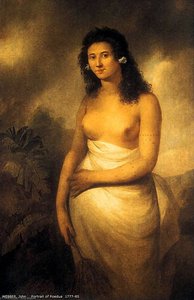
John Webber’s 1785 portrait of Poedua, daughter of Oreo, chief of Ulaietea in the Society Islands, transcends a simple likeness; it’s a poignant intersection of cultures, a carefully constructed narrative woven with threads of colonial ambition, political maneuvering, and the quiet dignity of a young woman caught between worlds. This remarkable painting, now housed at Te Papa in Wellington, offers a rare and unsettling window into the complexities of Captain James Cook's third Pacific voyage – a journey marked by both scientific discovery and profound cultural disruption.
Webber’s artistic approach is distinctly neoclassical, reflecting the prevailing aesthetic sensibilities of London society at the time. The composition itself is meticulously balanced: Poedua occupies a central position, her posture conveying an air of restrained grace despite the circumstances surrounding her depiction. Her gaze, directed slightly off-camera, suggests both awareness and a subtle melancholy – a quiet acknowledgement of her displacement. The tapa cloth draped around her shoulders, adorned with intricate patterns, speaks to her chiefly status and the rich traditions of her island home, while the fly whisk, a symbol of leadership and authority, subtly reinforces this narrative.
The Shadow of Hostage: Context within Cook’s Expedition
The story behind Poedua's portrait is inextricably linked to the fraught events that unfolded during Cook’s visit to Raiatea in 1777. Following a desertion by two crew members, Captain Cook, seeking to secure their return and maintain order, took the audacious step of holding Oreo’s daughter hostage alongside her husband and brother. This act, while seemingly pragmatic, was deeply unsettling for both the Māori population and Cook's own men, who had witnessed firsthand the potential for violence during previous encounters. Webber seized this opportunity – a delicate balance between observation and manipulation – to create this arresting image.
The painting’s creation occurred not within the lush confines of Ulaietea, but aboard the HMS Resolution, a stark contrast that subtly underscores the themes of displacement and cultural intrusion. The limited palette—primarily whites, creams, and muted browns—further emphasizes this sense of confinement and detachment. It's a deliberate choice, highlighting the artificiality of the portrait as a representation, rather than an authentic portrayal of Poedua’s life.
Symbolism and the Unspoken Narrative
Beyond the immediate depiction, the painting is laden with symbolic weight. The pregnant state of Poedua adds another layer of complexity to her story – a reminder of the potential for disruption and change within a society grappling with colonial expansion. Her pose, reminiscent of classical depictions of goddesses or virtuous women, elevates her status while simultaneously hinting at her vulnerability. The background, deliberately vague, avoids specific details of Ulaietea, suggesting a deliberate erasure of her cultural identity in favor of a European aesthetic.
The inclusion of the tapa cloth and fly whisk are particularly significant, serving as visual anchors to Poedua’s heritage and asserting her position within the traditional social hierarchy. However, even these symbols are presented through a European lens – a neoclassical drape rather than a naturally flowing garment, a formal fly whisk instead of a more organically crafted tool. This subtle manipulation speaks volumes about the power dynamics at play during this historical encounter.
A Legacy of Ambiguity: Reflections on Colonial Art
Poedua’s portrait remains a powerful and unsettling work of art, prompting us to consider the ethical implications of colonial representation. It's not simply a beautiful depiction of a young woman; it’s a testament to the complexities of cultural exchange, the manipulation of power, and the enduring legacy of colonialism. Webber’s skill as an artist is undeniable, but his role as a chronicler of a fraught encounter demands critical reflection. The painting serves as a poignant reminder that even seemingly objective representations can be deeply implicated in historical narratives – revealing both what was seen and what was deliberately obscured.
Related Artworks
Artist Biography
Early Life and Education
- Birth and Family: John Webber was born on October 6, 1751, in London, United Kingdom. His father, Abraham Wäber, was a Swiss sculptor who anglicized his name upon moving to London and marrying Mary Quant in 1744.
- Early Training: Webber received his initial education in Bern, Switzerland, where he lived with his paternal aunt from the age of six. He began his artistic training as an apprentice to Johann Ludwig Aberli, a prominent landscape painter.
- Studies in Paris: From 1770, Webber continued his studies at the Académie Royale in Paris for four years, focusing on drawing and oil painting. This period honed his skills and broadened his artistic horizons.
- Return to London: After completing his education abroad, Webber returned to London and further refined his techniques at the Royal Academy.
The Pacific Expedition with Captain Cook
- Appointment as Artist: In 1776, Webber was selected as the official artist for Captain James Cook's third voyage of discovery in the Pacific. This opportunity arose through a recommendation from Daniel Solander, a botanist who had accompanied Cook on his first voyage.
- Voyage and Documentation: From 1776 to 1780, Webber meticulously documented the landscapes, people, and cultures encountered during the expedition. He created numerous drawings and watercolors of scenes in New Zealand, Hawaii (then known as the Sandwich Islands), Alaska, and other Pacific locations.
- First European Contact with Hawaii: Webber became the first European artist to make contact with Hawaii, producing significant visual records of the islands and their inhabitants. His watercolor landscapes of Kauai and Hawaii Island, including Kealakekua Bay and Kowroaa village, are particularly notable.
- Portraits of Indigenous Peoples: Webber also created portraits of prominent figures like Tereoboo, King of Owyhee, offering valuable insights into the appearance and customs of Pacific Islanders.
- Illustrations for Admiralty Account: His work was crucial in illustrating the British Admiralty's official account of the expedition, published in 1784. These engravings brought the discoveries of Cook’s voyage to a wider audience.
Career and Artistic Style
- Exhibitions at the Royal Academy: Following his return to England in 1780, Webber exhibited around 50 works at the Royal Academy between 1784 and 1792. His paintings showcased both landscapes and figures.
- Recognition and Membership: He was elected an associate of the Royal Academy in 1785 and a full member in 1791, demonstrating his growing reputation within the British art world.
- Landscape Focus with Figurative Elements: Webber’s artistic style primarily focused on landscapes, often incorporating figures to add narrative or scale. A notable example is “A Party from H.M.S. Resolution shooting sea horses,” exhibited in 1784.
- Influence of Earlier Masters: While his work reflects the influence of earlier landscape painters like Aberli, Webber developed a unique style characterized by detailed observation and accurate representation of natural environments.
Legacy and Collections
- Historical Significance: John Webber’s artwork provides invaluable visual documentation of Captain Cook's voyages and the first European encounters with Pacific cultures. His images offer a unique perspective on 18th-century exploration and cultural exchange.
- Museum Holdings: His works are held in numerous prestigious collections worldwide, including the Anchorage Museum of History and Art (Alaska), the Bishop Museum (Honolulu), the British Museum (London), the National Maritime Museum (London) ,the Bern Historical Museum (Switzerland), and the San Antonio Museum of Art.
- Enduring Impact: Webber’s paintings continue to be studied by art historians, anthropologists, and scholars interested in the history of exploration, Pacific cultures, and 18th-century art. His detailed depictions offer a glimpse into a pivotal period of global interaction.
- Death and Remembrance: John Webber died on May 29, 1793, leaving behind a significant artistic legacy that continues to resonate today.
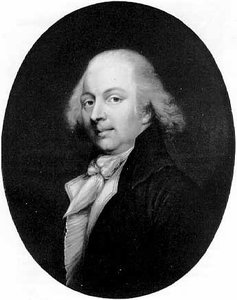
John Webber
1751 - 1793 , United Kingdom
Quick Facts
- Artistic Movement Or Style: Landscape, Portraiture
- Artists Who Influenced This Artist: ['Aberli']
- Date Of Birth: October 6, 1751
- Date Of Death: May 29, 1793
- Full Name: John Webber
- Nationality: English
- Notable Artworks:
- Ship Cove
- Cook's Portrait
- Poedua portrait
- Place Of Birth: London, UK

