

 Preview
 Send
Send Share
Share
 Details

 Download
 Similars
 X-Ray
X-Ray Diaporama
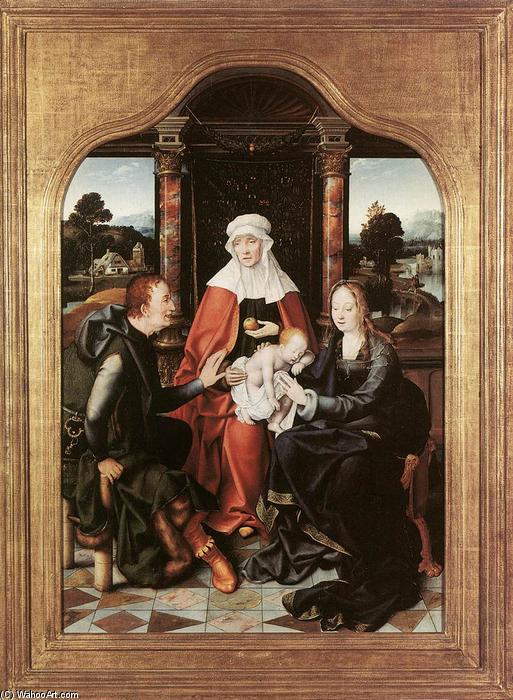
St Anne with the Virgin and Child and St Joachim
 Oil On Panel
- Early Netherlandish
 109.0 x 74.0 cm
 Musées Royaux des Beaux-Arts
 Read More
Purchase a high-resolution, enhanced digital image, far superior to the online preview.
Each file is meticulously prepared by our in-house specialists using advanced tools and expert manual retouching. We ensure every image has exceptional clarity, precise color accuracy, and fine detail.
The final file is delivered via email within 72 hours, optimized for immediate use in professional, editorial, and print environments. This is the same quality trusted by top-tier design studios, publishers, and galleries.
Digital Image
Download a high-resolution file for personal display, printing, and creative projects. ( Buy Print Buy Hand Made Painting)
Included in Every Digital Image Order
Expert Digital Delivery, Guaranteed
When you choose ArtsDot.com, you're not just getting an image - you're receiving a professionally enhanced digital artwork, crafted with precision and backed by a satisfaction guarantee. Here's everything that comes with your order, automatically:

Fast Email Delivery
Your high-resolution digital image file will be emailed to you within 72 hours of ordering - ready for immediate use.

AI-Enhanced Digital File
Your artwork is professionally optimized using advanced AI tools and manual editing, ensuring maximum detail, clarity, and color accuracy.

Free Lifetime Re-Delivery
Accidentally deleted or lost your file? No worries - we'll resend it to you anytime, free of charge.

No Import Fees - Ever
Enjoy your artwork instantly with zero customs, duties, or delivery fees - digital downloads are always tax-free.

Color Accuracy Guarantee
We ensure your digital image reflects the original colors as closely as possible using professional tools and color management.

60-Day Satisfaction Guarantee
If you're not satisfied with your digital image, we'll revise it or refund 100% within 60 days - no questions asked.

100% Money-Back Guarantee
Not satisfied? Get a full refund within 60 days of receiving your digital file - no questions asked.

Bulk Order Discounts
Buy 3 images, save 10% - Buy 5, save 15% - Buy 10+, save 20%. Great for creative projects, galleries, and agencies.
St Anne with the Virgin and Child and St Joachim – A Renaissance Tapestry of Faith
The artwork, “St Anne with the Virgin and Child and St Joachim,” by Joos van Cleve, stands as a testament to the artistic fervor of Antwerp during the High Renaissance—a period marked by an unparalleled confluence of humanist ideals and masterful craftsmanship. Executed around 1525, this oil painting on wood panel transcends mere representation; it embodies profound theological contemplation and reflects the prevailing aesthetic sensibilities of its time. Its provenance resides within The Jack and Belle Linsky Collection, donated to The Metropolitan Museum of Art in 1982, ensuring its enduring presence as a cornerstone of European art history.A Synthesis of Netherlandish Tradition and Italian Influence
Joos van Cleve’s genius lay in his ability to harmonize the established conventions of Early Netherlandish painting with burgeoning influences emanating from Italy—particularly Leonardo da Vinci and Albrecht Dürer. This fusion resulted in a style characterized by meticulous detail, realism in facial features, and symbolic layering – elements that distinguish it from its contemporaries. Unlike many artists preoccupied with grand narratives or monumental commissions, Van Cleve focused on intimate scenes imbued with spiritual significance, prioritizing emotional resonance over ostentation. The painting’s composition—a carefully balanced equilateral triangle—immediately draws the eye to St Anne at its center, flanked by Mary and Joachim—a familial tableau reflecting Christian piety.Technical Mastery: Layered Color and Textured Surfaces
The execution of “St Anne…” exemplifies Van Cleve's technical prowess. Primarily utilizing oil paint on wood panel, he employed a technique rooted in glazing – applying thin layers of translucent pigment over underlying colors to achieve luminous effects and subtle tonal variations. This meticulous layering contributes significantly to the painting’s rich texture, particularly noticeable on the drapery folds and skin tones—evidence of painstaking brushwork designed to capture the nuances of human anatomy and fabric materiality. The artist skillfully utilized linear perspective, albeit flattened compared to later Renaissance masterpieces, creating depth without striving for absolute realism. Furthermore, the muted palette—dominated by earthy hues—contrasts sharply with the vibrant colors of the tapestry adorning the interior space, emphasizing the importance of visual harmony.Symbolism: Echoes of Scripture and Medieval Tradition
Beyond its aesthetic qualities, “St Anne…” is replete with symbolic references rooted in Christian scripture and medieval iconography. The depiction of St Anne cradling the Virgin Mary and Child—a motif originating in illuminated manuscripts—represents the veneration of the Holy Mother—a central theme within Catholic piety. The inclusion of a landscape—featuring rolling hills and distant water—serves as a backdrop for the familial scene, symbolizing Paradise and hinting at divine grace. Notably, the Virgin’s prayer book—open to verses from Psalm 130—represents repentance and supplication—underscoring the painting's contemplative mood. The purse held by Joachim—a symbol of rejected offerings—further reinforces the narrative’s theological dimension—highlighting the importance of faith and devotion.Emotional Resonance: Reverence and Quiet Contemplation
Ultimately, “St Anne…” communicates a profound sense of reverence and quiet contemplation—qualities characteristic of Renaissance art's aspiration to elevate the viewer beyond earthly concerns. The serene expressions of the figures—combined with the balanced composition and masterful use of light—invite viewers into a space of spiritual reflection. This artwork continues to inspire admiration for its artistic excellence and serves as a poignant reminder of the enduring power of faith and familial love—themes that resonate powerfully across centuries.Related Artworks
Artist Biography
The Master of Antwerp: The Life and Legacy of Joos van Cleve
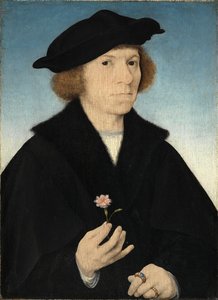
In the bustling, mercantile heart of sixteenth-century Antwerp, a new era of visual storytelling was unfolding, driven by the brush of Joos van Cleve. Born around 1485 in Krefeld, Germany, this Flemish Renaissance master emerged not merely as a painter of great skill, but as a visionary bridge between two worlds. His career, which flourished from approximately 1511 until his death in 1540, represents a profound moment in art history where the meticulous, detailed traditions of the Netherlandish masters met the sweeping, atmospheric innovations flowing from the Italian Renaissance. To look upon a work by van Cleve is to witness a delicate dance between the tactile reality of Northern Europe and the idealized grace of the South.
The foundations of his genius were laid during his formative years under the tutelage of Jan Joest. This rigorous apprenticeship provided him with more than just technical proficiency; it immersed him in the monumental traditions of late Gothic art. One of his most significant early experiences involved assisting Joest on the high altar of the Kalkar Nikolaikirche, a project that demanded an understanding of grand scale and spiritual gravity. Through this work, van Clecept mastered the complex alchemy of pigment preparation and the painstaking layering of glazes—techniques that would later allow him to imbue his portraits with a lifelike luminosity and his religious scenes with a palpable sense of divinity.
A Synthesis of Northern Detail and Italian Grace
What truly distinguishes Joos van Cleve from his contemporaries was his restless, experimental spirit. While many artists of the period remained tethered to the rigid stylistic dogmas of their local guilds, van Cleve looked toward the horizon. He became a pioneer of Flemish Mannerism, a style characterized by an exceptional sensitivity to color and a remarkable unity of figures within a composition. Perhaps his most enduring contribution to the Northern Renaissance was his revolutionary use of landscape. Rather than utilizing static or symbolic backdrops, he introduced expansive, atmospheric vistas that breathed life into his subjects, creating a sense of depth and continuity between the human figure and the natural world.
This stylistic evolution was deeply influenced by the burgeoning trends in Italy. By integrating elements of Italianate perspective and a more fluid, rhythmic approach to anatomy, he transformed the traditional Flemish portrait into something far more psychologically complex. His subjects were no longer mere icons of status; they possessed an inner life, an emotional resonance that invited the viewer into a silent dialogue. This ability to convey profound human emotion through subtle facial expressions and delicate hand gestures remains one of his most celebrated achievements.
Historical Significance and Artistic Triumph
The legacy of Joos van Cleve is etched into the very fabric of Antwerp’s golden age. As a central figure in the city's artistic community, his workshop became a beacon of innovation, influencing generations of painters who followed. His ability to blend the following elements ensured his lasting impact on the history of European art:
- Technical Mastery: The seamless application of Netherlandish glazing techniques to achieve unparalleled texture and light.
- Compositional Innovation: The integration of vast, panoramic landscapes that expanded the narrative scope of religious and secular painting.
- Psychological Depth: A shift from purely symbolic representation toward a more humanistic, emotive portrayal of his subjects.
- Cultural Synthesis: The successful marriage of Northern European precision with the grace and movement of the Italian Renaissance.
Though his life ended in 1540, the echoes of his artistry continue to resonate. Joos van Cleve did not simply follow the trends of his time; he helped define them, leaving behind a body of work that serves as a testament to the transformative power of artistic synthesis. His paintings remain enduring windows into a period of immense cultural transition, capturing the moment when the medieval world began to dissolve into the light of the modern era.
Joos van Cleve
1485 - 1540 , Germany
Quick Facts
- Artistic Movement Or Style: Renaissance Mannerism
- Artists Or Movements Influenced By This Artist: Italian Renaissance
- Artists Who Influenced This Artist: Jan Joest
- Date Of Birth: c. 1485
- Date Of Death: 1540
- Full Name: Joos van Cleve
- Nationality: Flemish
- Notable Artworks:
- The Adoration of the Magi - Left Wing
- The Holy Family
- Portrait of Henry VIII
- Place Of Birth: Krefeld, Germany

