 Preview
 Send
Send Share
Share
 Details

 Download
 Similars
 X-Ray
X-Ray Diaporama
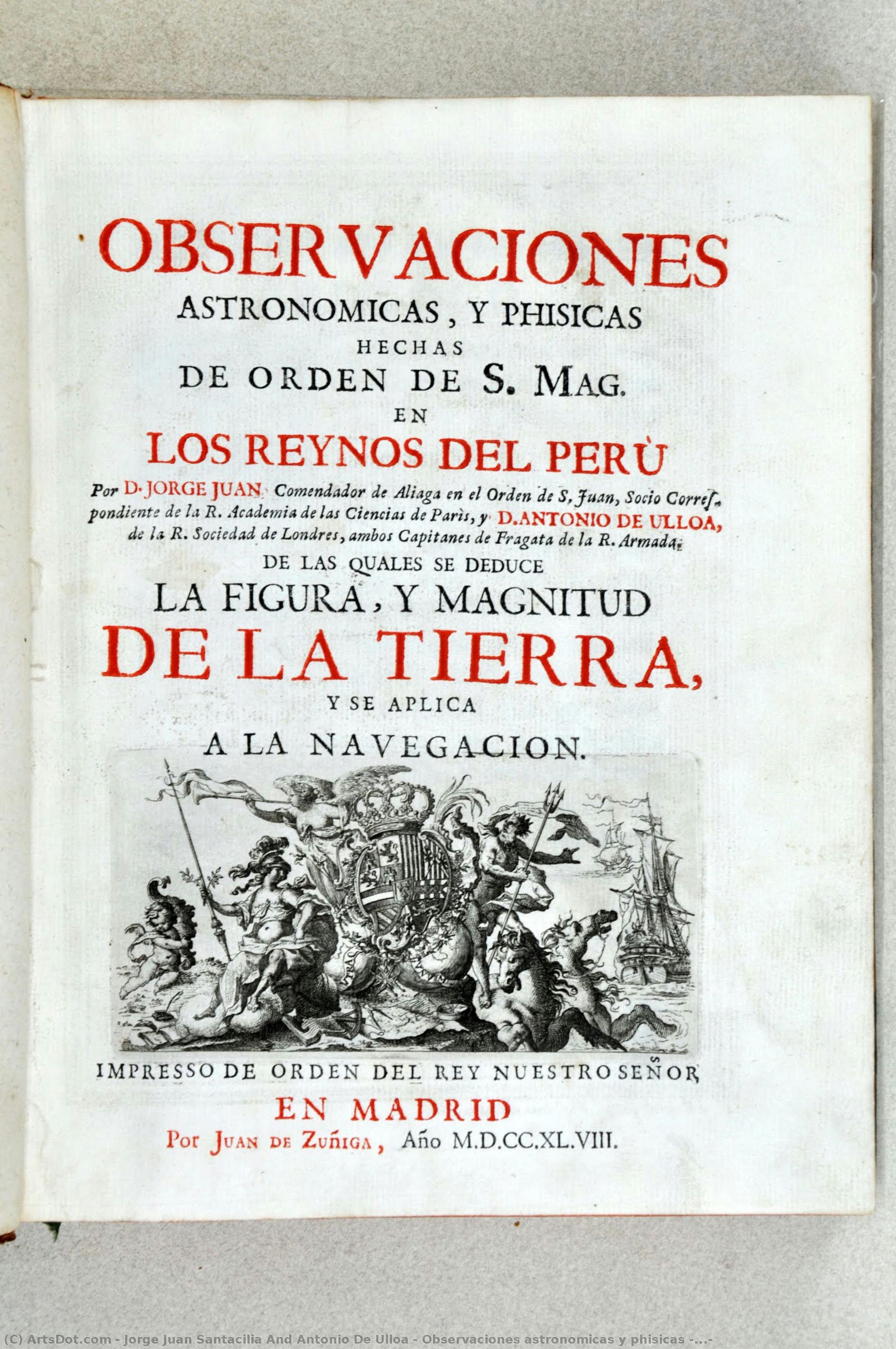
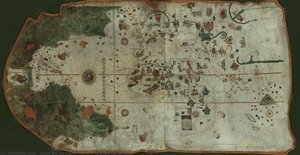
Observaciones astronomicas y phisicas (...)


 Read More
Giclée / Art Print
Museum-quality giclée or canvas print with fast production and flexible finish options. ( Buy Hand Made Painting Buy Image)




































Pick from our preset sizes that match the artwork's original proportions.

You may enter your own dimensions to fit a specific frame or space. If your selected size does not match the original image's proportions, we will either crop the artwork or extend the image with a mirrored or solid-fill edge. A digital mockup will be sent for your approval before production begins.
Please note that the on-screen preview does not reflect the actual cropping or extension. Only the mockup will accurately show the final composition.
While custom sizes are available, we recommend selecting a dimension from the predefined list to preserve the original proportions.
Worldwide Delivery () in 2 weeks instead of standard 4/5 weeks. (31 August)

Free Worldwide Express Shipping

High-Quality Linen Canvas

Full Shipping Insurance

Customs Tax Refund Guarantee

True Color Matching Guarantee

60-Day Return Policy (Defects Only)

100% Money-Back Guarantee

Bulk Discount Offer
 Glass option is only available in size under 110 CM

Observaciones astronomicas y phisicas (...)
Giclée / Art Print
Reproduction Size
-


Total Price
$ 63
Related Artworks
![Los Trabajos De Persiles Y Sigismunda (trans. The Trials Of Persiles And Sigismunda) (biblioteca Nacional De España)\n\n[2] — Cervantes Saavedra, Miguel, Baroque](/media/artworks/images-thumb/24/0d/240dd607a1820db624a8917b792ba42c.jpg)
Artist Biography
The Architects of Enlightenment: The Scientific Legacy of Jorge Juan and Antonio de Ulloa
In the golden age of the 18th-century Enlightenment, when the boundaries of the known world were being redrawn by the precision of mathematics and the courage of maritime exploration, two names emerged from the Spanish tradition to illuminate the very shape of our planet: Jorge Juan y Santacilia and Antonio José de Ulloa. Their lives were not merely defined by personal ambition, but by a profound, shared devotion to the empirical truths of the natural world. As naval officers and scholars, they navigated both the treacherous currents of the Atlantic and the complex intellectual debates of the European scientific community, leaving behind a legacy that bridged the gap between colonial administration and pure scientific discovery.
The story of their collaboration is inextricably linked to one of the most ambitious scientific endeavors of the era: the French Geodesic Mission to the Equator. This expedition, a rare moment of international scientific cooperation, sought to resolve a fundamental mystery regarding the Earth's geometry—whether the planet was an oblate spheroid, flattened at the poles as Isaac Newton had theorized, or elongated at the poles. As young lieutenants, Juan and Ulloa traveled through the vast territories of the Viceroyalty of Peru, enduring the rigors of tropical climates and uncharted landscapes to perform precise arc measurements near the equator. Their findings were monumental; by measuring a degree of latitude in the equatorial regions, they provided the empirical evidence necessary to confirm Newton’s Principia, forever altering our understanding of the Earth's true form.
A Life of Discovery and Diplomacy
Beyond the mathematical triumphs of their expeditions, the lives of these two men were characterized by a remarkable versatility that mirrored the polymathic spirit of the age. Jorge Juan, often referred to as el sabio español (the Spanish savant), was much more than a mathematician; he was a master of naval architecture and an agent of modernization. His career was marked by high-stakes diplomacy and even clandestine intelligence gathering. Under the patronage of the influential Marquess of Ensenada, Juan undertook a daring eighteen-month mission to London, acting as an industrial spy to acquire the technological secrets necessary to revitalize the Spanish Navy. This blend of scientific rigor and strategic service exemplifies how the Enlightenment was not just a movement of ideas, but a practical tool for nation-building and institutional reform.
Antonio de Ulloa, born in Seville, shared this relentless drive for knowledge. His contributions extended far beyond geodesy into the realms of natural history and maritime exploration. The duo’s work during the War of Jenkins' Ear further demonstrated their ability to apply scientific precision to military defense, as they organized the protection of the Peruvian coast against British incursions. Their lives were a testament to the idea that science does not exist in a vacuum; it is deeply intertwined with politics, warfare, and the expansion of empires. Through their eyes, the world was not just a collection of territories to be governed, but a complex, measurable, and beautiful system waiting to be decoded.
Historical Significance and Lasting Impact
The historical weight of Jorge Juan and Antonio de Ulloa lies in their role as conduits for the most advanced scientific thought of their time. They did not merely observe the world; they translated the language of mathematics into a tangible reality for the Spanish Crown. By introducing Newtonian physics and infinitesimal calculus to the Iberian Peninsula, they laid the groundwork for the future of the Spanish Academy of Sciences and the professionalization of naval engineering.
Their achievements can be summarized through several key pillars of their legacy:
- Geodetic Revolution: Their participation in the equatorial mission provided the definitive proof of the Earth's oblate shape, settling a decades-long debate between the Newtonian and Cassini models.
- Naval Modernization: Through technical innovation and the acquisition of foreign industrial knowledge, they played a critical role in the Bourbon Reforms of the Spanish Navy.
- Scientific Diplomacy: They embodied the rare ability to navigate the delicate intersection of international scientific cooperation and sensitive state diplomacy.
- Intellectual Foundation: Their work fostered an environment where mathematics and natural philosophy could flourish within the Spanish educational and military institutions.
Today, as we look back upon the era of the great maritime expeditions, the names of Jorge Juan y Santacilia and Antonio de Ulloa stand as symbols of a time when human curiosity and mathematical precision converged to map the very essence of our existence.
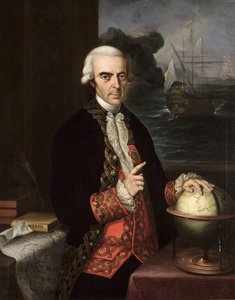
jorge juan santacilia and antonio de ulloa
1713 - 1795 , Spain
Quick Facts
- Artistic Movement Or Style: Enlightenment
- Artists Or Movements Influenced By This Artist: ['French Geodesy']
- Artists Who Influenced This Artist: ['Zenón de Somodevilla']
- Date Of Birth: January 5, 1713
- Date Of Death: June 21, 1773
- Full Name: Jorge Gaspar Juan y Santacilia & Antonio de Ulloa
- Nationality: Spanish
- Notable Artworks: ['Observaciones astronomicas y phisicas']
- Place Of Birth: Novelda, Spain
Related Articles
Jorge José Castillo Casalderrey: A Spanish Abstract Expressionist's Evolving Vision
Explore the captivating world of Jorge José Castillo Casalderrey, a leading Spanish Abstract Expressionist. Discover his unique style, market value & legacy. Expert insights for discerning collectors.
Mapping Beauty: Transform Your Space with Stunning Topographical Artworks
Elevate your interiors with breathtaking topographical art. From vintage cartography to textured 3D reliefs, discover how hand-painted maps and historical landscapes can transform any room into a sophisticated sanctuary of discovery and timeless beauty.
Juan de Valdés Leal: Baroque Realism, Memento Mori & Theatricality of Spanish Grief
Explore the powerful Baroque realism of Juan de Valdés Leal (1622-1690). Discover his somber masterpieces, iconic 'In Ictu Oculi', and profound explorations of mortality. Museum-quality reproductions available at ArtsDot.
18th Century Masters: 10 Artworks That Define an Era | ArtsDot
Journey through 18th century art! Explore 10 iconic paintings – from Rococo elegance to Neoclassical grandeur. Discover Fragonard, David & more. Find museum-quality reproductions and elevate your home decor on ArtsDot.com.
Rafael de Penagos: A Study in Spanish Portraiture & Artistic Identity
Explore the life & art of Rafael de Penagos, a leading Spanish Art Deco illustrator. Discover his iconic 'Penagos Woman', commercial work, and lasting legacy. Learn about this pivotal figure in 20th-century Spanish art history.