 Preview
 Send
Send Share
Share
 Details

 Download
 Similars
 X-Ray
X-Ray Diaporama
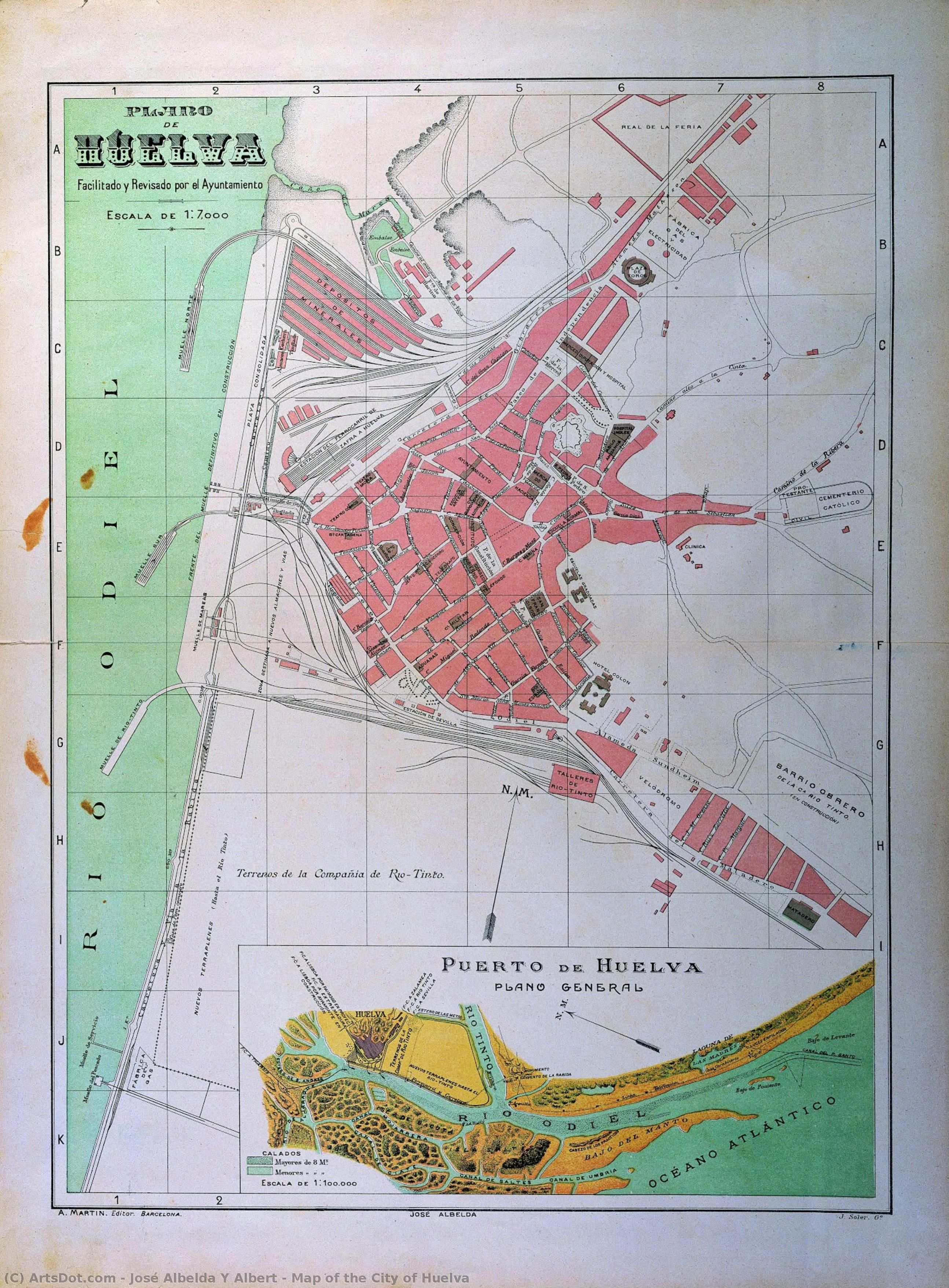
Map of the City of Huelva
 1920
1920 51.0 x 37.0 cm
 Andalusian Archives
 Read More
Giclée / Art Print
Museum-quality giclée or canvas print with fast production and flexible finish options. ( Buy Hand Made Painting Buy Image)




































Pick from our preset sizes that match the artwork's original proportions.

You may enter your own dimensions to fit a specific frame or space. If your selected size does not match the original image's proportions, we will either crop the artwork or extend the image with a mirrored or solid-fill edge. A digital mockup will be sent for your approval before production begins.
Please note that the on-screen preview does not reflect the actual cropping or extension. Only the mockup will accurately show the final composition.
While custom sizes are available, we recommend selecting a dimension from the predefined list to preserve the original proportions.
Worldwide Delivery () in 2 weeks instead of standard 4/5 weeks. (31 August)

Free Worldwide Express Shipping

High-Quality Linen Canvas

Full Shipping Insurance

Customs Tax Refund Guarantee

True Color Matching Guarantee

60-Day Return Policy (Defects Only)

100% Money-Back Guarantee

Bulk Discount Offer
 Glass option is only available in size under 110 CM

Map of the City of Huelva
Giclée / Art Print
Reproduction Size
-


Total Price
$ 63
Related Artworks









Artist Biography
A Cartographer’s Vision: The World of José Albelda y Albert
José Albelda y Albert, a name perhaps unfamiliar to many outside the specialized circles of cartographic history, represents a fascinating intersection of art, science, and urban documentation in early 20th-century Spain. While biographical details remain somewhat sparse, his enduring legacy rests primarily on one remarkable work: the ‘Map of the City of Huelva’ created in 1920. This meticulously rendered map isn't merely a geographical representation; it is a vibrant snapshot of a city poised at the cusp of modernity, offering invaluable insights into the port life and architectural character of Huelva during a period of significant transformation. Albelda y Albert wasn’t simply recording what *was*, but capturing a moment in time, preserving a visual record for generations to come.Huelva in 1920: A City on the Rise
The early decades of the 20th century were pivotal for Huelva, a port city in Andalusia with deep historical roots stretching back to Tartessian times. The burgeoning mining industry in the surrounding region fueled economic growth and attracted both Spanish and foreign investment. This influx of activity dramatically altered the urban landscape, necessitating accurate and detailed mapping. It was within this context that Albelda y Albert undertook his ambitious project. His ‘Map of Huelva’ is notable for its precision, but also for its artistic sensibility. The map isn't a dry technical drawing; it features subtle shading to indicate topography, carefully rendered architectural details, and a clear delineation of the port facilities—the very heart of the city’s economic engine.The Art of Cartography: Beyond Mere Representation
To understand Albelda y Albert’s achievement, one must appreciate the artistry inherent in cartography itself. Before the advent of digital mapping technologies, creating accurate maps was a laborious and highly skilled undertaking. It demanded not only mathematical precision but also an eye for detail and an understanding of visual communication. Albelda y Albert's map demonstrates a mastery of these skills. He wasn’t just plotting coordinates; he was interpreting space, selecting what details to emphasize, and presenting them in a way that was both informative and aesthetically pleasing. The inclusion of architectural landmarks suggests an appreciation for the city’s heritage, while the focus on the port highlights its economic importance. This careful curation of information elevates the map beyond a purely functional document into a work of art.Influences and Historical Context
Pinpointing specific artistic influences on Albelda y Albert is challenging given the limited documentation surrounding his life. However, it’s reasonable to assume he was familiar with the traditions of Spanish cartography, which had a rich history dating back to the Age of Exploration. The meticulous detail and emphasis on architectural representation may also reflect broader trends in urban planning and documentation prevalent during the early 20th century.- The rise of scientific surveying techniques.
- A growing interest in preserving historical landmarks.
- The increasing importance of accurate maps for economic development.
Legacy and Significance
While José Albelda y Albert may not have achieved widespread fame during his lifetime, his ‘Map of Huelva’ stands as a testament to his skill and dedication. It provides an invaluable historical record of a city at a critical juncture in its development, offering researchers and art enthusiasts alike a glimpse into the past. The map is more than just a geographical artifact; it's a cultural document that reflects the economic, social, and architectural character of Huelva in 1920. As urban landscapes continue to evolve at an accelerating pace, Albelda y Albert’s work serves as a reminder of the importance of preserving visual records—snapshots of time that allow us to understand our past and shape our future. His contribution lies not just in the accuracy of his map, but in its ability to transport us back in time, allowing us to experience Huelva as it once was.
josé albelda y albert
Spain
Quick Facts
- Artistic Movement Or Style: Cartography
- Full Name: José Albelda y Albert
- Nationality: Spanish
- Notable Artworks: ['Map of the City of Huelva']
- Place Of Birth: Spain