

 Preview
 Send
Send Share
Share
 Details

 Download
 Similars
 X-Ray
X-Ray Diaporama
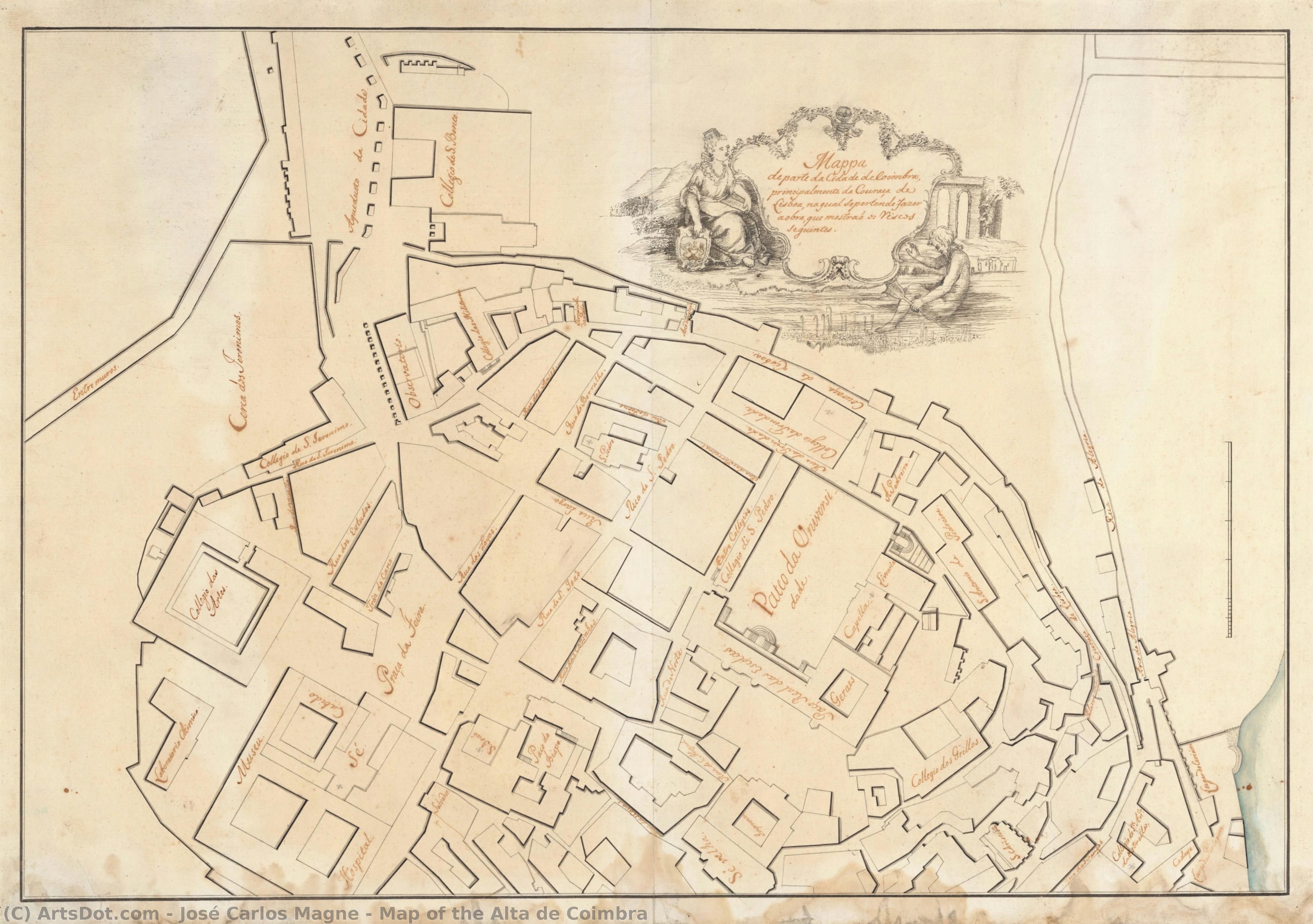
Map of the Alta de Coimbra
 Painting
- Rococo
 1777
1777 51.0 x 73.0 cm
 Machado de Castro National Museum
 Read More
Purchase a high-resolution, enhanced digital image, far superior to the online preview.
Each file is meticulously prepared by our in-house specialists using advanced tools and expert manual retouching. We ensure every image has exceptional clarity, precise color accuracy, and fine detail.
The final file is delivered via email within 72 hours, optimized for immediate use in professional, editorial, and print environments. This is the same quality trusted by top-tier design studios, publishers, and galleries.
Digital Image
Download a high-resolution file for personal display, printing, and creative projects. ( Buy Print Buy Hand Made Painting)
Included in Every Digital Image Order
Expert Digital Delivery, Guaranteed
When you choose ArtsDot.com, you're not just getting an image - you're receiving a professionally enhanced digital artwork, crafted with precision and backed by a satisfaction guarantee. Here's everything that comes with your order, automatically:

Fast Email Delivery
Your high-resolution digital image file will be emailed to you within 72 hours of ordering - ready for immediate use.

AI-Enhanced Digital File
Your artwork is professionally optimized using advanced AI tools and manual editing, ensuring maximum detail, clarity, and color accuracy.

Free Lifetime Re-Delivery
Accidentally deleted or lost your file? No worries - we'll resend it to you anytime, free of charge.

No Import Fees - Ever
Enjoy your artwork instantly with zero customs, duties, or delivery fees - digital downloads are always tax-free.

Color Accuracy Guarantee
We ensure your digital image reflects the original colors as closely as possible using professional tools and color management.

60-Day Satisfaction Guarantee
If you're not satisfied with your digital image, we'll revise it or refund 100% within 60 days - no questions asked.

100% Money-Back Guarantee
Not satisfied? Get a full refund within 60 days of receiving your digital file - no questions asked.

Bulk Order Discounts
Buy 3 images, save 10% - Buy 5, save 15% - Buy 10+, save 20%. Great for creative projects, galleries, and agencies.
Collectible Description
A Cartographic Glimpse into Eighteenth-Century Life
To gaze upon this depiction of the Map of the Alta de Coimbra is not merely to look at an old drawing; it is to step through a shimmering portal directly into the vibrant, ordered chaos of the late eighteenth century. Created in 1777 by José Carlos Magne, this piece transcends the function of a simple guide. It is a meticulously rendered tableau vivant, a historical document imbued with the artistry of its time. The map itself serves as both an architectural blueprint and a social portrait, inviting us to wander the cobblestone streets and peer into the lives unfolding within the heart of Coimbra.
The Artistry of Urban Planning and Daily Existence
Magne’s genius is evident in the sheer detail captured across this surface. The depiction showcases an organized yet lived-in urban landscape, where various buildings stand testament to established architectural styles. Yet, what truly animates the scene are the figures scattered throughout the composition. These small, carefully placed people—the residents, the visitors, the daily commuters—lend an immediate sense of scale and narrative depth. They suggest a bustling rhythm of life that once pulsed through these very streets. For the collector or designer, this piece offers unparalleled texture; it speaks to permanence while celebrating the ephemeral nature of human activity.
Historical Resonance and Technical Mastery
The context of its creation—the period of remodelling work in Coimbra—lends a fascinating layer of historical weight. This map was not just recording what *was*, but perhaps illustrating what *could be* or how it was being improved, making it a document of civic ambition as much as geography. Technically, the execution suggests a sophisticated understanding of perspective and topographical representation, hallmarks of skilled cartographic art from the era. The hand-painted quality ensures that even in its depiction of rigid structures, there remains an organic, artistic flourish, elevating it far beyond mere academic illustration.
Bringing the Past into Modern Interiors
For those seeking to infuse a space with the romance and gravitas of history, this reproduction offers profound potential. Imagine this map adorning a library wall or gracing a grand hall; it acts as an immediate conversation starter, whispering tales of Enlightenment-era life. Its rich tonality and intricate detail allow it to harmonize beautifully with both classical furnishings and more contemporary, curated interiors. It is a piece that demands contemplation, encouraging the viewer to slow down, to imagine the footsteps echoing on those depicted avenues.
Related Artworks
Artist Biography
Charles-Joseph Natoire: A Rococo Visionary Bridging Rome and Paris
Born in 1700, Charles-Joseph Natoire’s life spanned a pivotal era in French art, witnessing the transition from the exuberant excesses of the late Baroque to the more refined elegance of the Rococo. Though his early training was firmly rooted in the academic traditions of François Lemoyne, Natoire quickly distinguished himself as an artist capable of both dramatic narrative and exquisite detail, ultimately becoming one of the most significant figures within the French Academy in Rome. His career, marked by a fascinating interplay between Roman influences and Parisian patronage, offers a compelling window into the artistic landscape of 18th-century France.
Natoire’s formative years were spent diligently honing his skills under Lemoyne, a master known for his portraits and allegorical scenes. This rigorous training instilled in him a solid foundation in composition and technique. However, it was his appointment to the French Academy in Rome in 1723 – awarded with the prestigious Prix de Rome for his *Sacrifice of Manoah to obtain a son* – that truly launched his artistic trajectory. This initial Roman sojourn proved transformative, exposing him to the works of masters like Pietro da Cortona and fostering a deep appreciation for classical forms and theatricality. He spent nearly a decade in Italy, producing copies of celebrated paintings alongside original commissions, meticulously studying the nuances of light, color, and movement.
Upon his return to Paris in 1730, Natoire quickly established himself as a leading history painter. His early works, such as *The Expulsion of the Money-Changers from the Temple* (1734), demonstrated a masterful command of dramatic lighting and dynamic composition – hallmarks of his style. He was commissioned to create numerous paintings for prominent figures, including the Prince de Polignac, showcasing his ability to capture both grandeur and intimacy within a single scene. His most celebrated series, however, remains the *History of Psyche* for Germain Boffrand’s oval salon at the Hôtel de Soubise in Paris. These twelve canvases, depicting scenes from Ovid's *Metamorphoses*, are remarkable for their delicate beauty, graceful figures, and evocative use of color – a testament to Natoire’s skill in rendering both human emotion and mythological drama.
Furthermore, Natoire contributed significantly to the decorative arts through his work on the tapestries for the Beauvais tapestry manufacture. His cartoons for *The History of Don Quixote* are particularly noteworthy, demonstrating his ability to translate narrative into a visual language suitable for textile production. These tapestries, now housed at the Château de Compiègne, represent a significant achievement in combining painting and weaving techniques.
Natoire’s legacy extends beyond his individual works; he played a crucial role in shaping the artistic environment of Paris. He served as director of the French Academy in Rome from 1751 to 1775, mentoring a new generation of artists and upholding the standards of academic painting. His influence can be seen in the work of many subsequent painters who admired his technical skill and dramatic flair. Charles-Joseph Natoire died in Paris in 1777, leaving behind a substantial body of work that continues to captivate viewers with its beauty, elegance, and profound understanding of human nature.
Key Influences and Artistic Style
Natoire’s artistic development was shaped by a confluence of influences. His early training under François Lemoyne provided him with a solid grounding in the conventions of French academic painting. However, his time in Rome exposed him to the works of Italian masters, particularly Pietro da Cortona, whose dynamic compositions and masterful use of light profoundly impacted Natoire’s style. The influence of the Rococo movement is evident in his paintings' emphasis on grace, elegance, and playful ornamentation – though he retained a greater sense of classical restraint than some of his contemporaries.
His artistic style can be characterized by several key features: a dramatic use of light and shadow to create mood and atmosphere; dynamic compositions that capture movement and emotion; graceful figures rendered with exquisite detail; and a skillful blending of classical forms with Rococo sensibilities. He was particularly adept at portraying human emotions, capturing the nuances of love, grief, and joy with remarkable sensitivity.
Major Works
Charles-Joseph Natoire produced a vast body of work throughout his career, including numerous paintings, tapestries, and decorative panels. Some of his most celebrated works include:
- *History of Psyche* (12 canvases, Hôtel de Soubise, Paris)
- *The Expulsion of the Money-Changers from the Temple* (1734)
- Cartoons for *The History of Don Quixote* (Beauvais tapestry manufacture)
- *Moses Returning from Sinai* (won first prize at the Accademia di San Luca, Rome, 1728)
- *The Expulsion of the Money-Changers from the Temple* (1734)
Historical Significance
Charles-Joseph Natoire’s career reflects a pivotal moment in French art history – the transition from the Baroque to the Rococo. He was a key figure in upholding the standards of academic painting while simultaneously embracing the more informal and expressive qualities of the new style. His work exemplifies the artistic dynamism of 18th-century France, showcasing both the influence of Roman tradition and the evolving tastes of Parisian society. Natoire’s legacy as a skilled painter, influential teacher, and significant contributor to the decorative arts ensures his continued recognition as one of the most important artists of his time.

josé carlos magne
1777 - , Portugal
Quick Facts
- Artistic Movement Or Style: Rococo
- Artists Or Movements Influenced By This Artist:
- Germain Boffrand
- Beauvais tapestry
- Artists Who Influenced This Artist:
- François Lemoyne
- François Boucher
- Date Of Birth: March 3, 1700
- Date Of Death: August 23, 1777
- Full Name: Charles-Joseph Natoire
- Nationality: French
- Notable Artworks:
- History of Psyche
- Expulsion of Money-Changers
- Place Of Birth: Nîmes, France

