 Preview
 Send
Send Share
Share
 Details

 Download
 Similars
 X-Ray
X-Ray Diaporama
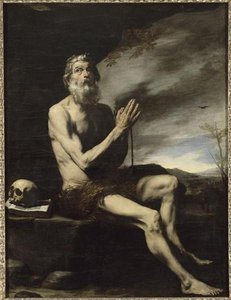
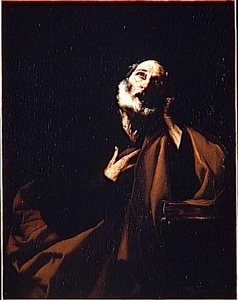
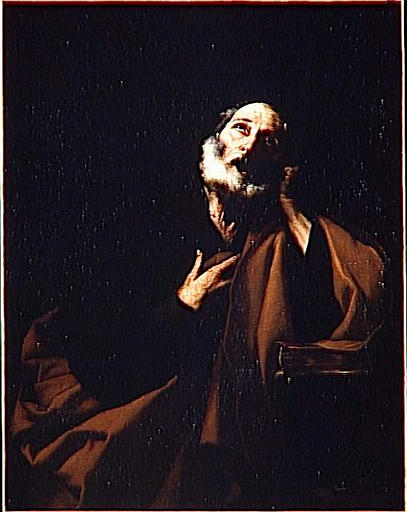
SAINT EN EXTASE LES LARMES DE SAINT PIERRE
 Read More
Giclée / Art Print
Museum-quality giclée or canvas print with fast production and flexible finish options. ( Buy Hand Made Painting Buy Image)




































Pick from our preset sizes that match the artwork's original proportions.

You may enter your own dimensions to fit a specific frame or space. If your selected size does not match the original image's proportions, we will either crop the artwork or extend the image with a mirrored or solid-fill edge. A digital mockup will be sent for your approval before production begins.
Please note that the on-screen preview does not reflect the actual cropping or extension. Only the mockup will accurately show the final composition.
While custom sizes are available, we recommend selecting a dimension from the predefined list to preserve the original proportions.
Worldwide Delivery () in 2 weeks instead of standard 4/5 weeks. (24 August)

Free Worldwide Express Shipping

High-Quality Linen Canvas

Full Shipping Insurance

Customs Tax Refund Guarantee

True Color Matching Guarantee

60-Day Return Policy (Defects Only)

100% Money-Back Guarantee

Bulk Discount Offer
 Glass option is only available in size under 110 CM

SAINT EN EXTASE LES LARMES DE SAINT PIERRE
Giclée / Art Print
Reproduction Size
-


Total Price
$ 63
Related Artworks



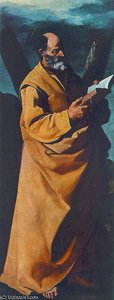


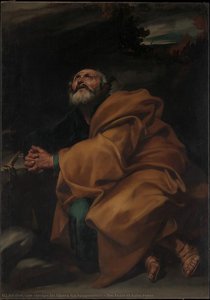
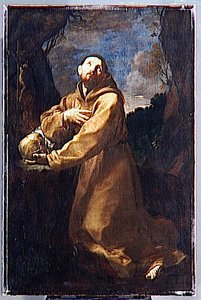
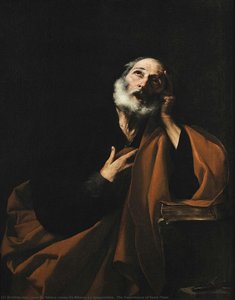

Artist Biography
The Shadow and the Soul: The Life of José de Ribera
To encounter the work of José de Ribera, known to his contemporaries as Spagnoletto, is to step into a world where light does not merely illuminate, but actively sculpts the human condition. Born in 1591 as José Martínez Ricci, this titan of the Spanish Baroque brought an uncompromising gaze to the canvas, capturing the raw, often brutal reality of existence. While his early life was marked by a pursuit of theology at Salamanca University, it was the vibrant, turbulent atmosphere of Naples that truly ignited his spirit. In this Mediterranean crucible, Ribera moved away from the idealized grace of the Renaissance toward a profound, visceral realism that would define an era.
His artistic journey was shaped by the rigorous discipline of disegno, learned under the tutelage of the sculptor Pedro Calderón de Sevilla. This foundation in anatomical precision allowed Ribera to transcend mere portraiture; he became a master of the flesh, capable of rendering the weathered texture of aged skin, the tension of straining muscle, and the heavy weight of coarse, sun-bleached fabrics. His style was deeply influenced by the dramatic tenebrism of Caravaggio, utilizing extreme contrasts between deep, impenetrable shadows and piercing highlights to create a sense of theatrical urgency and spiritual depth.
A Master of Tenebrism and Human Emotion
Ribera’s greatness lies in his ability to find the divine within the downtrodden. He possessed a unique fascination with the marginalized—beggars, workers, and elderly figures—often elevating them to the status of saints or philosophers through his meticulous brushwork. In his hands, a simple portrait of an old man becomes a profound meditation on mortality and wisdom. This was particularly evident in his religious compositions, where he eschewed the polished perfection of Mannerism in favor of a gritty, palpable holiness.
His repertoire was as diverse as it was intense, ranging from:
- Martyrdom Scenes: Brutal and unflinching depictions of saints enduring physical agony, where the viewer can almost feel the weight of the instruments of torture.
- Mythological Narratives: Evocative tales from classical antiquity, such as his powerful rendering of Ixion, which utilize mythological suffering to explore universal themes of punishment and fate.
- Ascetic Devotion: Intimate studies of hermits and saints, like his depiction of Saint Paul the Hermit, where the silence of the desert is made visible through the play of light on a solitary, contemplative face.
- Late Baroque Evolution: A transition in his later years toward a more complex use of color and softer, more atmospheric lighting, though he never truly abandoned the dramatic tension of his youth.
Legacy of the Little Spaniard
Though often overshadowed by contemporaries like Velázquez or El Greco during certain historical periods, Ribera’s influence on the Neapolitan school and the broader Spanish Baroque cannot be overstated. He was the undisputed protagonist of Neapolitan painting, a bridge between the stark shadows of the early 17th century and the more luminous, complex compositions that followed. His work serves as a memento mori, a constant reminder of the fleeting nature of life, yet it also celebrates the enduring strength of the human spirit amidst suffering.
Today, Ribera is celebrated not just as a painter of shadows, but as an artist who mastered the language of light to tell the most profound stories of faith, pain, and resilience. His legacy lives on in every stroke that dares to find beauty in the weathered, the worn, and the weary, ensuring his place as one of the most significant masters of European art history.
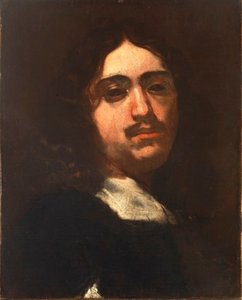
Quick Facts
- Artistic Movement Or Style: Baroque Realism
- Artists Or Movements Influenced By This Artist: ['Caravaggio']
- Artists Who Influenced This Artist: ['El Greco']
- Date Of Death: 1652
- Full Name: José de Ribera
- Nationality: Spanish
- Notable Artworks:
- Saint Paul ermite
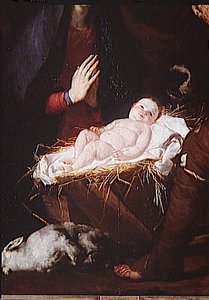
- L'Adoration des bergers
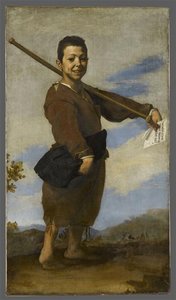
- Le pied bot
- Place Of Birth: Valencia, Spain