 Preview
 Send
Send Share
Share
 Details

 Download
 Similars
 X-Ray
X-Ray Diaporama
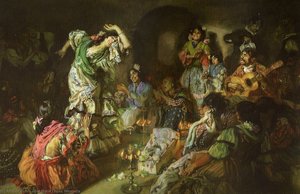
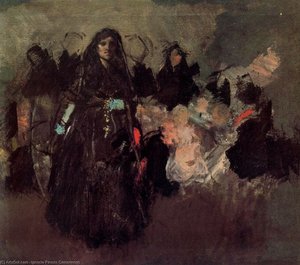
Jitanas Bailando

 Read More
Hand Made Oil Reproduction
Hand-painted oil on canvas in your size and frame, made to order by our artists. ( Buy Print Buy Image)




































Pick from our preset sizes that match the artwork's original proportions.

You may enter your own dimensions to fit a specific frame or space. If your selected size does not match the original image's proportions, we will either crop the artwork or extend the painting with additional hand-painted elements. A digital mockup will be sent for your approval before production begins.
Please note that the on-screen preview does not reflect the actual cropping or extension. Only the mockup will accurately show the final composition.
While custom sizes are available, we recommend selecting a dimension from the predefined list to preserve the original proportions.
After order, ArtsDot.com team will email client for instructions and provide a mockup preview
Worldwide Delivery () in 3/4 weeks instead of standard 5 weeks. (17 August). No compromise on quality.

Free Worldwide Express Shipping

High-Quality Linen Canvas

Full Shipping Insurance

Customs Tax Refund Guarantee

True Color Matching Guarantee

60-Day Return Policy (Defects Only)

100% Money-Back Guarantee

Bulk Discount Offer
 Glass option is only available in size under 110 CM

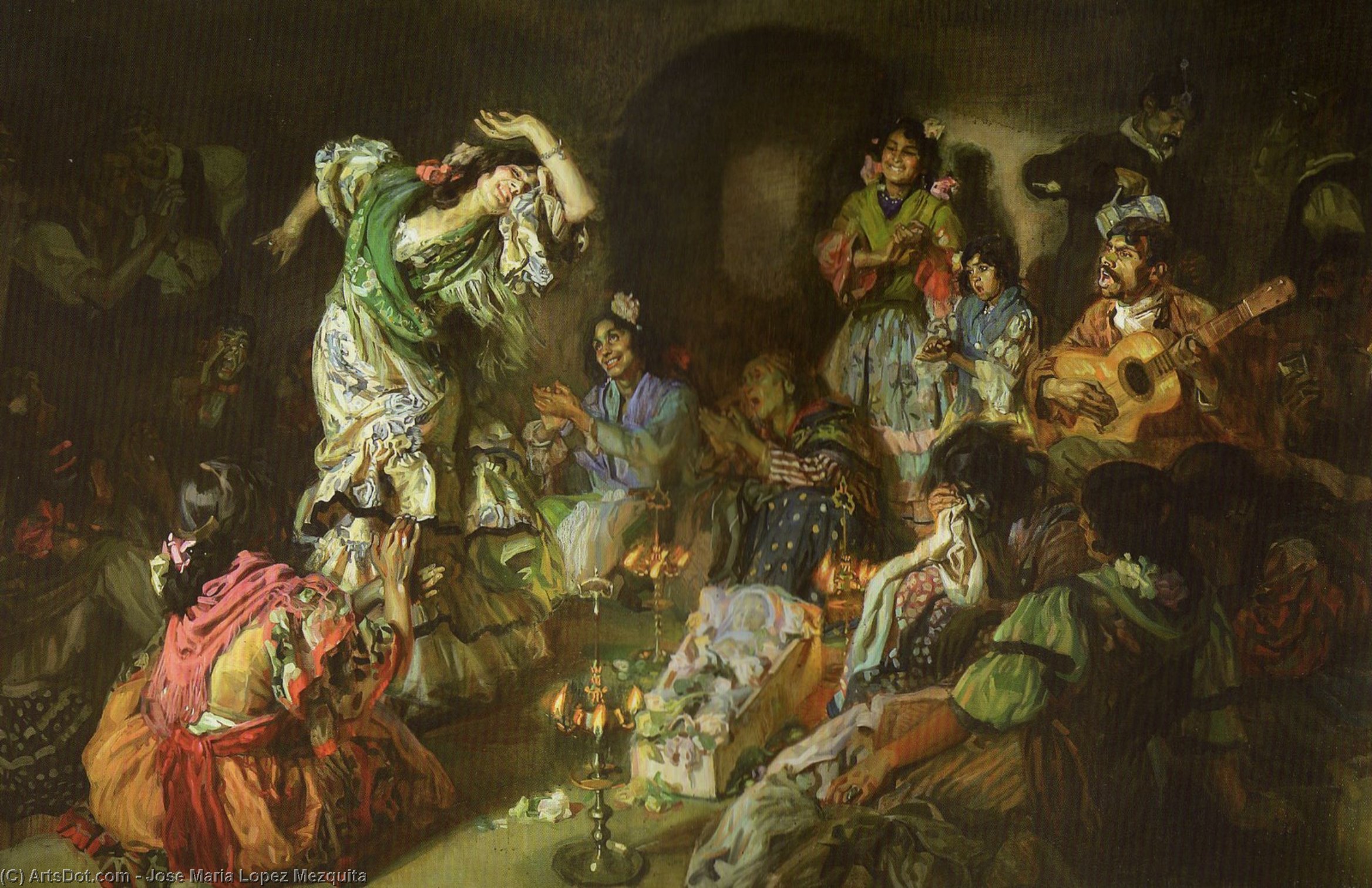
Jitanas Bailando
Reproduction Medium
Reproduction Size
-


Total Price
$ 263
Artwork Description
A Vibrant Scene of Andalusian Entertainment: "Jitanas Bailando"
This captivating painting, “Jitanas Bailando” by José María López Mezquita, transports viewers to a lively gathering in what appears to be Granada, Spain. The scene depicts a group of people intently watching a woman performing – likely a *jitanas*, traditional flamenco dancers known for their passionate and energetic routines. The atmosphere is one of joyous celebration, filled with music and entertainment. Two guitars are prominently displayed, hinting at the vibrant musical accompaniment that fuels the performance. A bowl sits on a nearby surface, perhaps holding refreshments for the audience or offerings for the dancer. The painting’s large scale further emphasizes the communal nature of this event, suggesting a significant social gathering within the Andalusian community.Style and Technique: Echoes of Romanesque and Gothic Influence
López Mezquita's artistic style reflects his acknowledged influences from both Romanesque and Gothic traditions, though adapted to a more contemporary setting. While a precise dating for this work is currently unknown, it likely falls within the artist’s mature period (roughly 1920-1950). The composition demonstrates a careful arrangement of figures, creating a sense of depth and perspective despite the crowded scene. The use of color appears rich and warm, characteristic of Spanish painting, contributing to the overall feeling of vibrancy and energy. While details about his specific technique are scarce, it's probable that he employed oil on canvas, a common medium for artists of this era in Spain. The artist skillfully uses light and shadow to highlight the central figure and draw the viewer’s eye to the performance.Historical Context: Flamenco Culture and Andalusian Society
"Jitanas Bailando" offers a glimpse into the cultural landscape of early 20th-century Andalusia, Spain. The *jitanas* themselves were figures deeply embedded in the region's folklore and entertainment scene – often associated with taverns and festive occasions. The painting reflects a period when flamenco music and dance were experiencing a resurgence in popularity, becoming increasingly recognized as an integral part of Spanish national identity. López Mezquita’s choice to depict this scene speaks to his interest in capturing authentic moments of Andalusian life and celebrating its unique cultural heritage. The presence of the guitars underscores the crucial role of music within the flamenco tradition.Emotional Impact and Symbolism
The painting evokes a powerful sense of energy, joy, and communal spirit. The focused expressions on the faces of the onlookers convey their captivated attention to the dancer’s performance. The vibrant colors and dynamic composition create an emotionally engaging experience for the viewer. Beyond its depiction of a specific event, "Jitanas Bailando" symbolizes the enduring power of music and dance to bring people together and celebrate life's moments of joy. It is a testament to the rich cultural traditions that continue to thrive in Andalusia, offering a window into a world of passion, artistry, and shared experience.Related Artworks
Artist Biography
José María López Mezquita: A Granada Master of Romanesque and Gothic Echoes
Born in Granada, Spain, in 1883, José María López Mezquita’s life and art were inextricably linked to the rich cultural tapestry of his homeland. While detailed biographical information remains somewhat sparse – a reflection perhaps of the era in which he lived – we can piece together a compelling narrative through his evocative works, revealing an artist deeply influenced by Spain's medieval past and its enduring artistic legacy. Mezquita’s career spanned several decades, culminating in his death in 1954, leaving behind a body of work that whispers of Romanesque churches, Gothic arches, and the timeless beauty of the Spanish landscape.Early Influences and Artistic Development
Mezquita's artistic journey began within the shadow of Granada’s Alhambra, a monument steeped in Moorish history and architectural splendor. The intricate details, geometric patterns, and vibrant colors of this iconic palace undoubtedly shaped his early aesthetic sensibilities. His training likely involved exposure to traditional Spanish painting techniques, but it was the enduring presence of Romanesque and Gothic art – particularly evident in the numerous churches and monasteries scattered throughout Andalusia – that truly ignited his passion. These structures, with their soaring vaults, intricate carvings, and symbolic frescoes, provided a visual vocabulary he would repeatedly return to throughout his career. The austere beauty of these spaces, imbued with religious devotion, became a cornerstone of his artistic vision.A Palette of Faith and Landscape
Mezquita’s paintings are characterized by a distinctive blend of realism and symbolic representation. He frequently depicted scenes from the Bible and religious narratives, but always within the context of the Spanish landscape. His compositions often feature Tuscan churches – a testament to the influence of Italian Renaissance art that had begun to permeate Spain at the time – nestled amongst rolling hills and olive groves. These settings aren’t merely backdrops; they are integral to the meaning of his works, suggesting a connection between faith, nature, and the spiritual realm. His use of light is particularly noteworthy, often employing dramatic chiaroscuro effects to heighten the emotional impact of his scenes.Key Works and Notable Pieces
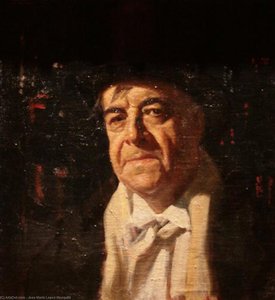
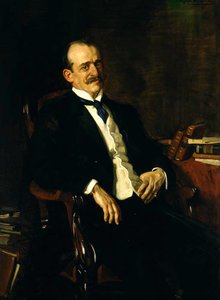
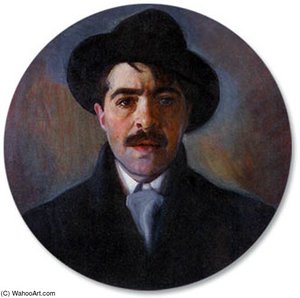
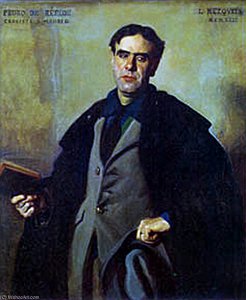
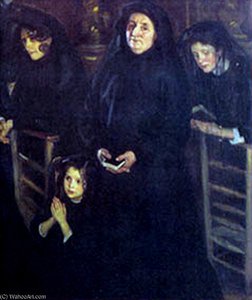
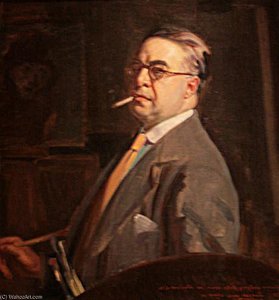
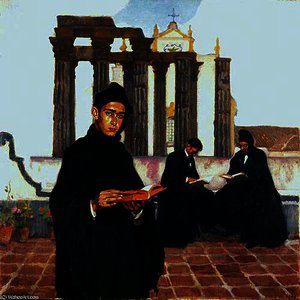
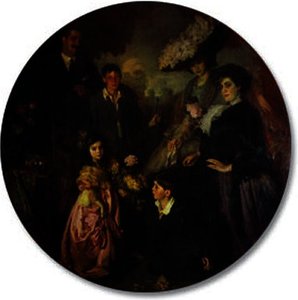
Several of Mezquita’s paintings offer compelling insights into his artistic style and thematic concerns. “Familia Retratada” (Family Portrait), a poignant black-and-white study, captures a moment of domestic tranquility, hinting at the enduring values of family and tradition within Spanish society. “Estudiantes” (Students) provides a captivating glimpse into scholarly pursuits, rendered with a subtle Romanesque/Gothic influence in its composition and use of shadow. “Autorretrato” (Self-Portrait), while perhaps less frequently discussed, demonstrates his technical skill and ability to convey personality through portraiture. These works, alongside numerous landscapes depicting churches and rural scenes, collectively showcase his mastery of capturing both the physical beauty and spiritual essence of Spain.Legacy and Historical Significance
José María López Mezquita’s contribution to Spanish art lies in his skillful revival of Romanesque and Gothic artistic traditions. He wasn't merely imitating these styles; he was breathing new life into them, adapting them to the sensibilities of the 19th century while retaining their core values. His work serves as a valuable record of Spain’s medieval heritage and offers a poignant reflection on faith, family, and the enduring power of landscape. Although his name may not be widely recognized outside specialist circles, his paintings continue to resonate with viewers who appreciate the quiet beauty and spiritual depth of his vision – a testament to an artist deeply rooted in the soul of Granada and the spirit of Spain.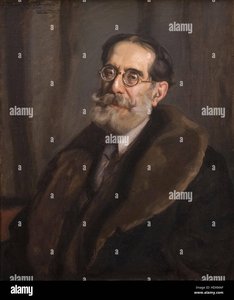
jose maria lopez mezquita
1883 - 1954 , Spain
Quick Facts
- Artistic Movement Or Style: Romanesque & Gothic
- Date Of Birth: 1883 Granada, Spain
- Date Of Death: 1954
- Full Name: José María López Mezquita
- Nationality: Spanish
- Notable Artworks:
- Familia Retratada
- Autorretrato
- Estudiantes
- Place Of Birth: Granada, Spain
Related Articles

Goya's Masterpieces: Explore 25 Iconic Paintings & Art Prints | ArtsDot
Delve into the world of Francisco Goya with ArtsDot. Explore 25 iconic paintings – from 'The Third of May' to his haunting Black Paintings. Discover the stories, techniques & emotions behind these Spanish masterpieces. Find museum-quality art reproductions for your home at ArtsDot.com!
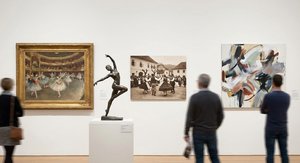
The Rhythmic Canvas: Exploring Representations of Dance Across Art History
Explore the captivating history of dance in art! From Degas' ballet scenes to abstract expressions, discover how artists have captured movement and cultural significance across time. Expert insights for collectors & enthusiasts.
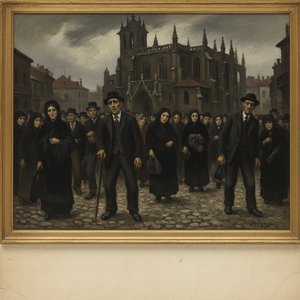
José Gutiérrez Solana: A Chronicle of Spanish Society Through Expressionist Vision
Explore the captivating world of José Gutiérrez Solana, a pivotal Spanish Expressionist painter. Discover his haunting depictions of early 20th-century Spain, influenced by Goya & El Greco. Learn about his key works and lasting legacy.
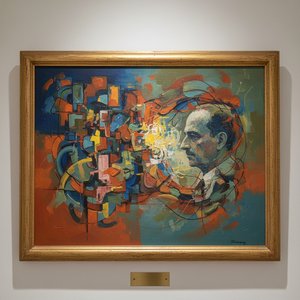
Jorge José Castillo Casalderrey: A Spanish Abstract Expressionist's Evolving Vision
Explore the captivating world of Jorge José Castillo Casalderrey, a leading Spanish Abstract Expressionist. Discover his unique style, market value & legacy. Expert insights for discerning collectors.
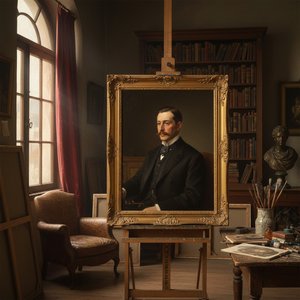
Rafael de Penagos: A Study in Spanish Portraiture & Artistic Identity
Explore the life & art of Rafael de Penagos, a leading Spanish Art Deco illustrator. Discover his iconic 'Penagos Woman', commercial work, and lasting legacy. Learn about this pivotal figure in 20th-century Spanish art history.