

 Preview
 Send
Send Share
Share
 Details

 Download
 Similars
 X-Ray
X-Ray Diaporama
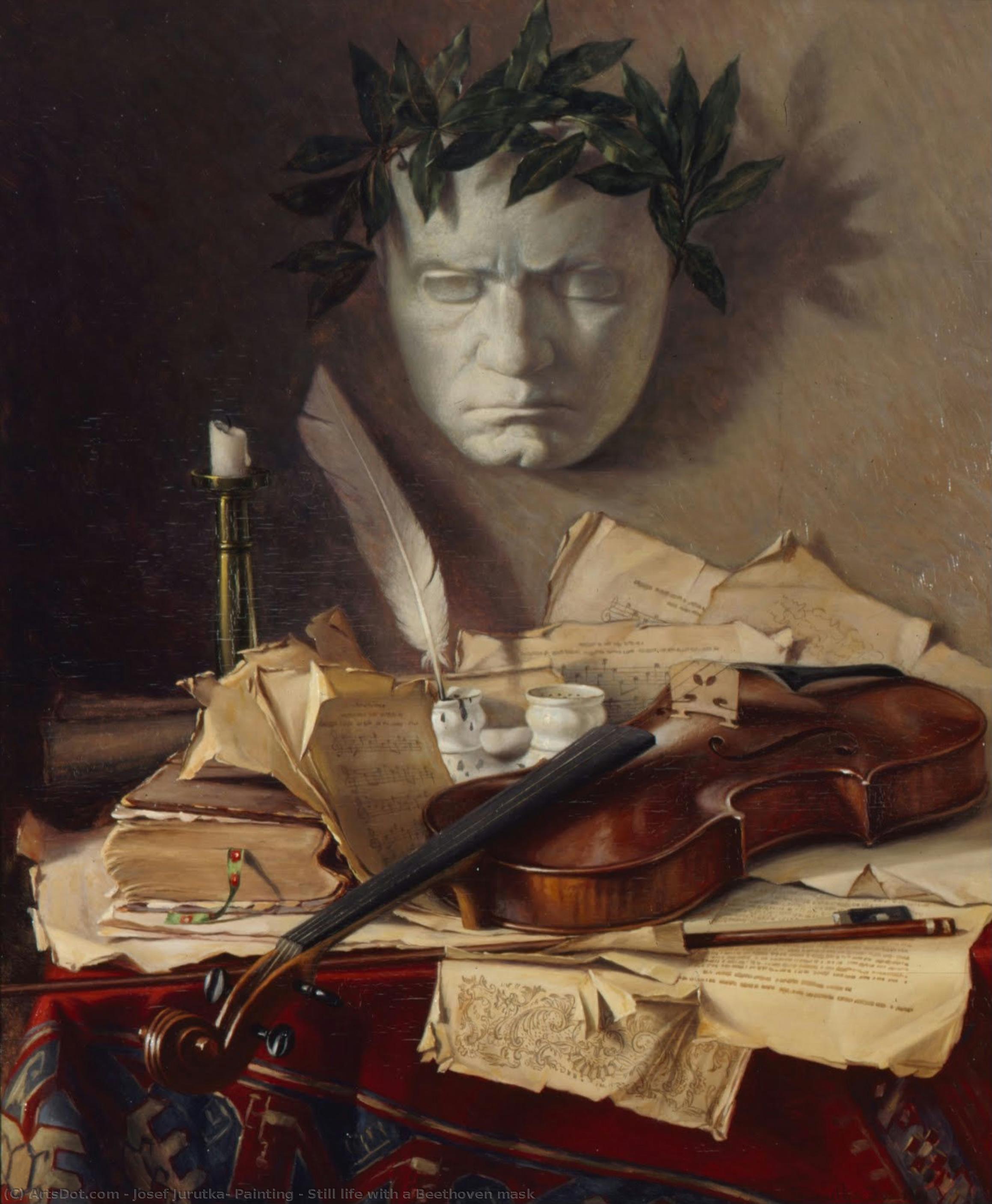
Still life with a Beethoven mask


 Read More
Hand Made Oil Reproduction
Hand-painted oil on canvas in your size and frame, made to order by our artists. ( Buy Print Buy Image)




P118B $10

P118H $10

P118W $10

P438Z $10

P508JH $12

P508YH $12

P805H $10

P805Z $10

P919BZ $10

P919G $10

P919XJ $10

P959ZH $10

P968JZ $12

W106C $8

W218G $10

W218JH $8

W218Y $10

W307PJ $10

W316G $10

W316PJ $8

W316Y $10

W398PJ $8

W4111J $10

W500HY $15

W500JH $15

W692G $12

W849H $8

W940BG $15

W953PJ $8




Pick from our preset sizes that match the artwork's original proportions.

You may enter your own dimensions to fit a specific frame or space. If your selected size does not match the original image's proportions, we will either crop the artwork or extend the painting with additional hand-painted elements. A digital mockup will be sent for your approval before production begins.
Please note that the on-screen preview does not reflect the actual cropping or extension. Only the mockup will accurately show the final composition.
While custom sizes are available, we recommend selecting a dimension from the predefined list to preserve the original proportions.
After order, ArtsDot.com team will email client for instructions and provide a mockup preview
Worldwide Delivery () in 3/4 weeks instead of standard 5 weeks. (24 August). No compromise on quality.

Free Worldwide Express Shipping

High-Quality Linen Canvas

Full Shipping Insurance

Customs Tax Refund Guarantee

True Color Matching Guarantee

60-Day Return Policy (Defects Only)

100% Money-Back Guarantee

Bulk Discount Offer
 Glass option is only available in size under 110 CM

Still life with a Beethoven mask
Reproduction Medium
Reproduction Size
-


Total Price
$ 263
Artwork Description
Related Artworks
Artist Biography
The Impressionist of the Wood: The Life and Legacy of Josef Jurutka
Josef Jurutka (1880 – 1945) emerged as a profound voice within the Hungarian art scene during the transformative era of the late nineteenth and early twentieth centuries. Born in Hungary, his formative years were set against the backdrop of a shifting Austro-Hungarian Empire, a period defined by intense cultural dynamism and a restless urge toward modernization. As an artist, Jurutka did not merely observe the world; he sought to interpret its fleeting essence through a lens that blended the light-drenched sensibilities of Impressionism with a deeply personal, tactile exploration of materiality. His journey was one of reconciling the academic discipline of his training with a revolutionary approach to medium and texture.
The foundations of Jurutka’s artistry were laid at the prestigious Budapest Academy of Fine Arts, where he mastered the rigorous techniques of observation and representation. However, his creative spirit was profoundly stirred by the broader European movements, particularly the Impressionist revolution led by masters such as Claude Monet and Edgar Degas. From these pioneers, he adopted a fascination with the ephemeral—the way light dances across a surface and how color can convey subjective emotion rather than mere photographic reality. This exposure to the shifting paradigms of his time allowed him to move beyond traditional realism, fostering a style that prioritized the atmospheric and the spiritual over the strictly literal.
A Mastery of Texture and the Soul of Wood
What truly distinguishes Jurutka from his contemporaries was his daring departure from the smooth, polished surfaces typical of many Impressionist works. He became a master of wood as a primary medium, treating it not just as a support, but as an active participant in the storytelling of his paintings. By manipulating wood through layering and subtle carving, he achieved a remarkable depth that traditional oil on canvas could rarely replicate. This technique allowed him to harness the natural grain patterns and organic variations of the material, creating surfaces that possessed a palpable, tactile resonance.
This fascination with the physical properties of his medium reflected a deeper philosophical pursuit: the desire to convey emotion through touch and texture. In Jurutka’s hands, the wood became a vessel for light and shadow, where every groove and grain contributed to the composition's emotional weight. His work stands as a testament to the idea that the very substance an artist chooses can alter the viewer's psychological connection to the subject matter, turning a visual experience into a sensory one.
Symbolism and Historical Resonance
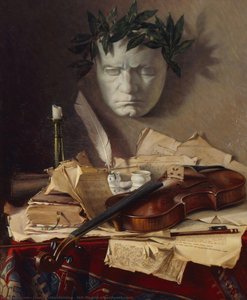
The depth of Jurutka’s intellect is perhaps most vividly captured in his more symbolic compositions, such as his celebrated work, Still life with a Beethoven mask. In this piece, the artist transcends simple arrangement to explore metaphysical themes. Through the use of an extinguished candle, he touches upon the vanitas tradition—the concept of the ephemerality of earthly existence. Yet, this mortality is balanced by the presence of a life mask of Beethoven, crowned with a laurel wreath, which serves as a powerful symbol of the immortality of musical genius. The inclusion of the violin and scattered sheet music further weaves a narrative of eternal art surviving the passage of time.
The historical significance of Jurutka’s work is also marked by its presence in some of the most complex political landscapes of the twentieth century. His painting was notably featured at the 1939 German Art Exhibition in Munich, and it famously became one of the two works acquired by Adolf Hitler for his personal collection. While such a historical footnote is heavy with the weight of the era's politics, it underscores the undeniable impact and recognition Jurutka’s technical mastery commanded on the international stage. Today, Josef Jurutka is remembered not merely as a participant in a movement, but as an innovator who breathed new life into ancient materials to capture the eternal spirit of human genius.
josef jurutka, painting
1880 - 1945 , Hungary
Quick Facts
- Artistic Movement Or Style: Impressionist & Modern
- Date Of Death: 1945
- Full Name: Josef Jurutka
- Nationality: Hungarian
- Notable Artworks: ['Still life with a Beethoven mask']
- Place Of Birth: Hungary
Related Articles

Cézanne's Masterpieces: 25 Iconic Artworks to Transform Your Space
Journey through 25 iconic artworks by Paul Cézanne – a master of Impressionism and Post-Impressionism. Explore his landscapes, still lifes, and the stories behind these timeless masterpieces. Discover museum-quality reproductions & curated decor at ArtsDot.com.
Károly Ferenczy: Pioneering Hungarian Modernism & the Soul of a Nation
Explore the life & art of Károly Ferenczy, a pivotal figure in Hungarian Modernism. Discover his landscapes, portraits, and role in founding the Nagybánya colony. Expert insights for collectors & enthusiasts.

Impressionism's Masterpieces: 10 Paintings That Defined a Movement | ArtsDot
Journey through Impressionism's heart with 10 iconic paintings by Monet, Renoir & Degas. Explore light, color & the stories behind these masterpieces. Find museum-quality art reproductions and elevate your home decor on ArtsDot.com.
Silent Narratives: Exploring the Enduring Appeal of Still Life Painting Across Centuries
Explore the rich history of still life painting with ArtsDot. Discover Dutch Masters, decode vanitas symbolism & learn about collecting timeless art. Expert insights and museum-quality reproductions.

Beyond Impressionism: Exploring the Emotional Depth of Post-Impressionist Painting
Explore the profound emotional depth & innovative techniques of Post-Impressionism with ArtsDot. Discover Cézanne, Van Gogh, Gauguin & more – and their lasting impact on modern art.

