 Preview
 Send
Send Share
Share
 Details

 Download
 Similars
 X-Ray
X-Ray Diaporama
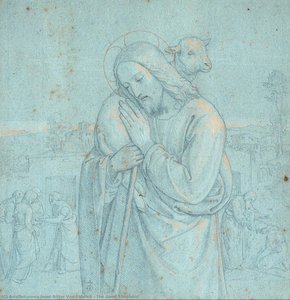
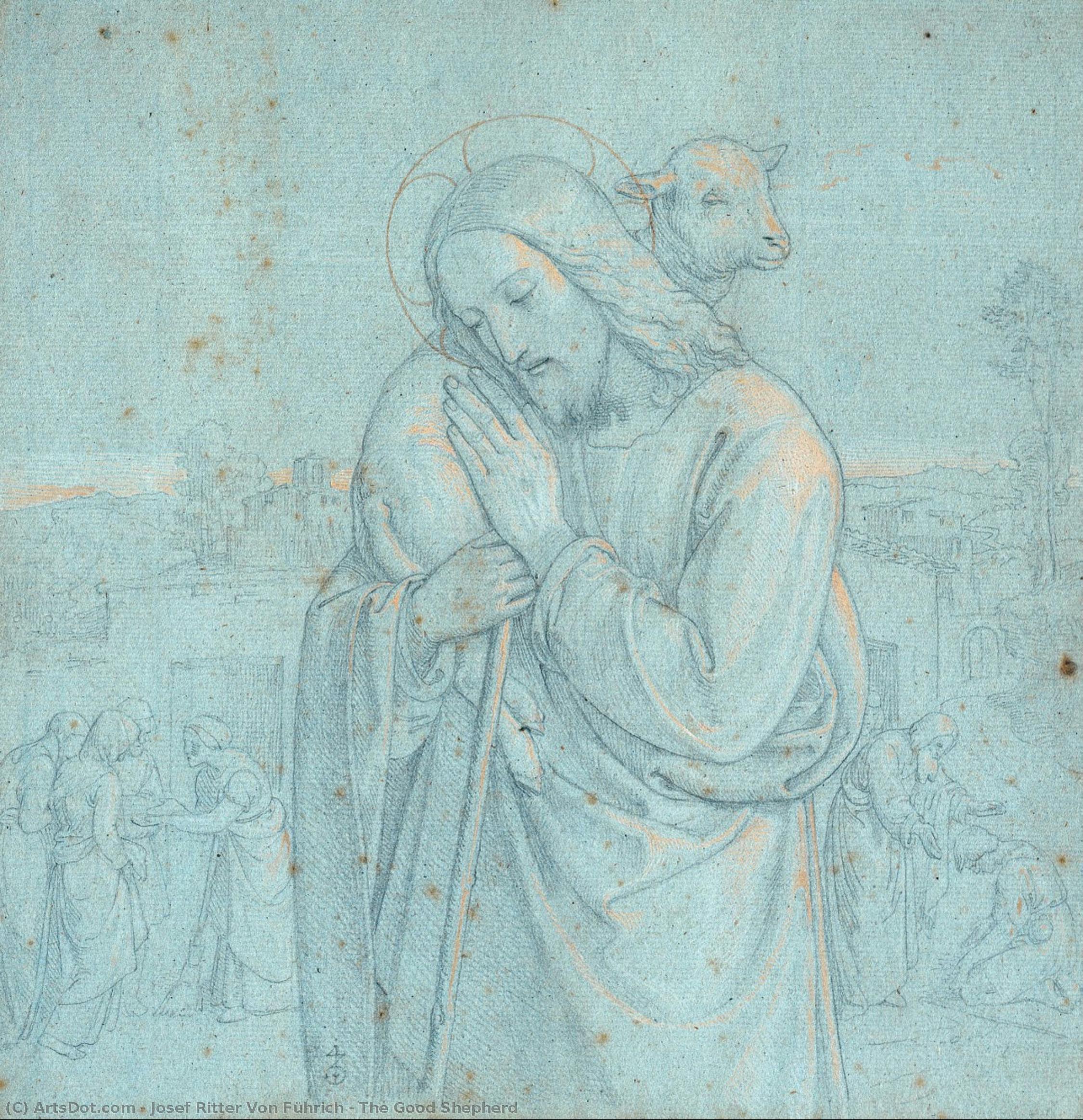
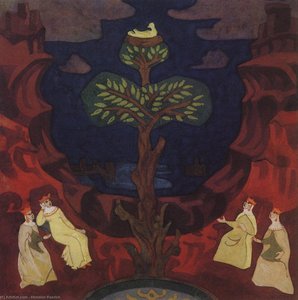
The Good Shepherd
 Acrylic On Canvas
- WallArt
- Nazarene Religious Painting
 1840
1840 237.0 x 243.0 cm
 Kunstpalast
 Read More
Hand Made Oil Reproduction
Hand-painted oil on canvas in your size and frame, made to order by our artists. ( Buy Print Buy Image)




P118B $10

P118H $10

P118W $10

P438Z $10

P508JH $12

P508YH $12

P805H $10

P805Z $10

P919BZ $10

P919G $10

P919XJ $10

P959ZH $10

P968JZ $12

W106C $8

W218G $10

W218JH $8

W218Y $10

W307PJ $10

W316G $10

W316PJ $8

W316Y $10

W398PJ $8

W4111J $10

W500HY $15

W500JH $15

W692G $12

W849H $8

W940BG $15

W953PJ $8




Pick from our preset sizes that match the artwork's original proportions.

You may enter your own dimensions to fit a specific frame or space. If your selected size does not match the original image's proportions, we will either crop the artwork or extend the painting with additional hand-painted elements. A digital mockup will be sent for your approval before production begins.
Please note that the on-screen preview does not reflect the actual cropping or extension. Only the mockup will accurately show the final composition.
While custom sizes are available, we recommend selecting a dimension from the predefined list to preserve the original proportions.
After order, ArtsDot.com team will email client for instructions and provide a mockup preview
Worldwide Delivery () in 3/4 weeks instead of standard 5 weeks. (25 August). No compromise on quality.

Free Worldwide Express Shipping

High-Quality Linen Canvas

Full Shipping Insurance

Customs Tax Refund Guarantee

True Color Matching Guarantee

60-Day Return Policy (Defects Only)

100% Money-Back Guarantee

Bulk Discount Offer
 Glass option is only available in size under 110 CM

The Good Shepherd
Reproduction Medium
Reproduction Size
-


Total Price
$ 263
Related Artworks

Artist Biography
The Soul of the Nazarene: The Life and Legacy of Josef Ritter von Führich
Born in the quiet landscape of Pless, Prussian Silesia, on February 9, 1800, Josef Ritter von Führich emerged as a profound voice within the nineteenth-century art world. His journey from his Polish origins to the heart of the Austrian Empire is a testament to a life dedicated to the pursuit of spiritual and technical excellence. As a prominent member of the Nazarene movement, Führich did not merely paint; he sought to revive the purity and religious fervor of early Renaissance masters, infusing his canvases with a sense of divine devotion that transcended the mere application of pigment.
Führich’s artistic evolution was deeply rooted in the rigorous academic traditions of his time. He sought refinement at the Academy of Fine Arts Vienna, where he studied under the esteemed Leopold Kupelwieser. This mentorship proved transformative, providing him with the technical foundation necessary to master both the delicate precision of draughtsmanship and the emotive power of religious oil painting. His talent was recognized early by the highest authorities; in 1845, he was awarded the prestigious grand prize and the imperial stipend, a distinction that signaled his ascent into the upper echelons of European art.
A Master of Line and Devotion
While many artists of his era sought to capture the fleeting light of the natural world, Führich turned his gaze inward toward the eternal. His oeuvre is characterized by an almost exclusive focus on religious themes, rendered with a clarity and grace that reflect the Nazarene ideal of spiritual sincerity. Though he achieved significant renown for his paintings, it was his mastery as a draughtsman that truly captured the imagination of his contemporaries. His ability to use line to convey profound emotion and sacred narrative allowed him to bridge the gap between the physical and the metaphysical.
The depth of his contribution to Austrian art is reflected in the various prestigious roles he held throughout his distinguished career:
- Director of the Prague Academy: Appointed in 1854, where he helped shape the next generation of artists.
- Professor at the Vienna Academy: Beginning in 1865, bringing his classical expertise to the forefront of academic instruction.
- Director of the Belvedere Gallery: Serving in this capacity in 1871, a role that placed him at the helm of one of Europe's most significant art collections.
- Rector of the Academy: Reaching the pinnacle of academic leadership in 1874.
Historical Significance and Enduring Presence
The historical significance of Josef Ritter von Führich lies not only in his individual creations but in his role as a custodian of artistic tradition. By serving as a director and professor, he ensured that the values of craftsmanship and spiritual depth remained central to the Viennese art scene. His work serves as a vital link to the Nazarene movement, preserving a period of history where art was viewed as a sacred vocation rather than a mere commodity.
Today, the legacy of Führich continues to resonate within the halls of the world's most esteemed institutions. His paintings and drawings can be found in the Belvedere Gallery and the Leopold Museum in Vienna, standing as enduring witnesses to his devotion. To study his work is to encounter a period of profound artistic introspection, where every stroke of the pen and every layer of oil was an act of reverence, ensuring that his name remains etched in the annals of Austrian art history.
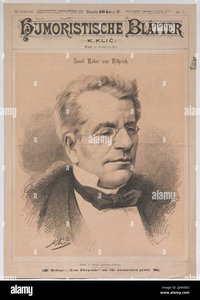
josef ritter von führich
1800 - 1876 , Poland
Quick Facts
- Artistic Movement Or Style: 19th Century
- Artists Or Movements Influenced By This Artist:
- Impressionism
- Hudson River School
- Artists Who Influenced This Artist:
- Caspar David Friedrich
- J.M.W. Turner
- John Constable
- Date Of Death: 1876
- Nationality: WahooArt
- Notable Artworks:
- Dover Plains, Dutchess County, New York
- Portrait of Madame Récamier
- Portrait of Lord Nelson
Related Articles

Giclée Prints: Archival Quality & Aesthetic Nuances for the Discerning Collector
Explore the world of giclée prints with ArtsDot. Learn about archival quality, aesthetic nuances & investment potential. Expert guidance for discerning art collectors seeking museum-quality reproductions and lasting value.

Echoes of Time: Exploring the Enduring Appeal & Historical Context of Vintage Art Prints
Explore the captivating world of vintage art prints! Discover their history, collecting tips & enduring appeal. Expert insights on chromolithography and building a legacy collection with ArtsDot.

The Enduring Legacy of Fine Art Prints: Technique, History & Aesthetic Impact
Explore the rich history & techniques of fine art prints. Discover investment potential, assess authenticity, and learn how to preserve your collection with expert guidance. Trusted insights for discerning collectors.
19th Century Masterpieces: 10 Paintings That Defined an Era | ArtsDot
Journey through 19th century art with ArtsDot! Explore 10 iconic paintings – from Monet & Renoir to Courbet – and discover the stories behind Romanticism, Realism & Impressionism. Find museum-quality reproductions for your home decor. Explore the full collection online!
The Enduring Legacy of Printmaking: Techniques, Themes & Artistic Innovation Across Centuries
Explore the rich history of printmaking with ArtsDot. Discover techniques from intaglio to lithography, learn about collecting valuable prints & find museum-quality reproductions. Expert insights for art enthusiasts and collectors.