 Preview
 Send
Send Share
Share
 Details

 Download
 Similars
 X-Ray
X-Ray Diaporama
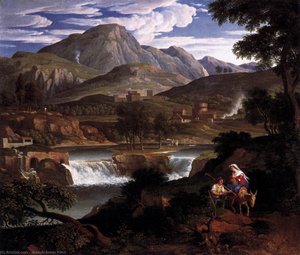
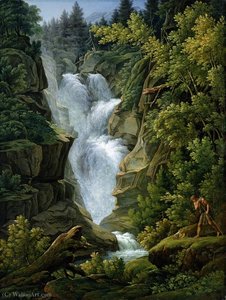
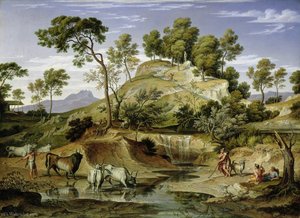
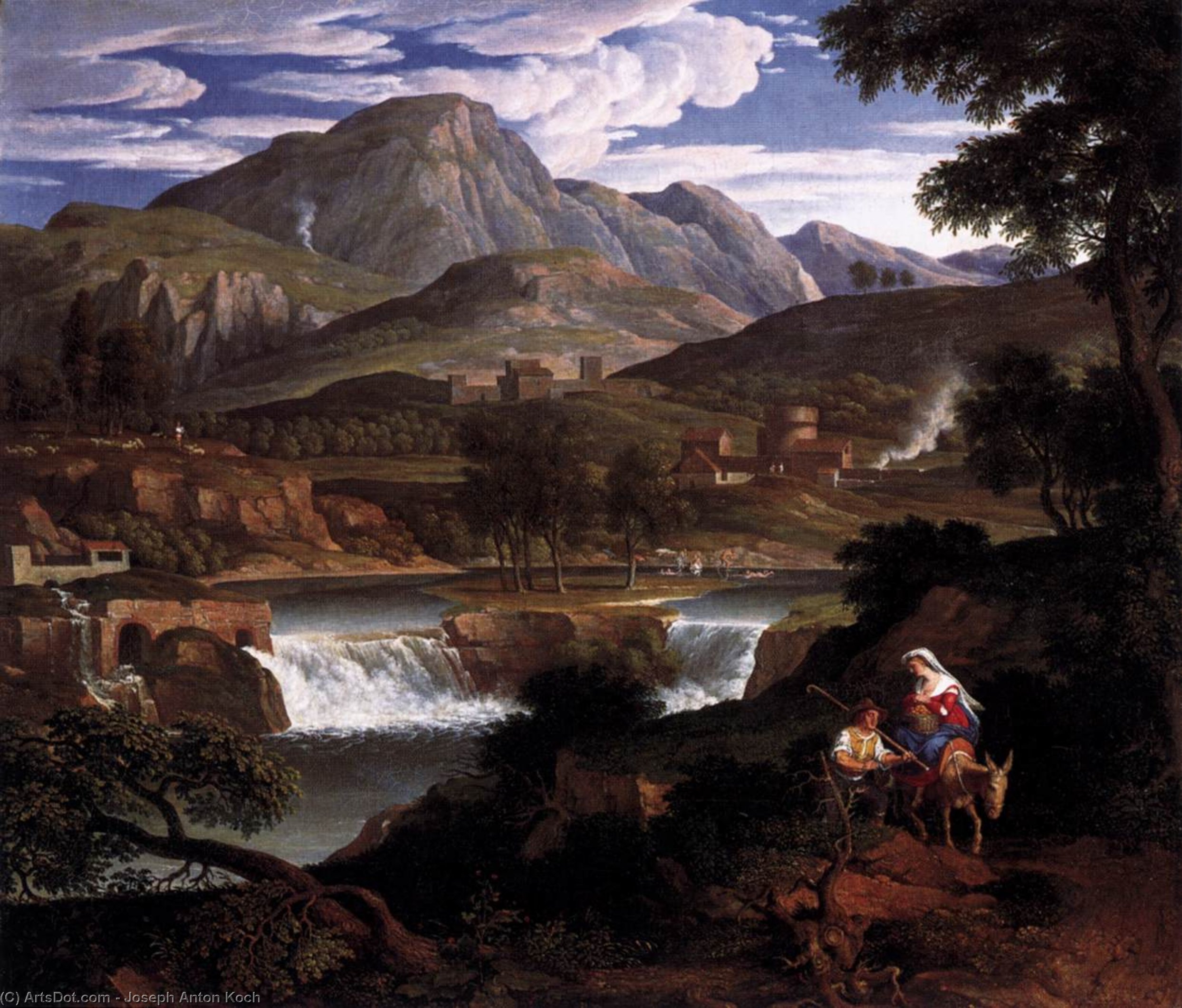
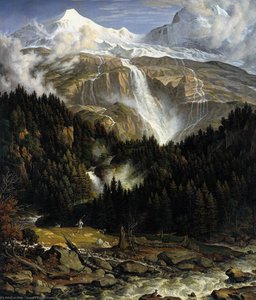
Waterfall near Subiaco
 Oil On Canvas
- WallArt
- Neoclassicism
 1813
1813 58.0 x 68.0 cm
 Nationalgalerie
 Read More
Hand Made Oil Reproduction
Hand-painted oil on canvas in your size and frame, made to order by our artists. ( Buy Print Buy Image)




P118B $10

P118H $10

P118W $10

P438Z $10

P508JH $12

P508YH $12

P805H $10

P805Z $10

P919BZ $10

P919G $10

P919XJ $10

P959ZH $10

P968JZ $12

W106C $8

W218G $10

W218JH $8

W218Y $10

W307PJ $10

W316G $10

W316PJ $8

W316Y $10

W398PJ $8

W4111J $10

W500HY $15

W500JH $15

W692G $12

W849H $8

W940BG $15

W953PJ $8




Pick from our preset sizes that match the artwork's original proportions.

You may enter your own dimensions to fit a specific frame or space. If your selected size does not match the original image's proportions, we will either crop the artwork or extend the painting with additional hand-painted elements. A digital mockup will be sent for your approval before production begins.
Please note that the on-screen preview does not reflect the actual cropping or extension. Only the mockup will accurately show the final composition.
While custom sizes are available, we recommend selecting a dimension from the predefined list to preserve the original proportions.
After order, ArtsDot.com team will email client for instructions and provide a mockup preview
Worldwide Delivery () in 3/4 weeks instead of standard 5 weeks. (17 August). No compromise on quality.

Free Worldwide Express Shipping

High-Quality Linen Canvas

Full Shipping Insurance

Customs Tax Refund Guarantee

True Color Matching Guarantee

60-Day Return Policy (Defects Only)

100% Money-Back Guarantee

Bulk Discount Offer
 Glass option is only available in size under 110 CM

Waterfall near Subiaco
Reproduction Medium
Reproduction Size
-


Total Price
$ 313
Artwork Description
Waterfall near Subiaco
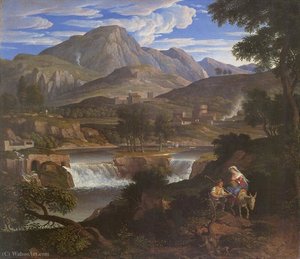
Joseph Anton Koch’s “Waterfall near Subiaco” (1813) stands as a cornerstone of Austrian landscape painting and exemplifies the harmonious blend between neoclassicism and burgeoning romantic sensibilities—a testament to Koch's artistic vision and enduring legacy. Executed in oil on canvas, this monumental artwork captures a breathtaking vista of a valley dominated by a cascading waterfall amidst towering mountains bathed in diffused sunlight. It’s more than just a depiction of scenery; it’s an embodiment of Enlightenment ideals filtered through the lens of Romantic emotion. ### Subject Matter and Narrative Context The painting portrays a biblical scene—Joseph, Mary, and baby Jesus traveling with a donkey—integrated seamlessly into the grandeur of the natural landscape. This deliberate juxtaposition underscores themes of pilgrimage, faith, and divine presence within the sublime beauty of creation. Koch’s choice reflects the Romantic preoccupation with elevating humanity through communion with nature, mirroring the philosophical currents circulating throughout Europe at the time. The biblical narrative serves as a conduit for conveying spiritual contemplation and reverence—a hallmark of the Romantic aesthetic. ### Artistic Style and Technique: Neoclassicism Revisited Koch adheres to neoclassical principles while subtly incorporating elements that anticipate romantic tendencies. The pyramidal composition draws the viewer’s gaze upwards from the foreground figures towards the expansive mountain peaks, establishing a visual hierarchy that reinforces stability and grandeur. Linear perspective meticulously renders depth, creating an illusion of three-dimensionality and immersing the observer in the scene's atmosphere. Brushwork is employed with considerable precision—particularly evident in the depiction of rocks and foliage—suggesting textural richness and conveying a sense of palpable realism. However, Koch departs from strict classical formalism by injecting warmer hues into the palette, softening the overall mood and hinting at the emotional resonance characteristic of Romantic art. ### Color Palette and Atmospheric Perspective The dominant color scheme is dominated by earthy browns, verdant greens, serene blues, and muted grays—a deliberate selection that contributes to a contemplative atmosphere imbued with majesty. Koch skillfully utilizes atmospheric perspective – diminishing colors and reducing detail in distant mountains – enhancing the illusion of depth and conveying the grandeur of the landscape. This technique aligns perfectly with Romantic ideals of sublime beauty, emphasizing awe and wonder at the immensity of nature’s power. ### Symbolism and Emotional Impact “Waterfall near Subiaco” transcends mere visual representation; it communicates profound emotional truths about humanity's relationship with divinity and the natural world. The waterfall symbolizes purification and renewal—themes central to Christian iconography—while simultaneously embodying the untamed spirit of the mountains, representing resilience and aspiration. Koch’s masterpiece evokes feelings of peace, tranquility, and spiritual contemplation—a testament to his ability to capture not only visual splendor but also intangible emotional resonance. It remains a powerful reminder of the transformative potential inherent in encountering sublime beauty. ### Location and Provenance Currently housed at Alte Nationalgalerie, Berlin, Germany, “Waterfall near Subiaco” represents a pivotal moment in Austrian art history—a bridge between rational neoclassicism and emotive romanticism. Its enduring appeal speaks to the timeless fascination with landscapes that inspire awe and contemplation.Related Artworks
Artist Biography
The Architect of the Heroic Landscape
Joseph Anton Koch stands as a singular figure in Austrian art history—a painter who deftly navigated the shifting currents of Neoclassicism into the burgeoning fervor of German Romanticism. Born in 1768 in Elbigenalp, Austria, his early life was marked by a pastoral simplicity that would profoundly shape his artistic vision; tending cattle in his youth instilled in him an intimate appreciation for the natural world, a connection that later manifested in his monumental depictions of earth and sky. A fortuitous recommendation from Bishop Umgelder secured him a prestigious academic education at Stuttgart’s Karlsschule, a rigorous military academy where discipline and intellectual pursuit converged. However, Koch's youthful spirit rebelled against such constraints, leading to a brief but formative wanderlust through France and Switzerland before he finally established himself in the artistic crucible of Rome in 1795.
In the heart of Italy, Koch found kinship with fellow painter Asmus Jacob Carstens, adopting a style often referred to as the heroic aesthetic. This approach initially mirrored Carstens’ literal interpretations of mythological narratives, characterized by a certain sculptural clarity and formal rigor. Koch demonstrated his technical prowess not only through paint but also through the meticulous art of printmaking, notably etching the pages of Carrend's Les Argonautes. This period of his life was defined by a mastery of detail and a command over line that would serve as the foundation for his later, more expansive compositions.
A Visionary Evolution: From Myth to Mountain
As his career progressed, Koch underwent a profound artistic evolution, transitioning from the structured narratives of Neoclassicism toward the sweeping grandeur of landscape painting. He began to reimagine classical ideals through the lens of the Austrian Alps and the Italian countryside, producing works that felt both timeless and intensely visceral. Influenced by the monumental compositions of masters like Nicolas Poussin and Claude Lorrain, Koch developed a unique way of organizing space, where dramatic lighting and vast, rugged terrains created a sense of awe. His landscapes were never merely topographical records; they were emotional journeys through heroic scenery.
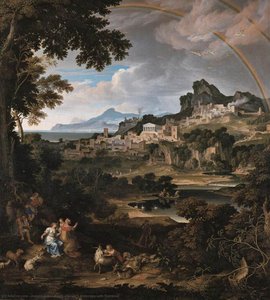
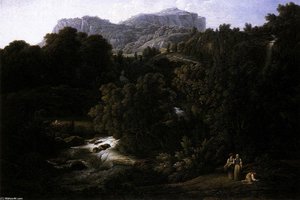
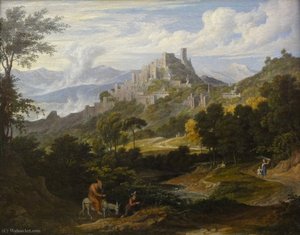
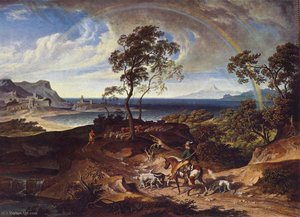
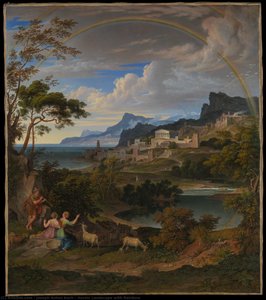
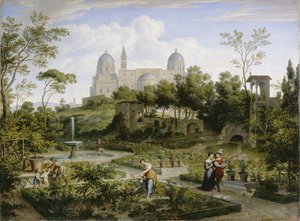
His ability to blend the classical with the romantic is perhaps best seen in his treatment of light and atmosphere. In works such as Heroic Landscape with Rainbow, he utilizes a Baroque sensibility to introduce dramatic weather elements that punctuate the stillness of the mountains. This technique allowed him to bridge two eras: the ordered, rational world of the Enlightenment and the emotive, untamed spirit of Romanticism. Even when depicting serene scenes, such as the Monastery of San Francesco di Civitella in the Sabine Mountains, there remains an underlying sense of the sublime—a realization of nature's immense power and scale.
Legacy and Historical Significance
The later years of Koch's life were marked by both movement and resilience. Facing financial hardships exacerbated by Napoleon’s invasions, he relocated to Vienna in 1812. In this new setting, he flourished under the patronage of influential intellectuals like Friedrich Schlegel and became a central figure in the Germanic artistic tradition. His work during this period began to reflect a shift toward harsher, more dramatic elements, further cementing his role as a pioneer of the landscape genre.
The historical significance of Joseph Anton Koch lies in his ability to transform the landscape from a secondary, decorative element into a primary vehicle for philosophical and emotional expression. His contributions can be summarized through several key artistic pillars:
- Synthesis of Styles: He successfully merged the formal discipline of Neoclassicism with the emotional depth of German Romanticism.
- The Heroic Aesthetic: He redefined landscape painting by introducing a sense of monumental scale and dramatic, "heroic" compositions.
- Technical Mastery: His skill spanned from the delicate precision of etching to the sweeping, atmospheric brushwork required for vast mountain vistas.
- Cultural Bridge: He acted as a vital link between the classical traditions of Rome and the emerging nationalistic landscape movements in Austria and Germany.
Today, Koch is remembered not just as an Austrian painter, but as a visionary who taught viewers to look upon the mountains and see within them the very soul of the sublime.
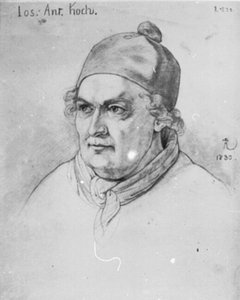
Joseph Anton Koch
1768 - 1839 , Austria
Quick Facts
- Artistic Movement Or Style: Neoclassicism & Romanticism
- Artists Or Movements Influenced By This Artist: ['Romantic painting']
- Artists Who Influenced This Artist: ['Asmus Jacob Carstens']
- Date Of Birth: 1768
- Date Of Death: 1839
- Full Name: Joseph Anton Koch
- Nationality: Austrian
- Notable Artworks:
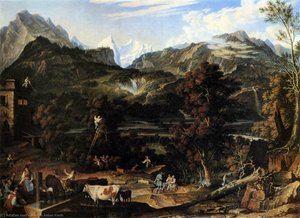
- The Upland near Bern
- Landscape with Abraham and the Three Angels in the Valley of Mambre
- Heroic Landscape with Rainbow
- Place Of Birth: Elbigenalp, Austria
Related Articles

Beyond the Horizon: 10 Landscape Masterpieces for Your Home Decor
Journey through 10 breathtaking landscape paintings by Monet, Van Gogh & more! Explore iconic artworks, artistic techniques & find inspiration for your home decor. Museum-quality reproductions at ArtsDot.com. Discover all masterpieces on ArtsDot.com

Romantic Landscapes: 10 Masterpieces for Your Home | ArtsDot
Journey through 10 Romantic landscape masterpieces by Friedrich, Turner & Cole. Explore emotional art, sublime nature scenes & iconic 19th-century paintings. Find museum-quality reproductions for your home at ArtsDot.com – discover the full collection online!

Evocations of Place: A Historical Journey Through Landscape Art
Explore the rich history of landscape art with ArtsDot. Discover renowned artists, movements like Impressionism & Romanticism, and expert guidance for collecting timeless pieces. Find your perfect serene escape today!

John Constable's Masterpieces: Explore 25 Iconic Landscapes for Your Home
Journey through John Constable's 25 most celebrated landscapes. Explore Romanticism, Dedham Vale & his masterful use of light in iconic paintings like 'Hay Wain'. Find museum-quality art reproductions and elevate your home decor on ArtsDot.com.

Evocations of Place: A Historical Journey Through Landscape Art
Explore the rich history of landscape art with ArtsDot. Discover renowned artists, movements like Impressionism & tonalism, and expert guidance for collecting timeless pieces. Find your perfect serene escape today!