 Preview
 Send
Send Share
Share
 Details

 Download
 Similars
 X-Ray
X-Ray Diaporama
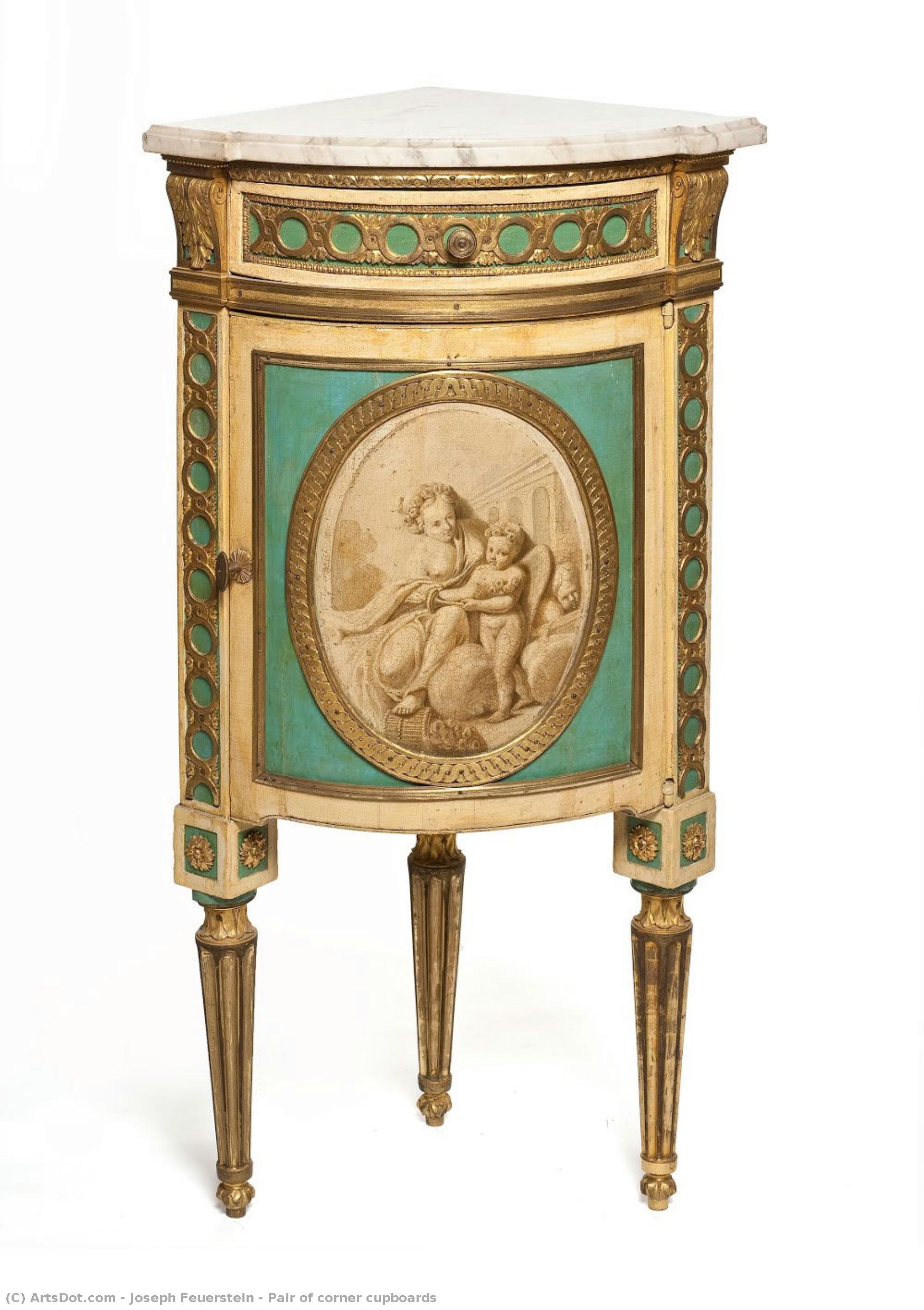
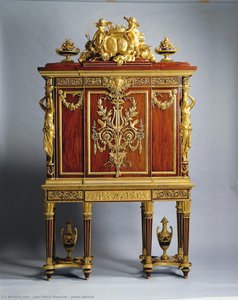
Pair of corner cupboards


 Read More
Hand Made Oil Reproduction
Hand-painted oil on canvas in your size and frame, made to order by our artists. ( Buy Print Buy Image)




































Pick from our preset sizes that match the artwork's original proportions.

You may enter your own dimensions to fit a specific frame or space. If your selected size does not match the original image's proportions, we will either crop the artwork or extend the painting with additional hand-painted elements. A digital mockup will be sent for your approval before production begins.
Please note that the on-screen preview does not reflect the actual cropping or extension. Only the mockup will accurately show the final composition.
While custom sizes are available, we recommend selecting a dimension from the predefined list to preserve the original proportions.
After order, ArtsDot.com team will email client for instructions and provide a mockup preview
Worldwide Delivery () in 3/4 weeks instead of standard 5 weeks. (25 August). No compromise on quality.

Free Worldwide Express Shipping

High-Quality Linen Canvas

Full Shipping Insurance

Customs Tax Refund Guarantee

True Color Matching Guarantee

60-Day Return Policy (Defects Only)

100% Money-Back Guarantee

Bulk Discount Offer
 Glass option is only available in size under 110 CM

Pair of corner cupboards
Reproduction Medium
Reproduction Size
-


Total Price
$ 263
Related Artworks

Artist Biography
The Refined World of Joseph Feuerstein: A Parisian Ébéniste
Joseph Feuerstein, a name perhaps less celebrated than some of his contemporaries, nevertheless occupies a significant place in the history of French furniture making during the late 18th century. Born in Bregenz, Austria, in 1733, Feuerstein’s journey led him to Paris, where he established himself as a highly skilled *ébéniste*, crafting exquisite pieces that embodied the elegance and refinement of the Louis XVI period. While biographical details remain somewhat sparse, the quality and distinctive character of his work speak volumes about his dedication to artistry and mastery of technique. He passed his master’s examination on April 29, 1767, a crucial step in establishing his independent workshop and solidifying his position within the Parisian *corporation* of furniture makers. Feuerstein operated from the rue du Faubourg Saint-Antoine, a bustling center for artisans and a hub of innovation in decorative arts.A Master of Louis XVI Style
Feuerstein’s reputation rests primarily on his production of commodes – chests of drawers that were not merely functional objects but statements of wealth, taste, and social standing. He became particularly known for his beautiful *Louis XVI period commode*, typically crafted in the late 1780s and early 1790s. These pieces are characterized by their graceful lines, delicate ornamentation, and meticulous attention to detail. Feuerstein frequently employed a restrained yet sophisticated aesthetic, favoring symmetrical designs and incorporating luxurious materials such as exotic woods, gilded bronze mounts, and marble tops. His work often features subtle floral marquetry or finely carved details that add depth and visual interest without overwhelming the overall form. The commodes were not created in isolation; Feuerstein collaborated with other skilled artisans – *bronziers* (gilders) and *marqueteurs* (inlayers) – to achieve the highest standards of quality and artistry.Influences and Artistic Development
The artistic climate of Paris during Feuerstein’s active years profoundly shaped his style. The transition from the Rococo exuberance of the mid-18th century towards the more neoclassical forms of Louis XVI was underway, and Feuerstein adeptly navigated this shift. While retaining a certain lightness and elegance reminiscent of Rococo, his work increasingly embraced the symmetry, restraint, and classical motifs favored by the new aesthetic. The influence of prominent *ébénistes* such as Jean-Henri Riesener is discernible in Feuerstein’s commodes, particularly in their refined proportions and use of bronze ornamentation. However, Feuerstein developed a distinctive voice within this stylistic framework, characterized by a subtle sophistication and an emphasis on harmonious balance. He wasn't simply copying trends; he was interpreting them through his own artistic sensibility.Legacy and Historical Significance
Although not as prolific as some of the most famous cabinetmakers of his time, Joseph Feuerstein’s contribution to the world of 18th-century furniture is nonetheless significant. His commodes represent the pinnacle of Parisian craftsmanship during the Louis XVI period, embodying the elegance, refinement, and technical skill that defined this era. The fact that examples of his work are still highly sought after by collectors and museums today testifies to their enduring beauty and artistic merit. Feuerstein’s pieces offer a glimpse into the world of the French aristocracy on the eve of the Revolution – a world characterized by luxury, taste, and an appreciation for finely crafted objects. His legacy lies not only in the exquisite commodes he created but also in his contribution to the broader tradition of French *ébénisterie*, demonstrating the enduring power of artistry and craftsmanship. His work stands as a testament to the skill and dedication of the artisans who shaped the aesthetic landscape of 18th-century France. The commodes, stamped with his name, serve as tangible links to a bygone era, offering a fascinating insight into the lives and tastes of those who commissioned them.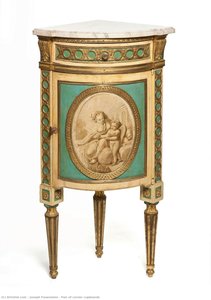
joseph feuerstein
1733 - 1809 , Austria
Quick Facts
- Artistic Movement Or Style: Louis XVI furniture
- Date Of Birth: 1733
- Date Of Death: 1809
- Full Name: Joseph Feuerstein
- Nationality: Austrian
- Notable Artworks: ['Louis XVI Commode']
- Place Of Birth: Bregenz, Austria