 Preview
 Send
Send Share
Share
 Details

 Download
 Similars
 X-Ray
X-Ray Diaporama
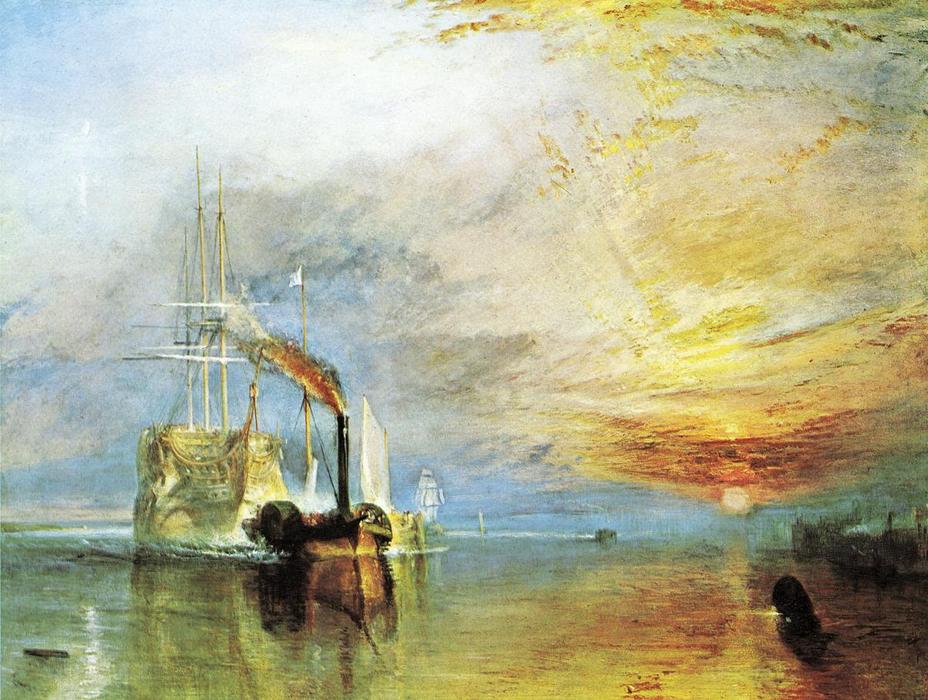
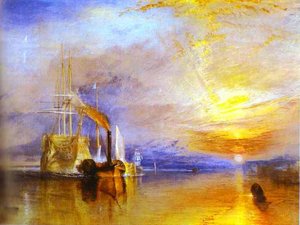
The Fighting Temeraire'', Tugged to her Last Berth To Be Broken Up, 1838''
 Oil On Canvas
- WallArt
- Romanticism
 1839
1839 91.0 x 122.0 cm
 National Gallery
 Read More
Hand Made Oil Reproduction
Hand-painted oil on canvas in your size and frame, made to order by our artists. ( Buy Print Buy Image)




P118B $10

P118H $10

P118W $10

P438Z $10

P508JH $12

P508YH $12

P805H $10

P805Z $10

P919BZ $10

P919G $10

P919XJ $10

P959ZH $10

P968JZ $12

W106C $8

W218G $10

W218JH $8

W218Y $10

W307PJ $10

W316G $10

W316PJ $8

W316Y $10

W398PJ $8

W4111J $10

W500HY $15

W500JH $15

W692G $12

W849H $8

W940BG $15

W953PJ $8




Pick from our preset sizes that match the artwork's original proportions.

You may enter your own dimensions to fit a specific frame or space. If your selected size does not match the original image's proportions, we will either crop the artwork or extend the painting with additional hand-painted elements. A digital mockup will be sent for your approval before production begins.
Please note that the on-screen preview does not reflect the actual cropping or extension. Only the mockup will accurately show the final composition.
While custom sizes are available, we recommend selecting a dimension from the predefined list to preserve the original proportions.
After order, ArtsDot.com team will email client for instructions and provide a mockup preview
Worldwide Delivery () in 3/4 weeks instead of standard 5 weeks. (30 August). No compromise on quality.

Free Worldwide Express Shipping

High-Quality Linen Canvas

Full Shipping Insurance

Customs Tax Refund Guarantee

True Color Matching Guarantee

60-Day Return Policy (Defects Only)

100% Money-Back Guarantee

Bulk Discount Offer
 Glass option is only available in size under 110 CM

The Fighting Temeraire'', Tugged to her Last Berth To Be Broken Up, 1838''
Reproduction Medium
Reproduction Size
-


Total Price
$ 263
A Requiem in Light: Turner’s “The Fighting Temeraire”
William Turner's "The Fighting Temeraire, Tugged to Her Last Berth To Be Broken Up, 1838" isn’t merely a depiction of a ship being dismantled; it’s a profound meditation on the fading glory of an empire and the poignant beauty of decay. Painted in 1839, this iconic work transcends its subject matter to become a powerful symbol of transition – a visual elegy for a bygone era. The scene unfolds along the Thames River at sunset, a dramatic interplay of fiery orange, bruised purple, and smoky grey that immediately draws the viewer into Turner’s intensely emotional landscape. The sheer scale of the painting, measuring 91 x 122 cm, amplifies its impact, enveloping us in the atmosphere of twilight and loss.
The Ship as Metaphor: Trafalgar's Legacy
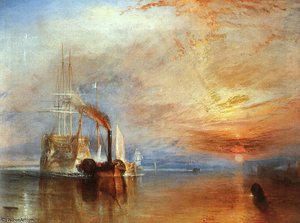
At the heart of the composition is the HMS Temeraire, a veteran of the Battle of Trafalgar – a pivotal moment in British naval history. This 98-gun ship, once a symbol of unwavering strength and victory, now lies helpless, being towed by the humble but increasingly powerful steam tug *Richmond*. Turner deliberately contrasts the majestic silhouette of the Temeraire with the utilitarian form of the tug, representing the shift from sail to steam – a technological revolution that signaled the decline of traditional naval power. The ship’s proud lines are softened by the haze and reflected light, suggesting not just physical deterioration but also the erosion of its former glory. The inclusion of the distant, barely visible masts of other ships hints at a vast fleet now diminished, mirroring the broader geopolitical changes occurring in Europe.
Romanticism’s Dance of Light and Color
Turner was a master of capturing atmospheric effects, and “The Fighting Temeraire” is arguably his most celebrated demonstration of this skill. He employed a loose, expressive brushstroke – almost abandoning traditional representation in favor of conveying feeling – to create an intensely luminous quality. The sunset isn’t rendered with photographic accuracy; instead, it's a swirling vortex of color, imbued with emotion and memory. Notice how Turner uses the reflected light on the water to amplify the drama, creating a shimmering pathway that guides our eye towards the ship. This technique, characteristic of Romanticism, prioritizes subjective experience over objective reality, inviting the viewer to feel the weight of history and the melancholy beauty of the scene.
Symbolism and Emotional Resonance
Beyond its technical brilliance, “The Fighting Temeraire” is rich in symbolic meaning. The act of towing the ship to be broken up represents not just the end of a career but also the dismantling of an entire system – the established order of the British Empire. The smoke rising from the tug’s furnace suggests both progress and destruction, hinting at the complex relationship between innovation and loss. The lone figure on the deck of the Temeraire, often interpreted as Turner himself, gazing towards the horizon, embodies a sense of quiet contemplation and acceptance in the face of inevitable change. This painting resonates deeply because it taps into universal themes of mortality, memory, and the bittersweet beauty of endings.
ArtsDot offers meticulously crafted oil painting reproductions of “The Fighting Temeraire,” allowing you to bring this masterpiece into your home or office. Each reproduction is created by skilled artists who have painstakingly recreated Turner’s unique style and luminous palette, ensuring that you experience the full emotional impact of this iconic work. A size of 91 x 122 cm captures the grandeur of the original, while the rich colors and textured surface faithfully reproduce Turner's distinctive brushwork. Own a piece of art history – own a piece of Turner’s soul.
Related Artworks

Artist Biography
The Luminary of Light: A Journey Through the Life and Art of J.M.W. Turner
Joseph Mallord William Turner, a name synonymous with the sublime power of landscape and the evocative dance of light, remains one of Britain’s most celebrated and influential artists. Born in Covent Garden, London, in 1775, Turner's journey from a barber’s son to a master painter was fueled by an innate talent, relentless dedication, and a visionary spirit that would forever alter the course of art history. From his earliest days sketching architectural details to his later, almost abstract explorations of atmosphere and color, Turner consistently pushed the boundaries of artistic expression.
His formal training began at the Royal Academy Schools in 1789, where he quickly distinguished himself as a promising student. However, Turner was not content with merely replicating established styles; he sought to capture the very essence of nature – its raw power, its fleeting beauty, and its inherent drama. Early works reveal a meticulous attention to topographical detail, reflecting the prevailing artistic tastes of the time. Yet, even in these early pieces, hints of his future direction are visible—a sensitivity to light and shadow, a willingness to experiment with color, and an emerging fascination with the sublime.
The Evolution of a Visionary: From Topography to Transcendence
Turner’s artistic development was marked by constant experimentation and a growing desire to move beyond mere representation. Influenced by masters like Claude Lorrain and J.M.W. Cozens, he began to infuse his landscapes with a romantic sensibility, emphasizing emotional response over precise depiction. His travels throughout Europe, beginning in 1802, proved pivotal, exposing him to diverse landscapes and inspiring new approaches to composition and color. He wasn’t simply recording what he saw; he was interpreting it through the lens of his own unique vision.
The early 19th century witnessed a shift in Turner's style towards greater expressiveness. His seascapes, in particular, became increasingly dramatic, capturing the fury and majesty of the ocean with unprecedented intensity. Paintings like “The Fighting Temeraire Tugged to Her Last Berth to Be Broken Up” (1839) are not merely depictions of a ship being towed to its final resting place; they are poignant meditations on mortality, loss, and the relentless march of progress. The use of light in this work is particularly striking—a golden sunset casting a melancholic glow over the scene, symbolizing the passing of an era.
A Master of Atmosphere: Light, Color, and the Sublime
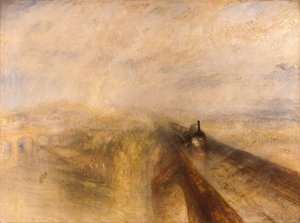
Turner’s later works are characterized by an almost radical departure from traditional artistic conventions. He increasingly prioritized atmosphere and color over form and detail, creating paintings that seem to dissolve into pure light and energy. Works like “Rain, Steam and Speed – The Great Western Railway” (1844) exemplify this approach—a swirling vortex of color and motion that captures the dynamism of the industrial age. Critics were often baffled by these later works, but their influence on subsequent generations of artists would prove profound.
He was a pioneer in exploring the effects of light and atmosphere, anticipating the Impressionists’ focus on capturing fleeting moments and subjective perceptions. His use of color was equally innovative—bold, vibrant hues applied with loose brushstrokes to create a sense of movement and energy. Turner wasn't simply painting landscapes; he was attempting to convey the very *feeling* of being in nature – the awe, the wonder, the terror.
Legacy and Influence: The Painter Who Changed Painting
J.M.W. Turner’s legacy extends far beyond his prolific output—over 550 oil paintings, 2,000 watercolors, and 30,000 works on paper. He left an indelible mark on the history of art, influencing countless artists who followed in his footsteps. The Impressionists, particularly Claude Monet, were deeply inspired by Turner’s exploration of light and color, while abstract expressionists like Mark Rothko acknowledged their debt to his atmospheric compositions.
Turner's willingness to challenge conventions, his relentless experimentation, and his unwavering commitment to artistic vision continue to resonate with artists and art lovers today. He remains a pivotal figure in the development of modern art, a true visionary who transformed the way we see and experience the world around us. His works are housed in major museums worldwide, including the Tate Britain in London, where visitors can immerse themselves in the luminous beauty and profound emotional depth of his extraordinary paintings.
Notable Works & Collections
- The Morning After the Deluge (1843): A powerful depiction of nature’s forces, housed in the Tate Collection, London.
- Chichester Canal (1828): Commissioned by George Wyndham, currently at the Tate Collection.
- Ruins of Tintern Abbey: A stunning watercolor showcasing his mastery of light and atmosphere, found in the Calouste Gulbenkian Museum (Lisboa, Portugal).
- The Fighting Temeraire Tugged to Her Last Berth to Be Broken Up (1839): A poignant masterpiece exploring themes of loss and change.
- Rain, Steam and Speed – The Great Western Railway (1844): Capturing the dynamism of the industrial age with swirling color and motion.
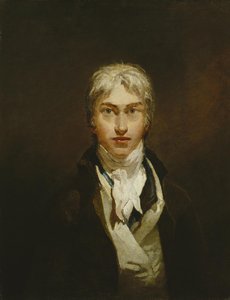
Joseph Mallord William Turner
1775 - 1851 , United Kingdom
Quick Facts
- Artistic Movement Or Style: Romanticism
- Artists Or Movements Influenced By This Artist:
- Claude Monet
- Mark Rothko
- Impressionism
- Date Of Birth: April 23, 1775
- Date Of Death: December 19, 1851
- Full Name: Joseph Mallord William Turner
- Nationality: British
- Notable Artworks:
- The Morning After the Deluge
- Chichester Canal
- Ruins of Tintern Abbey
- Place Of Birth: London, United Kingdom
Related Articles

The Enduring Legacy of Hand-Painted Oil Paintings: Aesthetic Value, Longevity & Emotional Resonance
Explore the enduring legacy of hand-painted oil paintings. Discover the aesthetic value, material longevity & emotional resonance that sets original art—and expertly crafted reproductions—apart. Invest in timeless beauty.

From Initial Sketch to Enduring Legacy: A Comprehensive Exploration of the Oil Painting Reproduction Process
Discover the art of museum-quality oil painting reproduction. Explore our expert process, skilled artists & authentic replicas. Elevate your home with timeless beauty – handcrafted and customized to your vision.
Reproducing Artistry: A Guide to Oil, Canvas & Paper Reproduction Mediums
Explore the world of art reproduction! Learn about oil, canvas & paper options with our expert guide. Discover museum-quality reproductions for your home or collection.
Romanticism's Greatest Artworks: 10 Masterpieces for Your Home |
Journey through Romanticism's soul with 10 iconic artworks by Delacroix, Goya & Turner. Explore emotional landscapes and historical drama. Find museum-quality art reproductions to elevate your home at – Discover all masterpieces online!
J.M.W. Turner: Light, Atmosphere & the Romantic Sublime
Explore the life & art of J.M.W. Turner, a master of Romantic landscape painting. Discover his innovative techniques, key works, and lasting influence on Impressionism. Find high-quality reproductions at ArtsDot.