 Preview
 Send
Send Share
Share
 Details

 Download
 Similars
 X-Ray
X-Ray Diaporama
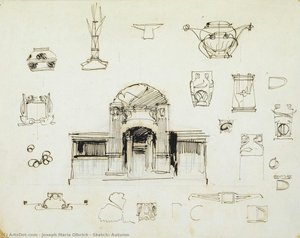
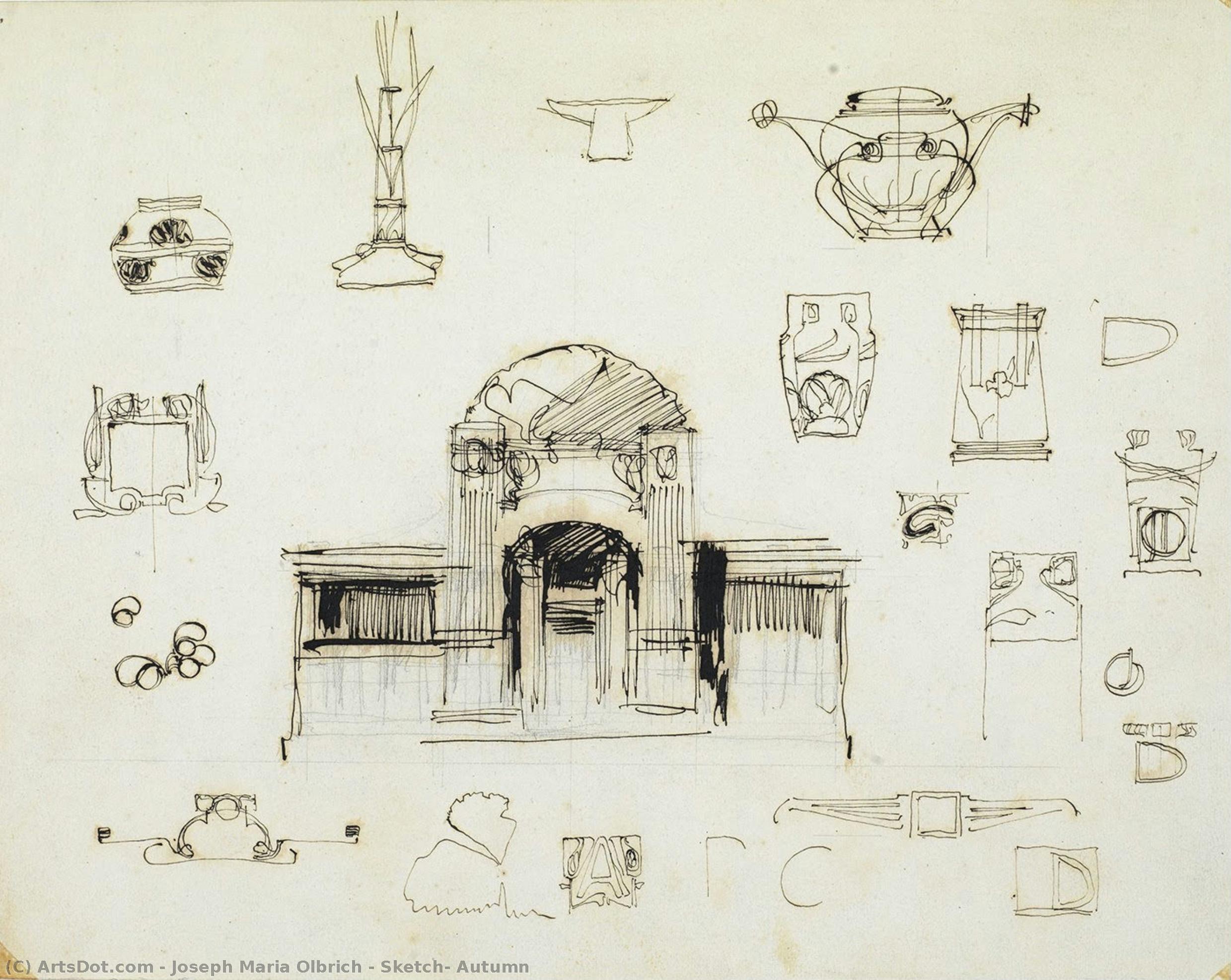
Sketch, Autumn


 Read More
Hand Made Oil Reproduction
Hand-painted oil on canvas in your size and frame, made to order by our artists. ( Buy Print Buy Image)




P118B $10

P118H $10

P118W $10

P438Z $10

P508JH $12

P508YH $12

P805H $10

P805Z $10

P919BZ $10

P919G $10

P919XJ $10

P959ZH $10

P968JZ $12

W106C $8

W218G $10

W218JH $8

W218Y $10

W307PJ $10

W316G $10

W316PJ $8

W316Y $10

W398PJ $8

W4111J $10

W500HY $15

W500JH $15

W692G $12

W849H $8

W940BG $15

W953PJ $8




Pick from our preset sizes that match the artwork's original proportions.

You may enter your own dimensions to fit a specific frame or space. If your selected size does not match the original image's proportions, we will either crop the artwork or extend the painting with additional hand-painted elements. A digital mockup will be sent for your approval before production begins.
Please note that the on-screen preview does not reflect the actual cropping or extension. Only the mockup will accurately show the final composition.
While custom sizes are available, we recommend selecting a dimension from the predefined list to preserve the original proportions.
After order, ArtsDot.com team will email client for instructions and provide a mockup preview
Worldwide Delivery () in 3/4 weeks instead of standard 5 weeks. (17 August). No compromise on quality.

Free Worldwide Express Shipping

High-Quality Linen Canvas

Full Shipping Insurance

Customs Tax Refund Guarantee

True Color Matching Guarantee

60-Day Return Policy (Defects Only)

100% Money-Back Guarantee

Bulk Discount Offer
 Glass option is only available in size under 110 CM

Sketch, Autumn
Reproduction Medium
Reproduction Size
-


Total Price
$ 263
Artwork Description
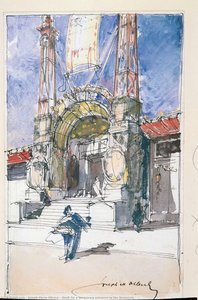
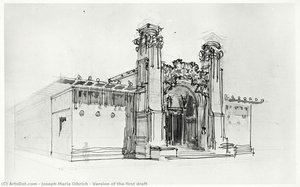
Sketch, Autumn - A Pioneer’s Vision of Viennese Modernism
Joseph Maria Olbrich (1867-1908), Austrian architect and one of the Vienna Secession founders, stands as a pivotal figure in reshaping artistic sensibilities at the turn of the century. His legacy extends far beyond mere building design; it embodies a radical reimagining of architectural aesthetics—a bold assertion that would solidify his place within the burgeoning Art Nouveau movement and propel him to international acclaim.
Born in Troppau (modern-day Opava, Czech Republic), Olbrich’s formative years were steeped in the practical realities of his father's construction business. This early exposure instilled a profound understanding of building processes—a foundation he meticulously honed through formal education at Vienna School of Arts and Crafts and subsequently at the Academy of Fine Arts Vienna under Carl von Hasenauer. These academic pursuits provided him with mastery over traditional architectural principles, yet it was his travels through Italy and North Africa, facilitated by the prestigious Prix de Rome, that truly broadened his artistic horizons.
The genesis of Olbrich’s groundbreaking approach can be traced back to Otto Wagner—a mentor who championed functionalism and decisively rejected stylistic imitation. Wagner's influence profoundly shaped Olbrich’s architectural philosophy, encouraging him to prioritize form following function while simultaneously embracing innovation. This collaborative spirit culminated in the iconic Secession Building, a testament to their shared vision of artistic progress.
The Secession Building: A Symbol of Artistic Liberation
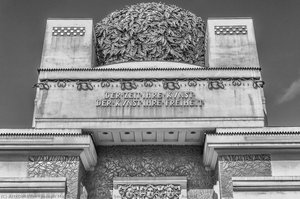
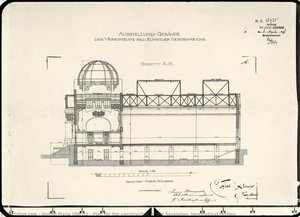
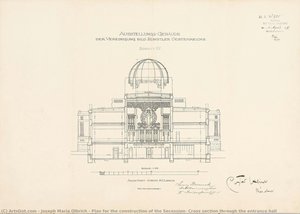
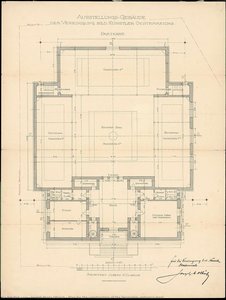
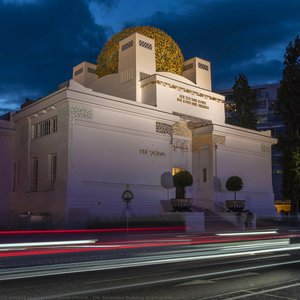
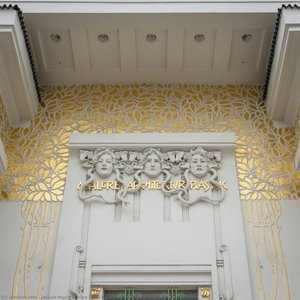
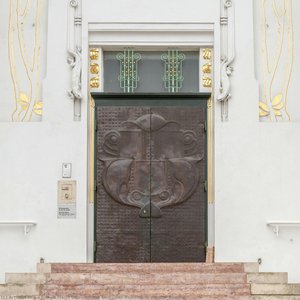
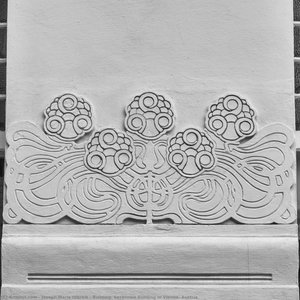
Completed in 1897–98, the Secession Building represents Olbrich’s most enduring achievement—a monumental structure that encapsulates the core tenets of the Vienna Secession. More than just a building; it served as a manifesto for artistic liberation, rejecting academic conventions and embracing geometric regularity alongside expansive floral ornamentation.
The building's façade is dominated by a soaring dome adorned with gilded laurel leaves—a deliberate reference to classical symbolism signifying victory and honor. This emblem embodies the Secession’s aspiration for transcendence—a desire to elevate art beyond mere decorative embellishment. Inside, Olbrich skillfully employed Beethoven Frieze, inspired by Ludwig van Beethoven's musical compositions, reflecting the Secession’s commitment to exploring profound themes.
Olbrich’s architectural prowess extended beyond monumental structures; he meticulously crafted residential spaces and exhibition halls—each imbued with a distinctive aesthetic sensibility. His Darmstadt Colony Buildings exemplify his ability to integrate historical influences with Art Nouveau principles, demonstrating an unwavering dedication to artistic excellence.
Technique and Style: Graphite Lines Embodied Elegance
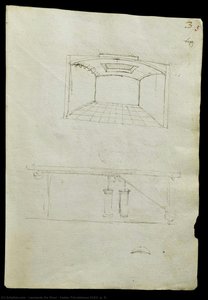
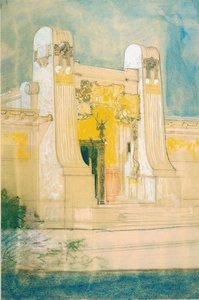
Olbrich’s architectural drawings are characterized by exceptional precision—a hallmark of his meticulous craftsmanship. Employing graphite on paper, he skillfully utilized hatching and cross-hatching techniques to convey depth and texture, capturing the essence of architectural form with remarkable subtlety.
The resulting sketches possess a captivating quality—reflecting Olbrich’s unwavering commitment to exploring innovative artistic expressions. His work stands as an inspiration for contemporary architects seeking to infuse their designs with elegance and sophistication. The Secession Building itself remains a beacon of Viennese Modernism, cementing Olbrich's place in architectural history.
A Legacy Beyond Brick and Stone
Joseph Maria Olbrich’s contribution to the artistic landscape transcends mere construction—it represents a transformative shift toward a new aesthetic language. His unwavering belief in functional beauty continues to resonate with artists and designers today, reminding us that true innovation stems from embracing both tradition and experimentation.
Related Artworks
Artist Biography
A Pioneer of the Vienna Secession
Joseph Maria Olbrich, born in Troppau (modern-day Opava, Czech Republic) on December 22, 1867, stands as a pivotal figure in the transition from nineteenth-century historicism to the dawn of modern architecture. His life, though tragically cut short at the age of forty, was one dedicated to forging a new aesthetic language – an artistic vision that would become synonymous with the Vienna Secession and the broader Art Nouveau movement. Olbrich’s early exposure to his father's construction business instilled in him a practical understanding of building processes, a foundation he later refined through formal education at the Vienna School of Arts and Crafts and subsequently at the Academy of Fine Arts Vienna under Carl von Hasenauer. This academic grounding provided him with a mastery of traditional architectural principles, but it was his travels through Italy and North Africa, enabled by the prestigious Prix de Rome, that truly broadened his artistic horizons, exposing him to diverse influences that would later inform his unique style. A crucial period in his development came during his apprenticeship with Otto Wagner, where he contributed significantly to the ambitious Wiener Stadtbahn project. This experience marked a turning point, as Olbrich began to move away from the constraints of historicism and embrace the emerging Jugendstil aesthetic – a German variant of Art Nouveau characterized by organic forms and flowing lines.The Secession Building: A Manifestation of Artistic Ideals
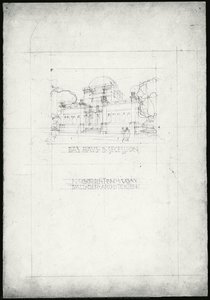
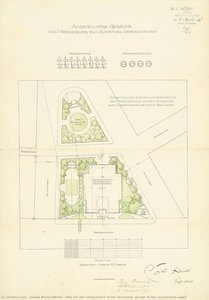
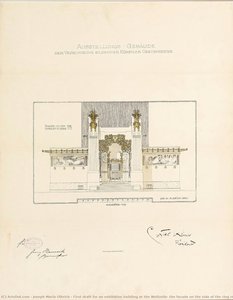
Olbrich’s most enduring legacy is undoubtedly the Secession Building in Vienna, completed in 1898. This iconic structure wasn't merely a building; it was a manifesto, a physical embodiment of the ideals championed by the Vienna Secession – a group of artists who rebelled against the conservative artistic establishment. The building’s most striking feature is its distinctive gilded dome, affectionately known as the “golden cabbage,” composed of laurel leaves crafted from hammered gold leaf. This audacious ornamentation immediately signaled a departure from traditional architectural norms and proclaimed the Secession's commitment to innovation. Beyond its exterior grandeur, the interior space was equally revolutionary. Olbrich masterfully created adaptable exhibition spaces designed to showcase the diverse works of Secession artists – painters, sculptors, designers – in an environment that prioritized both aesthetics and functionality. The building served not only as a headquarters for the movement but also as a vibrant venue for groundbreaking exhibitions that challenged conventional artistic boundaries. His earlier “First Draft for an Exhibition Building at the Wollzeile” demonstrates his ability to integrate practical considerations with artistic vision, foreshadowing the success of the Secession Building itself.Darmstadt and Beyond: Expanding Artistic Horizons
The recognition Olbrich garnered from the Secession Building led to a significant commission in Darmstadt, Germany. Ernst Ludwig, Grand Duke of Hesse, invited him to contribute to the Darmstadt Artists' Colony, an ambitious project aimed at fostering collaboration between artists and craftsmen. Here, Olbrich designed numerous residences and exhibition buildings, each reflecting his signature blend of historical influences and Art Nouveau ornamentation. He gained Hessian citizenship in 1900 and was appointed a professor by the Grand Duke, solidifying his position as a leading figure in the European art scene. The Darmstadt projects allowed him to explore new facets of design, extending beyond architecture into areas such as furniture, pottery, bookbinding, and even musical instruments. This holistic approach to artistic creation underscored his belief in the unity of the arts – a core tenet of the Art Nouveau philosophy. His courtyard and interiors for the 1904 St. Louis World’s Fair further showcased this versatility, earning him the highest prize at the exhibition and international acclaim.Influences, Legacy, and Lasting Significance
Olbrich's artistic development was profoundly shaped by several key influences. Otto Wagner instilled in him a commitment to functionalism and a rejection of excessive ornamentation, while his collaboration with Gustav Klimt and other members of the Vienna Secession fostered a shared aesthetic language characterized by geometric forms, decorative elements, and a sense of playful experimentation. However, Olbrich didn’t entirely abandon historical precedents; he skillfully reinterpreted them through an Art Nouveau lens, drawing inspiration from various periods while simultaneously forging a distinctly modern style. His untimely death on August 8, 1908, in Düsseldorf, due to leukemia, robbed the art world of a visionary talent. Nevertheless, his contributions were pivotal in establishing the Vienna Secession as a major force in European art and architecture. His emphasis on functional simplicity, innovative design, and the integration of arts and crafts continues to inspire architects and designers today. The Österreichische Galerie Belvedere preserves works by Olbrich, ensuring that his legacy endures for future generations. He is rightfully recognized as an early pioneer of modern architecture, a bridge between the ornate historicism of the nineteenth century and the streamlined aesthetic of the modernist movement. His work remains a testament to the power of artistic vision and the enduring appeal of beauty born from innovation.
Joseph Maria Olbrich
1867 - 1908 , Czech Republic
Quick Facts
- Artistic Movement Or Style: Vienna Secession, Art Nouveau
- Artists Or Movements Influenced By This Artist: ['Modern architecture']
- Artists Who Influenced This Artist: ['Otto Wagner']
- Date Of Birth: December 22, 1867
- Date Of Death: August 8, 1908
- Full Name: Joseph Maria Olbrich
- Nationality: Austrian
- Notable Artworks:
- Secession Building
- First Draft Exhibition House
- Darmstadt Colony Buildings
- Place Of Birth: Tropea, Czech Republic
Related Articles
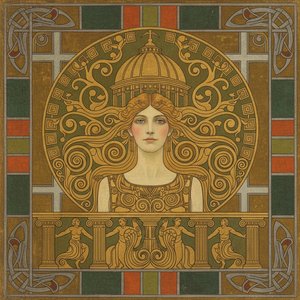
The Vienna Secession: A Rebellion of Form & Spirit in Fin-de-Siècle Art
Discover the revolutionary Vienna Secession art movement! Explore Klimt, Olbrich & more. Learn about its history, characteristics & lasting influence on modern art. High-quality reproductions available.

Giclée Prints: Archival Quality & Aesthetic Nuances for the Discerning Collector
Explore the world of giclée prints with ArtsDot. Learn about archival quality, aesthetic nuances & investment potential. Expert guidance for discerning art collectors seeking museum-quality reproductions and lasting value.

Echoes of Time: Exploring the Enduring Appeal & Historical Context of Vintage Art Prints
Explore the captivating world of vintage art prints! Discover their history, collecting tips & enduring appeal. Expert insights on chromolithography and building a legacy collection with ArtsDot.

The Enduring Legacy of Fine Art Prints: Technique, History & Aesthetic Impact
Explore the rich history & techniques of fine art prints. Discover investment potential, assess authenticity, and learn how to preserve your collection with expert guidance. Trusted insights for discerning collectors.
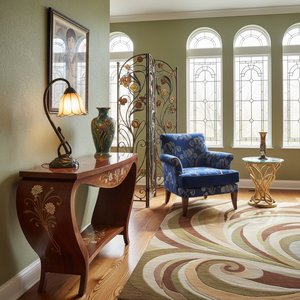
Art Nouveau's Golden Age: 10 Masterpieces for Your Home |
Journey into Art Nouveau's golden age! Explore 10 masterpieces by Klimt, Mucha & more. Discover captivating stories behind iconic paintings, floral motifs & flowing lines. Find museum-quality art reproductions for your home at .