 Preview
 Send
Send Share
Share
 Details

 Download
 Similars
 X-Ray
X-Ray Diaporama
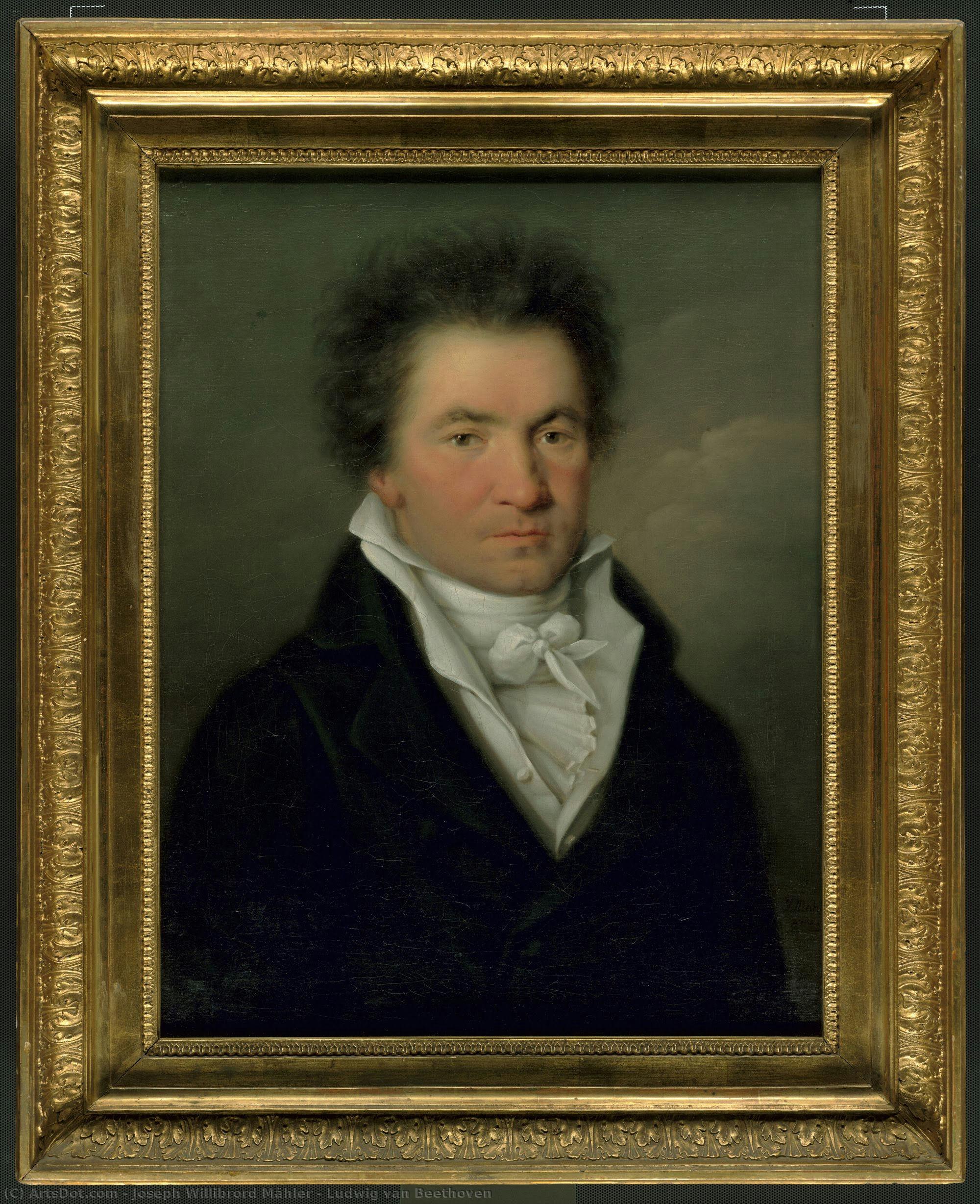
Ludwig van Beethoven
 Oil On Canvas
- WallArt
- Romantic Portraiture
 1815
1815- 19th Century
 62.0 x 47.0 cm
 Beethoven-Haus Bonn
 Read More
Hand Made Oil Reproduction
Hand-painted oil on canvas in your size and frame, made to order by our artists. ( Buy Print Buy Image)




P118B $10

P118H $10

P118W $10

P438Z $10

P508JH $12

P508YH $12

P805H $10

P805Z $10

P919BZ $10

P919G $10

P919XJ $10

P959ZH $10

P968JZ $12

W106C $8

W218G $10

W218JH $8

W218Y $10

W307PJ $10

W316G $10

W316PJ $8

W316Y $10

W398PJ $8

W4111J $10

W500HY $15

W500JH $15

W692G $12

W849H $8

W940BG $15

W953PJ $8




Pick from our preset sizes that match the artwork's original proportions.

You may enter your own dimensions to fit a specific frame or space. If your selected size does not match the original image's proportions, we will either crop the artwork or extend the painting with additional hand-painted elements. A digital mockup will be sent for your approval before production begins.
Please note that the on-screen preview does not reflect the actual cropping or extension. Only the mockup will accurately show the final composition.
While custom sizes are available, we recommend selecting a dimension from the predefined list to preserve the original proportions.
After order, ArtsDot.com team will email client for instructions and provide a mockup preview
Worldwide Delivery () in 3/4 weeks instead of standard 5 weeks. (17 August). No compromise on quality.

Free Worldwide Express Shipping

High-Quality Linen Canvas

Full Shipping Insurance

Customs Tax Refund Guarantee

True Color Matching Guarantee

60-Day Return Policy (Defects Only)

100% Money-Back Guarantee

Bulk Discount Offer
 Glass option is only available in size under 110 CM

Ludwig van Beethoven
Reproduction Medium
Reproduction Size
-


Total Price
$ 263
Artwork Description
A Portrait of Earnest Intensity: Joseph Mähler's Beethoven
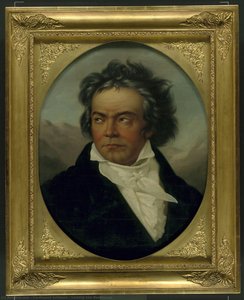
Joseph Willibrord Mähler’s 1815 portrait of Ludwig van Beethoven is more than simply a likeness; it’s a profound distillation of the composer’s inner life, rendered with a remarkable sensitivity to both his physical presence and the palpable weight of his genius. Measuring a substantial 62 x 47 cm, this oil-on-canvas work, now residing at the Beethoven-Haus in Bonn, Germany, offers an intimate glimpse into the world of one of music’s most iconic figures during a pivotal period of his life.
- The Subject: The painting depicts Beethoven as he appeared around 1815, a time marked by increasing deafness and a growing sense of isolation. His formal attire – a black suit accented by a crisp white shirt and tie – speaks to the societal expectations of the era, yet his bearing is one of quiet intensity.
- Mähler’s Technique: Mähler was a skilled portraitist influenced by the Neoclassical style, evident in the carefully constructed composition and the precise rendering of Beethoven's features. The artist masterfully employs light and shadow to sculpt Beethoven’s face, emphasizing his furrowed brow and the unwavering gaze directed squarely at the viewer. This direct engagement creates an immediate connection, inviting us to contemplate the complexities within.
A Window into a Troubled Genius
The portrait emerges from a fascinating historical context. 1815 was a year of immense upheaval in Europe, following the defeat of Napoleon and the subsequent reshaping of political boundaries. Beethoven, deeply affected by these events and increasingly reliant on his music as a means of expression, embodies the spirit of this turbulent time. The artist’s choice to capture Beethoven's direct gaze is particularly significant; it suggests a man grappling with profound questions about humanity, art, and his own place in the world.
- Symbolism of Appearance: While outwardly conforming to societal norms through his attire, Beethoven’s appearance subtly hints at his internal struggles. The severity of his expression, coupled with the meticulously rendered beard and mustache – hallmarks of his later years – speaks volumes about the challenges he faced.
The Legacy of Rembrandt Peale and Neoclassical Portraiture
It's crucial to acknowledge the influence of Rembrandt Peale, a contemporary artist whose career profoundly shaped the landscape of American portraiture. Peale’s emphasis on capturing not just physical likeness but also character and dignity resonated with Mähler, contributing to the overall impact of this portrait. The Neoclassical style, championed by artists like Jacques-Louis David, favored clarity, order, and a return to classical ideals – principles evident in Mähler's meticulous brushwork and balanced composition.
- Historical Context: Mähler’s work reflects the broader artistic trends of the early 19th century, where portraiture served as both a commemoration of prominent figures and a reflection of prevailing social and intellectual currents.
Emotional Resonance and Artistic Value
This reproduction offers more than just an image; it provides a tangible connection to one of history’s most celebrated composers. The painting's enduring appeal lies in its ability to capture the essence of Beethoven – his brilliance, his struggles, and his unwavering dedication to his art. A hand-painted reproduction allows you to bring this powerful portrait into your own space, fostering contemplation and appreciation for a musical giant whose legacy continues to inspire.
Related Artworks

Artist Biography
Rembrandt Peale: A Pioneer of American Portraiture
Rembrandt Peale, born near present-day Richboro, Pennsylvania in 1778 and passing away in 1860, stands as a pivotal figure in the early development of American portrait painting. More than simply a recorder of likenesses, Peale was a dedicated scholar, museum curator, and prolific artist who profoundly shaped the visual landscape of his era. His career spanned nearly six decades, marked by an unwavering commitment to capturing the dignity and character of prominent figures – presidents, statesmen, scientists, and members of Philadelphia’s elite society. Influenced deeply by his father, Charles Willson Peale, a renowned naturalist and artist himself, Rembrandt inherited not only artistic talent but also a passion for observation and documentation that would become hallmarks of his own work.Early Life and Artistic Training
Rembrandt’s early life was steeped in the world of art and science. His father, Charles Willson Peale, fostered an environment where artistic pursuits were valued alongside scientific inquiry. Rembrandt began drawing at the tender age of eight, a testament to his innate talent and his father's dedication to nurturing it. Crucially, he received instruction not just in painting techniques but also in anatomy, botany, and natural history – skills that would later inform his meticulous approach to portraiture. He meticulously studied the human form, striving for an accuracy that went beyond mere representation; he sought to capture the essence of his subjects’ personalities. His early self-portrait at thirteen, a remarkably accomplished piece considering his age, reveals a precocious talent and a desire to emulate the masters – particularly Rembrandt Harmenszoon van Rijn, after whom he was named. The painting itself is striking, with its detailed rendering of clothing and an almost theatrical quality that hints at the dramatic flair he would later bring to his portraits.A Career Defined by Portraits
Peale’s career blossomed in Philadelphia, a vibrant center of commerce and culture during the late 18th and early 19th centuries. He quickly established himself as a sought-after portraitist, catering to a clientele that included prominent figures from across the nation. His subjects ranged from George Washington and Thomas Jefferson – presidents who defined an era – to Charles Willson Peale’s own children, including Rubens, Raphael, and Titian, each immortalized in stunning detail. He also painted notable scientists like Jean-Antoine Houdon, capturing their intellectual gravitas alongside their physical presence. Beyond commissioned portraits, Peale was a prolific artist, producing numerous genre scenes, landscapes, and historical paintings. His work during this period reflects the neoclassical style prevalent at the time, characterized by its emphasis on order, balance, and classical ideals. Notably, he created “Court of Death” (1820), a dramatic tableau depicting figures representing various professions and social classes meeting their fate in the afterlife – a testament to his artistic range and his engagement with broader themes.Museum Curation and Scientific Observation
Perhaps less known is Peale’s significant contribution as a museum curator. In 1810, he established the first public museum in America, initially located in Philadelphia and later moving to New York City. This institution, which would eventually become the American Museum of Natural History, was revolutionary for its time. It housed a vast collection of natural specimens, artifacts, and artworks – a testament to Peale’s dual passions: art and science. His museum served as a laboratory for observation and study, encouraging visitors to engage with the wonders of the natural world. He meticulously documented his findings, employing techniques similar to those used by scientists of the era. This commitment to scientific accuracy profoundly influenced his portraiture; he sought to capture not just outward appearances but also the intellectual qualities of his subjects.Legacy and Historical Significance
Rembrandt Peale’s legacy extends far beyond his individual paintings. He played a crucial role in establishing American portraiture as a respected and enduring art form. His meticulous attention to detail, his commitment to capturing personality, and his innovative approach to museum curation helped to shape the development of both the visual arts and scientific inquiry in America. His portraits offer invaluable insights into the lives and times of prominent figures who shaped the nation’s history. Furthermore, his pioneering work at the American Museum of Natural History laid the foundation for modern natural history museums, demonstrating his profound impact on American culture and intellectual life. He remains a significant figure in the narrative of early American art, bridging the gap between artistic expression and scientific observation.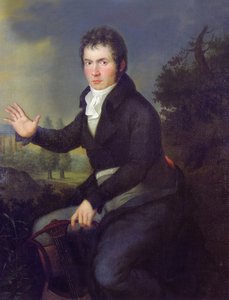
joseph willibrord mähler
1778 - 1860 , Germany
Quick Facts
- Artistic Movement Or Style: Neoclassicism
- Artists Or Movements Influenced By This Artist:
- John Varley
- William Hazlitt
- Artists Who Influenced This Artist:
- Charles Willson Peale
- Rembrandt Harmenszoon van Rijn
- Date Of Birth: Feb 22, 1778
- Date Of Death: Oct 3, 1860
- Full Name: Rembrandt Peale
- Nationality: American
- Notable Artworks:
- Court of Death
- George Washington, Patriae Pater
- Rubens Peale with a Geranium
- Place Of Birth: Near present-day Bucks Co, PA
Related Articles

Oil on Canvas: A Historical & Technical Exploration of a Timeless Artistic Medium
Explore the rich history & enduring techniques of oil painting on canvas. Discover the science behind its longevity, conservation practices, and contemporary relevance. Expert insights for art enthusiasts.

The Enduring Legacy of Oil on Canvas: Technique, History & Aesthetic Impact
Explore the rich history & techniques of oil painting – from Renaissance masters to Impressionism. Discover pigments, layering methods, and why this timeless medium endures. Expert insights for artists & art enthusiasts.

The Enduring Legacy of Oil on Canvas: Technique, History & Contemporary Practice
Explore the rich history & enduring techniques of oil painting on canvas. Discover the science behind its longevity, conservation practices, and contemporary relevance. Expert insights for art enthusiasts.

Giclée Prints: Archival Quality & Aesthetic Nuances for the Discerning Collector
Explore the world of giclée prints with ArtsDot. Learn about archival quality, aesthetic nuances & investment potential. Expert guidance for discerning art collectors seeking museum-quality reproductions and lasting value.
Oil on Canvas Masters: 10 Paintings That Redefined Art History |
Journey through art history with our guide to 10 legendary oil on canvas masterpieces! Explore iconic works by Van Gogh, Monet & Rembrandt. Find museum-quality reproductions and elevate your home decor at . Discover all masterpieces online.