 Preview
 Send
Send Share
Share
 Details

 Download
 Similars
 X-Ray
X-Ray Diaporama
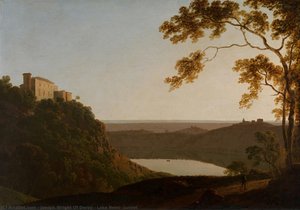
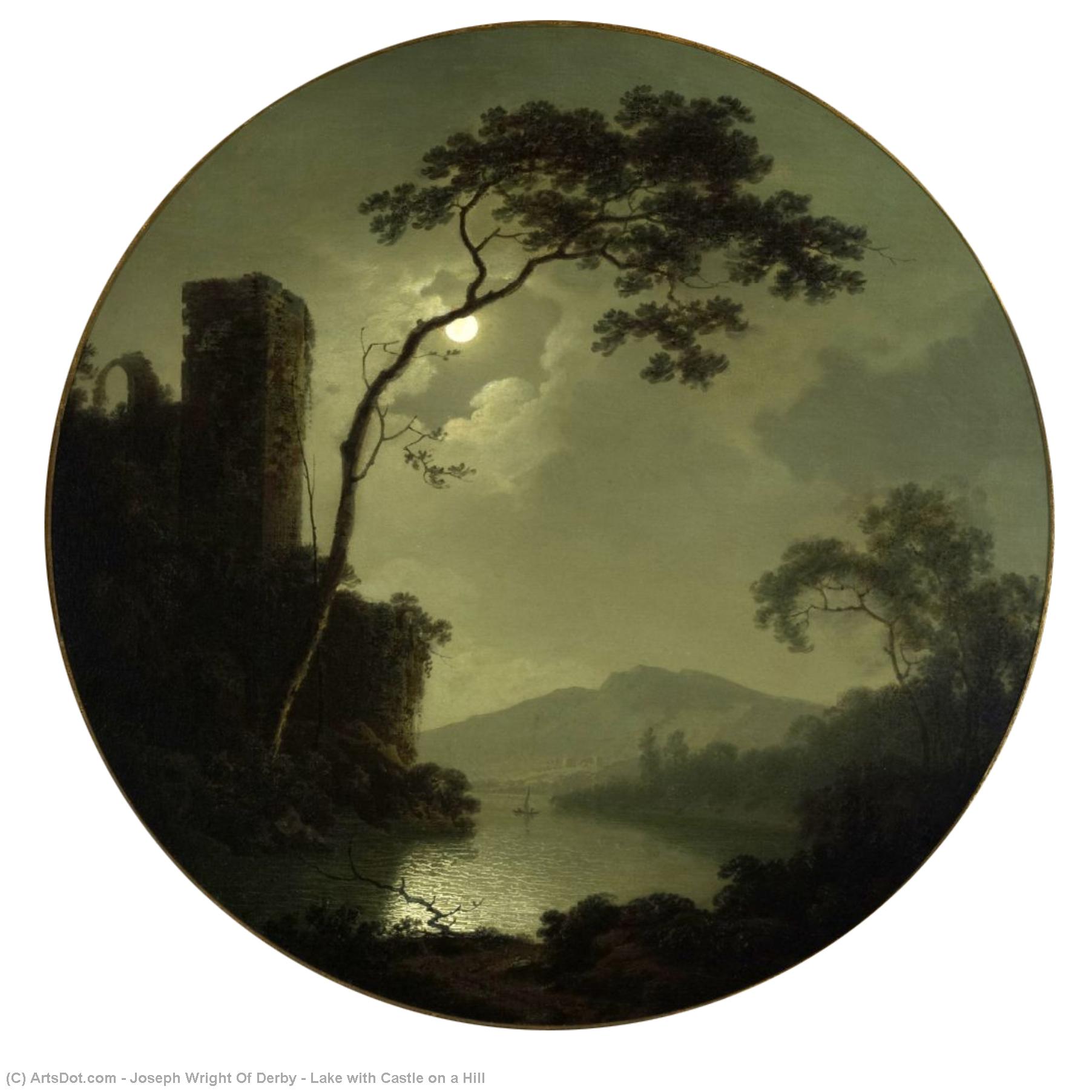
Lake with Castle on a Hill
 Oil On Canvas
- WallArt
- Romanticism
 1787
1787- 19th Century
 59.0 x 59.0 cm
 Read More
Hand Made Oil Reproduction
Hand-painted oil on canvas in your size and frame, made to order by our artists. ( Buy Print Buy Image)




P118B $10

P118H $10

P118W $10

P438Z $10

P508JH $12

P508YH $12

P805H $10

P805Z $10

P919BZ $10

P919G $10

P919XJ $10

P959ZH $10

P968JZ $12

W106C $8

W218G $10

W218JH $8

W218Y $10

W307PJ $10

W316G $10

W316PJ $8

W316Y $10

W398PJ $8

W4111J $10

W500HY $15

W500JH $15

W692G $12

W849H $8

W940BG $15

W953PJ $8




Pick from our preset sizes that match the artwork's original proportions.

You may enter your own dimensions to fit a specific frame or space. If your selected size does not match the original image's proportions, we will either crop the artwork or extend the painting with additional hand-painted elements. A digital mockup will be sent for your approval before production begins.
Please note that the on-screen preview does not reflect the actual cropping or extension. Only the mockup will accurately show the final composition.
While custom sizes are available, we recommend selecting a dimension from the predefined list to preserve the original proportions.
After order, ArtsDot.com team will email client for instructions and provide a mockup preview
Worldwide Delivery () in 3/4 weeks instead of standard 5 weeks. (17 August). No compromise on quality.

Free Worldwide Express Shipping

High-Quality Linen Canvas

Full Shipping Insurance

Customs Tax Refund Guarantee

True Color Matching Guarantee

60-Day Return Policy (Defects Only)

100% Money-Back Guarantee

Bulk Discount Offer
 Glass option is only available in size under 110 CM

Lake with Castle on a Hill
Reproduction Medium
Reproduction Size
-


Total Price
$ 263
Artwork Description
A Nocturne of Ruin and Romance: Joseph Wright’s “Lake with Castle on a Hill”
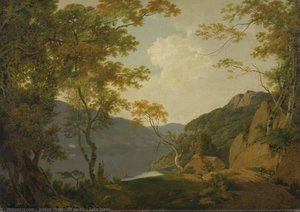
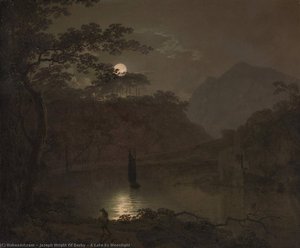
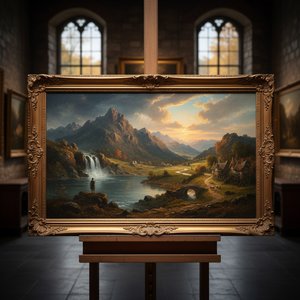
Joseph Wright of Derby's "Lake with Castle on a Hill," painted in 1787, is more than just a picturesque landscape; it’s a poignant meditation on time, loss, and the burgeoning impact of industrial change. This circular oil painting, measuring 59 x 59 cm, immediately draws the viewer into its melancholic embrace – a world dominated by deep greens and blues, punctuated by the stark white glow of a full moon. The scene unfolds with a deliberate balance: a gnarled tree in the foreground acts as a grounding vertical element, while the imposing castle ruin on a distant hill and the hazy mountain range across the lake provide horizontal anchors, creating a sense of vastness and solitude.
Romanticism’s Embrace of the Sublime
Painted during a period of significant societal transformation, “Lake with Castle on a Hill” firmly establishes Wright as a pivotal figure in the Romantic movement. Unlike the rigid formality of Neoclassical art, Wright prioritizes mood and atmosphere above precise detail, employing meticulous brushwork to evoke a powerful sense of realism through texture and light. The flattened perspective, inherent in the circular format, subtly enhances the dreamlike quality of the scene, inviting contemplation rather than demanding immediate observation. The dramatic lighting – primarily from the moon – casts long, evocative shadows, highlighting the rugged textures of the landscape and contributing to the painting’s overall sense of drama.
Symbolism Woven into the Landscape
Beyond its aesthetic beauty, the artwork is rich in symbolic meaning. The castle ruin, a recurring motif in Wright's work, represents decay, lost grandeur, and perhaps even the fading influence of aristocratic power – themes increasingly relevant as industrialization challenged traditional hierarchies. The full moon, a classic symbol of mystery and romance, adds to the painting’s ethereal quality, while the reflective lake mirrors not only the sky but also the viewer’s own emotions. The tree itself, with its intricate branches reaching towards the heavens, can be interpreted as a symbol of resilience and enduring strength amidst inevitable decline.
Technique and Materials: A Masterful Execution
Wright's skill is evident in every detail. The application of oil paints is smooth and rich, creating a tactile surface that invites close examination. The artist’s meticulous brushwork renders the foliage with remarkable realism, while the water appears to shimmer with reflected light. The use of atmospheric haze effectively creates depth, guiding the viewer's eye from the foreground tree towards the distant mountains. The canvas itself, bearing the marks of Wright’s careful hand, speaks volumes about the dedication and precision that characterized his artistic practice. The painting’s enduring appeal lies not only in its beauty but also in the testament to a master craftsman’s ability to capture a fleeting moment in time.
A Timeless Reflection
"Lake with Castle on a Hill" transcends its historical context, offering a timeless reflection on themes of mortality, beauty, and the relationship between humanity and nature. This hand-painted reproduction captures the essence of Wright’s vision, allowing you to experience the profound emotional impact of this remarkable artwork in your own space.
Related Artworks
Artist Biography
The Luminary of Derby: Joseph Wright and the Dawn of the Industrial Age
Joseph Wright, known to history as “Wright of Derby,” was more than a painter; he was a visual philosopher who captured a pivotal moment in human existence. Born in 1734 amidst the burgeoning industrial heartland of England, Wright didn’t merely depict his time—he *illuminated* it, both literally and figuratively. His canvases weren't filled with grand historical narratives or aristocratic portraits alone; they pulsed with the energy of scientific discovery, the drama of enlightenment thought, and the stark beauty of a landscape irrevocably altered by human innovation. He stands as the first major artist to truly grapple with, and celebrate, the spirit of the Industrial Revolution, an era that would redefine civilization itself. His early life in Derby, steeped in the practical world of his father’s legal profession, provided a grounding that perhaps informed his later fascination with precision and observation. Though initially destined for law, young Joseph's inclination towards art proved irresistible, leading him to London at seventeen to study under Thomas Hudson, a prominent portrait painter of the day. This formal training laid a foundation, but it was Wright’s innate curiosity and independent spirit that would ultimately forge his unique artistic path.Chiaroscuro and the Spirit of Inquiry
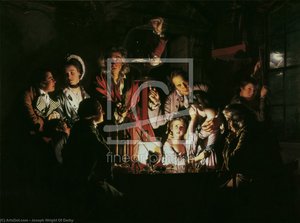
Wright's technical mastery is immediately apparent in his dramatic use of chiaroscuro, a technique borrowed from Baroque masters like Caravaggio but employed with a distinctly modern sensibility. He wasn’t simply interested in creating visual drama; he used light and shadow to symbolize the unveiling of knowledge, the struggle between darkness and understanding. Consider masterpieces such as *An Experiment on a Bird in the Air Pump* (1768), where candlelight throws stark relief upon the faces of onlookers witnessing a scientific demonstration—a scene brimming with both wonder and anxiety. The painting isn’t just about the experiment itself; it's an exploration of humanity’s burgeoning curiosity, its willingness to probe the mysteries of nature, and the ethical implications of such endeavors. Similarly, *A Philosopher Lecturing on the Orrery* (1766) presents a captivating scene where a miniature solar system is unveiled, illuminating not only the faces of the captivated audience but also the expanding universe of scientific thought. These weren’t isolated incidents; Wright consistently sought subjects that allowed him to explore the intersection of science, philosophy, and human emotion. His style was subtly influenced by Alexander Cozens, particularly in his compositional approaches, yet he remained fiercely independent, forging a visual language uniquely his own.Beyond Portraits: Landscapes and the Romantic Sensibility
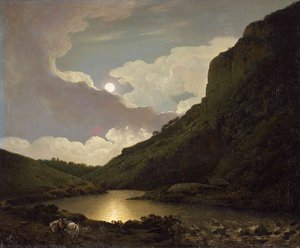
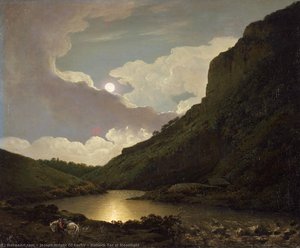
While Wright is celebrated for his “candlelight pictures,” to limit him to that single aspect of his oeuvre would be a grave disservice. He was also a gifted landscape painter, capturing the rugged beauty of Derbyshire and beyond with an increasingly Romantic sensibility. Works like *Dovedale by Moonlight* showcase his ability to evoke atmosphere and emotion through subtle gradations of light and shadow, transforming familiar scenes into evocative visions. His landscapes weren’t merely topographical representations; they were imbued with a sense of awe and reverence for the natural world—a sentiment that resonated deeply with the growing Romantic movement. Even in these seemingly tranquil scenes, however, there's often an undercurrent of melancholy or mystery, hinting at the fragility of nature and the inevitability of change. *Rydal Waterfall* (1795), exemplifies this skill, showcasing his mastery of capturing both power and serenity within a single composition.A Legacy Forged in Light and Shadow
Wright’s impact on British art was profound, though perhaps not immediately recognized during his lifetime. He faced some resistance from the established artistic circles, notably declining full membership to the Royal Academy after feeling slighted—a testament to his independent spirit. However, his influence extended beyond formal institutions. Artists like William Pether and John Downman were directly inspired by his techniques, particularly his dramatic use of light and shadow. More broadly, Wright’s work paved the way for a new generation of artists who sought to capture the dynamism and complexity of the modern world. He didn't just paint what he saw; he painted what he *felt*—the excitement, the anxiety, the wonder—of an era on the cusp of transformation. His paintings remain powerful reminders of a time when humanity dared to question everything, to explore the unknown, and to embrace the possibilities of a new age. Today, his works are held in major museums worldwide, ensuring that the luminary of Derby continues to illuminate our understanding of art, science, and the human spirit.- Notable Works: *An Experiment on a Bird in the Air Pump*, *A Philosopher Lecturing on the Orrery*, *Dovedale by Moonlight*.
- Influences: Thomas Hudson, Alexander Cozens, Baroque masters like Caravaggio.
- Key Characteristics: Dramatic chiaroscuro, exploration of scientific themes, Romantic landscapes.
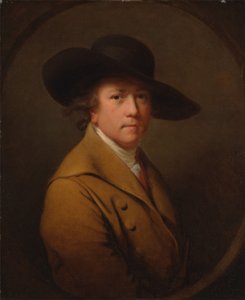
Joseph Wright of Derby
1734 - 1797 , United Kingdom
Quick Facts
- Artistic Movement Or Style: Chiaroscuro, Romanticism
- Artists Who Influenced This Artist:
- Thomas Hudson
- Alexander Cozens
- Date Of Birth: September 3, 1734
- Date Of Death: August 29, 1797
- Full Name: Joseph Wright of Derby
- Nationality: British
- Notable Artworks:
- Dovedale by moonlight
- Three Persons Viewing...
- A Philosopher Lecturing...
- An Experiment on a Bird...
- Place Of Birth: Derby, United Kingdom
Related Articles

Romantic Landscapes: 10 Masterpieces for Your Home | ArtsDot
Journey through 10 Romantic landscape masterpieces by Friedrich, Turner & Cole. Explore emotional art, sublime nature scenes & iconic 19th-century paintings. Find museum-quality reproductions for your home at ArtsDot.com – discover the full collection online!

Beyond the Horizon: 10 Landscape Masterpieces for Your Home Decor
Journey through 10 breathtaking landscape paintings by Monet, Van Gogh & more! Explore iconic artworks, artistic techniques & find inspiration for your home decor. Museum-quality reproductions at ArtsDot.com. Discover all masterpieces on ArtsDot.com

Evocations of Place: A Historical Journey Through Landscape Art
Explore the rich history of landscape art with ArtsDot. Discover renowned artists, movements like Impressionism & Romanticism, and expert guidance for collecting timeless pieces. Find your perfect serene escape today!
The Sublime and the Picturesque: Exploring Emotion & Nature in Romantic Landscape Painting
Explore the emotional power of Romantic landscape painting! Discover the sublime & picturesque traditions, key artists like Friedrich & Cole, and find your perfect artwork at ArtsDot.
Illuminating Enlightenment: Joseph Wright of Derby's Scientific Vision
Explore the captivating world of Joseph Wright of Derby, a pioneer of Enlightenment art. Discover his masterful chiaroscuro, scientific themes & investment potential. Expert analysis for collectors.