 Preview
 Send
Send Share
Share
 Details

 Download
 Similars
 X-Ray
X-Ray Diaporama
Still Life


 Read More
Hand Made Oil Reproduction
Hand-painted oil on canvas in your size and frame, made to order by our artists. ( Buy Print Buy Image)




P118B $10

P118H $10

P118W $10

P438Z $10

P508JH $12

P508YH $12

P805H $10

P805Z $10

P919BZ $10

P919G $10

P919XJ $10

P959ZH $10

P968JZ $12

W106C $8

W218G $10

W218JH $8

W218Y $10

W307PJ $10

W316G $10

W316PJ $8

W316Y $10

W398PJ $8

W4111J $10

W500HY $15

W500JH $15

W692G $12

W849H $8

W940BG $15

W953PJ $8




Pick from our preset sizes that match the artwork's original proportions.

You may enter your own dimensions to fit a specific frame or space. If your selected size does not match the original image's proportions, we will either crop the artwork or extend the painting with additional hand-painted elements. A digital mockup will be sent for your approval before production begins.
Please note that the on-screen preview does not reflect the actual cropping or extension. Only the mockup will accurately show the final composition.
While custom sizes are available, we recommend selecting a dimension from the predefined list to preserve the original proportions.
After order, ArtsDot.com team will email client for instructions and provide a mockup preview
Worldwide Delivery () in 3/4 weeks instead of standard 5 weeks. (17 August). No compromise on quality.

Free Worldwide Express Shipping

High-Quality Linen Canvas

Full Shipping Insurance

Customs Tax Refund Guarantee

True Color Matching Guarantee

60-Day Return Policy (Defects Only)

100% Money-Back Guarantee

Bulk Discount Offer
 Glass option is only available in size under 110 CM

Still Life
Reproduction Medium
Reproduction Size
-


Total Price
$ 263
Artwork Description
Juan de Arellano: A Master of Floral Still Life
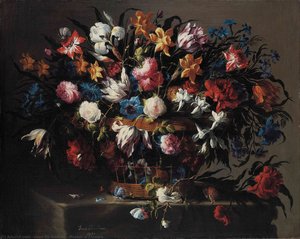
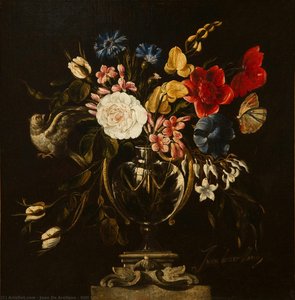
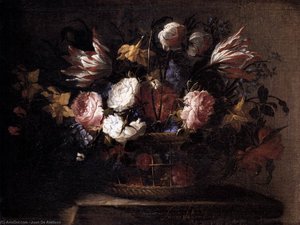
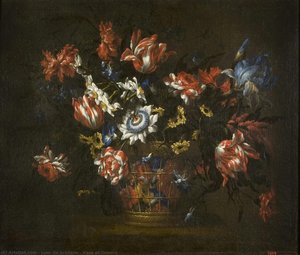
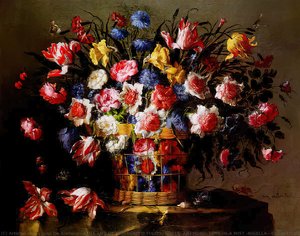
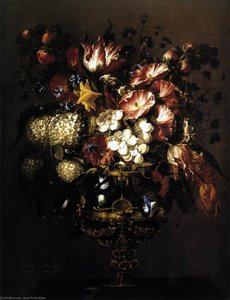
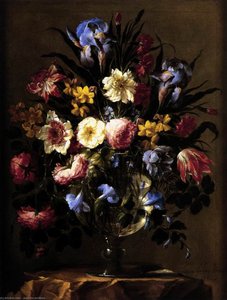
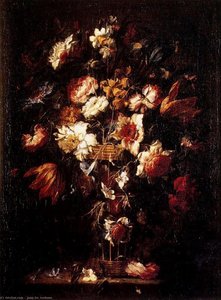
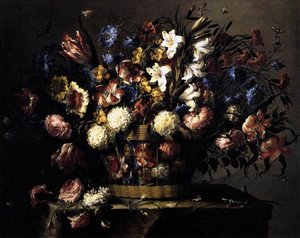
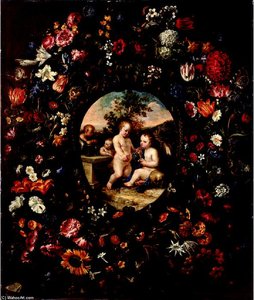
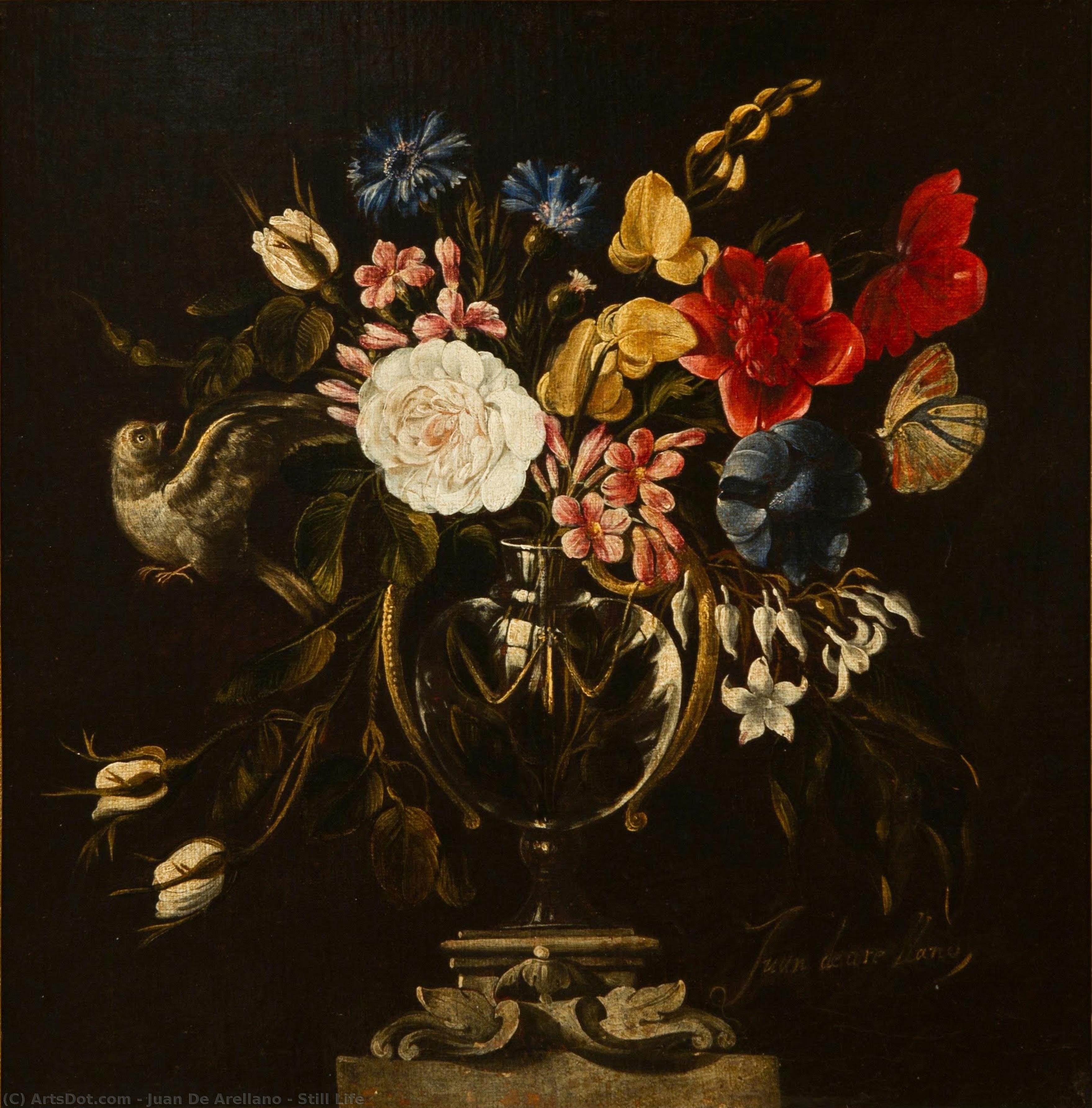
Juan de Arellano (1614 – 1676) stands as a singular figure in the Baroque art landscape of Spain, celebrated primarily for his breathtaking floral still life paintings. Born in Santorcaz, near Madrid—a city that would become synonymous with his artistic legacy—Arellano’s life unfolded amidst the opulent patronage of Philip III and witnessed the burgeoning influence of Flemish and Italian artistic traditions. While biographical details remain somewhat sparse, he emerged as a student under Juan de Solís, whose landscapes offered a contrasting aesthetic to Arellano's focused dedication to botanical representation. His work embodies the spirit of the era—a fascination with observation, meticulous detail, and an attempt to capture not merely what is seen but also what is felt.- Style: Arellano’s style firmly rooted itself within the Baroque tradition, inheriting its dramatic chiaroscuro techniques and embracing a humanist sensibility that prioritized natural beauty and contemplation. However, unlike many of his contemporaries who sought grandeur and spectacle, he opted for a quieter, more intimate portrayal of nature—a deliberate choice reflecting the prevailing taste for decorative art during Philip III’s reign.
- Technique: Arellano excelled in oil painting on linen, utilizing layering and glazing methods to achieve remarkable luminosity and depth. He painstakingly rendered individual petals, stems, and leaves with astonishing accuracy, capturing subtle variations in color and texture—a testament to his mastery of observation and artistic skill. The artist’s meticulous approach ensured that each flower seemed to pulsate with life on the canvas.
The Influence of Flemish Masters
Like many artists of his era, Arellano absorbed the stylistic precepts of Flemish masters such as Daniel Seghers and Mario Nuzzi. These influences instilled in him a meticulous attention to detail and a masterful command of chiaroscuro—the dramatic interplay of light and shadow—techniques characteristic of Northern Baroque painting. Seghers’ landscapes taught Arellano how to convey atmosphere and perspective, while Nuzzi's flower paintings demonstrated the importance of capturing delicate nuances of color and form. This synthesis of artistic influences resulted in a distinctive visual language that distinguishes Arellano’s oeuvre from other Spanish painters of his time.Symbolism and Emotional Resonance
Beyond mere aesthetic beauty, Arellano's floral still lifes carried profound symbolic meaning—a hallmark of Baroque art. Flowers were frequently employed to convey concepts of mortality, remembrance, and spiritual contemplation, reflecting the anxieties of a society grappling with religious dogma and facing imminent death. The artist’s careful composition—often featuring birds perched atop vases or flowers—reinforced these themes, inviting viewers to engage in introspection and consider the ephemeral nature of existence. His paintings evoke a sense of serenity and melancholy, capturing the fleeting beauty of the natural world while simultaneously prompting reflection on human mortality.Notable Works
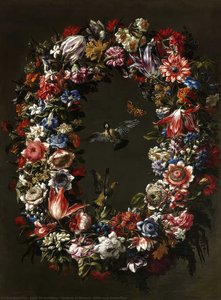
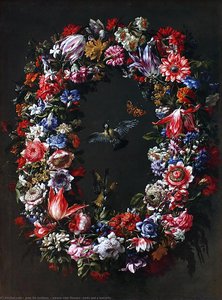
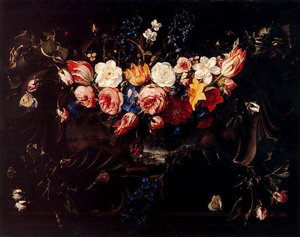
Among Arellano’s most celebrated pieces are “Bouquet of Flowers” (c.1660), currently housed in the Museo del Prado, Madrid—a masterful depiction of roses and lilies bathed in soft light—and “Garland of Flowers, Birds and Butterfly,” displayed at The Louvre. He also executed commissions for the sacristy of San Jerónimo el Real, showcasing his versatility as an artist. Furthermore, reproductions of his paintings can be found in museums across Europe, including Bilbao Fine Arts Museum and The Royal Academy of Fine Arts of San Fernando. Examining these artworks offers a glimpse into the artistic sensibilities of a pivotal moment in Spanish Baroque history.Related Artworks
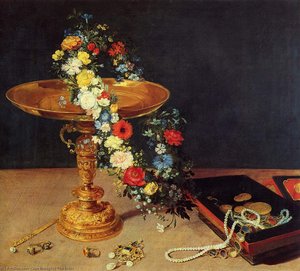
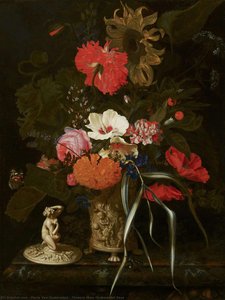
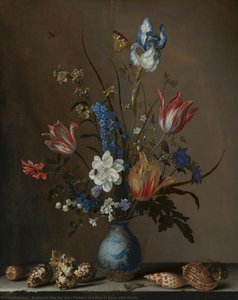
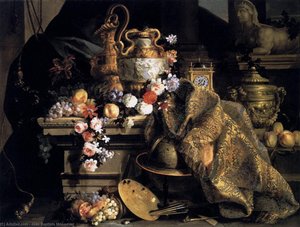
Artist Biography
The Master of Botanical Splendor
In the golden age of the Spanish Baroque, few artists captured the ephemeral grace of nature with as much precision and passion as Juan de Arellano. Born in 1614 in Santorcaz, near the vibrant heart of Madrid, Arellano emerged as a singular force in a century often defined by dramatic religious fervor and somber realism. While his contemporaries frequently turned toward grand historical narratives or intense martyrdoms, Arellano found his calling in the delicate, silent language of petals and stems. His life and work represent a masterful intersection of Spanish sensibility and the lush, ornamental traditions flowing from the Flemish and Italian schools, creating a legacy that remains a cornerstone of seventeenth-century still life painting.
The foundations of Arellano’s artistry were laid under the guidance of Juan de Solís, a painter whose expertise in landscapes provided a structural backdrop to the artist's burgeoning interest in botanical detail. However, it was the broader European artistic currents that truly shaped his vision. By absorbing the meticulous, almost scientific precision of Flemish masters like Daniel Seghers and the dramatic, light-drenched compositions of Italian painters such as Mario Nuzzi, Arellano developed a unique stylistic vocabulary. He mastered the art of chiaroscuro, using the profound interplay between deep, velvety shadows and brilliant, luminous highlights to breathe life into every rose, tulip, and lily he rendered.
A Vision of Precision and Pragmatism
There is a fascinating duality in the story of Arellano’s career—a blend of artistic devotion and shrewd professional intellect. Historical accounts suggest that the artist made a deliberate choice to specialize exclusively in floral still lifes. This was not merely an aesthetic preference but a pragmatic decision; by focusing on this specific genre, he could navigate the burgeoning art market with greater efficiency, offering highly sought-after botanical studies that were both lucrative and less physically demanding than the monumental canvases required for altarpieces. This focus allowed him to achieve an unparalleled level of technical mastery, turning each canvas into a window of hyper-realistic beauty.
His compositions are far more than simple arrangements of flora; they are carefully orchestrated dramas of color and form. In his hands, a bouquet becomes a complex narrative of texture and light. He possessed an extraordinary ability to capture the fleeting moments of a bloom's peak—the slight curl of a wilting petal, the dewy sheen on a leaf, or the translucent quality of a petal caught in a sunbeam. Through his brushwork, the viewer is invited into a realm of serene contemplation, where the transient beauty of the natural world is frozen in eternal, vibrant perfection.
Legacy and Artistic Significance
The historical significance of Juan de Arellano lies in his ability to elevate the still life from a secondary genre to a profound medium of artistic expression. His work serves as a vital link between the heavy, symbolic traditions of the early Baroque and the more decorative, light-filled aesthetics that would follow. Through his paintings, we see the influence of international styles harmonizing with a distinctly Spanish elegance, creating a body of work that transcends borders.
Today, the impact of Arellano’s oeuvre can be felt in the prestigious halls of museums worldwide, where his iconic bouquets continue to captivate audiences. His contributions to the art world include:
- Technical Innovation: The sophisticated application of light and shadow to create three-dimensional botanical realism.
- Genre Elevation: Transforming the floral still life into a prestigious subject capable of profound emotional and symbolic depth.
- Cultural Synthesis: Successfully merging Flemish detail with Italian drama and Spanish grace, creating a unique European aesthetic.
As we look upon his masterpieces, such as his celebrated Bouquet of Flowers, we are reminded that true artistry lies in the ability to find the infinite within the infinitesimal, and to find eternal beauty in the most delicate of transient things.
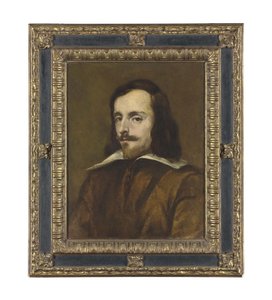
Juan de Arellano
1614 - 1676 , Spain
Quick Facts
- Artistic Movement Or Style: Baroque
- Artists Or Movements Influenced By This Artist: ['Daniel Seghers']
- Artists Who Influenced This Artist: ['Juan de Solís']
- Date Of Birth: 1614
- Date Of Death: 1676
- Full Name: Juan de Arellano
- Nationality: Spanish
- Notable Artworks:
- Bouquet of Flowers
- Garland of Flowers
- Place Of Birth: Santorcaz, Spain
Related Articles

Dutch Baroque Masters: 10 Paintings That Shaped an Era | ArtsDot
Journey through the Golden Age with our guide to the Top 10 Dutch Baroque masterpieces! Explore iconic paintings by Rembrandt, Vermeer & Frans Hals. Find museum-quality art reproductions and elevate your home decor at ArtsDot.com.

Golden Age Reflections: Dutch Baroque Painting & Cultural Innovation
Explore the Dutch Golden Age of painting! Discover key artists like Vermeer & ter Borch, their innovative techniques, and the rich cultural context behind these Baroque masterpieces. Learn about collecting & appreciating this iconic art period.
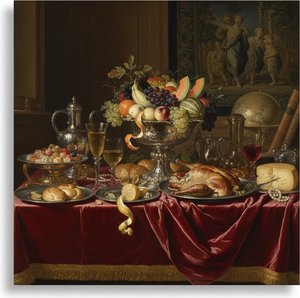
Abraham Hendricksz van Beyeren: Pioneering Dutch Still Life & the Banquet Tradition
Explore the captivating world of Dutch Golden Age still life with Abraham van Beyeren. Discover his innovative techniques, symbolic banquet scenes & lasting influence on art history. Learn about collecting these masterpieces.
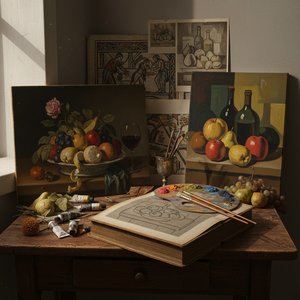
Silent Narratives: Exploring the Enduring Appeal of Still Life Painting Across Centuries
Explore the rich history of still life painting with ArtsDot. Discover Dutch Masters, decode vanitas symbolism & learn about collecting timeless art. Expert insights and museum-quality reproductions.
The Enduring Appeal of Still Life: A Historical & Contemporary Exploration
Explore the rich history & symbolism of still life painting with ArtsDot. Discover masterpieces from the Dutch Golden Age, learn about vanitas art, and find expert guidance for collecting timeless artworks.