

 Preview
 Send
Send Share
Share
 Details

 Download
 Similars
 X-Ray
X-Ray Diaporama
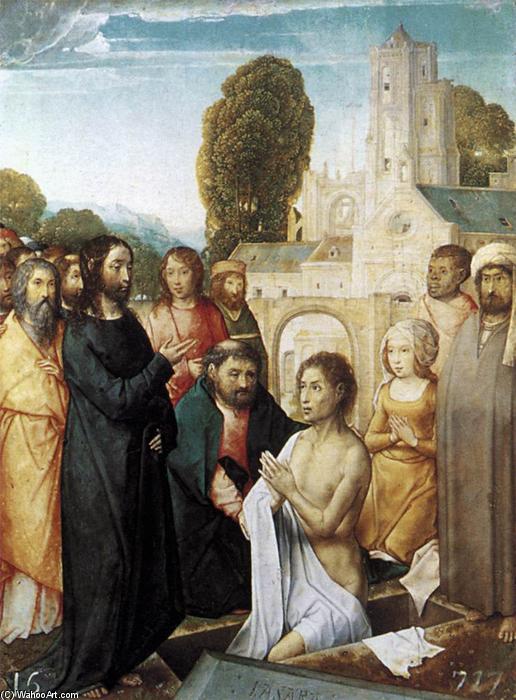
Resurrection of Lazarus
 Oil On Panel
- Early Netherlandish Renaissance
 1500
1500 20.0 x 15.0 cm
 Palacio Real
 Read More
Purchase a high-resolution, enhanced digital image, far superior to the online preview.
Each file is meticulously prepared by our in-house specialists using advanced tools and expert manual retouching. We ensure every image has exceptional clarity, precise color accuracy, and fine detail.
The final file is delivered via email within 72 hours, optimized for immediate use in professional, editorial, and print environments. This is the same quality trusted by top-tier design studios, publishers, and galleries.
Digital Image
Download a high-resolution file for personal display, printing, and creative projects. ( Buy Print Buy Hand Made Painting)
Included in Every Digital Image Order
Expert Digital Delivery, Guaranteed
When you choose ArtsDot.com, you're not just getting an image - you're receiving a professionally enhanced digital artwork, crafted with precision and backed by a satisfaction guarantee. Here's everything that comes with your order, automatically:

Fast Email Delivery
Your high-resolution digital image file will be emailed to you within 72 hours of ordering - ready for immediate use.

AI-Enhanced Digital File
Your artwork is professionally optimized using advanced AI tools and manual editing, ensuring maximum detail, clarity, and color accuracy.

Free Lifetime Re-Delivery
Accidentally deleted or lost your file? No worries - we'll resend it to you anytime, free of charge.

No Import Fees - Ever
Enjoy your artwork instantly with zero customs, duties, or delivery fees - digital downloads are always tax-free.

Color Accuracy Guarantee
We ensure your digital image reflects the original colors as closely as possible using professional tools and color management.

60-Day Satisfaction Guarantee
If you're not satisfied with your digital image, we'll revise it or refund 100% within 60 days - no questions asked.

100% Money-Back Guarantee
Not satisfied? Get a full refund within 60 days of receiving your digital file - no questions asked.

Bulk Order Discounts
Buy 3 images, save 10% - Buy 5, save 15% - Buy 10+, save 20%. Great for creative projects, galleries, and agencies.
Collectible Description
A Moment of Divine Intervention: The Resurrection of Lazarus
Juan de Flandes’ “Resurrection of Lazarus,” painted in 1500 and currently residing within the opulent halls of the Palacio Real in Madrid, is more than just a depiction of a biblical miracle; it's a profound meditation on faith, hope, and the transformative power of compassion. This oil-on-panel artwork transcends its modest dimensions (20 x 15 cm) to deliver an emotionally resonant experience, showcasing the artist’s meticulous attention to detail and his mastery of the Northern Renaissance style. The scene unfolds within a meticulously rendered Gothic-style building, subtly hinting at the spiritual weight of the event – a backdrop that anchors the miraculous resurrection in a tangible, earthly context.
The Artistry of Juan de Flandes: Technique and Detail
Flandes’ skill is immediately apparent in his masterful use of oil on panel. This medium allowed him to achieve an astonishing level of realism, layering thin glazes of paint to create luminous colors and subtle gradations that breathe life into the figures. The artist's dedication to texture is equally remarkable; observe the intricate folds of Lazarus’ linen shroud – a deliberate symbol of purity and rebirth – contrasted with the smooth rendering of his resurrected skin. Impasto is strategically employed, particularly in the robes and faces, adding depth and volume to these key elements. Lines are used not merely to define forms but also to create a sense of three-dimensionality, pulling the viewer into the heart of the scene. The flattened perspective, characteristic of the period, prioritizes clarity and detail over strict spatial realism, contributing to the painting’s overall dramatic effect.
Symbolism and Narrative: Unpacking the Layers of Meaning
Beyond its visual beauty, “The Resurrection of Lazarus” is rich in symbolic meaning. The central figures – Jesus Christ, Lazarus, and the assembled onlookers – are arranged with deliberate precision, drawing our attention to their roles within the narrative. The white cloth covering Lazarus’ body isn't simply a detail; it represents purification and the promise of resurrection, a visual anchor for the miraculous event. The expressions on the faces of the witnesses convey a range of emotions: awe, disbelief, hope, and perhaps even a touch of lingering sorrow. The distant cityscape, rendered with careful attention to perspective, provides context without distracting from the central drama. The painting’s composition expertly balances the earthly and the divine, reminding us that miracles are often born from moments of profound human connection.
A Legacy Preserved: Reproduction and Historical Context
Juan de Flandes was a pivotal figure in the Northern Renaissance, bridging the traditions of Flemish painting with the burgeoning artistic spirit of Spain. His work reflects both his training within the Ghent School – known for its realism and attention to detail – and his adaptation to the tastes and aesthetics of the Spanish court. The Palacio Real in Madrid proudly houses this remarkable piece, a testament to Flandes’ enduring legacy. At ArtsDot.com, we are honored to offer meticulously crafted oil painting reproductions that capture the essence of “The Resurrection of Lazarus,” allowing you to experience its beauty and profound symbolism firsthand. Our skilled artists utilize only the finest materials, ensuring an exact replica of this iconic masterpiece. Explore our collection today and bring a touch of Renaissance artistry into your home or office – Visit ArtsDot.com to learn more.
Related Artworks
Artist Biography
The Enigmatic Master of the Spanish Court
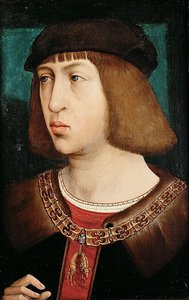
The identity of Juan de Flandes remains one of the most captivating mysteries in the annals of Early Netherlandish painting. Shrouded in a veil of historical ambiguity, scholars have long debated whether this master was the individual known as Jan van der Straat or another unnamed virtuoso whose brushwork left an indelible mark on the Iberian Peninsula. Though his true origins are obscured by time, his artistic soul is unmistakably rooted in the vibrant traditions of Flanders. Born likely in the mid-15th century, he emerged from the prestigious artistic milieu of Ghent, a city then pulsating with the innovations of the Ghent School. It was here, amidst the shadows of masters like Joos van Wassenhove and Hugo van der Goes, that Juan refined his ability to capture the delicate interplay of light and texture, establishing a technical foundation that would later bridge the gap between Northern precision and Spanish grandeur.
His journey from the Low Countries to the heart of Spain represents a pivotal chapter in the evolution of the Spanish Renaissance. In 1496, his destiny became inextricably linked with the Spanish Crown when he secured the prestigious patronage of Queen Isabella I of Castile. This appointment was far more than a mere professional milestone; it placed him at the very epicenter of political and religious power. Serving as a court painter until Isabella’s death in 1504, Juan de Flandes became the visual chronicler of a golden age. Through his eyes, the dignity of the royal family—most notably Isabella and Ferdinand—was immortalized with a refined elegance that balanced the meticulous, microscopic detail characteristic of Flemish art with a new, solemn Spanish sensibility.
A Legacy of Devotion and Detail
The true genius of Juan de Flandes is perhaps most profoundly felt in his religious compositions, where his technical mastery meets deep spiritual devotion. His most celebrated achievement lies in the monumental series of small panels created for a magnificent polyptych altarpiece dedicated to the Virgin Mary. These works are masterpieces of narrative intimacy, inviting the viewer into sacred spaces through landscapes that feel both otherworldly and tangibly real. In these panels, one can observe a breathtaking synthesis of styles:
- Flemish Precision: The meticulous rendering of fabrics, the crystalline clarity of distant horizons, and the obsessive attention to botanical detail.
- Spanish Grandeur: A sense of monumental stillness and a dignified, somber atmosphere that reflects the religious fervor of the Spanish court.
- Atmospheric Innovation: An early mastery of light that breathes life into the landscapes, creating a sense of depth and spiritual transcendence.
Today, these dispersed treasures—housed in prestigious institutions such as the Prado Museum in Madrid and the National Gallery of Art in Washington D.C.—serve as enduring testaments to his skill. The historical significance of Juan de Flandes extends far beyond his individual portraits; he acted as a vital cultural conduit. By transplanting the sophisticated techniques of the North into the fertile soil of Spain, he helped shape the aesthetic language of a burgeoning empire. His work remains a hauntingly beautiful reminder of a period when art served as the ultimate bridge between different worlds, blending the intricate textures of Flanders with the profound, enduring spirit of the Spanish Renaissance.
Juan de Flandes
1460 - 1519 , Belgium
Quick Facts
- Artistic Movement Or Style: Early Netherlandish
- Artists Or Movements Influenced By This Artist: ['Spanish Renaissance']
- Artists Who Influenced This Artist:
- Joos van Wassenhove
- Hugo van der Goes
- Date Of Birth: c. 1460
- Date Of Death: 1519
- Full Name: Juan de Flandes
- Nationality: Dutch
- Notable Artworks:
- The Nativity
- Portrait of an Infanta
- Resurrection of Lazarus
- Place Of Birth: Flanders (Belgium)

