 Preview
 Send
Send Share
Share
 Details

 Download
 Similars
 X-Ray
X-Ray Diaporama
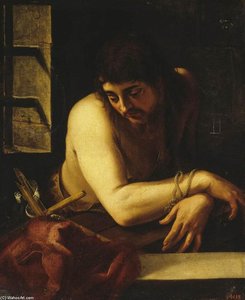
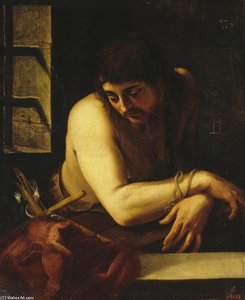
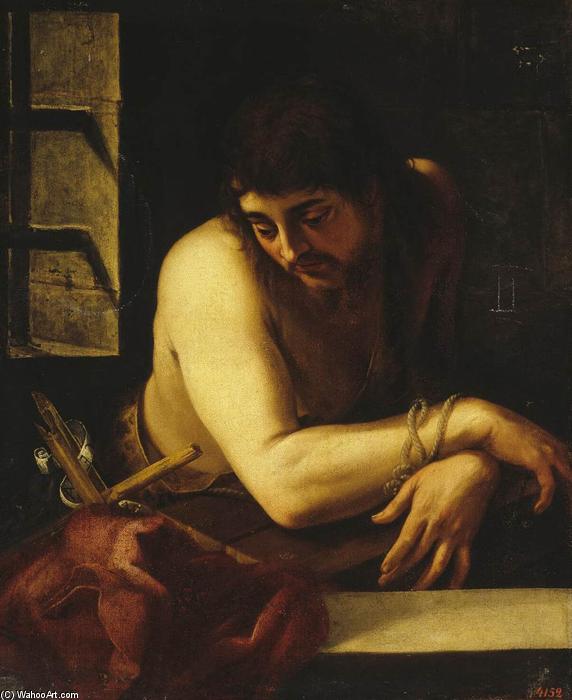
St John the Baptist in the Prison
 Oil On Canvas
- WallArt
- Spanish Mannerism
 1565
1565 80.0 x 72.0 cm
 Hermitage Museum
 Read More
Hand Made Oil Reproduction
Hand-painted oil on canvas in your size and frame, made to order by our artists. ( Buy Print Buy Image)




P118B $10

P118H $10

P118W $10

P438Z $10

P508JH $12

P508YH $12

P805H $10

P805Z $10

P919BZ $10

P919G $10

P919XJ $10

P959ZH $10

P968JZ $12

W106C $8

W218G $10

W218JH $8

W218Y $10

W307PJ $10

W316G $10

W316PJ $8

W316Y $10

W398PJ $8

W4111J $10

W500HY $15

W500JH $15

W692G $12

W849H $8

W940BG $15

W953PJ $8




Pick from our preset sizes that match the artwork's original proportions.

You may enter your own dimensions to fit a specific frame or space. If your selected size does not match the original image's proportions, we will either crop the artwork or extend the painting with additional hand-painted elements. A digital mockup will be sent for your approval before production begins.
Please note that the on-screen preview does not reflect the actual cropping or extension. Only the mockup will accurately show the final composition.
While custom sizes are available, we recommend selecting a dimension from the predefined list to preserve the original proportions.
After order, ArtsDot.com team will email client for instructions and provide a mockup preview
Worldwide Delivery () in 3/4 weeks instead of standard 5 weeks. (27 August). No compromise on quality.

Free Worldwide Express Shipping

High-Quality Linen Canvas

Full Shipping Insurance

Customs Tax Refund Guarantee

True Color Matching Guarantee

60-Day Return Policy (Defects Only)

100% Money-Back Guarantee

Bulk Discount Offer
 Glass option is only available in size under 110 CM

St John the Baptist in the Prison
Reproduction Medium
Reproduction Size
-


Total Price
$ 263
Artwork Description
Juan Fernández Navarrete: The Silent Master of El Escorial – A Portrait of Penitence
Juan Fernández Navarrete (1526–1579), affectionately known as “El Mudo” – meaning “The Silent” – stands as a monumental figure in Spanish Mannerist painting and an unwavering devotee to Philip II’s patronage. Born around 1538 in Logroño, Navarrete embarked on his artistic journey amidst the fervor of Spain's Golden Age, fueled by an ardent admiration for Italian Renaissance ideals while simultaneously grappling with profound personal challenges.
Despite his reticent demeanor—a moniker earned due to his inability to speak—Navarrete achieved remarkable renown for his masterful depictions of religious subjects, particularly those commissioned for El Escorial, Philip II’s awe-inspiring palace complex in Madrid. These canvases served not merely as decorative embellishments but as tangible expressions of royal piety and a testament to Navarrete's unparalleled skill.
St John the Baptist in the Prison: Symbolism and Technique
“St John the Baptist in the Prison” (1565-70), an oil on canvas measuring 80 x 72 cm housed at Museo del Prado, exemplifies Navarrete’s signature Mannerist style. Characterized by elongated figures, stylized drapery, and a deliberate flattening of perspective—techniques borrowed directly from Italian Renaissance masters—the painting transcends mere representation to convey profound spiritual contemplation.
The central figure, St John the Baptist, is depicted in a starkly lit cell, symbolizing repentance and solitude. His gaze directs upwards towards heaven, conveying unwavering faith amidst adversity. The artist’s meticulous attention to detail—evident in the folds of his toga and the expressive rendering of his face—highlights Navarrete's mastery of chiaroscuro, creating dramatic contrasts that heighten the emotional impact of the scene.
Historical Context: Philip II and the Renaissance Ideal
Navarrete’s artistic output coincided with Philip II’s reign (1556–1598), a period marked by an unwavering commitment to humanist ideals and a fervent desire to emulate the grandeur of Florence and Rome. Recognizing the importance of visual culture in shaping religious belief, Philip II actively supported artists like Navarrete who could translate these principles into compelling artistic narratives.
The commission for “St John the Baptist in the Prison” reflects this broader cultural preoccupation with themes of asceticism and spiritual transformation—concepts central to Protestant Reformation anxieties. Navarrete’s painting serves as a poignant reminder of the Renaissance's enduring influence on European art and thought, demonstrating how artistic innovation could simultaneously express religious conviction and engage in sophisticated stylistic experimentation.
A Legacy of Quiet Genius
Juan Fernández Navarrete remains an enigmatic figure—a “Silent Master” whose oeuvre speaks volumes about his profound understanding of human psychology and his unwavering devotion to artistic excellence. His enduring legacy resides not only in the beauty of his paintings but also in their ability to inspire contemplation and convey timeless spiritual truths.
Reproductions of "St John the Baptist in the Prison," available from Hermitage Museum and Wikimedia Commons offer a captivating glimpse into Navarrete’s artistic vision—a testament to the power of understated elegance and enduring spiritual resonance.
Related Artworks

Artist Biography
The Silent Master of the Spanish Golden Age
In the grand, echoing halls of Spain’s architectural marvels, the name Juan Fernández Navarrete resonates with a quiet but profound power. Known to history by the evocative moniker “El Mudo”—The Mute—Navarrete lived a life defined by a unique sensory experience. An illness in his infancy had robbed him of his hearing, a condition that rendered him unable to speak but gifted him with an extraordinary visual vocabulary. Where words failed, his charcoal sketches and vibrant pigments spoke, allowing him to communicate the divine through the language of light and form. Born around 1526, likely in Logroño, his journey from a silent child expressing needs through sketches to a celebrated court painter is one of the most compelling narratives of the Spanish Renaissance.
Navarrete’s artistic evolution was deeply intertwined with the movement of ideas across Europe. While his roots were firmly planted in the Spanish tradition, his spirit wandered through the great art centers of Italy. His early training under Cristóbal Muñoz Sánchez provided a sturdy classical foundation, yet it was his exposure to the masters of the Italian Renaissance that truly ignited his genius. As he traversed Naples, Rome, Florence, and Milan, he absorbed the sophisticated elegance of Mannerism. This stylistic choice—characterized by elongated figures, dramatic tension, and an intentional departure from strict naturalism—became the hallmark of his mature work. He did not merely copy the Italians; he translated their grace into a Spanish idiom that felt both spiritually urgent and aesthetically sublime.
A Devotion to El Escorial and the Divine
The zenith of Navarrete’s career was inextricably linked to the ambitions of Philip II. As a favored court artist, Navarrete dedicated eleven pivotal years to the decoration of El Escorial, the monumental palace-monastery that served as the spiritual heart of the Spanish Empire. Within this austere and magnificent complex, he breathed life into religious narratives, transforming cold stone walls into windows to the heavens. His work for the King was not merely decorative; it was an act of profound devotion. He utilized the expressive potential of Mannerism to create altarpieances and frescoes that commanded awe, employing a palette that could shift from the radiant, celestial glow seen in his Nativity to the somber, introspective shadows of his more penitential subjects.
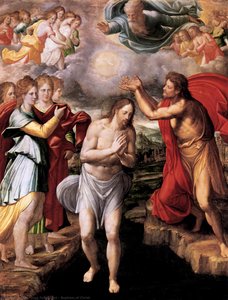
His technical mastery allowed him to weave complex theological themes into visually arresting compositions. One can observe the lingering influence of Correggio in the soft, luminous light that seems to emanate from within his figures, and the structural elegance of Parmigianino in his stylized silhouettes. His ability to manipulate light—a technique known as chiaroscuro—served to heighten the emotional stakes of his religious scenes, making the miraculous feel tangibly present. Whether depicting the baptismal waters of Christ or the celestial visitation of angels to Abraham, Navarrete’s brush captured the tension between the earthly and the divine.
Legacy of a Silent Visionary
Though his life was cut short in 1579 at the age of approximately fifty-three, the impact of Juan Fernández Navarrete remains etched in the history of European art. He served as a vital conduit, helping to spread the sophisticated influences of the Italian Renaissance throughout the Iberian Peninsula, effectively shaping the trajectory of the Spanish Golden Age. His works, now preserved in prestigious institutions such as the Prado Museum and the National Gallery of Ireland, continue to captivate viewers with their rhythmic compositions and emotional depth.
The significance of Navarrete lies in his ability to transcend his physical silence to create a visual symphony. His legacy is found in:
- The Integration of Styles: Successfully blending Spanish piety with the sophisticated elegance of Italian Mannerism.
- Royal Patronage: Defining the aesthetic identity of Philip II’s most important architectural project, El Escorial.
- Spiritual Expression: Using dramatic lighting and stylized forms to communicate complex religious truths to a wide audience.
In the annals of art history, El Mudo stands as a testament to the power of perception. He proved that even without a voice, an artist can command the attention of kings and the devotion of the faithful, leaving behind a visual legacy that speaks across the centuries.
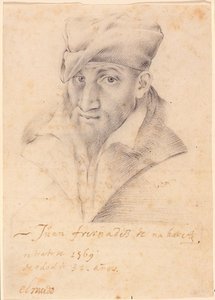
juan fernández de navarrete
1526 - 1579
Quick Facts
- Artistic Movement Or Style: Mannerism
- Artists Or Movements Influenced By This Artist: ['Italian Renaissance']
- Artists Who Influenced This Artist:
- Correggio
- Titian
- Date Of Birth: 1526
- Date Of Death: 1579
- Full Name: Juan Fernández Navarrete
- Nationality: Spanish
- Notable Artworks:
- Nativity
- Baptism of Christ
- Abraham Receiving the Three Angels
- Place Of Birth: Spain
Related Articles

John Singer Sargent's 25 Masterpieces: Portraits & Beyond | ArtsDot
Explore 25 iconic John Singer Sargent paintings – from dazzling portraits to Impressionist landscapes. Discover the stories behind Madame X, El Jaleo & more! Find museum-quality art reproductions and elevate your home decor with ArtsDot.com.

John Constable's Masterpieces: Explore 25 Iconic Landscapes for Your Home
Journey through John Constable's 25 most celebrated landscapes. Explore Romanticism, Dedham Vale & his masterful use of light in iconic paintings like 'Hay Wain'. Find museum-quality art reproductions and elevate your home decor on ArtsDot.com.

El Greco's Masterpieces: Explore 25 Iconic Paintings & Spiritual Visions | ArtsDot
Journey through El Greco's 25 most iconic paintings! Explore the spiritual depth & dramatic beauty of this Spanish Renaissance master. Discover art history, techniques & find museum-quality reproductions for your home at ArtsDot.com.
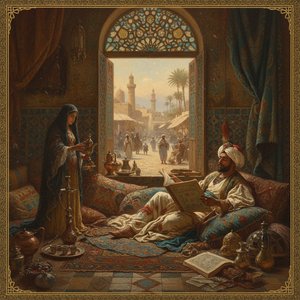
John Frederick Lewis: Orientalism, Detail & Genre Painting in 19th-Century British Art
Explore the captivating Orientalist paintings of John Frederick Lewis! Discover his mastery of detail, genre scenes & influence on 19th-century British art. Learn about his life, techniques & legacy at ArtsDot.
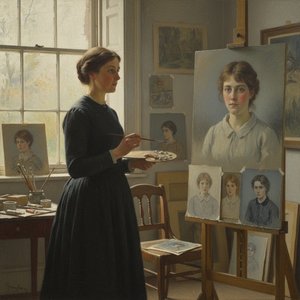
Gwen John: Intimacy, Modernity & the Quiet Power of Welsh Portraiture
Explore the captivating world of Gwen John, a pioneering Welsh artist renowned for her intimate portraits & subtle style. Discover her life, legacy, and how to bring her timeless beauty into your home with ArtsDot.