 Preview
 Send
Send Share
Share
 Details

 Download
 Similars
 X-Ray
X-Ray Diaporama
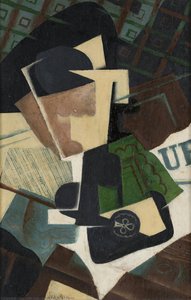
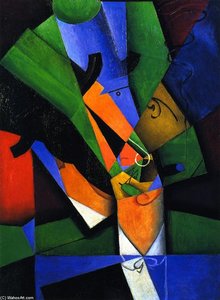
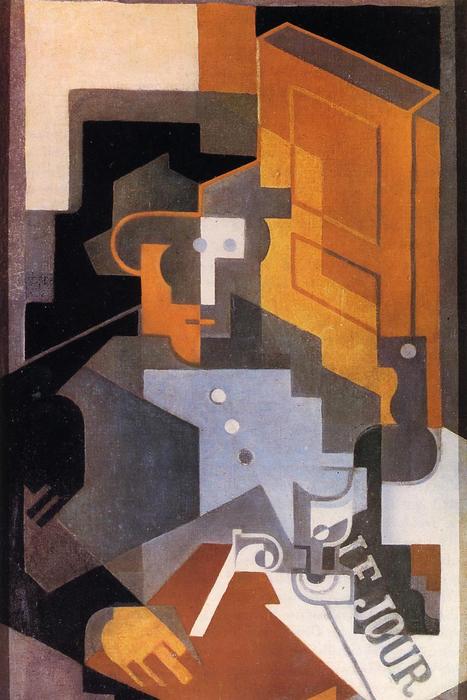
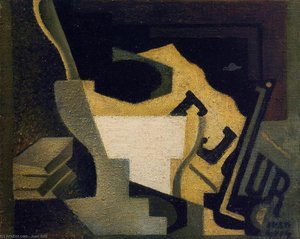
Man from Touraine
 Acrylic On Canvas
- WallArt
- Cubism
 1918
1918 100.0 x 65.0 cm
 Musée National d'Art Moderne Centre Georges Pompidou
 Read More
Hand Made Oil Reproduction
Hand-painted oil on canvas in your size and frame, made to order by our artists. ( Buy Print Buy Image)




P118B $10

P118H $10

P118W $10

P438Z $10

P508JH $12

P508YH $12

P805H $10

P805Z $10

P919BZ $10

P919G $10

P919XJ $10

P959ZH $10

P968JZ $12

W106C $8

W218G $10

W218JH $8

W218Y $10

W307PJ $10

W316G $10

W316PJ $8

W316Y $10

W398PJ $8

W4111J $10

W500HY $15

W500JH $15

W692G $12

W849H $8

W940BG $15

W953PJ $8




Pick from our preset sizes that match the artwork's original proportions.

You may enter your own dimensions to fit a specific frame or space. If your selected size does not match the original image's proportions, we will either crop the artwork or extend the painting with additional hand-painted elements. A digital mockup will be sent for your approval before production begins.
Please note that the on-screen preview does not reflect the actual cropping or extension. Only the mockup will accurately show the final composition.
While custom sizes are available, we recommend selecting a dimension from the predefined list to preserve the original proportions.
After order, ArtsDot.com team will email client for instructions and provide a mockup preview
Worldwide Delivery () in 3/4 weeks instead of standard 5 weeks. (16 August). No compromise on quality.

Free Worldwide Express Shipping

High-Quality Linen Canvas

Full Shipping Insurance

Customs Tax Refund Guarantee

True Color Matching Guarantee

60-Day Return Policy (Defects Only)

100% Money-Back Guarantee

Bulk Discount Offer
 Glass option is only available in size under 110 CM

Man from Touraine
Reproduction Medium
Reproduction Size
-


Total Price
$ 263
Artwork Description
Man from Touraine: A Fragmented Portrait of Modernity
Juan Gris’s “Man from Touraine,” completed in 1918 during the height of Cubist fervor, isn't merely a depiction of a man; it’s an audacious exploration of perception and representation itself. Painted on canvas measuring 100 x 65 cm and currently residing at the Musée National d’Art Moderne Centre Georges Pompidou in Paris, this artwork encapsulates the revolutionary spirit of its time—a period defined by artists like Picasso wrestling with how to capture reality beyond surface appearances.
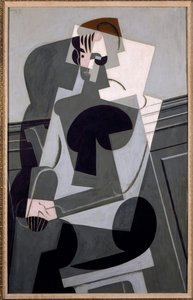
- Composition & Style: The painting presents a man seated down, his head tilted slightly as if observing something unseen. Gris employs a masterful technique of geometric fragmentation, dissecting the figure into interlocking planes—a hallmark of Cubism’s challenge to traditional perspective. Notice how the blue uniform is rendered in angular shards, mirroring the fractured reality he seeks to convey.
- Technique: Gris utilized oil paint on canvas, applying thin layers of pigment to build up texture and depth despite the stylized forms. The meticulous attention to detail—evident in the rendering of the hat and the book—demonstrates a commitment to capturing nuances that wouldn’t be possible with more conventional methods.
- Historical Context: Created amidst the turbulent backdrop of World War I, “Man from Touraine” reflects the anxieties and uncertainties of the era. Cubism emerged as a reaction against Impressionism's focus on fleeting impressions, prioritizing intellectual analysis over sensory experience—a deliberate stance against the comforting illusions of the past.
- Symbolism: The book symbolizes knowledge and contemplation, juxtaposed with the man’s gaze directed outwards. This visual dialogue suggests an internal struggle between observation and understanding, mirroring the broader philosophical debates surrounding the nature of consciousness during this period.
More than just a beautiful image, “Man from Touraine” compels us to reconsider our own ways of seeing. Gris’s fragmented portrait isn't simply showing us what is there; it’s inviting us to actively participate in reconstructing the scene—a testament to Cubism’s enduring power as an artistic paradigm and its profound influence on subsequent generations of artists.
For those seeking inspiration or considering a high-quality reproduction, ArtsDot.com offers exceptional prints that faithfully capture Gris's groundbreaking vision. Explore Wikipedia for further insights into Juan Gris’s life and legacy—a story as captivating as the artwork itself.
Related Artworks
Artist Biography
A Spanish Visionary of Cubism: The Life and Art of Juan Gris
Born José Victoriano González-Pérez in Madrid in 1887, the artist who would become known as Juan Gris embarked on a journey that would place him among the most significant figures of early 20th-century art. His initial path wasn’t one immediately leading to canvas and brush; he pursued engineering at the School of Arts and Sciences, demonstrating an analytical mind that would later profoundly influence his artistic approach. Even during these formative years, a creative spark flickered – contributing drawings to local periodicals hinted at a burgeoning visual talent. It was in 1905 that he adopted the pseudonym Juan Gris, a name resonating with a newfound sense of identity and purpose as he began formal painting studies under José Moreno Carbonero. This marked a pivotal shift, setting him on a course toward artistic innovation.Parisian Awakening and the Embrace of Cubism
The year 1906 witnessed a transformative relocation to Paris, a city then pulsating with artistic energy. Gris immersed himself in this vibrant milieu, forging friendships with luminaries like Henri Matisse, Georges Braque, and Fernand Léger. He initially engaged in satirical illustration for publications such as *L'Assiette au Beurre*, honing his observational skills and developing a keen sense of visual wit. However, the magnetic pull of Pablo Picasso proved particularly influential. Around 1910, Gris began to seriously dedicate himself to painting, moving away from caricature towards the burgeoning language of Cubism. This wasn’t mere imitation; he embarked on a quest to distill the essence of form and space, seeking a new visual order. His early explorations were marked by a deliberate departure from traditional representation, embracing abstraction as a means of capturing reality's underlying structure.The Geometry of Perception: Style and Key Works
Juan Gris’s artistic output is characterized by an exceptional clarity and intellectual rigor. He didn’t simply deconstruct objects; he reconstructed them with deliberate precision, emphasizing geometric forms and a carefully considered palette. This approach led to what became known as his “crystal period,” exemplified in masterpieces like *Still Life Before an Open Window* and *Place Ravignan* (1915). These works showcase a remarkable interplay of planes and angles, creating a sense of depth and solidity while simultaneously challenging conventional notions of perspective. After 1913, Gris wholeheartedly embraced Synthetic Cubism, pioneering the use of *papier collé* – collage – incorporating real-world materials like newspaper clippings and textured papers into his compositions. This technique added another layer of complexity and tactility to his work, blurring the boundaries between painting and sculpture. Notable examples include *Guitar in front of the sea* (1925), a testament to his simplified forms and adherence to cubist principles, and *Homage à Pablo Picasso* (1912), which signaled his growing recognition within the avant-garde art world.Legacy and Lasting Influence
Juan Gris’s contribution to Cubism extends beyond mere stylistic innovation; he brought a unique intellectual depth and structural clarity to the movement. He moved past the analytical phase, towards a more organized and synthetic approach, emphasizing order and precision. His work profoundly influenced the Purist style championed by Amédée Ozenfant and Charles Edouard Jeanneret (Le Corbusier), advocating for a return to classical principles of form and composition. Gris’s emphasis on geometric forms, harmonious color palettes, and the integration of everyday objects into his art established him as a pivotal figure in 20th-century art. His legacy continues to inspire artists today, demonstrating the enduring power of Cubism and the visionary genius of Juan Gris – a Spanish master who reshaped our understanding of perception and representation.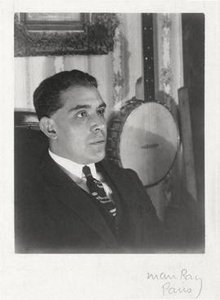
Juan Gris
1887 - 1927 , Spain
Quick Facts
- Artistic Movement Or Style: Cubism, Synthetic Cubism
- Artists Or Movements Influenced By This Artist:
- Purism
- Amédée Ozenfant
- Le Corbusier
- Artists Who Influenced This Artist:
- Pablo Picasso
- Henri Matisse
- Georges Braque
- Date Of Birth: March 23, 1887
- Date Of Death: May 11, 1927
- Full Name: José Victoriano González-Pérez
- Nationality: Spanish
- Notable Artworks:
- Guitar in front of the sea
- Homage à Pablo Picasso
- The Miller
- Portrait of Madame Josette Gris
- Place Of Birth: Madrid, Spain
Related Articles
Pablo Picasso's Masterpieces: Explore 25 Iconic Artworks for Your Home | ArtsDot
Journey through Pablo Picasso's 25 most iconic artworks! Explore Cubism, the Blue Period & masterpieces like Guernica. Find museum-quality reproductions and elevate your home decor with ArtsDot.com. Discover all masterpieces on ArtsDot.com.
Juan Gris: Cubist Deconstruction & Synthesis – A Comprehensive Exploration
Explore the revolutionary art of Juan Gris – a master of Cubism. Discover his unique approach to deconstruction, vibrant Synthetic Cubist works, and lasting influence on modern art. Expert analysis for collectors.
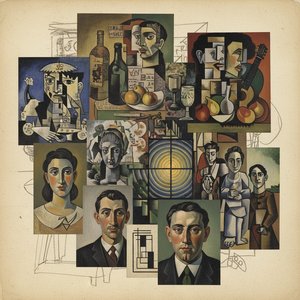
Cubism's Revolution: 10 Masterpieces That Redefined Modern Art | ArtsDot
Explore 10 Cubist masterpieces by Picasso, Braque & more! Delve into the history of this revolutionary art movement. Find museum-quality reproductions and elevate your home decor with ArtsDot. Discover all masterpieces on ArtsDot.com
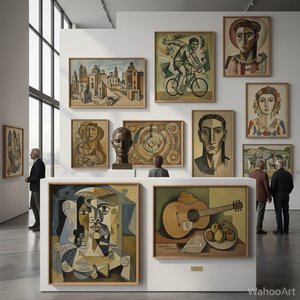
Cubism's Revolution: 10 Masterpieces That Redefined Modern Art |
Journey through Cubism's evolution with 10 iconic masterpieces by Picasso, Braque & more. Explore the stories behind these revolutionary paintings and find museum-quality art reproductions to elevate your home decor at .
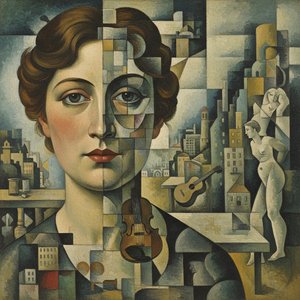
Deconstructing Reality: Cubism's Revolutionary Impact on 20th-Century Art
Explore the revolutionary world of Cubism with ArtsDot. Discover Picasso & Braque's groundbreaking techniques, its philosophical roots, and lasting impact on modern art. Expert insights for collectors.