 Preview
 Send
Send Share
Share
 Details

 Download
 Similars
 X-Ray
X-Ray Diaporama
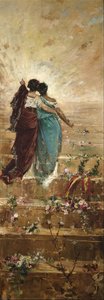
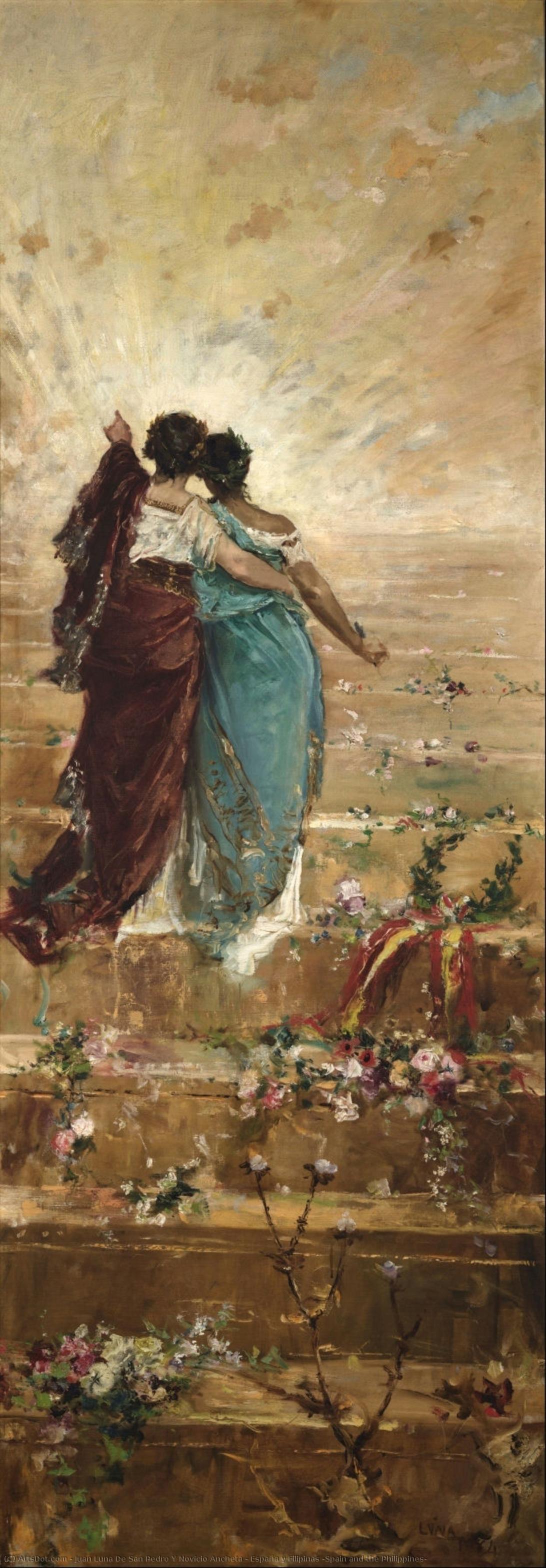
España y Filipinas (Spain and the Philippines)
 Oil On Canvas
- WallArt
- Romanticism
 1884
1884 229.0 x 79.0 cm
 National Gallery Singapore
 Read More
Giclée / Art Print
Museum-quality giclée or canvas print with fast production and flexible finish options. ( Buy Hand Made Painting Buy Image)




P118B $10

P118H $10

P118W $10

P438Z $10

P508JH $12

P508YH $12

P805H $10

P805Z $10

P919BZ $10

P919G $10

P919XJ $10

P959ZH $10

P968JZ $12

W106C $8

W218G $10

W218JH $8

W218Y $10

W307PJ $10

W316G $10

W316PJ $8

W316Y $10

W398PJ $8

W4111J $10

W500HY $15

W500JH $15

W692G $12

W849H $8

W940BG $15

W953PJ $8




Pick from our preset sizes that match the artwork's original proportions.

You may enter your own dimensions to fit a specific frame or space. If your selected size does not match the original image's proportions, we will either crop the artwork or extend the image with a mirrored or solid-fill edge. A digital mockup will be sent for your approval before production begins.
Please note that the on-screen preview does not reflect the actual cropping or extension. Only the mockup will accurately show the final composition.
While custom sizes are available, we recommend selecting a dimension from the predefined list to preserve the original proportions.
Worldwide Delivery () in 2 weeks instead of standard 4/5 weeks. (3 September)

Free Worldwide Express Shipping

High-Quality Linen Canvas

Full Shipping Insurance

Customs Tax Refund Guarantee

True Color Matching Guarantee

60-Day Return Policy (Defects Only)

100% Money-Back Guarantee

Bulk Discount Offer
 Glass option is only available in size under 110 CM

España y Filipinas (Spain and the Philippines)
Giclée / Art Print
Reproduction Size
-


Total Price
$ 63
España y Filipinas (Spain and the Philippines): A Romantic Vision of Colonial Harmony
Juan Luna’s “España y Filipinas,” completed in 1884, stands as an emblem of Philippine Romanticism—a movement that sought to elevate Filipino art through classical ideals while simultaneously grappling with the complexities of colonial rule. More than just a depiction of two women embracing on a balcony overlooking a cityscape, this monumental oil painting embodies a carefully constructed allegory designed to communicate a specific narrative about Spain’s role in shaping the nation’s destiny.
Overall Impression: The artwork exudes a melancholic beauty characteristic of its era. Luna employs loose brushstrokes and expressive color palettes—primarily warm hues—to create an atmosphere of dreamy contemplation. The composition prioritizes the central figures, positioned prominently against a backdrop of stylized buildings and swirling clouds, emphasizing intimacy and connection amidst grandeur.
Detailed Description: Luna meticulously renders the female subjects with graceful poses and flowing drapery, mirroring the stylistic conventions of Romanticism. The balcony itself serves as a visual metaphor for transition—a threshold between Spain and the Philippines—highlighting the desired relationship of paternal guidance and cultural enrichment. Atmospheric perspective subtly diminishes detail in distant structures, reinforcing the painting’s ethereal quality.
Technique & Materials: Luna executed “España y Filipinas” with masterful skill using traditional oil painting techniques. Thick impasto brushstrokes build up textural surfaces—particularly on the women's clothing and balcony railings—adding depth and dynamism to the scene. The artist’s meticulous layering of paint contributes to the overall luminosity and richness of color.
Symbolism & Context: Beyond its aesthetic appeal, “España y Filipinas” carries profound symbolic weight. Luna deliberately portrays Spain as a benevolent protector—represented by a woman adorned with regal attire—guiding the Philippines toward enlightenment and prosperity. The inclusion of floral elements symbolizes harmony between the colonizer and colonized nations, reflecting the prevailing sentiment within Ilustrado circles during the late 19th century.
Historical Significance: Created during the Propaganda Movement, Luna’s masterpiece reflects a fervent desire for Filipino artistic excellence alongside intellectual engagement with European ideals. It exemplifies the Romantic preoccupation with emotion and imagination—a stylistic hallmark that cemented Luna's legacy as one of the Philippines’s foremost artists and secured his place within the broader canon of European art history.
Reproductions Available: Explore a stunning high-quality reproduction of “España y Filipinas” at ArtsDot.com and elevate your interior décor with this timeless masterpiece.
Related Artworks


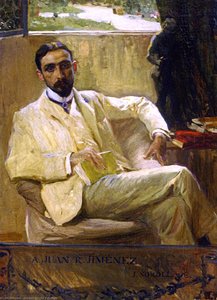
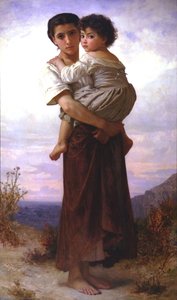
Artist Biography
A Titan of Philippine Romanticism
Juan Luna de San Pedro y Novicio Ancheta (1857–1899) stands as one of the Philippines’s most celebrated artists, a figure whose dramatic canvases captured the spirit of his era and cemented his place in the annals of European art history. Born in Bacnotan, Pangadamente, Luna possessed an innate talent for visual storytelling from a young age—a passion nurtured by early studies at Escuela de Derecho in Manila before he decisively embraced the path of artistic excellence at Academia de Artes y Letras. His journey to Spain in 1877 marked a pivotal moment, propelling him into the orbit of the Real Academia de Bellas Artes de San Fernando where he honed his skills under luminaries like José María Sertor and Eduardo Hibbert Palmer, absorbing the stylistic precepts of European Romanticism and Academic painting.
Luna’s formative years were steeped in classical tradition yet simultaneously receptive to burgeoning Romantic ideals. He diligently studied anatomy and perspective—skills that would prove invaluable in his subsequent artistic endeavors. However, it was the 1884 Madrid Exposition of Fine Arts where Luna truly ascended to international prominence. Alongside Félix Resurrección Hidalgo, he secured a remarkable double victory – gold for ‘La Batalla de Mactan’ and silver for ‘Spoliarium’, marking an unprecedented achievement for Filipino artists abroad. These monumental paintings captivated audiences with their grandeur, theatrical composition, and masterful depiction of historical events—specifically Magellan's conquest of Cebu and the Roman Forum respectively—demonstrating Luna’s command of technique and his ability to convey profound emotion through visual imagery.
Mastery of Light and Emotion
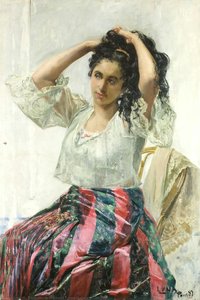
Luna’s artistic style is characterized by a striking blend of European academic conventions and Romantic fervor. He meticulously rendered anatomical detail with an intensity that breathed life into his subjects, often utilizing dramatic chiaroscuro to heighten the emotional stakes of his narratives. His work frequently moved between the epic scale of historical allegories and the intimate, soulful essence of portraiture. In pieces such as 'Feminine Figure', one can witness a contemplative stillness, where the artist captures the delicate textures of hair and skin, inviting the viewer into a moment of timeless beauty and quiet introspection.
Beyond the purely aesthetic, Luna’s work often carried deep political and symbolic weight. His ability to weave complex themes of identity and colonial struggle into his compositions allowed him to speak to both the Filipino struggle for sovereignty and the broader human condition. A prime example is ‘España y Filipinas’ (Spain and the Philippines), a stunning 1884 oil painting that utilizes the romanticized imagery of two women to explore the intricate, often turbulent relationship between the colonizer and the colonized. Through rich textures and a masterful use of color, Luna transformed historical commentary into high art.
Legacy and Historical Significance
The legacy of Juan Luna extends far beyond the borders of the Philippines. As a pioneer who conquered the European art scene, he provided a sense of dignity and intellectual parity for Filipino artists during a period of intense colonial tension. His achievements served as a beacon of pride, proving that the artistry emerging from the archipelago could stand toe-to-toe with the masters of the West. His life, though marked by both immense triumph and personal tragedy, remains an essential chapter in the story of 19th-century art.
To understand Luna is to understand the intersection of art, politics, and national identity. His contributions can be summarized through several key pillars:
- Technical Excellence: His mastery of the Academic style, particularly in anatomy and perspective.
- Cultural Bridge: His role in bringing Filipino talent to the forefront of the international stage in Madrid and beyond.
- Symbolic Depth: The use of historical and allegorical themes to reflect contemporary political realities.
- Romantic Influence: The infusion of dramatic emotion and light into classical compositions.
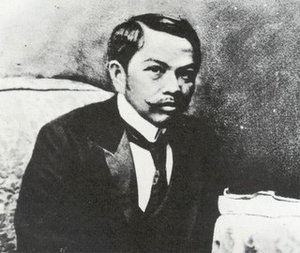
juan luna de san pedro y novicio ancheta
1857 - 1899 , Philippines
Quick Facts
- Artistic Movement Or Style: European Academic Style
- Artists Or Movements Influenced By This Artist: ['Romanticism']
- Artists Who Influenced This Artist: ['Felix Ressurreccion Hidalgo']
- Date Of Birth: October 25, 1857
- Date Of Death: December 7, 1899
- Full Name: Juan Luna de San Pedro y Novicio Ancheta
- Nationality: Filipino
- Notable Artworks:
- Spoliarium
- La batalla de Mactan
- Place Of Birth: Bacnotan, Philippines
Related Articles

Goya's Masterpieces: Explore 25 Iconic Paintings & Art Prints | ArtsDot
Delve into the world of Francisco Goya with ArtsDot. Explore 25 iconic paintings – from 'The Third of May' to his haunting Black Paintings. Discover the stories, techniques & emotions behind these Spanish masterpieces. Find museum-quality art reproductions for your home at ArtsDot.com!
Romantic Realism's Finest: 10 Masterpieces for Your Home | ArtsDot
Explore 10 defining masterpieces of Romantic Realism! Discover Courbet, Millet & Daumier's powerful paintings—capturing emotion and social realities. Find museum-quality reproductions for your home at ArtsDot.com.

Romantic Landscapes: 10 Masterpieces for Your Home | ArtsDot
Journey through 10 Romantic landscape masterpieces by Friedrich, Turner & Cole. Explore emotional art, sublime nature scenes & iconic 19th-century paintings. Find museum-quality reproductions for your home at ArtsDot.com – discover the full collection online!
Romantic Masterpieces: 10 Artworks for a Timeless Home Decor Aesthetic
Fall in love with art! Explore 10 iconic romantic paintings – from Monet & Bouguereau to Fragonard. Discover the stories behind these masterpieces and find museum-quality reproductions for your home decor at .
The Sublime and the Picturesque: Exploring Emotion & Nature in Romantic Landscape Painting
Explore the emotional power of Romantic landscape painting! Discover the sublime & picturesque traditions, key artists like Friedrich & Cole, and find your perfect artwork at ArtsDot.