 Preview
 Send
Send Share
Share
 Details

 Download
 Similars
 X-Ray
X-Ray Diaporama
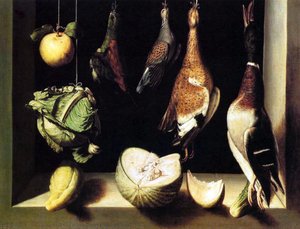
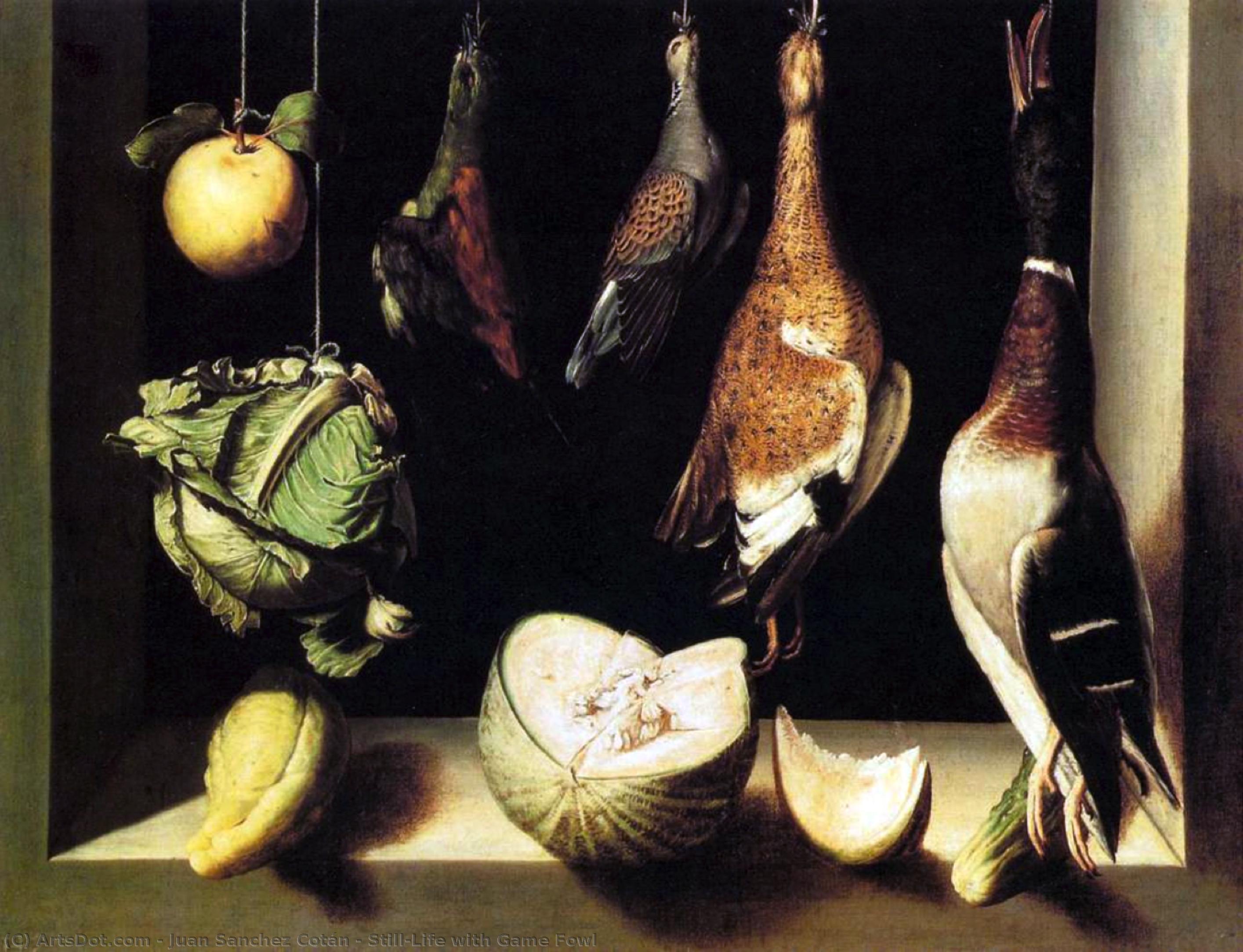
Still-Life with Game Fowl
 Acrylic On Canvas
- WallArt
- Baroque Realism
 1600
1600 68.0 x 89.0 cm
 Art Institute of Chicago
 Read More
Hand Made Oil Reproduction
Hand-painted oil on canvas in your size and frame, made to order by our artists. ( Buy Print Buy Image)




P118B $10

P118H $10

P118W $10

P438Z $10

P508JH $12

P508YH $12

P805H $10

P805Z $10

P919BZ $10

P919G $10

P919XJ $10

P959ZH $10

P968JZ $12

W106C $8

W218G $10

W218JH $8

W218Y $10

W307PJ $10

W316G $10

W316PJ $8

W316Y $10

W398PJ $8

W4111J $10

W500HY $15

W500JH $15

W692G $12

W849H $8

W940BG $15

W953PJ $8




Pick from our preset sizes that match the artwork's original proportions.

You may enter your own dimensions to fit a specific frame or space. If your selected size does not match the original image's proportions, we will either crop the artwork or extend the painting with additional hand-painted elements. A digital mockup will be sent for your approval before production begins.
Please note that the on-screen preview does not reflect the actual cropping or extension. Only the mockup will accurately show the final composition.
While custom sizes are available, we recommend selecting a dimension from the predefined list to preserve the original proportions.
After order, ArtsDot.com team will email client for instructions and provide a mockup preview
Worldwide Delivery () in 3/4 weeks instead of standard 5 weeks. (17 August). No compromise on quality.

Free Worldwide Express Shipping

High-Quality Linen Canvas

Full Shipping Insurance

Customs Tax Refund Guarantee

True Color Matching Guarantee

60-Day Return Policy (Defects Only)

100% Money-Back Guarantee

Bulk Discount Offer
 Glass option is only available in size under 110 CM

Still-Life with Game Fowl
Reproduction Medium
Reproduction Size
-


Total Price
$ 263
Artwork Description
Juan Sánchez Cotán: The Soul of Still Life
Juan Sánchez Cotán (1560-1627) stands as a singular figure in Spanish Baroque art, recognized as the foremost innovator of realism during his era. Born in Orgaz, near Toledo, he emerged from a milieu steeped in religious fervor and artistic tradition—a formative influence that would permeate his entire oeuvre. His legacy rests primarily on his breathtaking still lifes ("bodegones"), paintings that transcended mere depiction to embody profound spiritual contemplation and an unparalleled mastery of light and texture. These weren't simply representations of objects; they were meditations on mortality, faith, and the beauty inherent in God’s creation—a distinction that cemented Cotán’s place as a pioneer of psychological depth within his artistic circle.Early Life & Training: A Foundation in Humanism
Sánchez Cotán’s artistic journey began in Orgaz, where he received a robust grounding in humanist scholarship alongside his religious upbringing. He studied under Blas de Prado, whose Mannerist style—characterized by subtle distortions and atmospheric perspective—provided a crucial springboard for Cotán's own stylistic evolution. Prado’s influence instilled in Cotán a meticulous attention to detail and an understanding of how visual illusion could convey emotional resonance – principles that would become central to his distinctive approach. This careful observation of the natural world, combined with intellectual curiosity, shaped him into an artist deeply attuned to both aesthetic beauty and philosophical inquiry.Religious Patronage & Toledo Period (1590-1603): The Influence of Faith
Cotán swiftly established himself as a favored painter for the Catholic Church in Toledo, securing commissions from prominent noble families and religious institutions. This patronage afforded him access to considerable resources and allowed him to immerse himself in the artistic traditions of his time—a period marked by intense spiritual devotion and artistic experimentation. The austere grandeur of Toledo’s cathedral commissioned several monumental altarpieces, showcasing Cotán's ability to synthesize visual splendor with solemn piety. His works frequently incorporated symbolic elements reflecting Christian beliefs, demonstrating a commitment to conveying moral truths through art.Technique & Style: Mastering Light and Texture
Cotán’s artistic technique was revolutionary for its time. Unlike many of his contemporaries who favored idealized representations, he achieved remarkable realism by employing a groundbreaking method known as “sfumato”—a subtle blending of tones that created an ethereal haze and softened contours. This masterful manipulation of light and shadow wasn't merely decorative; it served to heighten the emotional impact of the painting and imbue objects with a palpable sense of presence. He meticulously rendered textures—the velvety sheen of fruit skins, the rough surface of earthenware jugs—capturing nuances that would have been impossible for earlier artists. The result was an astonishingly convincing illusion of reality, elevating Cotán’s still lifes to unparalleled heights of artistic achievement.Symbolism & Emotional Impact: Reflections on Mortality
Cotán's paintings are laden with symbolic meaning, reflecting the pervasive influence of Renaissance humanist thought and Christian theology. Recurring motifs—such as skulls, withered flowers, and decaying fruit—served as reminders of human mortality and the transience of earthly existence – a concept deeply rooted in Stoic philosophy and biblical scripture. These images weren’t intended to frighten viewers but rather to provoke contemplation on the inevitability of death and the importance of living virtuously. Cotán's still lifes invite us to consider not only the beauty of the natural world but also its connection to the spiritual realm, prompting a profound reflection on our own place within the grand scheme of creation. His works continue to resonate with audiences today, offering timeless insights into human experience and artistic genius.Related Artworks
Artist Biography
The Silent Majesty of the Spanish Baroque
In the quiet, sun-drenched landscapes of 16th-century Spain, a singular vision began to emerge that would forever alter the course of European still life painting. Juan Sánchez Cotán, born in the historic town of Orgaz near Toledo around 1560, was not merely a painter of objects, but a poet of the profound. While his contemporaries often sought the grand drama of sweeping religious narratives or the ornate complexities of Mannerism, Cotán turned his gaze inward, finding the infinite within the infinitesimal. His work serves as a bridge between the fading echoes of the Renaissance and the burgeoning, shadow-drenched intensity of the Baroque era.
The foundations of his artistry were laid in the intellectual and spiritual crucible of Toledo. As a student of Blas de Prado, Cotán inherited a certain Mannerist elegance, yet he possessed an innate drive to strip away artifice. His early years were spent navigating the religious and aristocratic circles of Toledo, where he mastered the art of the altarpiece and the portrait. However, it was his transition toward the bodegón—the Spanish still life—that would secure his immortality. In these works, he achieved a level of realism that felt less like mere imitation and more like a spiritual encounter with the physical world.
The Geometry of Devotion
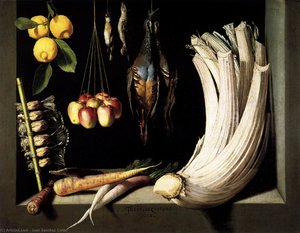
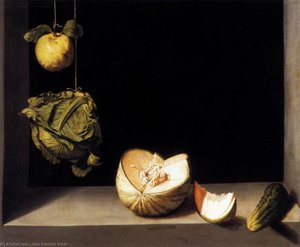
To look upon a Sánchez Cotán masterpiece is to enter a space of monastic stillness. His most celebrated period, roughly between 1602 and 1617, is defined by an almost mathematical precision. He frequently utilized a compositional device known as the shallow niche, where objects are arranged within a dark, recessed space that seems to push forward toward the viewer. Within these architectural confines, a cabbage, a melon, or a quince is suspended in a state of eternal grace. There is no clutter here; there is only the essential.
The technique employed by Cotán was nothing short of revolutionary for his time. He utilized tenebrism—the dramatic contrast between deep, impenetrable shadows and piercing highlights—to sculpt his subjects out of the darkness. This use of light does more than just define form; it imbues humble foodstuffs with a divine presence. A single drop of moisture on a cucumber or the textured skin of a lemon becomes a subject of intense contemplation. Through this meticulous attention to detail, Cotán transformed the mundane into the monumental, suggesting that the divine could be found in the simplest elements of creation.
His compositions are characterized by several defining elements:
- Mathematical Harmony: An arrangement of objects that feels balanced yet organic, often following a strict geometric logic.
- Austere Realism: A rejection of the ostentatious pronkstilleven style found in the Netherlands in favor of a stark, humble beauty.
- Spiritual Depth: The use of light to evoke a sense of mystery and religious meditation.
A Legacy Carved in Shadow
As his life progressed, Cotán’s path took a turn toward even deeper asceticism. In 1612, he moved to Granada, eventually dedicating himself to the Carthusian monastery. This period of intense religious devotion mirrored the austerity of his paintings, as he moved away from the complex still lifes of his Toledo years toward a life of quiet contemplation. Though his output changed, the spiritual essence that defined his earlier work remained a permanent fixture of his soul.
The historical significance of Juan Sánchez Cotán cannot be overstated. He was a pioneer who paved the way for the great masters of the Spanish Golden Age. Without his foundational realism and his mastery of light, the works of Francisco de Zurbarán might never have achieved their characteristic spiritual weight. He taught future generations that the smallest object, when viewed with enough reverence, can contain the entire universe. Today, his paintings remain much more than historical artifacts; they are windows into a world where silence speaks and where every shadow holds a secret.
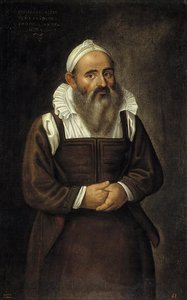
juan sanchez cotan
1560 - 1627 , Spain
Quick Facts
- Artistic Movement Or Style: Baroque Realism
- Artists Or Movements Influenced By This Artist: ['Zurbarán']
- Artists Who Influenced This Artist: ['Blas de Prado']
- Date Of Birth: 1560
- Full Name: Juan Sánchez Cotán
- Nationality: Spanish
- Notable Artworks:
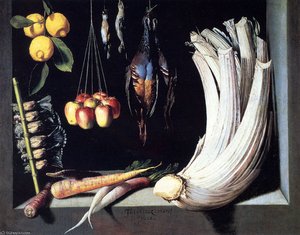
- Quince, cabbage, melon and cucumber
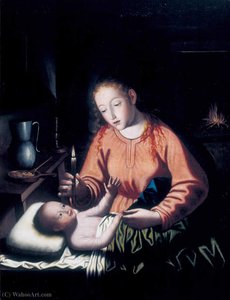
- Virgin waking the boy
- Place Of Birth: Orgaz, Spain
Related Articles

Baroque Masterpieces: 10 Paintings That Defined an Era |
Journey through the drama & grandeur of Baroque art! Explore 10 masterpieces by Caravaggio, Rembrandt, Rubens & more. Discover stunning oil paintings, rich colors & timeless stories. Find museum-quality reproductions at .

The Dramatic Flourish: Exploring the Baroque Movement's Enduring Legacy in Art History
Explore the dramatic world of Baroque art! Discover iconic artists like Caravaggio & Rubens, defining techniques, and its lasting impact on art history. Expert insights for collectors & enthusiasts at ArtsDot.
Juan de Valdés Leal: Baroque Realism, Memento Mori & Theatricality of Spanish Grief
Explore the powerful Baroque realism of Juan de Valdés Leal (1622-1690). Discover his somber masterpieces, iconic 'In Ictu Oculi', and profound explorations of mortality. Museum-quality reproductions available at ArtsDot.
Silent Narratives: Exploring the Enduring Appeal of Still Life Painting Across Centuries
Explore the rich history of still life painting with ArtsDot. Discover Dutch Masters, decode vanitas symbolism & learn about collecting timeless art. Expert insights and museum-quality reproductions.
Romantic Realism's Finest: 10 Masterpieces for Your Home | ArtsDot
Explore 10 defining masterpieces of Romantic Realism! Discover Courbet, Millet & Daumier's powerful paintings—capturing emotion and social realities. Find museum-quality reproductions for your home at ArtsDot.com.