 Preview
 Send
Send Share
Share
 Details

 Download
 Similars
 X-Ray
X-Ray Diaporama
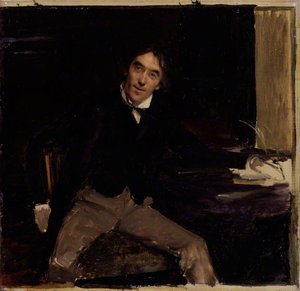
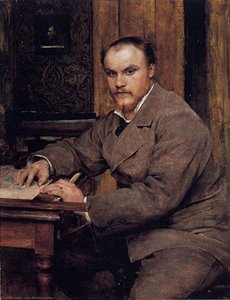
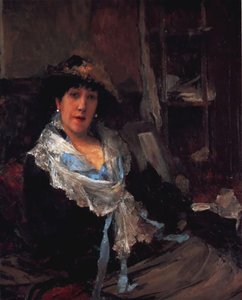
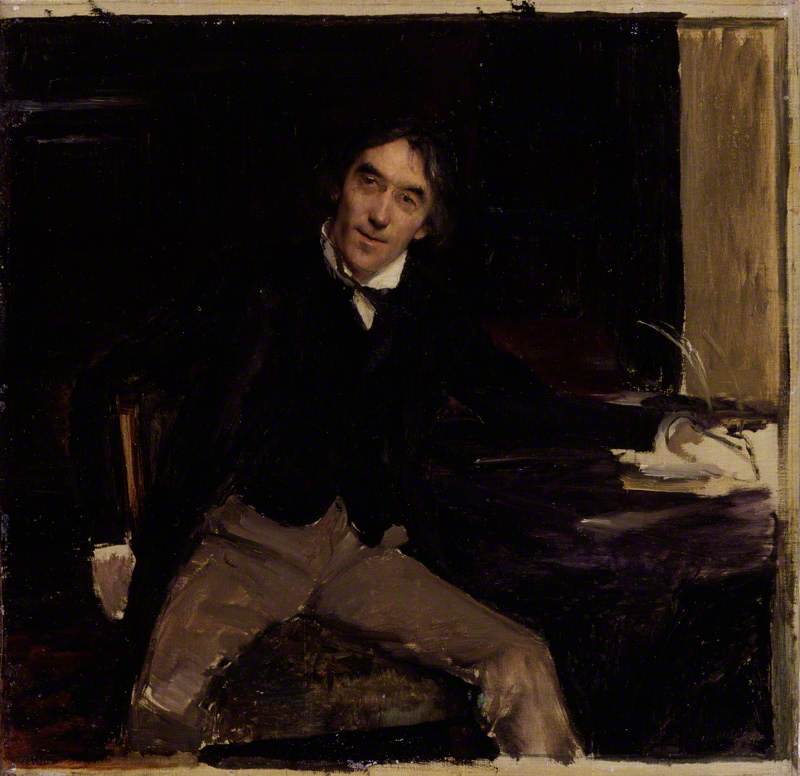
Sir Henry Irving
 Oil On Canvas
- WallArt
- Naturalism
 1880
1880- 19th Century
 43.0 x 46.0 cm
 Read More
Hand Made Oil Reproduction
Hand-painted oil on canvas in your size and frame, made to order by our artists. ( Buy Print Buy Image)




P118B $10

P118H $10

P118W $10

P438Z $10

P508JH $12

P508YH $12

P805H $10

P805Z $10

P919BZ $10

P919G $10

P919XJ $10

P959ZH $10

P968JZ $12

W106C $8

W218G $10

W218JH $8

W218Y $10

W307PJ $10

W316G $10

W316PJ $8

W316Y $10

W398PJ $8

W4111J $10

W500HY $15

W500JH $15

W692G $12

W849H $8

W940BG $15

W953PJ $8




Pick from our preset sizes that match the artwork's original proportions.

You may enter your own dimensions to fit a specific frame or space. If your selected size does not match the original image's proportions, we will either crop the artwork or extend the painting with additional hand-painted elements. A digital mockup will be sent for your approval before production begins.
Please note that the on-screen preview does not reflect the actual cropping or extension. Only the mockup will accurately show the final composition.
While custom sizes are available, we recommend selecting a dimension from the predefined list to preserve the original proportions.
After order, ArtsDot.com team will email client for instructions and provide a mockup preview
Worldwide Delivery () in 3/4 weeks instead of standard 5 weeks. (16 August). No compromise on quality.

Free Worldwide Express Shipping

High-Quality Linen Canvas

Full Shipping Insurance

Customs Tax Refund Guarantee

True Color Matching Guarantee

60-Day Return Policy (Defects Only)

100% Money-Back Guarantee

Bulk Discount Offer
 Glass option is only available in size under 110 CM

Sir Henry Irving
Reproduction Medium
Reproduction Size
-


Total Price
$ 263
Artwork Description
A Glimpse into Victorian Grandeur: Sir Henry Irving
To stand before this portrait of Sir Henry Irving is to be enveloped in the rich, smoky atmosphere of a bygone era—a moment suspended between the brilliance of the stage and the quiet intimacy of a private study. The artist has captured not merely a likeness, but the very essence of theatrical charisma filtered through the lens of late 19th-century naturalism. Irving dominates the composition, seated in a posture that suggests both repose and latent energy. The overall impression is one of profound depth; the viewer feels as though they have stumbled upon a private viewing, privy to a fleeting moment of contemplation from a titan of Victorian culture.
Mastery of Light and Shadow: Technique and Atmosphere
The technical brilliance here lies in the masterful handling of light, employing a dramatic chiaroscuro that speaks volumes without uttering a word. Strong illumination catches Irving’s face and upper torso, allowing the subtle nuances of his expression to emerge from the surrounding velvet darkness. This is not the flat clarity of modern photography; rather, it is an oil painting executed with visible, impasto-like brushstrokes. These strokes give the surface a palpable texture, inviting the eye to trace the artist's hand across the canvas. The background dissolves into suggestive shadow and muted tones—deep browns, blacks, and hints of yellow-gold illumination—creating an atmospheric depth that pulls the viewer inward, making the figure feel both monumental and deeply personal.
The Naturalist Gaze: Context and Style
Painted around 1880 by Jules Bastien-Lepage, this work stands as a quintessential example of French Naturalism. Bastien-Lepage, known for grounding his art in the authentic lives and landscapes of France, brought an honesty to portraiture that bridged the gap between academic realism and the emerging freedoms of Impressionism. Here, that commitment to natural observation is evident; the forms are organic, the pose informal, suggesting a life lived outside the rigid confines of formal studio sittings. The style eschews sharp definition for suggestion, allowing light itself to sculpt the contours of Sir Henry Irving’s distinguished features.
Symbolism and Emotional Resonance
The somber palette—dominated by deep earth tones contrasted with luminous skin highlights—lends the piece an air of profound seriousness and introspection. It speaks to the weight of public life, the solitude that can accompany great fame, and the enduring mystery surrounding artistic genius. For the collector or designer, this painting offers more than mere decoration; it is a narrative anchor. It evokes the romance of the Victorian age while possessing a timeless quality derived from its emotional rawness. Reproducing this piece allows one to infuse a space with intellectual depth and historical gravitas.
Related Artworks
![Pas Mèche [nothing Doing] — Jules Bastien-lepage, Naturalist Painting](/media/artworks/images/thumbnails/7e/ef/7eef15355f4b4c9cac0a91bcd75c9239.jpg)
Artist Biography
A Pioneer of Naturalism: The Life and Art of Jules Bastien-Lepage
Jules Bastien-Lepage emerged as a pivotal figure in late 19th-century French painting, a bridge between the established Realist tradition and the burgeoning Impressionist movement. Born in 1848 in the small village of Damvillers, nestled within France’s Meuse region, his artistic trajectory was deeply rooted in the landscapes and lives of rural France. This connection to his origins wasn't merely biographical; it became the very essence of his art, imbuing his canvases with an authenticity that resonated profoundly with audiences seeking a more honest depiction of the world around them. His brief but intensely productive career, tragically cut short by his death in 1884 at just thirty-six years old, left an indelible mark on the development of Naturalism and influenced artists across Europe.From Rural Roots to Artistic Training
Bastien-Lepage’s initial artistic education came from his father, himself a painter who recognized and nurtured his son's talent. The young Jules filled sketchbooks with studies of the countryside, capturing the rhythms of rural life with an observant eye. This early immersion in the natural world would remain a defining characteristic of his work. Formal training followed at the École des Beaux-Arts in Paris, beginning in 1867, where he studied under Alexandre Cabanel – a prominent academic painter known for his polished technique and historical subjects. While mastering the skills demanded by the Salon system, Bastien-Lepage simultaneously harbored a desire to break free from its constraints. The outbreak of the Franco-Prussian War in 1870 interrupted his studies, leading him to serve as a volunteer soldier. This experience, coupled with a subsequent illness, brought him back to Damvillers, reinforcing his commitment to portraying the lives of those he knew best: the peasants and laborers of his homeland.The Rise of Naturalism and Bastien-Lepage’s Style
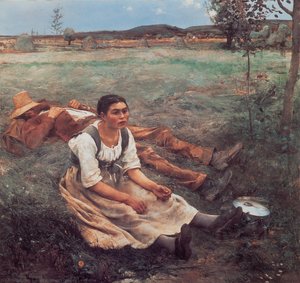
Upon returning to Paris after the war, Bastien-Lepage began exhibiting works that signaled a departure from traditional academic painting. His style was characterized by an intricate application of paint – small, deliberate brushstrokes building up texture and form – combined with a palette dominated by warm, natural tones. He embraced *plein air* painting, working directly from nature to capture the fleeting effects of light and atmosphere. This dedication to observation and authenticity aligned him with the emerging Naturalist movement, which sought to depict life as it was, without idealization or romanticism. Haymaking (1877), exhibited at the Salon in 1879, proved to be a watershed moment, establishing Bastien-Lepage as a leader of this new artistic direction. The painting’s realistic portrayal of rural workers and its luminous depiction of the countryside captivated critics and audiences alike. He wasn't merely documenting peasant life; he was elevating it, imbuing his subjects with dignity and respect.Major Works and Lasting Influence
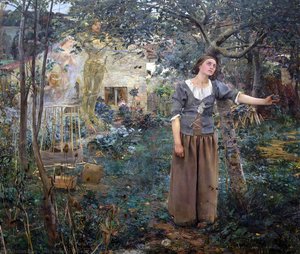
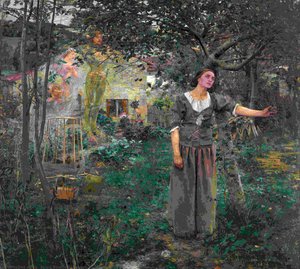
Bastien-Lepage’s success extended beyond genre scenes. His portraiture gained considerable acclaim, notably Portrait of my Grandfather (1874), which garnered early recognition, and a striking portrait of the celebrated actress Sarah Bernhardt in 1879 – a commission that brought him further prominence. He also tackled historical subjects with a naturalist sensibility, as exemplified by his painting Joan of Arc, now housed at the Musée d'Orsay. This work presented Joan not as a mythical heroine but as a young woman rooted in her rural origins, reflecting Bastien-Lepage’s commitment to portraying figures within their social and historical context. By 1883, his influence was so widespread that critics observed artists across Europe were emulating his style – a testament to the power of his vision. His work resonated with British painters like George Clausen and Tom Roberts, who incorporated elements of his naturalism into their own depictions of rural life. Jules Bastien-Lepage’s legacy lies not only in the beauty and emotional depth of his paintings but also in his role as a catalyst for artistic change. He paved the way for future generations of artists to explore new ways of representing the world around them, challenging conventional norms and embracing a more honest and authentic approach to art.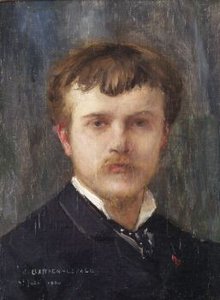
Jules Bastien-Lepage
1848 - 1884 , France
Quick Facts
- Artistic Movement Or Style: Naturalism
- Artists Or Movements Influenced By This Artist: ['Impressionism']
- Artists Who Influenced This Artist:
- Realist Movement
- George Clausen
- Tom Roberts
- Date Of Birth: 1848
- Date Of Death: 1884
- Full Name: Jules Bastien-Lepage
- Nationality: French
- Notable Artworks:
- Portrait of my Grandfather
- Joan of Arc
- Haymaking
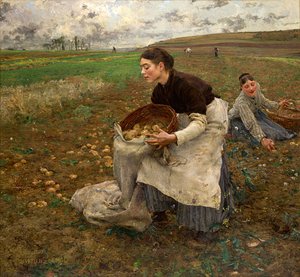
- October - gathering potatoes
- At Harvest Time
- Laura, Lady Alma Tadema
- Sarah Bernhardt
- Charcoal landscape, winter
- Place Of Birth: Damvillers, France
Related Articles

The Enduring Legacy of Oil on Canvas: Technique, History & Aesthetic Impact
Explore the rich history & techniques of oil painting – from Renaissance masters to Impressionism. Discover pigments, layering methods, and why this timeless medium endures. Expert insights for artists & art enthusiasts.

Oil on Canvas: A Historical & Technical Exploration of a Timeless Artistic Medium
Explore the rich history & enduring techniques of oil painting on canvas. Discover the science behind its longevity, conservation practices, and contemporary relevance. Expert insights for art enthusiasts.

The Enduring Legacy of Oil on Canvas: Technique, History & Contemporary Practice
Explore the rich history & enduring techniques of oil painting on canvas. Discover the science behind its longevity, conservation practices, and contemporary relevance. Expert insights for art enthusiasts.
Oil on Canvas Masters: 10 Paintings That Redefined Art History |
Journey through art history with our guide to 10 legendary oil on canvas masterpieces! Explore iconic works by Van Gogh, Monet & Rembrandt. Find museum-quality reproductions and elevate your home decor at . Discover all masterpieces online.

The Enduring Power of Painting: A Historical & Contemporary Exploration of Form and Emotion
Explore the rich history & enduring techniques of oil painting with ArtsDot. Discover masterpieces, learn about art collecting, and find authentic handmade reproductions crafted by skilled artists.