 Send
Send Share
Share
 Details

 Download
 Similars
 Diaporama
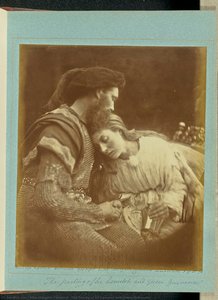
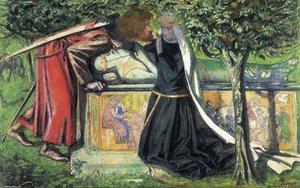
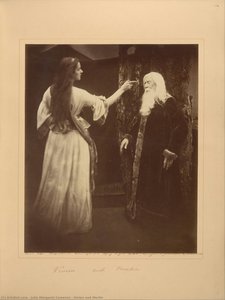
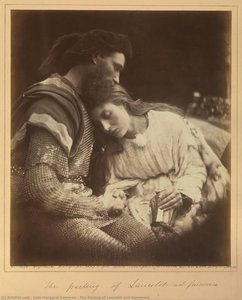
The Parting of Lancelot and Guinevere
 Digital
- Digital
- Romantic Photography
 1874
1874- 19th Century
 33.0 x 28.0 cm
 Metropolitan Museum of Art
 Read More
Hand Made Oil Reproduction
Hand-painted oil on canvas in your size and frame, made to order by our artists. ( Buy Print Buy Image)




































Pick from our preset sizes that match the artwork's original proportions.

You may enter your own dimensions to fit a specific frame or space. If your selected size does not match the original image's proportions, we will either crop the artwork or extend the painting with additional hand-painted elements. A digital mockup will be sent for your approval before production begins.
Please note that the on-screen preview does not reflect the actual cropping or extension. Only the mockup will accurately show the final composition.
While custom sizes are available, we recommend selecting a dimension from the predefined list to preserve the original proportions.
After order, ArtsDot.com team will email client for instructions and provide a mockup preview
Worldwide Delivery () in 3/4 weeks instead of standard 5 weeks. (5 September). No compromise on quality.

Free Worldwide Express Shipping

High-Quality Linen Canvas

Full Shipping Insurance

Customs Tax Refund Guarantee

True Color Matching Guarantee

60-Day Return Policy (Defects Only)

100% Money-Back Guarantee

Bulk Discount Offer
 Glass option is only available in size under 110 CM

The Parting of Lancelot and Guinevere
Reproduction Medium
Reproduction Size
-


Total Price
$ 263
A Poignant Echo of Arthurian Tragedy
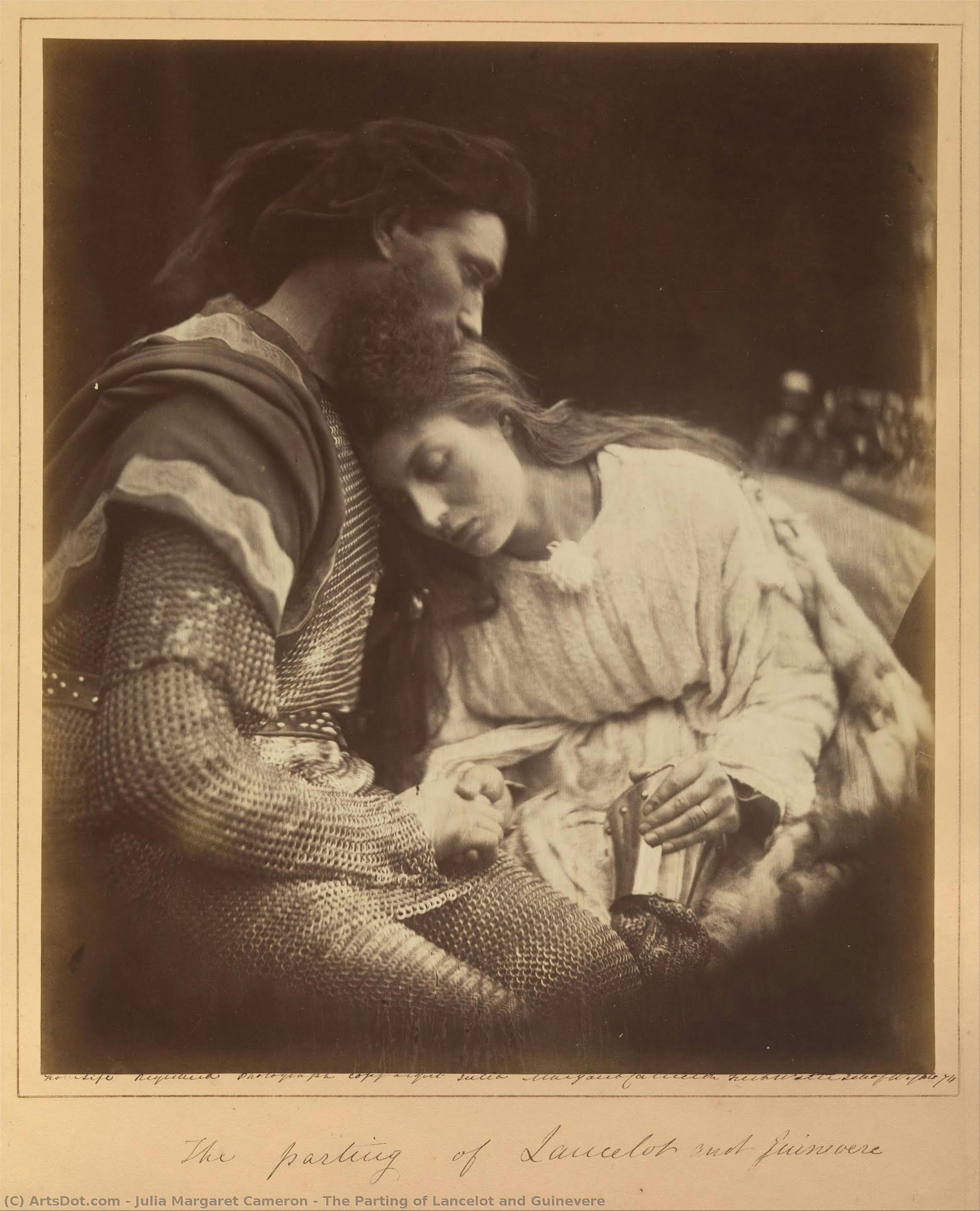
In the soft, silvered shadows of Julia Margaret Cameron’s 1874 masterpiece, "The Parting of Lancelot and Guinevere," we encounter more than a mere photographic record; we witness a soul-stirlyng fragment of legend brought to life. This evocative work captures the precise, agonizing moment of farewell between the legendary knight and his queen, as they prepare to part ways following their clandestine passion. Commissioned by the poet Alfred Lord Tennyson for his epic Idylls of the King, the image serves as a visual bridge between the written word and the photographic lens, translating the rhythmic sorrow of Tennyson’s verse into a tangible, haunting atmosphere. To gaze upon this piece is to step into a world where the boundaries between reality and myth dissolve, leaving only the raw, palpable ache of impending loss.
The composition is a masterclass in emotional intimacy, positioning the two figures in a closeness that suggests both their profound connection and the tragic weight of their separation. Clad in medieval-inspired attire that evokes the romanticism of the Pre-Raphaelite era, Lancelot and Guinevere are rendered not with the clinical sharpness of traditional portraiture, but with a dreamlike tenderness. The woman leans against the man’s shoulder, a gesture of vulnerability and reliance that speaks volumes about their shared history. For collectors and decorators, this piece offers a profound sense of narrative depth, making it an ideal centerpiece for spaces designed to evoke contemplation, nostalgia, or a sophisticated appreciation for historical romanticism.
The Alchemy of Soft Focus and Light
What truly distinguishes Cameron’s work is her revolutionary departure from the technical standards of her era. While her contemporaries sought the crisp, unyielding clarity of the Daguerreotype, Cameron embraced the aesthetic of Pictorialism. She deliberately utilized soft-focus techniques to create an ethereal haze, a deliberate blurring that mimics the way memory itself functions—fragmented, hazy, and colored by emotion rather than precise detail. This technique allows light to bleed softly around the edges of her subjects, creating an atmospheric illusion that feels less like a photograph and more like a fading dream.
This intentional lack of sharp definition serves a higher purpose: it prioritizes the essence of the human experience over the mere documentation of physical features. The muted, monochromatic palette emphasizes texture and shadow, drawing the eye to the subtle interplay of light on fabric and skin. For an interior designer, this soft-focus quality provides a unique advantage; the artwork does not demand attention through jarring brightness but rather invites the viewer into its quiet, melancholic orbit, complementing sophisticated, moody, or classically inspired decor with an understated elegance.
A Legacy of Symbolism and Artistic Vision
Beyond its technical brilliance, "The Parting of Lancelot and Guinevere" is steeped in a rich tapestry of symbolism. Every element, from the heavy drapery to the somber postures, reinforces the themes of duty, desire, and inevitable heartbreak. Cameron’s ability to capture the intangible—the weight of a secret, the sting of a goodbye—marks her as a pioneer who saw the camera not just as a tool for science, but as a medium for high art. Her work resonates with those who value art that tells a story, offering a window into the Victorian fascination with Arthurian legend and the Romantic movement's obsession with the sublime.
Owning a high-quality reproduction of this photograph allows one to bring this piece of history into a contemporary setting, bridging the gap between the 19th century and the present day. Whether placed in a private library, a grand hallway, or a curated gallery wall, the image acts as a silent storyteller, providing an anchor of historical depth and emotional resonance that continues to captivate the modern imagination.
Related Artworks
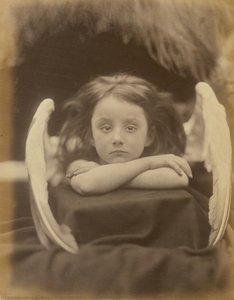
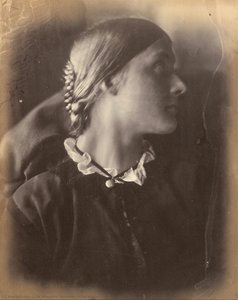
![[julia Jackson] — Julia Margaret Cameron, Victorian Photography](/media/artworks/images-thumb/38/f1/38f1667da1e9e5ced766b2acd175f4c6.jpg)
Artist Biography
A Pioneering Vision: The Life and Art of Julia Margaret Cameron
Julia Margaret Cameron, a name synonymous with the evocative power of 19th-century photography, emerged as a significant artistic voice remarkably late in life. Born Julia Pattle on June 11, 1815, in Calcutta, India, her early years were steeped in the vibrant cultural tapestry of Anglo-Indian society and shaped by a lineage that connected her to both British colonial administration and French aristocracy. This unique heritage instilled within her a cosmopolitan sensibility and an appreciation for beauty that would later permeate her artistic endeavors. Her upbringing was further enriched by extended periods spent in France, fostering a deep engagement with art, literature, and the intellectual currents of the time. The Pattle sisters were known for their unconventional spirit and embrace of Indian aesthetics, setting Julia apart from conventional Victorian expectations even before she picked up a camera.
It wasn’t until 1863, at the age of 48, that Cameron discovered her passion for photography. A gift from her daughter and son-in-law—a wet collodion camera—ignited a creative fire within her. This was not merely a hobby; it became an all-consuming pursuit that would define the next eleven years of her life. She quickly established herself within a circle of prominent Victorian intellectuals and artists, drawn to the artistic possibilities of this relatively new medium. Her home on the Isle of Wight transformed into a haven for creativity, attracting luminaries such as Alfred Lord Tennyson, Charles Darwin, and George Frederic Watts—all of whom would become subjects of her iconic portraits.
Artistic Innovation and Technical Mastery
Cameron’s photographic style was immediately distinctive, and often controversial. Rejecting the prevailing emphasis on sharp focus and meticulous detail favored by many of her contemporaries, she deliberately embraced a soft-focus aesthetic. This wasn't due to technical limitations but rather a conscious artistic choice. She believed that softening the image allowed her to capture not merely the likeness of her subjects, but their inner essence—their character, emotions, and spiritual depth. Her closely cropped compositions further intensified this intimacy, drawing viewers into a direct and profoundly personal encounter with those portrayed.
Cameron’s mastery extended beyond aesthetic choices; she was also a skilled manipulator of the wet collodion process itself. This complex technique, requiring immediate development after exposure, allowed her to experiment with various effects, including blurring, double exposures, and dramatic lighting. She treated photography not as a purely mechanical reproduction of reality, but as an art form akin to painting—a means of expressing her own artistic vision. Her willingness to push the boundaries of photographic technique challenged conventional norms and paved the way for future generations of artists who sought to explore the expressive potential of the medium.
Themes and Influences: Mythology, Literature, and the Human Spirit
While Cameron is celebrated for her penetrating portraits, her artistic vision extended far beyond capturing likenesses. She was deeply fascinated by mythology, literature, and religious allegory, themes that frequently appeared in her work. Inspired by the Pre-Raphaelite movement’s interest in medieval romance and Arthurian legends, she staged elaborate tableaux vivants—living pictures—depicting scenes from Tennyson's *Idylls of the King* and other literary sources. These allegorical images were not simply illustrations; they were imbued with a profound sense of emotion and spiritual yearning.
Her artistic influences were diverse, ranging from Renaissance painting to contemporary literature and theatre. She admired the dramatic lighting and emotional intensity of Italian masters like Correggio and sought to emulate their effects in her own work. The influence of her close friend, poet Alfred Lord Tennyson, is particularly evident in her numerous portraits of him and her interpretations of his poetry. However, at the heart of Cameron’s art lay a deep fascination with the human spirit—a desire to capture the beauty, complexity, and vulnerability of individuals from all walks of life.
Legacy and Enduring Influence
Despite facing criticism during her lifetime for her unconventional style, Julia Margaret Cameron's work has endured as a testament to her artistic vision and technical skill. Her pioneering use of soft focus, close-up compositions, and allegorical themes profoundly influenced the development of pictorial photography—a movement that emphasized artistic expression over strict realism. Her portraits continue to captivate viewers with their psychological depth and emotional resonance.
Today, Cameron’s photographs are held in prestigious collections around the world, including The Museum of Modern Art in New York, the J. Paul Getty Museum, and the Ingram Collection of Modern British and Contemporary Art in London. Her legacy extends beyond the realm of photography; she is recognized as a trailblazing female artist who challenged societal norms and paved the way for future generations of women photographers. Her work serves as a powerful reminder that art can be found in unexpected places and that true beauty lies not in perfection, but in the expression of the human spirit.
Further Exploration
- Museums & Collections: Explore her works at The Ingram Collection, Plymouth Museum and Art Gallery, and numerous other institutions worldwide.
- Online Resources: Discover more about Julia Margaret Cameron’s life and art at https://ArtsDot.com/@/julia-margaret-cameron.
- Related Artists: Consider the work of her son, Henry Herschel Hay Cameron, and contemporaries like David Wilkie Wynfield who were also pushing boundaries in photographic portraiture.
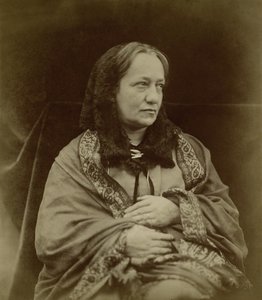
Julia Margaret Cameron
1815 - 1879 , India
Quick Facts
- Artistic Movement Or Style: Pictorialism, Portraiture
- Artists Or Movements Influenced By This Artist: ['Modern Photography']
- Artists Who Influenced This Artist: ['George Frederick Watts']
- Date Of Birth: June 11, 1815
- Date Of Death: 1879
- Full Name: Julia Margaret Cameron
- Nationality: British
- Notable Artworks: ['Alfred, Lord Tennyson (1865)']
- Place Of Birth: Kolkata, India
Related Articles
Pictorialism: A Search for Artistic Photography's Soul – Aesthetics, Techniques & Legacy
Explore the captivating world of Pictorialism – a pivotal movement that transformed photography into fine art. Discover key artists like Stieglitz & Käsebier, techniques, and collecting tips from experts.
Beyond the Lens: Photography's Enduring Influence on Modern & Contemporary Art
Explore photography's pivotal role in shaping modern & contemporary art. Discover key movements, influential artists like Stieglitz, and expert collecting advice from ArtsDot.

Monochrome Visions: Exploring the Aesthetic & Historical Significance of Black & White Photography
Explore the rich history & artistic power of black and white photography. From early techniques to iconic masters like Ansel Adams, discover why monochrome continues to captivate art lovers today. Expert insights for collectors.
Witnessing History Through Lens & Light: Documentary Photography's Enduring Legacy
Explore the powerful history of documentary photography – from its origins to contemporary masters like Gordon Parks & W. Eugene Smith. Discover how this art form shapes our understanding of society and witness pivotal moments in time.
Documentary Photography's Defining Moments: 10 Masterpieces for Your Home |
Explore 10 defining documentary photography masterpieces – from Dorothea Lange to Robert Capa. Discover powerful stories, iconic images & timeless art for your home. Museum-quality prints at .
![[Ellen Terry at Age Sixteen]](/media/artworks/images-thumb/2c/7b/2c7b1d541f094c02639b9b8340679602.jpg)
![[Holy Family]](/media/artworks/images-thumb/5a/e0/5ae0a462896baeb40d66369facafb1a7.jpg)