 Preview
 Send
Send Share
Share
 Details

 Download
 Similars
 X-Ray
X-Ray Diaporama
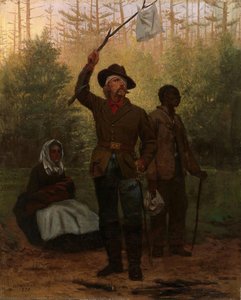
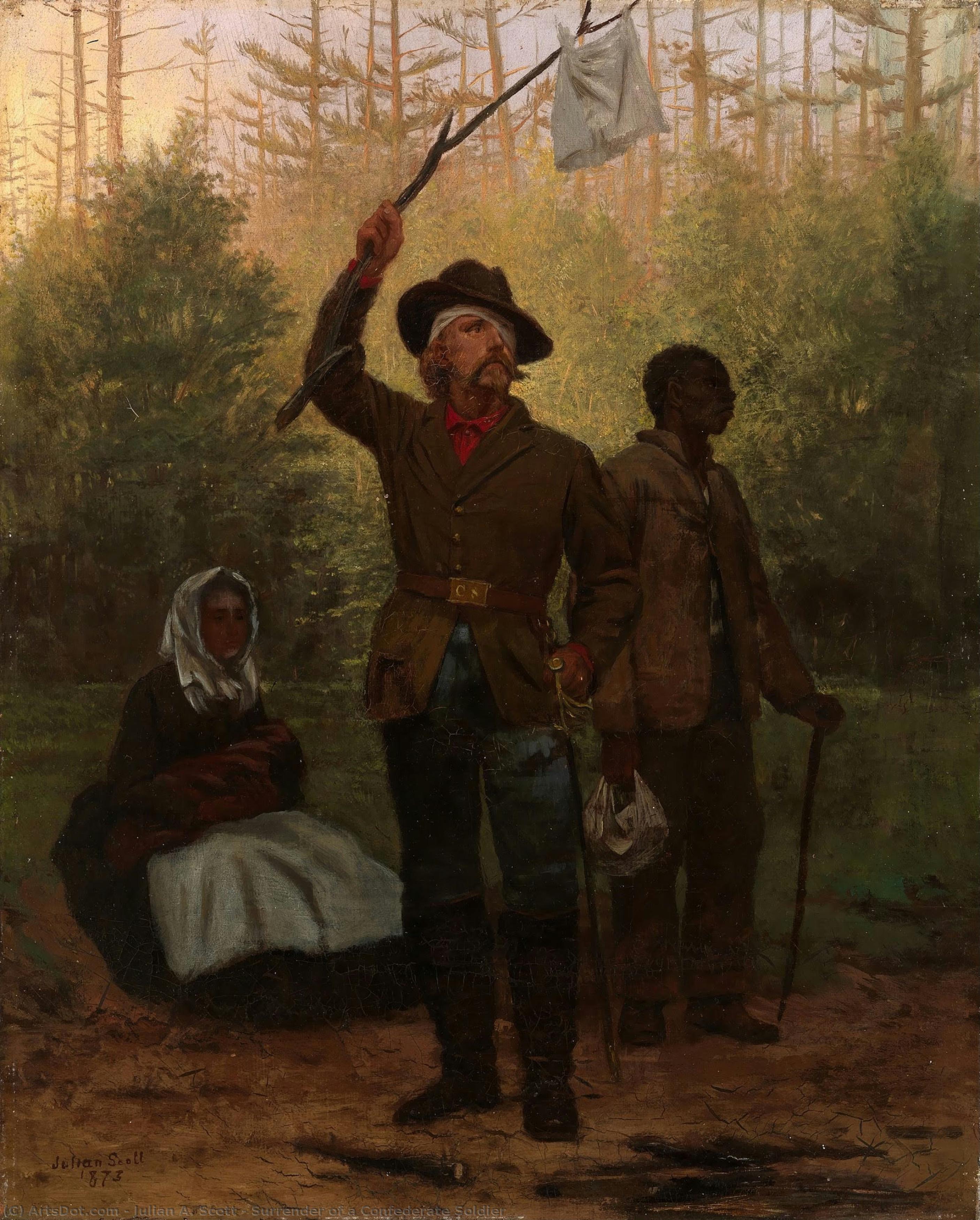
Surrender of a Confederate Soldier


 Read More
Giclée / Art Print
Museum-quality giclée or canvas print with fast production and flexible finish options. ( Buy Hand Made Painting Buy Image)




P118B $10

P118H $10

P118W $10

P438Z $10

P508JH $12

P508YH $12

P805H $10

P805Z $10

P919BZ $10

P919G $10

P919XJ $10

P959ZH $10

P968JZ $12

W106C $8

W218G $10

W218JH $8

W218Y $10

W307PJ $10

W316G $10

W316PJ $8

W316Y $10

W398PJ $8

W4111J $10

W500HY $15

W500JH $15

W692G $12

W849H $8

W940BG $15

W953PJ $8




Pick from our preset sizes that match the artwork's original proportions.

You may enter your own dimensions to fit a specific frame or space. If your selected size does not match the original image's proportions, we will either crop the artwork or extend the image with a mirrored or solid-fill edge. A digital mockup will be sent for your approval before production begins.
Please note that the on-screen preview does not reflect the actual cropping or extension. Only the mockup will accurately show the final composition.
While custom sizes are available, we recommend selecting a dimension from the predefined list to preserve the original proportions.
Worldwide Delivery () in 2 weeks instead of standard 4/5 weeks. (22 August)

Free Worldwide Express Shipping

High-Quality Linen Canvas

Full Shipping Insurance

Customs Tax Refund Guarantee

True Color Matching Guarantee

60-Day Return Policy (Defects Only)

100% Money-Back Guarantee

Bulk Discount Offer
 Glass option is only available in size under 110 CM

Surrender of a Confederate Soldier
Giclée / Art Print
Reproduction Size
-


Total Price
$ 63
Collectible Description
The Weight of History: Julian Scott’s ‘Surrender of a Confederate Soldier’
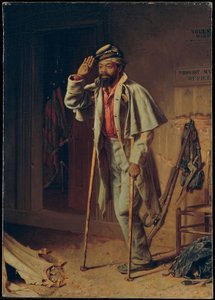
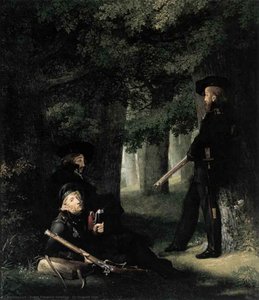
Julian A. Scott's “Surrender of a Confederate Soldier,” painted in 1873, isn’t merely a depiction of a battlefield moment; it’s a profound meditation on loss, resilience, and the unsettling aftermath of conflict. The painting immediately commands attention with its somber palette – muted browns, grays, and ochres dominate, reflecting not triumph but the bleak reality of shattered hopes and wounded bodies. It's a scene steeped in quiet dignity amidst palpable suffering, a testament to Scott’s remarkable ability to capture the psychological weight of war rather than simply its physical violence.
The central figure, an injured Confederate soldier, is rendered with startling realism. His uniform, torn and stained, speaks volumes about his ordeal – a tangible representation of the brutal realities faced by those who fought in the American Civil War. He holds aloft a makeshift flag, not a symbol of victory, but a gesture of surrender, a poignant acknowledgment of defeat. Crucially, he’s not alone. Beside him stands a Black man, presumably his former slave, and a woman cradling an infant – figures that inject a complex layer of meaning into the scene. This inclusion challenges simplistic narratives of conflict, hinting at the shared experience of hardship and the enduring bonds forged amidst devastation.
A Masterclass in Realism and Emotional Resonance
Scott’s artistic skill lies not just in his technical proficiency but in his ability to imbue his subjects with humanity. He employs a loose, expressive brushstroke – characteristic of the Hudson River School, yet distinctly his own – that conveys both the physical wounds of the soldier and the emotional turmoil within him. The lighting is particularly effective; it’s diffused and melancholic, casting long shadows that accentuate the figures' vulnerability. The composition itself draws the eye inward, focusing on the faces of the individuals involved, inviting the viewer to contemplate their stories.
Technically, the painting demonstrates a mastery of oil paint. Scott skillfully uses layering and glazing techniques to create depth and texture, particularly in the depiction of the soldier’s clothing and the rough terrain. The subtle variations in tone suggest a keen understanding of light and shadow, contributing significantly to the overall mood of the piece. The attention to detail—the worn fabric, the dirt-stained boots, the weary expression on the soldier's face—is meticulously rendered, reinforcing the painting’s powerful sense of realism.
Historical Context: The Aftermath and a Shifting Narrative
“Surrender of a Confederate Soldier” was created in the immediate aftermath of the Civil War, a period marked by profound social and political upheaval. The Union victory had brought an end to slavery, but it hadn’t ushered in an era of reconciliation or equality. The painting reflects this complex reality, capturing the uncertainty and disillusionment felt by many Southerners grappling with the loss of their way of life. It's important to note that Scott himself served as a Union Army drummer during the war, lending his personal experience and perspective to the work.
Interestingly, scholars like Eleanor Jones Harvey have argued that the painting represents a shift in how the Civil War was depicted – moving away from glorifying military heroism towards acknowledging the human cost of conflict. Scott’s choice to portray the surrender not as an act of defeat but as a moment of quiet dignity and shared humanity is particularly significant in this context. The inclusion of the Black man and woman adds another layer of complexity, suggesting a recognition of the intertwined fates of all those affected by the war.
Symbolism and Enduring Impact
Beyond its immediate depiction of a surrender, “Surrender of a Confederate Soldier” is rich in symbolism. The makeshift flag represents not just the end of military action but also the relinquishing of power and control. The woman cradling her infant embodies the hope for future generations, despite the devastation of the present. The painting’s enduring impact lies in its ability to evoke empathy and provoke reflection on the lasting consequences of war – not just on soldiers and their families, but on entire societies.
Today, “Surrender of a Confederate Soldier” remains a powerful testament to Scott's artistic vision and a poignant reminder of the complexities of American history. Reproductions of this iconic work offer an opportunity to engage with this significant historical moment and contemplate its enduring relevance.
Related Artworks

Artist Biography
a life marked by war, art, and valor
julian a. scott, a name etched in the annals of american art and military history, left an indelible mark on both realms. born in johnson, vermont, in 1846, scott's life was a testament to his unyielding spirit, as he navigated the tumultuous landscape of the american civil war and subsequently, the world of art.early life and military service
scott's early education at the lamoille academy (now johnson state college) laid the groundwork for his future artistic endeavors. however, it was his service in the union army during the american civil war that defined his early adulthood. enlisting at 15 as a fifer in the 3rd vermont infantry, scott's bravery earned him the medal of honor in february 1865 for rescuing wounded soldiers under enemy fire at the battle of lee's mills.artistic pursuits
following the war, scott pursued his passion for art, studying under emmanuel leutze and later graduating from the national academy of design in new york. his travels to paris and stuttgart further honed his skills. notably, his 1872 masterwork, battle of cedar creek, now at the vermont state house, is a poignant reflection on war's human cost.- julian a. scott's works are characterized by their realism and emotional depth, reflecting his experiences during the civil war.
- his paintings often capture the essence of pivotal moments in american history, making him a significant figure in american art.
- scott's contributions to the world of art are a testament to his multifaceted nature – from a soldier to an artist.
notable works and legacy
- surrender of a confederate soldier, part of the smithsonian american art museum collection, is a powerful example of scott's work. - the recall (1872), on board the hartford (1874), and reserves awaiting orders (1877) are among his notable pieces. - scott's legacy extends beyond his art, as his medal of honor citation stands as a reminder of his valor. learn more about julian a. scott's art: - [https://ArtsDot.com/@/julian-a-scott](https://ArtsDot.com/@/julian-a-scott) - explore the artist's profile on ArtsDot. - /en/art/show/art-8xyffg-en/ - discover more about his art pieces and their significance. references: - julian scott, wikipedia, [https://en.wikipedia.org/wiki/julian_scott](https://en.wikipedia.org/wiki/julian_scott) - titterton, robert j. (1997). julian scott: artist of the civil war and native america: with 97 illustrations. jefferson, n.c.: mcfarland & co. - [https://ArtsDot.com/@/julian-a-scott](https://ArtsDot.com/@/julian-a-scott) - artist's profile on ArtsDot.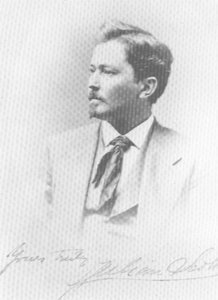
julian a. scott
1846 - 1901 , United States of America
Quick Facts
- Artistic Movement Or Style: Realism
- Artists Or Movements Influenced By This Artist: ['Hudson River School']
- Artists Who Influenced This Artist: ['Emmanuel Leutze']
- Date Of Birth: 1846
- Date Of Death: 1901
- Full Name: Julian A. Scott
- Nationality: American
- Notable Artworks:
- Battle of Cedar Creek
- Surrender of a confederate soldier
- Place Of Birth: Johnson City, United States
Related Articles
Grant Wood & American Regionalism: Identity, Myth & the Rural Landscape
Explore the world of Grant Wood & American Regionalism with ArtsDot. Discover the symbolism behind 'American Gothic', recurring themes, and the movement's lasting impact on art history. High-quality reproductions available.

American Realism's Defining Works: 10 Masterpieces for Your Home
Explore 10 defining American Realism masterpieces – Hopper, Homer & more. Discover the stories behind these iconic paintings and bring timeless art to your home with ArtsDot's museum-quality reproductions. Explore the full collection online.
American Regionalism: A Crucible of Identity – Exploring Themes of Place, Labor & Social Commentary
Explore American Regionalism's powerful depiction of the American heartland during the Great Depression. Discover Grant Wood, Thomas Hart Benton & more. Expert analysis & high-quality art reproductions at ArtsDot.
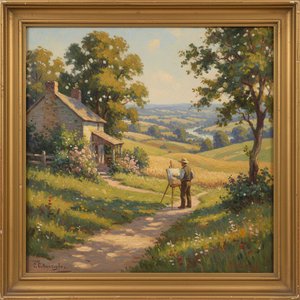
Julian Alden Weir: A Quiet Master of American Impressionism & Rural Life
Discover Julian Alden Weir, a leading American Impressionist painter celebrated for his serene landscapes & depictions of rural life. Explore his artistic evolution, influence on 'The Ten', and legacy at Weir Farm.
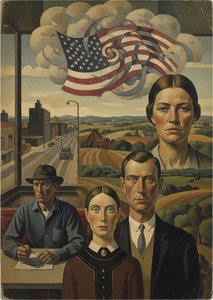
Echoes of Place: Regionalism & American Identity in Interwar Art
Explore the rise of American Regionalism in interwar art! Discover Grant Wood, Thomas Hart Benton & the movement's impact on American identity. Expert analysis & historical context.