 Preview
 Send
Send Share
Share
 Details

 Download
 Similars
 X-Ray
X-Ray Diaporama
 Stats
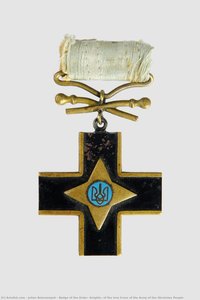
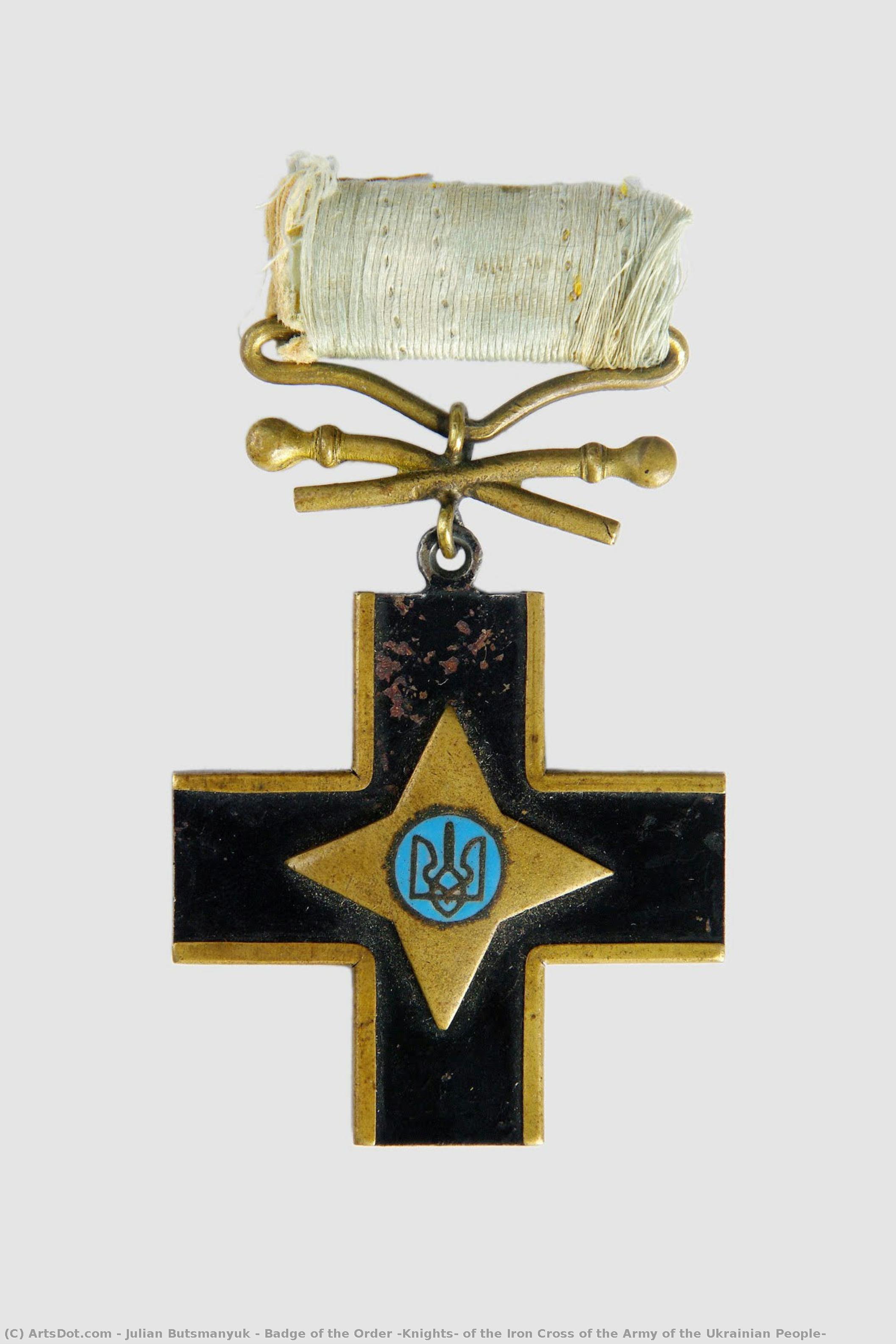
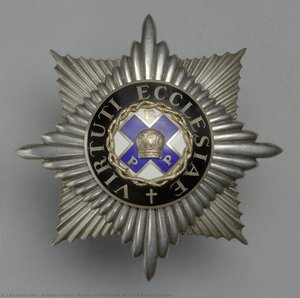
StatsBadge of the Order (Knights) of the Iron Cross of the Army of the Ukrainian People


 Read More
Giclée / Art Print
Museum-quality giclée or canvas print with fast production and flexible finish options. ( Buy Hand Made Painting Switch to Digital Image)




































Pick from our preset sizes that match the artwork's original proportions.

You may enter your own dimensions to fit a specific frame or space. If your selected size does not match the original image's proportions, we will either crop the artwork or extend the image with a mirrored or solid-fill edge. A digital mockup will be sent for your approval before production begins.
Please note that the on-screen preview does not reflect the actual cropping or extension. Only the mockup will accurately show the final composition.
While custom sizes are available, we recommend selecting a dimension from the predefined list to preserve the original proportions.
Worldwide Delivery () in 2 weeks instead of standard 4/5 weeks. (10 September)

Free Worldwide Express Shipping

High-Quality Linen Canvas

Full Shipping Insurance

Customs Tax Refund Guarantee

True Color Matching Guarantee

100-Day Return Policy (Defects Only)

100% Money-Back Guarantee

Bulk Discount Offer
 Glass option is only available in size under 110 CM

Badge of the Order (Knights) of the Iron Cross of the Army of the Ukrainian People
Giclée / Art Print
Reproduction Size
-


Total Price
$ 63
Related Artworks





Artist Biography
Robert Delaunay: A Pioneer of Color and Rhythm
Born in Paris on April 12, 1885, Robert Delaunay emerged as a pivotal figure within the vibrant tapestry of early 20th-century art. His journey began not with formal artistic training but through an apprenticeship with a theatrical designer, a formative experience that instilled in him a deep appreciation for visual composition and stagecraft. This initial exposure laid the groundwork for his later exploration of color, light, and movement – elements he would masterfully integrate into his groundbreaking abstract paintings.
Influenced by the burgeoning currents of Neo-Impressionism, particularly the work of Georges Seurat and Paul Signac, Delaunay initially focused on meticulously applying small dots of pure color to create luminous effects. However, a pivotal encounter with Matisse in 1909 marked a dramatic shift in his artistic trajectory. Matisse’s emphasis on spontaneous color application and the rejection of traditional representation ignited within Delaunay a desire to liberate color from its descriptive function and explore it as an independent expressive force. This led him to embrace the principles of Orphism, a movement he co-founded with his wife, Sonia Delaunay, characterized by bold geometric forms, vibrant hues, and a dynamic interplay of rhythm and color.
Delaunay’s early works, such as “Saint-Séverin” (1912), demonstrate this nascent approach. These paintings are not mere depictions of the cathedral but rather explorations of light and color refracted through geometric shapes – circles, squares, and lines – creating a sense of dynamism and spatial ambiguity. He moved beyond simply applying dots of color; instead, he began to use overlapping planes of pure color, creating an illusion of depth and movement that was revolutionary for its time. This experimentation extended to his later work, including the monumental “Endless Rhythm” (1932), a vast panel dominated by concentric circles radiating outwards from a central point, embodying the core principles of Orphism.
The Bloomsbury Circle and Artistic Exchange
Delaunay’s artistic development was inextricably linked to his engagement with the intellectual and social circles of Paris. He became associated with the influential Bloomsbury Group, a collective of artists, writers, and intellectuals who challenged conventional artistic norms and championed innovation. His connections with figures like Roger Fry, Vanessa Bell, and Clive Bell provided him with access to new ideas and perspectives, while his own work influenced their aesthetic sensibilities.
The Omega Workshops, co-founded by Delaunay and Vanessa Bell, further solidified his position within this artistic community. This collaborative venture aimed to produce functional art objects – furniture, textiles, and ceramics – that integrated design with artistic expression. The workshops provided a platform for experimentation and innovation, allowing Delaunay to explore the possibilities of color and form in a broader context.
Sonia Delaunay: A Collaborative Partnership
Robert Delaunay’s artistic evolution was profoundly shaped by his marriage to Sonia Terk (later Delaunay) in 1910. Sonia, a talented painter in her own right, brought a unique perspective and sensibility to their collaborative practice. Initially trained in Russia and Germany, she possessed a strong grounding in color theory and design principles. Together, they developed a shared language of abstraction, exploring the interplay of color, form, and rhythm with remarkable synergy.
Sonia’s contributions extended beyond painting; she played a crucial role in shaping the visual identity of Orphism, designing textiles, posters, and decorative panels that embodied its core principles. Their collaborative projects – furniture designs, murals, and textile patterns – demonstrated a seamless integration of art and design, pushing the boundaries of artistic expression.
Later Years and Legacy
During World War I, Delaunay and Sonia sought refuge in Spain and Portugal, where they continued to experiment with color and form. Returning to Paris after the war, they focused on creating large-scale panels and murals that explored the principles of Orphism. In the 1930s, Delaunay began to incorporate relief elements into his paintings, adding a tactile dimension to his abstract compositions.
Robert Delaunay died in Montpellier on October 25, 1941, leaving behind a remarkably influential body of work. His pioneering exploration of color and rhythm paved the way for subsequent developments in abstraction and influenced generations of artists. His legacy endures not only through his paintings but also through his collaborative partnership with Sonia Delaunay, whose contributions were equally vital to the development of Orphism. Today, Robert Delaunay is recognized as a key figure in the early history of abstract art, celebrated for his bold experimentation and his unwavering commitment to the expressive power of color.

julian butsmanyuk
1885 - 1967 , Ukraine
Quick Facts
- Artistic Movement Or Style: Orphism, Cubism
- Artists Or Movements Influenced By This Artist:
- Sonia Delaunay
- Simultanism
- Artists Who Influenced This Artist:
- Cézanne
- Matisse
- Date Of Birth: 1885-04-12
- Date Of Death: 1941-10-25
- Full Name: Robert Delaunay
- Nationality: French
- Notable Artworks:
- Endless Rhythm
- The Eiffel Tower
- Disc
- Place Of Birth: Paris, France