 Preview
 Send
Send Share
Share
 Details

 Download
 Similars
 X-Ray
X-Ray Diaporama
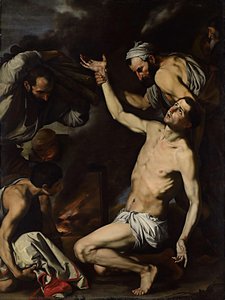
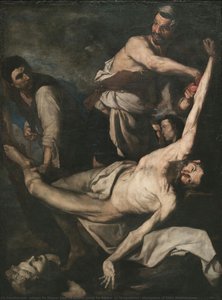
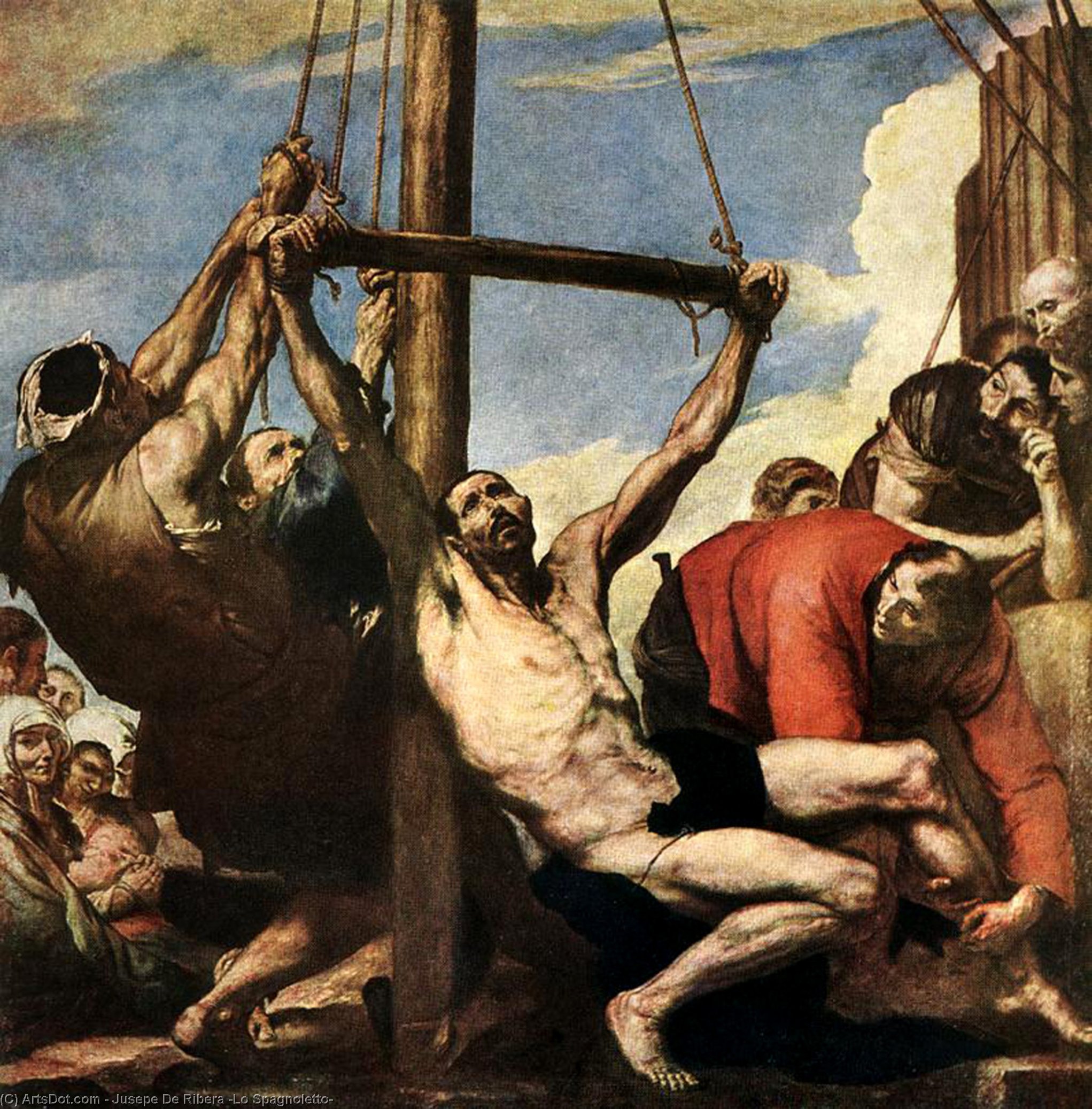
Martyrdom of St Bartholomew

 Read More
Hand Made Oil Reproduction
Hand-painted oil on canvas in your size and frame, made to order by our artists. ( Buy Print Buy Image)




P118B $10

P118H $10

P118W $10

P438Z $10

P508JH $12

P508YH $12

P805H $10

P805Z $10

P919BZ $10

P919G $10

P919XJ $10

P959ZH $10

P968JZ $12

W106C $8

W218G $10

W218JH $8

W218Y $10

W307PJ $10

W316G $10

W316PJ $8

W316Y $10

W398PJ $8

W4111J $10

W500HY $15

W500JH $15

W692G $12

W849H $8

W940BG $15

W953PJ $8




Pick from our preset sizes that match the artwork's original proportions.

You may enter your own dimensions to fit a specific frame or space. If your selected size does not match the original image's proportions, we will either crop the artwork or extend the painting with additional hand-painted elements. A digital mockup will be sent for your approval before production begins.
Please note that the on-screen preview does not reflect the actual cropping or extension. Only the mockup will accurately show the final composition.
While custom sizes are available, we recommend selecting a dimension from the predefined list to preserve the original proportions.
After order, ArtsDot.com team will email client for instructions and provide a mockup preview
Worldwide Delivery () in 3/4 weeks instead of standard 5 weeks. (17 August). No compromise on quality.

Free Worldwide Express Shipping

High-Quality Linen Canvas

Full Shipping Insurance

Customs Tax Refund Guarantee

True Color Matching Guarantee

60-Day Return Policy (Defects Only)

100% Money-Back Guarantee

Bulk Discount Offer
 Glass option is only available in size under 110 CM

Martyrdom of St Bartholomew
Reproduction Medium
Reproduction Size
-


Total Price
$ 263
Artwork Description
The Harrowing Depiction: Ribera’s *Martyrdom of Saint Bartholomew*
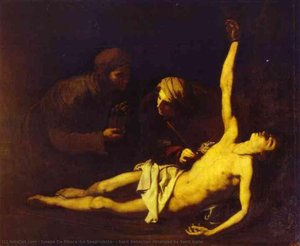
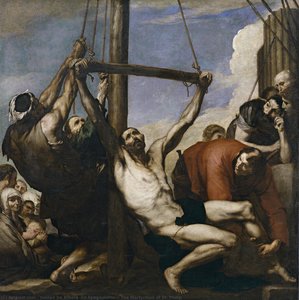
Jusepe de Ribera's *Martyrdom of Saint Bartholomew*, painted circa 1624, is not merely a depiction of religious suffering; it’s a visceral plunge into the heart of human agony. Executed in oil on canvas with a masterful command of chiaroscuro – a technique pioneered by Caravaggio – this work transcends its biblical subject matter to become a profound meditation on pain, faith, and the brutal realities of power. The painting immediately commands attention with its dramatic composition, a dynamic pyramidal structure anchored by the prone figure of Bartholomew himself, his body suspended in a state of agonizing vulnerability. Ribera doesn’t shy away from the grotesque; he confronts us with the raw physicality of death, rendering the scene with unflinching realism that was revolutionary for its time.
The narrative unfolds with brutal clarity. Bartholomew, identified as the apostle who brought Christianity to Armenia, is subjected to a horrific punishment – flaying – by a drunken executioner whose expression reveals not just cruelty but also a disturbing delight in inflicting pain. The scene is punctuated by the presence of onlookers: two priests, their heads bowed in solemn witness, and a soldier observing the spectacle with detached curiosity. This arrangement isn’t simply observational; it forces the viewer to confront their own complicity – or lack thereof – in this act of barbarism.
A Baroque Masterpiece: Technique and Style
Ribera's style is quintessential Baroque, characterized by its intense emotional expression, dynamic movement, and dramatic use of light. The artist’s brushstrokes are visible yet skillfully blended to create a sense of volume and texture – the rough fabric of Bartholomew’s loincloth contrasts sharply with the smooth, almost polished skin tones of his body. The directional lighting, originating from an unseen source, sculpts the figures, emphasizing their musculature and highlighting the stark contrast between light and shadow, intensifying the emotional impact. This technique, known as tenebrism, was a hallmark of Ribera’s work and powerfully conveys the scene's horror.
The flattened perspective, typical of Baroque art, further enhances the dramatic effect, pushing the figures forward into the viewer’s space. Overlapping forms and variations in shading create an illusion of depth, drawing us into the chaotic heart of the event. The color palette – dominated by earthy browns, reds, and blues – contributes to the painting's somber mood, punctuated by flashes of vibrant red that draw attention to the act of violence.
Symbolism and Historical Context
The *Martyrdom of Saint Bartholomew* is deeply rooted in the religious and political context of 17th-century Europe. During the Counter-Reformation, the Catholic Church sought to reaffirm its authority through art that would inspire piety and reinforce traditional beliefs. Ribera’s depiction of Bartholomew's death served as a potent reminder of the price of faith – a stark warning against heresy and dissent. The inclusion of the classical sculpture, identified as Baldach, adds another layer of symbolism, referencing ancient myths about suffering and sacrifice.
Furthermore, the painting reflects Ribera’s own experiences in Naples, where he was commissioned by Spanish authorities to create works that glorified Spain's dominion over Southern Italy. The scene’s brutal realism – a departure from idealized religious representations – aligns with Ribera’s commitment to portraying the human condition with unflinching honesty. The work is inextricably linked to the story of Bartholomew, who brought Christianity to Armenia and whose martyrdom became a powerful symbol of faith and resilience.
A Timeless Testament to Human Suffering
*The Martyrdom of Saint Bartholomew* remains a profoundly moving artwork, its power undiminished centuries after its creation. Ribera’s masterful technique, combined with his unflinching realism and dramatic composition, creates an unforgettable image of human suffering – a testament to the enduring themes of faith, violence, and redemption. It is a work that demands contemplation, prompting viewers to confront uncomfortable truths about humanity's capacity for both cruelty and compassion.
Related Artworks
Artist Biography
A Life Forged in Shadow and Light
Jusepe de Ribera, known to many as Lo Spagnoletto – “the Little Spaniard” – was a towering figure of the Baroque era, an artist whose canvases pulsed with dramatic intensity and unflinching realism. Born in Xàtiva, Spain, in 1591, his journey took him far from his Valencian origins, ultimately establishing him as one of the most significant painters in 17th-century Naples, a city then under Spanish rule. Ribera’s life was not merely a chronicle of artistic development; it was a narrative woven with hardship, ambition, and an unwavering commitment to portraying the human condition in all its raw complexity. While early biographical details remain shrouded in some mystery, we know he arrived in Italy around 1607, initially settling in Rome before gravitating towards Naples in 1616 – a city that would become both his artistic home and the crucible for his unique style. His marriage to Caterina Azzolino, daughter of a local painter, further cemented his ties to the Neapolitan art world, allowing him to flourish within its vibrant, yet often turbulent, atmosphere.The Embrace of Tenebrism and Realist Vision
Ribera’s artistic formation was profoundly shaped by the prevailing currents of Italian painting. The influence of Caravaggio is undeniable; Ribera absorbed the master's revolutionary use of tenebrism – that dramatic interplay of light and shadow – to create scenes charged with emotional power. However, he didn’t simply imitate. He synthesized this technique with elements gleaned from other masters like Guido Reni, incorporating a classical sensibility into his compositions while retaining the visceral impact of Caravaggio's realism. This fusion resulted in a style uniquely his own: one characterized by stark contrasts, intensely focused figures, and an almost brutal honesty in depicting human suffering and spiritual ecstasy. His early works, such as the Martyrdom of Saint Bartholomew, exemplify this approach – a harrowing depiction of pain rendered with unflinching detail. He didn’t shy away from portraying the physical realities of martyrdom, the contorted bodies, the strained muscles, the very texture of skin and bone. This commitment to realism extended beyond religious subjects; his portraits of beggars and common folk, often depicted as philosophers or saints, were groundbreaking in their time, elevating the marginalized to a level of dignity and importance rarely seen in art before.A Career Across Genres and Evolving Styles
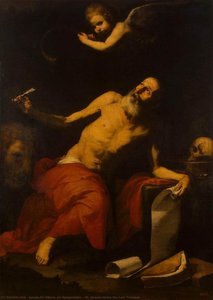
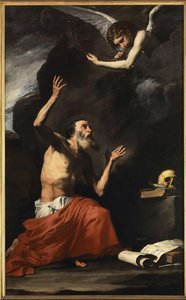
Ribera’s artistic output was remarkably diverse. While he is perhaps best known for his religious paintings – scenes of martyrdom, depictions of saints, and dramatic biblical narratives – he also excelled in portraiture, still life, and even landscape painting. His Saint Jerome and the Angel, for instance, showcases a softer, more contemplative side to his artistry, while still retaining the characteristic dramatic lighting that defines his work. Throughout his career, Ribera’s style underwent subtle but significant evolutions. His earlier paintings are marked by an almost austere realism and a stark use of tenebrism. As he matured, particularly after establishing himself firmly in Naples, his palette became richer, his compositions more complex, and his lighting somewhat softened. However, the core elements of his Baroque aesthetic – the emotional intensity, the dramatic narratives, and the unwavering commitment to portraying human experience with honesty – remained constant. He was a master craftsman, capable of rendering textures with astonishing precision, from the rough fabric of a beggar’s cloak to the smooth skin of a youthful saint.Legacy and Lasting Influence
Jusepe de Ribera's impact on the art world extended far beyond his Neapolitan workshop. He became a pivotal figure in Spanish Baroque painting, alongside masters like Velázquez, Zurbarán, and Murillo. His innovative use of tenebrism and his unflinching realism influenced generations of artists throughout Europe. His work resonated with those seeking to break away from the idealized forms of Renaissance art and embrace a more visceral, emotionally charged style. Even later artists drew inspiration from his dramatic compositions and powerful depictions of human suffering. Today, Ribera’s paintings are housed in prestigious museums around the world – the Museo del Prado in Madrid, the National Gallery of Art in Washington D.C., and numerous institutions across Europe – ensuring that his legacy continues to inspire and captivate audiences centuries after his death in 1652. He stands as a testament to the power of art to confront difficult truths, explore the depths of human emotion, and illuminate the enduring spirit of faith and resilience.A Master’s Enduring Appeal
The continued fascination with Ribera's work lies in its ability to transcend time and cultural boundaries. His paintings are not merely historical artifacts; they are powerful statements about the human condition – about suffering, faith, hope, and despair. His unflinching realism forces us to confront uncomfortable truths, while his dramatic compositions and masterful use of light and shadow create an atmosphere of intense emotional resonance. Lo Spagnoletto, as he was affectionately known, left behind a body of work that is both profoundly moving and intellectually stimulating – a legacy that ensures his place among the greatest masters of the Baroque era. His paintings are not simply to be admired; they are to be experienced—felt in the depths of one’s being.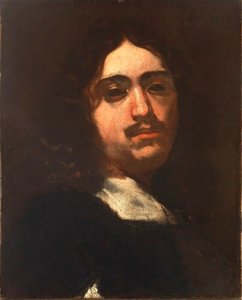
Jusepe de Ribera
1591 - 1652 , Spain
Quick Facts
- Artistic Movement Or Style: Baroque
- Artists Or Movements Influenced By This Artist:
- José de Ribera
- European masters
- Artists Who Influenced This Artist:
- Caravaggio
- Guido Reni
- Date Of Birth: 1591
- Date Of Death: 1652
- Full Name: Jusepe de Ribera
- Nationality: Spanish
- Notable Artworks:
- Martyrdom of St. Bartholomew
- Saint Jerome and the Angel
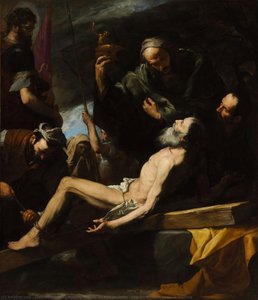
- The Martyrdom of Saint Andrew
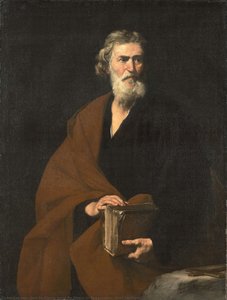
- Bearded Woman
- Place Of Birth: Xativa, Spain
Related Articles

Baroque Drama: Bringing Opulence & Emotion into Contemporary Interiors
Explore the opulent world of Baroque interior design! Discover key elements, modern applications & how to bring dramatic elegance into your home with 's authentic reproductions.

The Dramatic Flourish: Exploring the Baroque Movement's Enduring Legacy in Art History
Explore the dramatic world of Baroque art! Discover iconic artists like Caravaggio & Rubens, defining techniques, and its lasting impact on art history. Expert insights for collectors & enthusiasts at ArtsDot.

The Visceral Stage: Exploring Dramatic Narratives & Emotional Intensity in Baroque Art
Explore the dramatic world of Baroque art! Discover iconic masters like Caravaggio & Rembrandt, their techniques, and the movement's lasting impact. Expert insights for collectors & enthusiasts at ArtsDot.

Baroque Masterpieces: 10 Paintings That Defined an Era |
Journey through the drama & grandeur of Baroque art! Explore 10 masterpieces by Caravaggio, Rembrandt, Rubens & more. Discover stunning oil paintings, rich colors & timeless stories. Find museum-quality reproductions at .

Theatricality & Triumph: Baroque Drama in Painting & Sculpture
Explore the dramatic world of Baroque art! Discover its history, defining characteristics, & lasting influence on painting & sculpture. Expert insights into Caravaggio, Zurbarán, and Bernini – plus high-quality reproductions at ArtsDot.