 Preview
 Send
Send Share
Share
 Details

 Download
 Similars
 X-Ray
X-Ray Diaporama
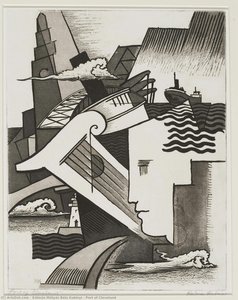
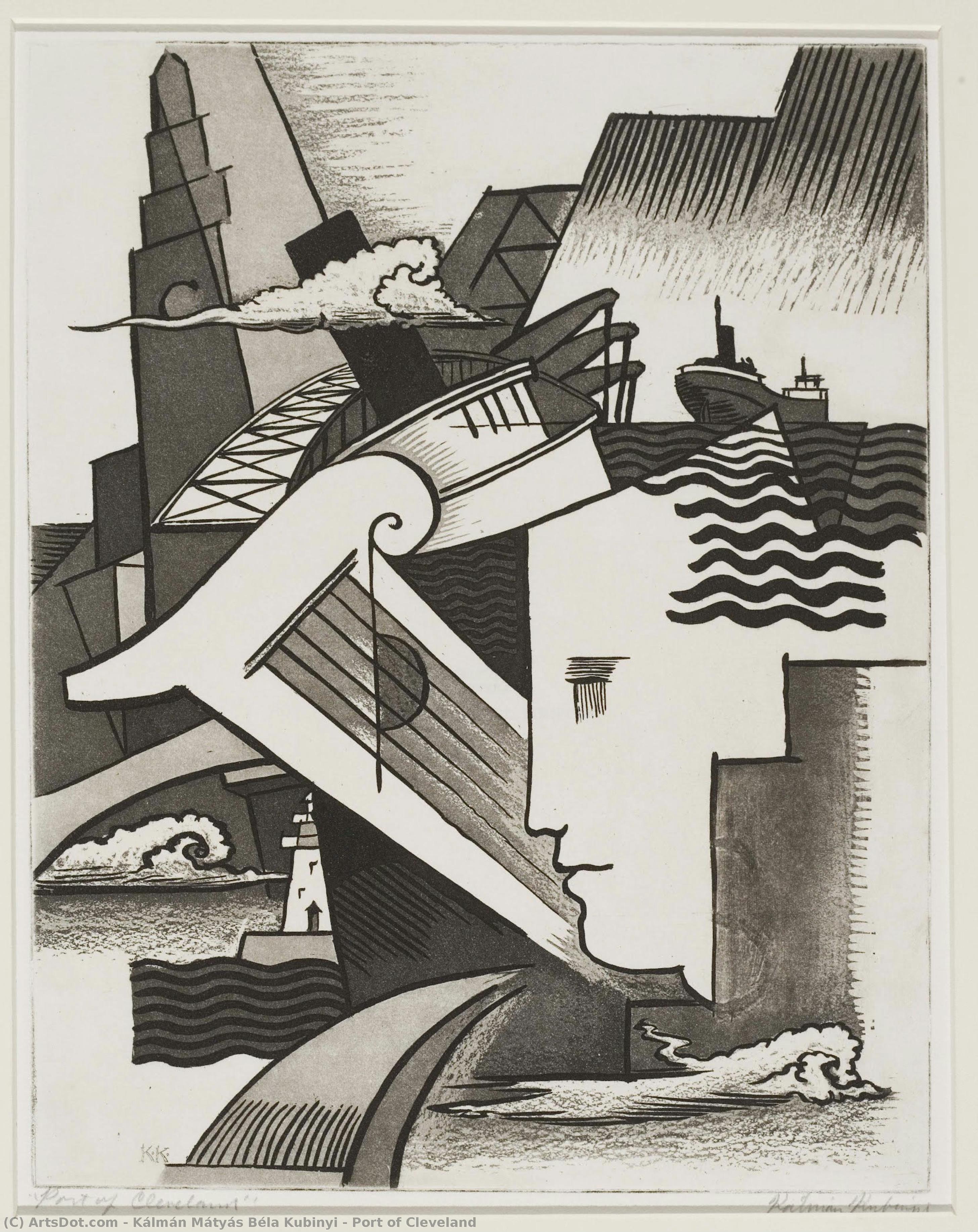
Port of Cleveland


 Read More
Giclée / Art Print
Museum-quality giclée or canvas print with fast production and flexible finish options. ( Buy Hand Made Painting Buy Image)




































Pick from our preset sizes that match the artwork's original proportions.

You may enter your own dimensions to fit a specific frame or space. If your selected size does not match the original image's proportions, we will either crop the artwork or extend the image with a mirrored or solid-fill edge. A digital mockup will be sent for your approval before production begins.
Please note that the on-screen preview does not reflect the actual cropping or extension. Only the mockup will accurately show the final composition.
While custom sizes are available, we recommend selecting a dimension from the predefined list to preserve the original proportions.
Worldwide Delivery () in 2 weeks instead of standard 4/5 weeks. (29 August)

Free Worldwide Express Shipping

High-Quality Linen Canvas

Full Shipping Insurance

Customs Tax Refund Guarantee

True Color Matching Guarantee

60-Day Return Policy (Defects Only)

100% Money-Back Guarantee

Bulk Discount Offer
 Glass option is only available in size under 110 CM

Port of Cleveland
Giclée / Art Print
Reproduction Size
-


Total Price
$ 63
Related Artworks




Artist Biography
The Architect of Cleveland Modernism
In the heart of the American industrial landscape, where the grit of the Great Lakes meets the steel-clad ambition of the twentieth century, the work of Kálmán Mátyás Béla Kubinyi emerged as a profound visual chronicle. Born in Cleveland in 1906 to Hungarian immigrants, Kubinyi was a child of the very industrial pulse he would later immortalize. His early life was steeped in an artistic lineage; inspired by the arrival of paintings and prints from his uncle, Alexander von Kubinyi, in Munich, the young artist found himself drawn toward the transformative power of line and texture. This early exposure to European sensibilities, combined with a rigorous education at the Cleveland School of Art, allowed him to bridge the gap between American industrial reality and the avant-garde movements of the Old World.
Kubinyi’s artistic evolution was never a solitary journey but rather a dialogue with the shifting tides of modernism. As he matured, his work began to absorb the radical energies of Cubism and Futurism, movements that sought to capture the fragmented, high-speed essence of the machine age. Yet, unlike those who sought only abstraction, Kubiny and his contemporaries in the Cleveland School found a deeper resonance in the tangible. He became a master of the "Ash Can" aesthetic, a style that turned its gaze toward the unvarnished truths of urban existence. Through his etchings and engravings, the heavy machinery of the Cuyahoga River, the mist-shrouded silhouettes of the Terminal Tower, and the weary dignity of the working class were rendered with a striking, tactile realism that bordered on the poetic.
A Legacy Forged in Steel and Ink
The 1930s marked the zenith of Kubinyi’s influence, a decade where his role as both creator and leader became indispensable to the American art scene. During the Great Depression, when the nation sought meaning amidst economic upheaval, Kubinyi stepped into the vanguard of the Works Progress Administration (WPA). His leadership within the Cleveland WPA Arts Project was more than an administrative feat; it was a mission to document the resilience of the human spirit. Under his guidance, the graphic arts division became a vital organ of cultural preservation, producing works that captured the triumphs and tribulations of an era in flux.
His technical prowess as an etcher and enamelist allowed him to explore a vast spectrum of visual textures, from the sharp, biting lines of social realism to the luminous, smooth surfaces of enamel. This versatility earned him international acclaim, with his works gracing prestigious stages such as the Venice Biennale in 1937 and the New York World's Fair in 1939. Beyond his individual canvases and plates, Kubinyi was a pioneer of community engagement. He founded the Cleveland Print Makers in 1930, establishing the revolutionary "Print-a-Month" series. This initiative democratized art ownership, allowing subscribers to receive monthly masterpieces, thereby fostering a deep, sustained connection between the public and the burgeoning modernist movement.
As a teacher at the Cleveland Institute of Art and the Cleveland Museum of Art, Kubinyi ensured that his commitment to experimentation and social commentary would endure in future generations. His life, which concluded in 1973, remains a testament to the power of art to act as both a mirror to society and a catalyst for change. Through his eyes, we do not merely see the industrial decay or the mechanical roar of Cleveland; we see the soul of an era captured in the indelible permanence of ink and metal.
kálmán mátyás béla kubinyi
1906 - 1973 , United States of America
Quick Facts
- Artistic Movement Or Style: Modernism; Social Realism
- Date Of Birth: 1906
- Full Name: Kálmán Kubinyi
- Nationality: American
- Notable Artworks:
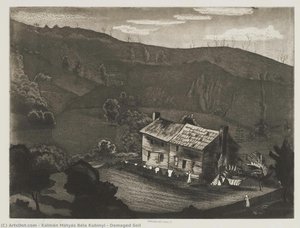
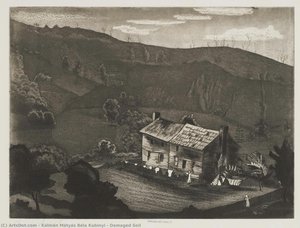
- Damaged Soil
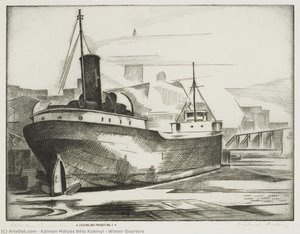
- Winter Quarters
- Port of Cleveland
- Place Of Birth: Cleveland, United States