 Preview
 Send
Send Share
Share
 Details

 Download
 Similars
 X-Ray
X-Ray Diaporama
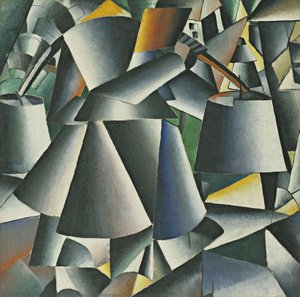
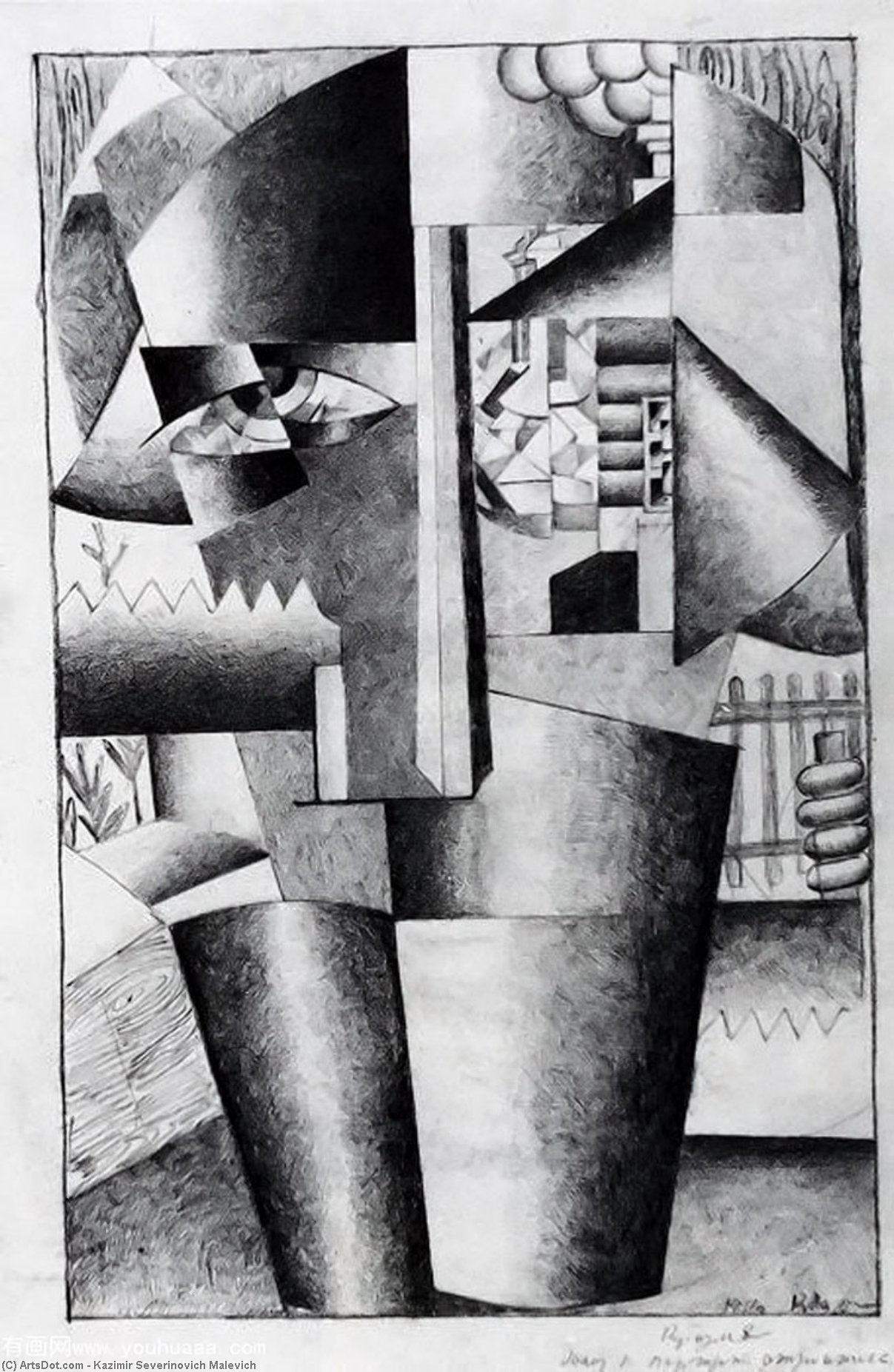
Peasant Woman with Buckets
 Pencil
- WallArt
- Cubist Futurism
 1913
1913- Modern
 10.0 x 10.0 cm
 Read More
Hand Made Oil Reproduction
Hand-painted oil on canvas in your size and frame, made to order by our artists. ( Buy Print Buy Image)




P118B $10

P118H $10

P118W $10

P438Z $10

P508JH $12

P508YH $12

P805H $10

P805Z $10

P919BZ $10

P919G $10

P919XJ $10

P959ZH $10

P968JZ $12

W106C $8

W218G $10

W218JH $8

W218Y $10

W307PJ $10

W316G $10

W316PJ $8

W316Y $10

W398PJ $8

W4111J $10

W500HY $15

W500JH $15

W692G $12

W849H $8

W940BG $15

W953PJ $8




Pick from our preset sizes that match the artwork's original proportions.

You may enter your own dimensions to fit a specific frame or space. If your selected size does not match the original image's proportions, we will either crop the artwork or extend the painting with additional hand-painted elements. A digital mockup will be sent for your approval before production begins.
Please note that the on-screen preview does not reflect the actual cropping or extension. Only the mockup will accurately show the final composition.
While custom sizes are available, we recommend selecting a dimension from the predefined list to preserve the original proportions.
After order, ArtsDot.com team will email client for instructions and provide a mockup preview
Worldwide Delivery () in 3/4 weeks instead of standard 5 weeks. (25 August). No compromise on quality.

Free Worldwide Express Shipping

High-Quality Linen Canvas

Full Shipping Insurance

Customs Tax Refund Guarantee

True Color Matching Guarantee

60-Day Return Policy (Defects Only)

100% Money-Back Guarantee

Bulk Discount Offer
 Glass option is only available in size under 110 CM

Peasant Woman with Buckets
Reproduction Medium
Reproduction Size
-


Total Price
$ 263
Artwork Description
A Fractured Vision of Rural Russia
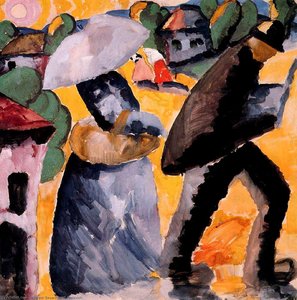
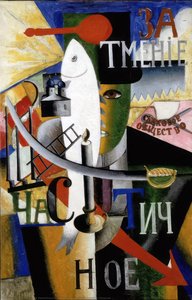
In the quiet, rhythmic pulse of the Ukrainian countryside, there exists a profound beauty that transcends the mere sight of labor and landscape. Kazimir Malevich’s 1913 masterpiece, Peasant Woman with Buckets, captures this essence not through the lens of traditional realism, but through a radical deconstruction of reality itself. At first glance, the viewer encounters a scene deeply rooted in the traditions of rural life, yet as the eye lingers, the familiar dissolves into a captivating dance of geometry. This is not a portrait of a person so much as it is an exploration of form, where the weight of the buckets and the presence of the woman are translated into a dynamic interplay of interlocking planes, squares, and triangles.
The artwork serves as a pivotal bridge in the history of modern art, standing at the intersection of Cubo-Futurism. Malevich masterfully employs a Cubist approach to dismantle his subject, rejecting the illusion of three-dimensional space in favor of a flattened, multifaceted perspective. By presenting multiple viewpoints simultaneously, he invites the observer to perceive the scene not as a static moment frozen in time, but as a living, breathing arrangement of energy and structure. For the collector or designer, this piece offers a sophisticated tension; it possesses the grounded, soulful subject matter of folk tradition while maintaining the avant-garde edge that defines the early 20th-century revolution.
The Precision of Shadow and Line
Executed with meticulous care in pencil and charcoal on paper, the technical execution of this work is a testament to Malevich’s disciplined hand. There is a remarkable tonal density achieved through subtle variations in shading, which provides a sense of structural integrity to the fragmented shapes. The lines are predominantly straight and angular, creating a sharp, rhythmic cadence across the composition. This deliberate use of contrast—the stark interplay between light and deep shadow—serves to emphasize the geometric architecture of the figure, making the abstract forms feel tactile and substantial.
While surface detail is intentionally minimized, the texture of the medium lends a raw, organic quality to the piece that prevents it from feeling cold or purely mathematical. The artist’s restraint is his greatest strength here; by stripping away the unnecessary, he allows the pure essence of the subject to emerge. This technique creates a sense of depth through overlapping planes rather than traditional perspective, offering a visual complexity that rewards prolonged contemplation. It is a work where the simplicity of the medium belies the profound intellectual depth of the concept.
An Emotional Resonance for Modern Spaces
Beyond its historical significance as a precursor to Suprematism, Peasant Woman with Buckets carries an emotional weight that is both unsettling and deeply moving. The fragmentation of the figure can evoke feelings of disruption or the alienation inherent in a changing world, yet there is an undeniable strength in the geometric stability of the composition. It represents a moment of transition—a metamorphosis from the recognizable world into the realm of pure feeling.
For those looking to curate a space with intellectual depth and artistic prestige, this reproduction offers more than mere decoration. It acts as a focal point of conversation, bringing a sense of historical gravity and avant-garde spirit to any interior. Whether placed in a minimalist contemporary gallery or a richly textured classical study, the piece provides a window into a transformative era of human creativity. It is an invitation to look past the surface of things and to find beauty in the structural truth beneath the skin of reality.
Related Artworks
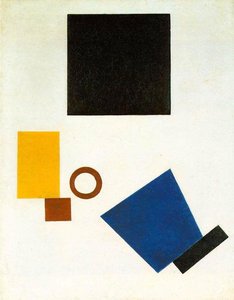
Artist Biography
Kazimir Malevich: A Pioneer of Abstract Art
Early Life and Influences
- Born in Kyiv Oblast, Ukraine in 1878 to a Polish family, Kazimir Severinovich Malevich’s early life was shaped by the rural Ukrainian landscape and its rich folk culture.
- His upbringing instilled in him an appreciation for traditional artistic expressions that would later subtly influence his work.
- Formal training began in Kyiv, but Malevich quickly sought broader artistic horizons, moving towards Moscow and eventually engaging with the burgeoning avant-garde movements of Europe.
- Key Influences: Early exposure to folk art, combined with a desire for modern expression, formed the foundation of his unique style.
Artistic Development & Key Movements
- Initially, Malevich explored various styles including Impressionism, Symbolism, Fauvism, and Cubism. A pivotal trip to Paris in 1912 exposed him to the latest developments in European art.
- He gradually moved away from representational forms, seeking a purely artistic language based on geometric shapes and color.
- This led to the development of Suprematism around 1915 – an abstract movement focused on “the supremacy of pure feeling” in art.
- Suprematism rejected any attempt to depict objects from the visible world, instead prioritizing basic geometric forms like squares, circles, and rectangles.
Major Achievements & Notable Works
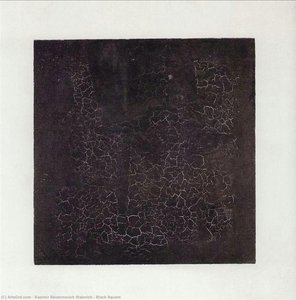
- Black Square (1915): Arguably his most famous work, it represents a radical departure from traditional art and is considered a foundational piece of abstract painting.
- White on White (1918): A series exploring the purity of form and color, featuring white geometric shapes against a white background – pushing abstraction to its limits.
- Stroyuschiysya dom [House under Construction] (1916): An early example of Suprematism showcasing his unique perspective on Ukrainian culture through abstract forms.
- He also wrote extensively on art theory, articulating the philosophical principles behind Suprematism and advocating for a new artistic consciousness.
Historical Significance & Legacy
- Malevich’s work profoundly impacted the development of 20th-century abstract art, influencing movements like Minimalism and Constructivism.
- He challenged conventional notions of representation and paved the way for non-objective art.
- His ideas about pure feeling and geometric abstraction continue to resonate with artists today.
- Despite facing political persecution under Stalin – initially supported, then suppressed – Malevich persevered in his practice and teaching.
- Influence on Later Artists: He directly influenced artists like El Lissitzky and indirectly shaped countless others through the enduring legacy of Suprematism.
Later Life & Death
- In his later years, Malevich revisited figurative painting, attempting to synthesize his abstract principles with representational forms.
- He continued to teach and write about art until his death in Leningrad (now St. Petersburg) in 1935.
- His work remained relatively obscure for decades after his death but experienced a resurgence of interest in the latter half of the 20th century, solidifying his place as one of the most important figures in modern art history.
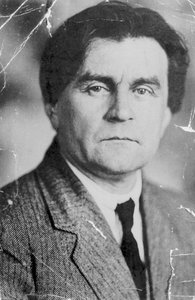
Kazimir Malevich
1878 - 1935 , Ukraine
Quick Facts
- Artistic Movement Or Style: Suprematism, Abstract Art
- Artists Or Movements Influenced By This Artist:
- Minimalism
- Constructivism
- El Lissitzky
- Artists Who Influenced This Artist:
- Cubism
- Fauvism
- Impressionism
- Date Of Birth: 1878
- Date Of Death: 1935
- Full Name: Kazimir Severinovich Malevich
- Nationality: Ukrainian/Russian
- Notable Artworks:
- Black Square
- White on White
- House under Construction
- Place Of Birth: Kyiv, Ukraine
Related Articles
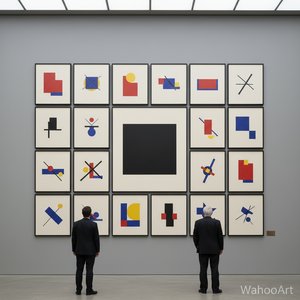
Kazimir Malevich: 25 Masterpieces of Suprematism & Abstract Art | ArtsDot
Explore 25 iconic artworks by Kazimir Malevich, pioneer of Suprematism & abstract art. Discover the stories behind 'Black Square' and more! Find museum-quality prints & elevate your home decor with ArtsDot.com.

Geometric Abstraction's 10 Defining Masterpieces | Art for Your Home - ArtsDot
Explore 10 defining masterpieces of Geometric Abstraction! Discover Kandinsky, Mondrian & Malevich’s iconic works. Find museum-quality art reproductions and curated decor ideas to elevate your home at ArtsDot.com.
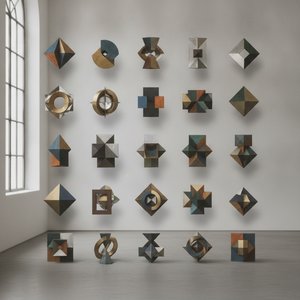
Top 25 Masterpieces by Laurent Fabre: The Essence of Neo-Abstract Geometry
Immerse yourself in the luminous world of Laurent Fabre. Explore our curated selection of 25 iconic Neo-Abstract masterpieces, celebrating geometric precision and chromatic harmony. Find museum-quality art reproductions for your space. Discover all masterpieces on ArtsDot.com.
Beyond Form & Color: Geometric Abstraction's Evolution in 20th/21st Century Art
Explore the evolution of geometric abstraction from Cubism to contemporary art. Discover key artists like Malevich & Mondrian, investment insights, and expert collecting advice at ArtsDot.
Deconstructing Reality: Cubo-Futurism's Aesthetic Revolution & Historical Context
Explore the revolutionary world of Cubo-Futurism! Discover its origins, key artists like Malevich & Rozanova, and lasting impact on 20th-century art. Expert analysis for collectors.
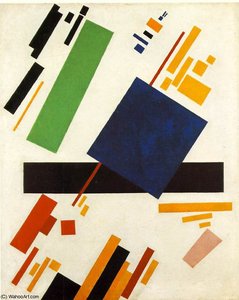
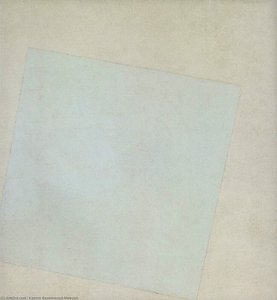
![Black circle [1913] State Russian Museum,](/media/artworks/images-thumb/62/67/6267e452b0c8476772a6511e19ce1616.jpg)