The Genesis of Cubo-Futurism: Bridging European Avant-Gardes
The early 20th century was a period of seismic shifts, not only in the political and social landscapes but also within the realm of artistic expression. As traditional modes of representation faltered under the weight of modernity, artists across Europe began to dismantle established conventions, seeking new languages to articulate the rapidly changing world around them. Cubo-Futurism, a uniquely Russian phenomenon, emerged from this ferment as a potent synthesis of two dominant avant-garde movements: Italian Futurism and French Analytical Cubism. It wasn’t merely an adoption of these styles, however; it was a dynamic reinterpretation, infused with the specific cultural anxieties and utopian aspirations of Russia on the cusp of revolution. The initial exposure to Western art came through the collections of forward-thinking patrons like Sergei Shchukin and Ivan Morozov, who amassed impressive holdings of Picasso, Matisse, and Cézanne, effectively introducing Russian artists to the radical possibilities unfolding in Paris and beyond. This encounter sparked a fervent desire not simply to replicate but to *transform* these influences into something distinctly their own.
Russian Context & The Hylaeans: A Crucible for Innovation
To understand Cubo-Futurism, one must appreciate the unique socio-political climate of Russia at the time. Rapid industrialization contrasted sharply with a largely agrarian society, creating a sense of both excitement and alienation. The burgeoning “machine aesthetic” – a fascination with technology and its potential to reshape life – found resonance among artists grappling with these changes. This backdrop provided fertile ground for a group of poets known as the Hylaeans (Gileya), who played a pivotal role in the movement’s genesis. Initially focused on Symbolism, they quickly gravitated towards Futurism's embrace of dynamism and rejection of traditional forms. The publication of Filippo Tommaso Marinetti’s “Futurist Manifesto” in 1909 served as a catalyst, prompting them to experiment with *zaum*, a transrational language intended to bypass conventional meaning and tap into pure sensation. This linguistic exploration was inextricably linked to their visual experiments; the desire to break down established structures in poetry mirrored a similar impulse in painting. Figures like Velimir Khlebnikov and Aleksei Kruchenykh pushed the boundaries of language, paving the way for a new aesthetic that prioritized form over content.
Formal Characteristics: Fragmentation, Dynamism, and the 'Machine Aesthetic'
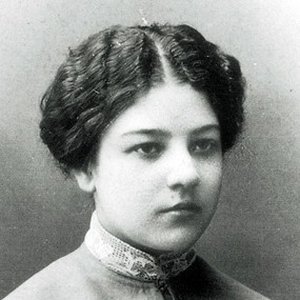 Olga Rozanova
Discover Olga Rozanova (1886-1918), a Russian avant-garde pioneer who seamlessly blended Suprematism, Cubo-Futurism & Neo-Primitivism into vibrant abstract art. Explore her influential 'color painting' style and legacy.
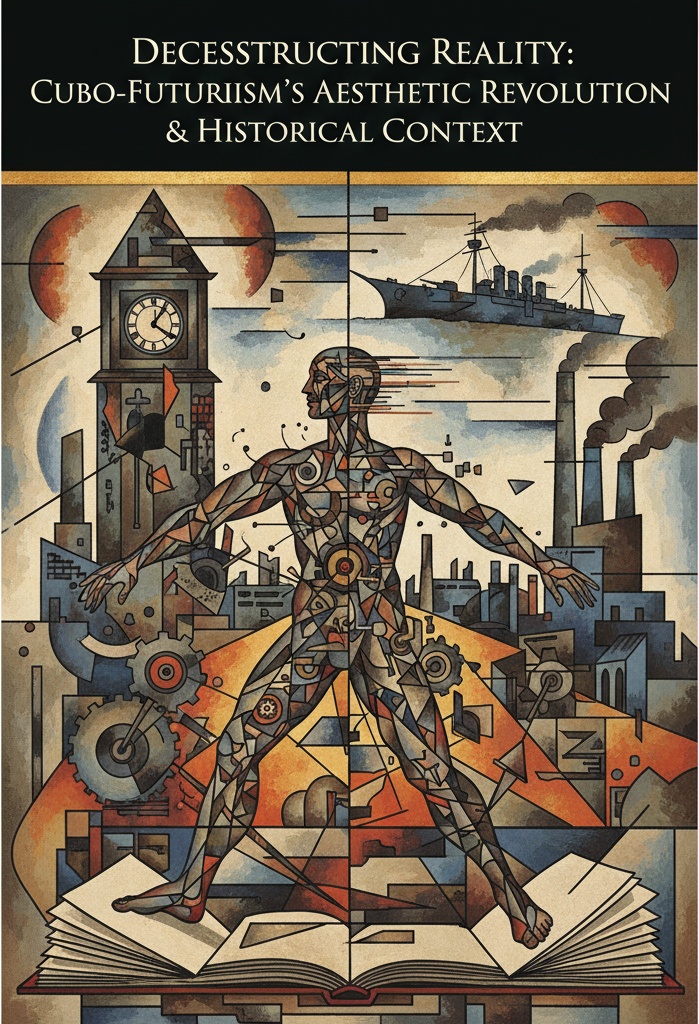
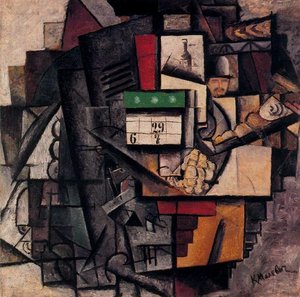
Cubo-Futurist paintings are immediately recognizable by their distinctive visual vocabulary. Borrowing from Cubism, artists fragmented objects into geometric shapes, presenting multiple perspectives simultaneously. However, unlike the more analytical approach of Picasso and Braque, Russian Cubo-Futurists infused these forms with a sense of relentless energy and movement – a direct inheritance from Futurism. This dynamism wasn’t merely representational; it was intended to convey the feeling of speed, technology, and the overwhelming pace of modern life. The “machine aesthetic” manifested in depictions of industrial landscapes, mechanical components, and abstracted figures that often resembled fragmented machinery. Color palettes tended towards bold contrasts and vibrant hues, further amplifying the sense of energy and disruption. Artists frequently employed intersecting planes, distorted perspectives, and a deliberate rejection of traditional shading to create a flattened, almost collage-like effect. The emphasis wasn’t on creating an illusion of depth but rather on presenting a fractured, multi-faceted reality.
Key Artists and Their Masterpieces: Malevich, Rozanova, Ekster, and Baranoff-Rossine
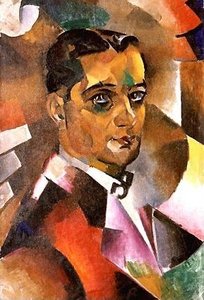 vladimir baranoff rossiné
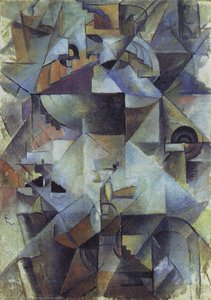
Wladimir Baranoff-Rossine (1888-1944) was a Ukrainian-Russian-French avant-garde painter, inventor & pioneer of Cubo-Futurism. Known for his optophonic piano, dynamic camouflage techniques, and tragic fate during WWII. Explore his innovative art & sy
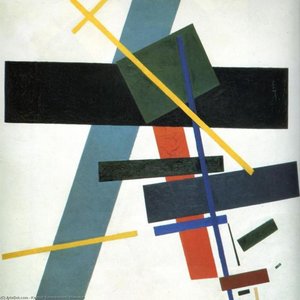
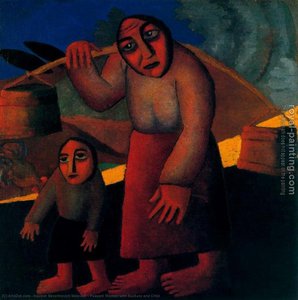
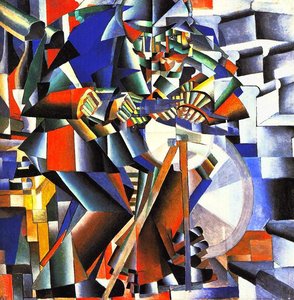
Several artists stand out as central figures in the Cubo-Futurist movement. Kazimir Malevich, perhaps the most iconic of the group, initially explored Cubo-Futurism before developing his signature Suprematism. Works like “The Knifegrinder” (1912) demonstrate his early experimentation with fragmentation and geometric abstraction, foreshadowing his later non-objective compositions. Olga Rozanova, a highly innovative artist, seamlessly blended Cubo-Futurism with Neo-Primitivism, creating vibrant abstract paintings characterized by dynamic color fields and energetic brushwork; her “Playing Card” series exemplifies this unique synthesis. Aleksandra Ekster was another pivotal figure, known for her bold compositions, stage designs, and exploration of the relationship between art and life. Her work often incorporated elements of Cubo-Futurism alongside Suprematist principles, resulting in visually striking and intellectually stimulating pieces. Vladimir Baranoff-Rossine, a lesser-known but equally fascinating artist, was a pioneer of optophonic painting – attempting to translate sound into visual form – and developed dynamic camouflage techniques that reflected his interest in technology and perception. Each artist brought a unique sensibility to the movement, contributing to its rich diversity.
Beyond Painting: Cubo-Futurism in Performance & Stage Design
Cubo-Futurism wasn’t confined to the canvas; it permeated other artistic disciplines, most notably performance and stage design. Artists actively sought to break down traditional theatrical conventions, embracing improvisation, nonsensical *zaum* poetry, and audience participation. The 1913 Futurist satirical tragedy “Vladimir Mayakovsky” exemplified this experimental spirit, featuring fragmented dialogue, unconventional staging, and a deliberate rejection of narrative coherence. Stage designs often incorporated Cubo-Futurist aesthetics – geometric shapes, bold colors, and dynamic compositions – creating visually arresting environments that challenged viewers’ expectations. This interdisciplinary approach reflected the movement's broader ambition to transform all aspects of life, not just art. The collaboration between artists, poets, and musicians created a vibrant cultural ecosystem where experimentation was encouraged and boundaries were constantly pushed.
Legacy and Influence: The Evolution of Abstraction in 20th-Century Art
Although Cubo-Futurism as a distinct movement had a relatively short lifespan – largely superseded by Suprematism and Constructivism – its impact on the development of abstract art was profound. It laid the groundwork for subsequent generations of artists to explore non-objective forms, geometric abstraction, and the relationship between art and technology. The emphasis on fragmentation, dynamism, and the rejection of traditional representation paved the way for movements like De Stijl and Bauhaus. The Cubo-Futurists’ radical experimentation with form and color continues to inspire artists today, demonstrating the enduring power of their vision. Their legacy lies not only in the specific artworks they created but also in their unwavering commitment to innovation and their belief in art's ability to transform society. At ArtsDot.com, we celebrate this rich artistic heritage by offering high-quality reproductions of Cubo-Futurist masterpieces, allowing you to experience the energy and dynamism of this revolutionary movement firsthand.