Early Life & Iconographic Beginnings: Forging a Unique Artistic Path
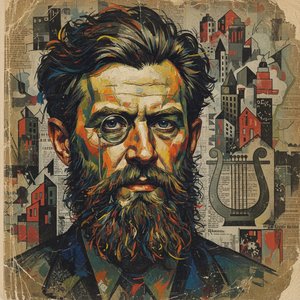
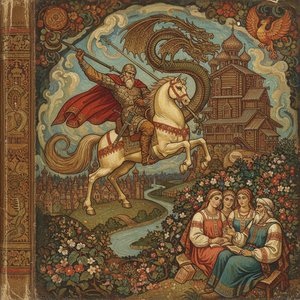
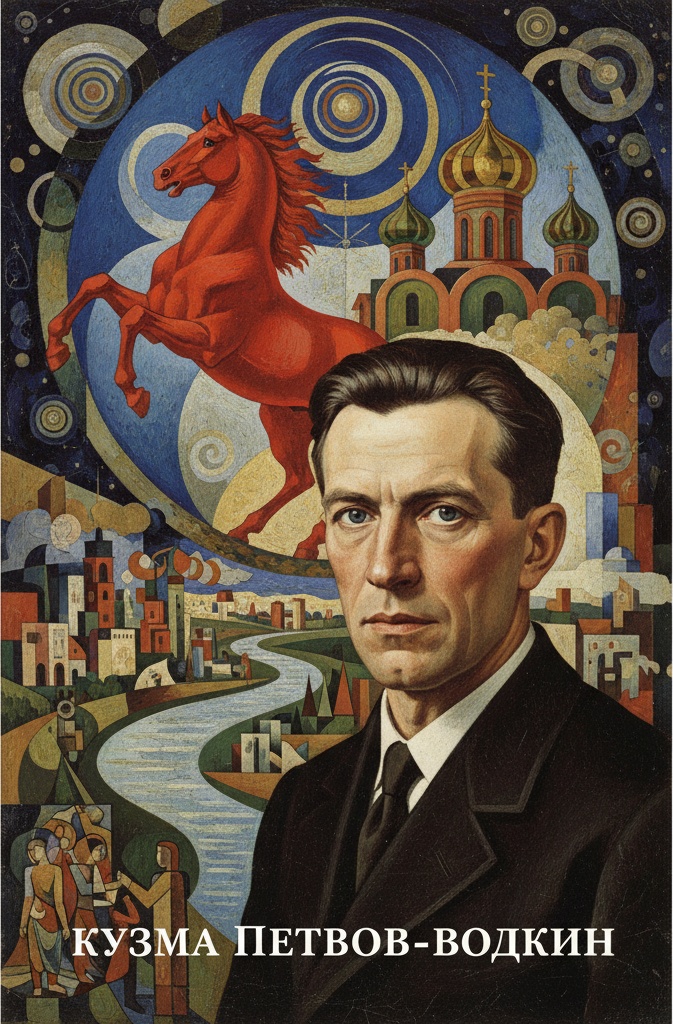
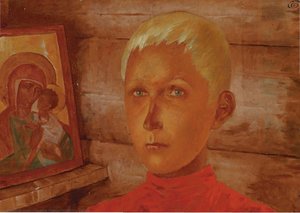
Kuzma Sergeyevich Petrov-Vodkin, born in 1878 in the provincial town of Khvalynsk on the Volga River, emerged from humble beginnings to become one of Russia’s most distinctive and spiritually resonant painters. His early exposure to art wasn't through formal academies but rather within the vibrant, yet localized world of icon painting and sign-making—a foundation that would profoundly shape his aesthetic sensibilities. Though initially drawn towards a practical life, a failed attempt at railway college led him to St. Petersburg in 1895, supported by charitable subscriptions from local merchants recognizing a nascent talent. This journey wasn’t merely geographical; it was a transition into a world of artistic possibility, yet one he approached with initial uncertainty.
His time at the Stieglitz Academy and later the Moscow School of Painting, Sculpture and Architecture proved formative, exposing him to masters like Valentin Serov and Konstantin Korovin. However, Petrov-Vodkin’s true awakening came during a period in Munich studying under Anton Ažbe. It was here that he began to develop his individual voice, one increasingly concerned with the emotive power of color and form. Crucially, his early attempts at religious painting—specifically commissions for chapels—were met with rejection by the Orthodox Church, deemed too unconventional, even blasphemous. This experience wasn’t a deterrent but rather a catalyst, pushing him to explore new avenues of spiritual expression outside the confines of traditional iconography.
This early period was characterized by a restless experimentation, a search for a visual language that could convey not just religious narratives but also the deeper psychological and emotional states they evoked. He wasn’t simply replicating existing forms; he was attempting to *feel* his way into the essence of faith, translating it onto canvas with an increasingly personal and symbolic vocabulary.
The Dream & Bathing of a Red Horse: Defining Moments in Petrov-Vodkin’s Style
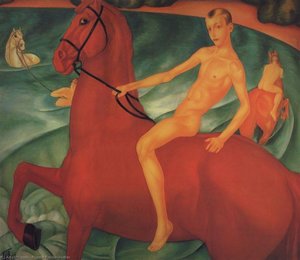
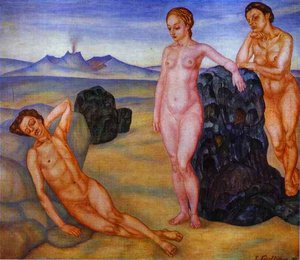
By the early 20th century, Petrov-Vodkin was establishing himself as a force to be reckoned with. Two paintings, in particular, would come to define his unique style and cement his place in Russian art history: The Dream (1910) and Bathing of a Red Horse (1912). The Dream, with its languid figures bathed in ethereal light, sparked immediate controversy. The composition, depicting nude figures in a seemingly idyllic landscape, was both captivating and unsettling, prompting debate about its allegorical meaning and perceived eroticism. Alexandre Benois championed the work, while Ilya Repin voiced strong criticism, highlighting the polarized reaction it elicited.
Bathing of a Red Horse, however, proved to be his breakthrough masterpiece. This iconic image—a vibrant depiction of horses frolicking in water against a backdrop of a fiery sunset—became an instant symbol of impending social change and a premonition of revolution. The painting’s power lies not just in its striking color palette but also in its symbolic depth. The red horse itself is often interpreted as representing the Russian people, poised for upheaval, while the landscape evokes a sense of both beauty and foreboding.
These works weren't simply aesthetic exercises; they were deeply personal statements reflecting Petrov-Vodkin’s evolving worldview. He sought to capture not just what he *saw* but also what he *felt*, imbuing his paintings with a profound sense of spirituality and emotional resonance. The use of bold colors, simplified forms, and unusual compositions became hallmarks of his style, setting him apart from his contemporaries.
Spherical Perspective and Symbolic Language: Decoding the Artist's Vision
Central to understanding Petrov-Vodkin’s art is his innovative use of “spherical perspective.” Dissatisfied with traditional linear perspective, he developed a technique that distorted space to create a sense of immersion and heightened emotional impact. This wasn’t merely a stylistic quirk; it was rooted in his fascination with the curvature of the earth and a desire to represent the viewer as being enveloped by the scene itself. Imagine standing high above the landscape, perceiving its vastness and interconnectedness—this is the sensation Petrov-Vodkin sought to convey.
This technique, drawing inspiration from Byzantine iconography’s inverted perspective, creates a unique sense of depth and intimacy. It draws the viewer *into* the painting, making them feel like an active participant in the scene rather than a detached observer. Coupled with this distinctive perspective was his increasingly complex symbolic language. He imbued everyday objects and figures with layers of meaning, drawing upon Russian folklore, religious traditions, and personal experiences.
For example, recurring motifs such as mothers and children often represented themes of vulnerability, resilience, and the enduring power of the human spirit. His paintings weren’t meant to be read literally but rather interpreted through a lens of emotional intuition and symbolic understanding. He aimed to create works that resonated on a subconscious level, tapping into universal archetypes and shared human experiences.
Navigating Revolution & Soviet Society: Art as Reflection and Response
The tumultuous years following the 1917 Russian Revolution presented both challenges and opportunities for Petrov-Vodkin. Initially embracing the ideals of the new regime, he sought to create art that reflected the spirit of social transformation. He became actively involved in artistic organizations, even serving as the first president of the Leningrad Union of Soviet Artists. However, his independent spirit and unconventional style often clashed with the increasingly rigid demands of Socialist Realism.
Paintings like Death of a Commissar (1928) demonstrate his attempt to reconcile his artistic vision with the political realities of the time. While depicting a tragic event, it does so through his signature spherical perspective and symbolic language, creating a powerful and emotionally charged image that transcends simple propaganda. He continued to travel extensively throughout the Soviet Union, documenting the lives of ordinary people and capturing the changing landscape.
Despite facing criticism and periods of artistic isolation, Petrov-Vodkin remained committed to his unique vision. His autobiographical writings, praised for their insightful observations and poetic prose, further solidified his reputation as a leading intellectual figure in Russian art. He navigated the complexities of Soviet society with a delicate balance of idealism and pragmatism, striving to create art that was both meaningful and relevant.
Petrov-Vodkin’s Legacy: Influence on Russian Art and Beyond
Kuzma Petrov-Vodkin died in 1939, leaving behind a body of work that continues to captivate and inspire. His influence on Russian art is undeniable, particularly his impact on subsequent generations of painters who sought to explore themes of spirituality, symbolism, and national identity. He bridged the gap between icon painting and modernism, creating a unique visual language that was both deeply rooted in tradition and strikingly innovative.
His exploration of spherical perspective remains a significant contribution to art theory, challenging conventional notions of space and representation. Furthermore, his symbolic language—rich with layers of meaning and emotional resonance—continues to resonate with contemporary audiences. Today, Petrov-Vodkin’s paintings are exhibited in major museums around the world, celebrated for their beauty, complexity, and enduring power.
For those seeking a deeper understanding of Russian art history and the complexities of the avant-garde movement, exploring the works of Kuzma Petrov-Vodkin is essential. His paintings offer not just aesthetic pleasure but also a profound glimpse into the soul of a nation—a testament to the enduring power of art to reflect, challenge, and inspire. Discover his masterpieces at ArtsDot.com, where you can explore high-quality reproductions and delve deeper into the world of this remarkable artist.