 Send
Send Share
Share
 Details

 Download
 Similars
 Diaporama
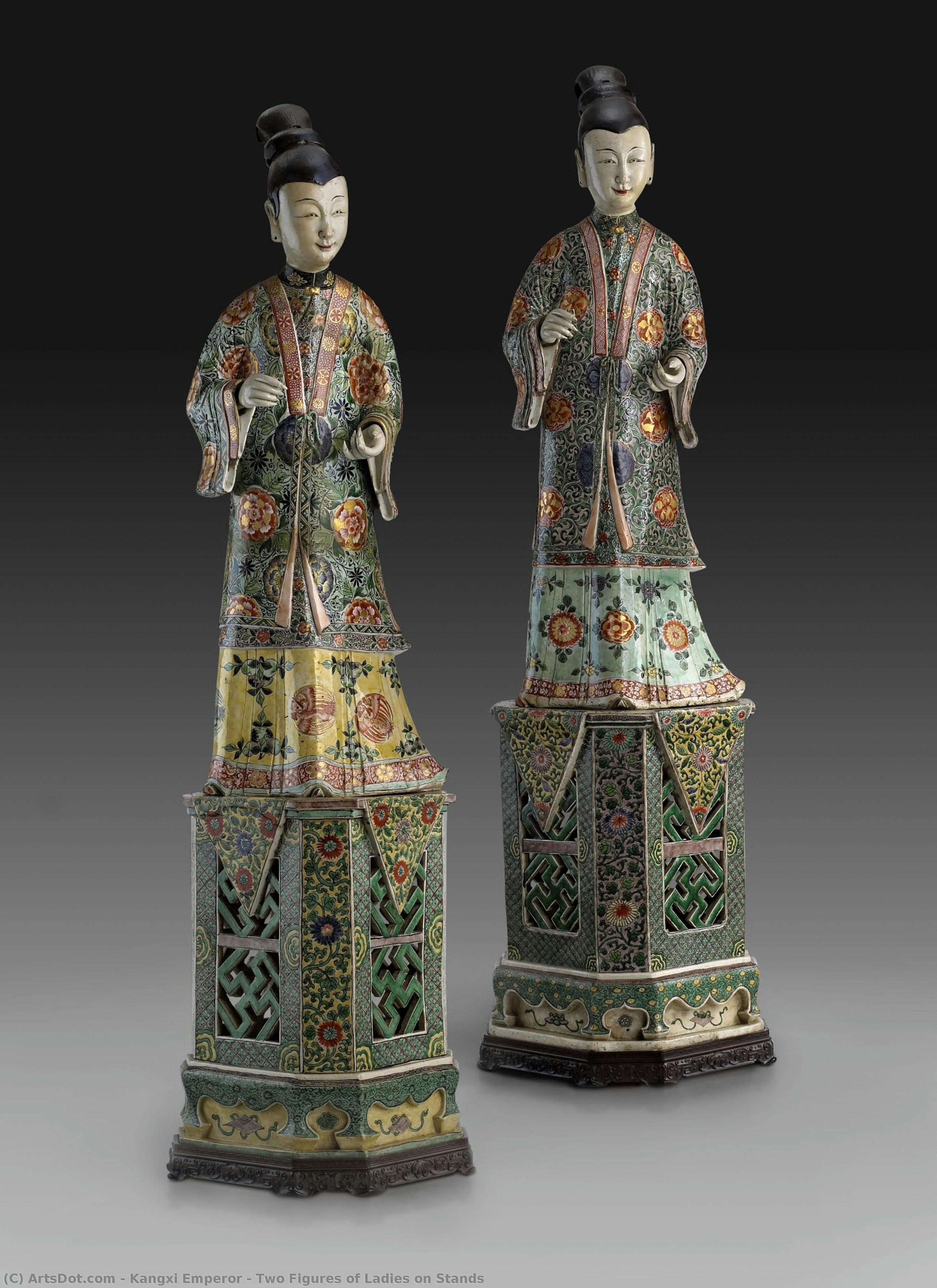
Two Figures of Ladies on Stands
 Ceramics
- Contemporary Realism
 1700
1700 96.0 x 26.0 cm
 The Frick Collection
 Read More
Hand Made Oil Reproduction
Hand-painted oil on canvas in your size and frame, made to order by our artists. ( Buy Print Buy Image)




































Pick from our preset sizes that match the artwork's original proportions.

You may enter your own dimensions to fit a specific frame or space. If your selected size does not match the original image's proportions, we will either crop the artwork or extend the painting with additional hand-painted elements. A digital mockup will be sent for your approval before production begins.
Please note that the on-screen preview does not reflect the actual cropping or extension. Only the mockup will accurately show the final composition.
While custom sizes are available, we recommend selecting a dimension from the predefined list to preserve the original proportions.
After order, ArtsDot.com team will email client for instructions and provide a mockup preview
Worldwide Delivery () in 3/4 weeks instead of standard 5 weeks. (21 August). No compromise on quality.

Free Worldwide Express Shipping

High-Quality Linen Canvas

Full Shipping Insurance

Customs Tax Refund Guarantee

True Color Matching Guarantee

60-Day Return Policy (Defects Only)

100% Money-Back Guarantee

Bulk Discount Offer
 Glass option is only available in size under 110 CM

Two Figures of Ladies on Stands
Reproduction Medium
Reproduction Size
-


Total Price
$ 288
Artwork Description
An Ode to Porcelain Grace: Two Ladies on Stands
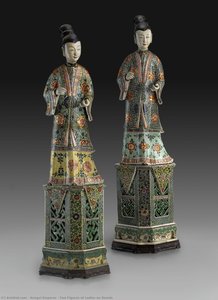
To gaze upon these two porcelain figurines is to step directly into the refined elegance of early eighteenth-century Chinese artistry. They are not merely decorative objects; they are exquisite narratives cast in glazed ceramic, embodying an ideal vision of femininity and prosperity from a bygone era. The overall impression is one of breathtaking symmetry and meticulous craftsmanship. These figures, depicting elegant ladies poised upon ornate stands, invite the viewer into a world where every curve and color tells a story of refinement.
Mastery in Enamel: Technique and Color
The technical brilliance displayed here lies in the application of overglaze enamel palettes, particularly those dominated by the luminous quality known as famille vert. The artisans achieved a rich tapestry of colors—vibrant greens mingling with deep reds, sunny yellows, regal aubergines, and serene blues. These hues are not simply painted on; they are glazed onto the porcelain surface, creating translucent effects that give the entire piece an ethereal glow. One can almost feel the delicate touch required to apply these enamels, a process demanding both patience and profound skill. The smooth, glossy texture of the porcelain catches the light, making the intricate patterns—be it the suggestion of silk brocade on their garments or the detailed work on the stands—seem alive.
Symbolism Woven into Form
The subject matter itself is deeply symbolic. The women represent an idealized beauty, echoing the aesthetic ideals described by seventeenth-century writers: faces shaped like perfect ovals, brows delicately curved, and figures possessing a supple grace reminiscent of willow branches. Their gentle hands, poised as if offering a flower or fruit, carry the universal gesture in Chinese culture—a heartfelt good wish extended from woman to man. Beyond the human form, the decorative motifs are rich with auspicious meaning. We observe naturalistic elements like blooming chrysanthemums and rose blossoms, alongside the graceful flight of storks, symbols of longevity. Most notably, the repeated inclusion of the wan symbol, a Buddhist emblem for good fortune, anchors the piece in a deep current of hope and well-being.
A Glimpse Across Continents
Considering their probable journey from China to Western collectors, these figurines carry the weight of history and transatlantic trade. Their large size, which once made them notoriously fragile for shipping, only adds to their perceived value today—they are tangible remnants of cultural exchange. They speak of a time when such artistry was coveted across continents, serving not just as decoration, but as potent symbols of status, good fortune, and sophisticated taste within the grand homes of the elite. Owning a reproduction allows one to bring this historical narrative of grace and enduring beauty into a modern setting.
Related Artworks
Artist Biography
Carel Fabritius: A Master of Illusion and Domestic Detail
Carel Pietersz. Fabritius, born in Delft on February 27, 1622, and tragically passing away at the young age of 32 on October 12, 1654, remains a singular figure in the Dutch Golden Age—a master of illusionistic painting whose brief career produced works of astonishing depth and technical brilliance. While he didn’t achieve widespread fame during his lifetime, Fabritius's legacy has been profoundly reassessed in recent decades, revealing him as a pivotal innovator who pushed the boundaries of realism and spatial representation. His work is characterized by an uncanny ability to create convincing illusions, particularly within domestic settings, offering viewers a glimpse into everyday life with remarkable detail and psychological insight. Fabritius’s artistic journey began under the tutelage of his father, Pietersz. Fabritius, a skilled painter in his own right, and later through the influence of other prominent Delft artists like Johannes Vermeer and Pieter de Hooch. He initially focused on historical paintings, mirroring the prevailing trends of the time—large-scale compositions depicting biblical scenes or mythological narratives. However, around 1654, Fabritius shifted his focus to smaller, more intimate subjects, a move that would define his artistic identity. This transition is particularly evident in *The Goldfinch* (1654), his most celebrated work and the one that has fueled decades of scholarly debate.- The Illusion of Reality: Fabritius’s genius lay in his meticulous rendering of textures, light, and shadow—creating an illusion so convincing that it seems to transcend mere representation. He employed a technique known as *trompe-l'oeil*, or “fool the eye,” deliberately deceiving the viewer into believing they are observing a real scene unfolding before them.
- The Goldfinch: This painting, now housed at the Kunsthistorisches Museum in Vienna, exemplifies Fabritius’s mastery. The bird perched on its feeding box, seemingly poised to take flight, is rendered with such precision that one instinctively expects it to move. The inclusion of a street scene visible through a window adds another layer of complexity, suggesting an engagement between the viewer and the painted world.
- A Neighborhood Window: Recent scholarship, as detailed in Linda Stone-Ferrier’s article for *The Journal of Historians of Netherlandish Art*, proposes that *The Goldfinch* was originally intended to be viewed through a street-side window. This theory posits that the painting may have been affixed to an actual window jamb, creating a seamless integration between the painted world and the surrounding environment—a sophisticated commentary on the role of windows in shaping social interactions and perceptions within a Dutch household.
The Influence of Vermeer and the Delft School
Fabritius’s artistic development was undoubtedly shaped by his contemporaries, particularly Johannes Vermeer. Both artists shared a fascination with light and shadow, and both possessed an exceptional ability to capture the nuances of domestic life. However, while Vermeer is celebrated for his serene and contemplative scenes, Fabritius's work often carries a sense of heightened drama and psychological intensity. He was also part of the Delft School of painting, known for its realism and attention to detail. The influence of this school can be seen in Fabritius’s meticulous rendering of objects and figures—a hallmark of Dutch art during the Golden Age. Fabritius's work also reflects the broader artistic trends of the time, including the rise of naturalism and the increasing interest in depicting everyday life. He was influenced by Caravaggio, particularly his dramatic use of light and shadow, but he developed a distinctly personal style—characterized by an unparalleled level of realism and illusionistic skill.A Tragic Early Death and Enduring Legacy
Fabritius’s tragically short life has contributed to the enduring mystery surrounding his work. He died suddenly in 1654, leaving behind only a handful of paintings—a remarkably small output for such a talented artist. The circumstances of his death remain unclear, though theories range from illness to accidental injury. His untimely demise robbed the art world of a promising talent and left many of his works unfinished. Despite this limited body of work, Fabritius’s influence on subsequent generations of artists is undeniable. His innovative use of *trompe-l'oeil* techniques paved the way for later developments in realism and illusionism—particularly in the work of Johannes Vermeer. Today, Fabritius is recognized as a pivotal figure in Dutch art history—a master of illusion, detail, and psychological insight whose brief career left an indelible mark on the artistic landscape.Major Works
Fabritius’s oeuvre consists of only six paintings that are definitively attributed to him:- *The Goldfinch* (1654)
- *A Young Woman Addressed by a Youth* (1652-1653)
- *A Musical Instrument Dealer* (1650-1653)
- *The Concert* (c. 1657, possibly unfinished)
- *A Milkmaid Bringing in Pails* (c. 1652-1653)
- *A Woman with a Water Pitcher* (c. 1652-1653)
Historical Significance
Fabritius's work is not just aesthetically significant; it also offers valuable insights into 17th-century Dutch society. *The Goldfinch*, in particular, provides a glimpse into the social dynamics of a Dutch household—the interaction between residents and passersby, the role of windows as points of connection, and the importance of domestic objects in shaping daily life. His paintings are a window into a bygone era, offering a rare and intimate portrait of a world that is both familiar and profoundly distant.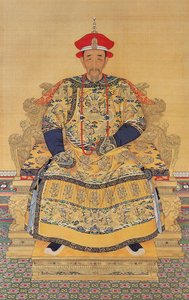
kangxi emperor
1654 - 1722 , China
Quick Facts
- Artistic Movement Or Style: Delft School, Dutch Golden Age
- Artists Or Movements Influenced By This Artist: ['Johannes Vermeer']
- Artists Who Influenced This Artist:
- Peter Paul Rubens
- Jan Vermeer
- Date Of Birth: February 27, 1622
- Date Of Death: October 12, 1654
- Full Name: Carel Pietersz. Fabritius
- Nationality: Dutch
- Notable Artworks:
- The Goldfinch
- Young Woman with a Pearl Necklace
- Place Of Birth: Delft, Netherlands
Related Articles
The Enduring Appeal of Decorative Art: A Historical Survey of Ornamentation, Functionality & Cultural Significance
Explore the rich history of decorative arts with ArtsDot.com. Discover key movements, influential artists, and expert guidance for building a discerning collection. Learn about ornamentation, functionality & cultural significance.
Top 10 Masterpieces for Your Living Room: Iconic Paintings & Art Decor Ideas |
Transform your living room with iconic art! Explore our guide to the Top 10 most famous paintings – from Van Gogh's Starry Night to Mona Lisa. Discover artist stories, techniques & find museum-quality reproductions for timeless decor. Explore the full collection on
25 Klimt Masterpieces: A Journey Through Iconic Art & Decor
Delve into the world of Gustav Klimt with our top 25 masterpieces! Explore his iconic paintings – 'The Kiss,' 'Portrait of Adele,' and more. Discover museum-quality reproductions & curated decor ideas. Explore the full collection online at ArtsDot.com.
Pu Xinyu's 'Puru': A Legacy of Literati Painting & Emotional Resonance
Explore the captivating world of Pu Xinyu (Puru), the last great literati painter. Discover his imperial heritage, masterful ink wash techniques & enduring legacy – a valuable addition to any discerning art collection.

Tactile Maximalism: The Expert Guide to Styling Bold Pop Art for Dopamine Decor Interiors
Master the art of Dopamine Decor with our expert guide to Tactile Maximalism. Learn how to professionally style bold Pop Art through texture, color theory, and curated layers to create a joyful, high-end interior that inspires.