 Preview
 Send
Send Share
Share
 Details

 Download
 Similars
 X-Ray
X-Ray Diaporama
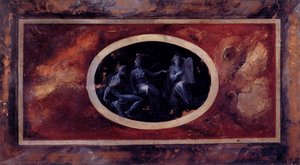
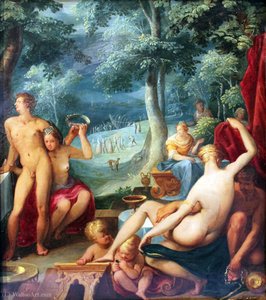
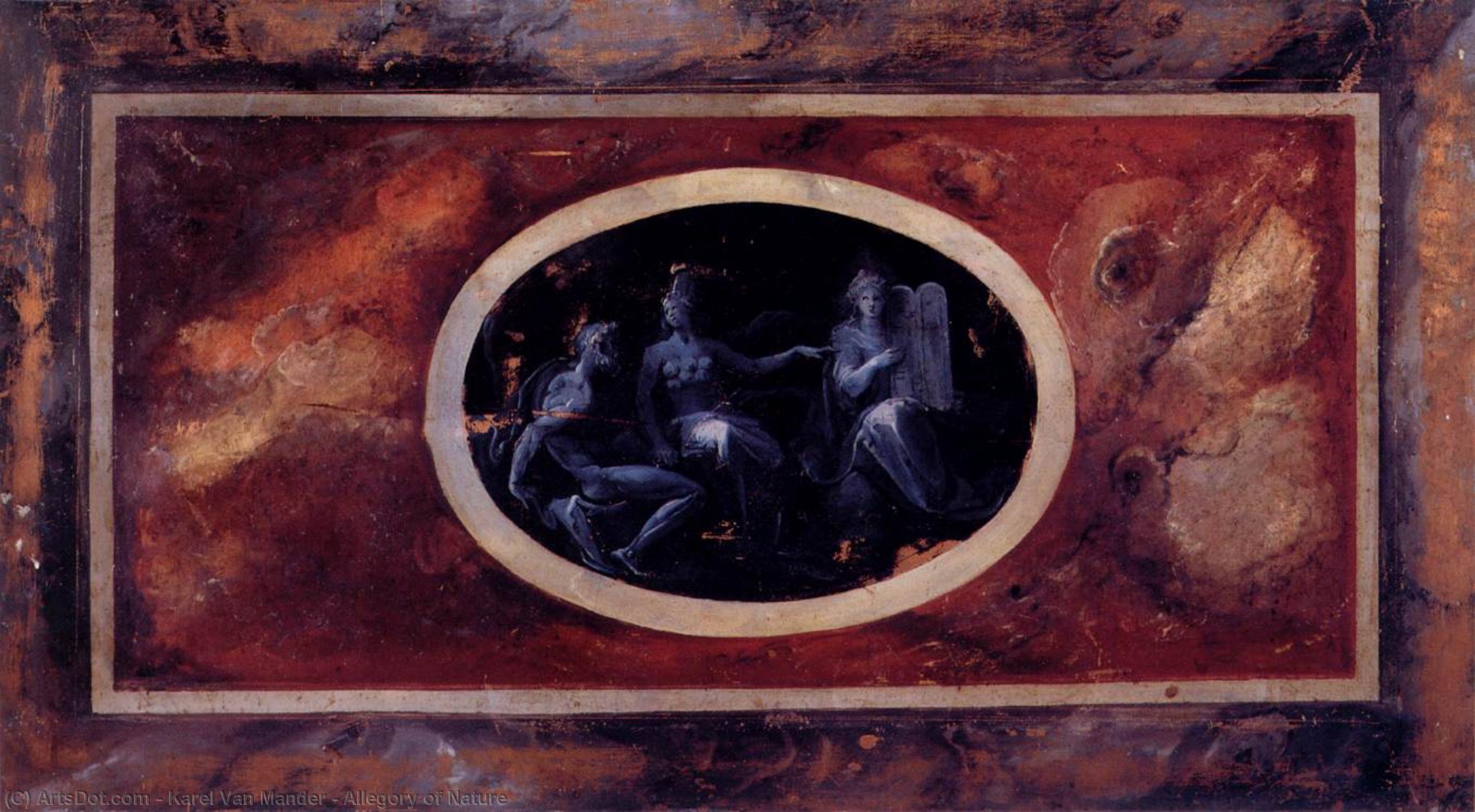
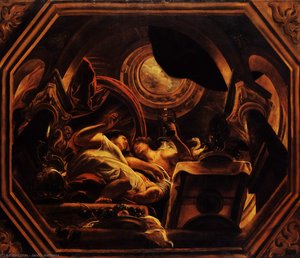
Allegory of Nature
 Oil On Copper
- Northern Renaissance
 1600
1600 44.0 x 79.0 cm
 Rijksmuseum
 Read More
Hand Made Oil Reproduction
Hand-painted oil on canvas in your size and frame, made to order by our artists. ( Buy Print Buy Image)




P118B $10

P118H $10

P118W $10

P438Z $10

P508JH $12

P508YH $12

P805H $10

P805Z $10

P919BZ $10

P919G $10

P919XJ $10

P959ZH $10

P968JZ $12

W106C $8

W218G $10

W218JH $8

W218Y $10

W307PJ $10

W316G $10

W316PJ $8

W316Y $10

W398PJ $8

W4111J $10

W500HY $15

W500JH $15

W692G $12

W849H $8

W940BG $15

W953PJ $8




Pick from our preset sizes that match the artwork's original proportions.

You may enter your own dimensions to fit a specific frame or space. If your selected size does not match the original image's proportions, we will either crop the artwork or extend the painting with additional hand-painted elements. A digital mockup will be sent for your approval before production begins.
Please note that the on-screen preview does not reflect the actual cropping or extension. Only the mockup will accurately show the final composition.
While custom sizes are available, we recommend selecting a dimension from the predefined list to preserve the original proportions.
After order, ArtsDot.com team will email client for instructions and provide a mockup preview
Worldwide Delivery () in 3/4 weeks instead of standard 5 weeks. (17 August). No compromise on quality.

Free Worldwide Express Shipping

High-Quality Linen Canvas

Full Shipping Insurance

Customs Tax Refund Guarantee

True Color Matching Guarantee

60-Day Return Policy (Defects Only)

100% Money-Back Guarantee

Bulk Discount Offer
 Glass option is only available in size under 110 CM

Allegory of Nature
Reproduction Medium
Reproduction Size
-


Total Price
$ 313
Artwork Description
A Glimpse into Northern Renaissance Harmony: The Allegory of Nature
Karel van Mander’s “Allegory of Nature,” painted in 1600, is more than just a beautiful depiction; it's a meticulously crafted window into the intellectual and artistic currents of the Northern Renaissance. This oil-on-copper masterpiece, currently residing within the hallowed halls of the Rijksmuseum in Amsterdam, invites contemplation on themes of balance, harmony, and the very essence of the natural world. Van Mander, a painter renowned as much for his scholarly treatise “Het Schilderboeck” – a foundational text on art theory – infused this work with layers of symbolic meaning rooted deeply in both artistic tradition and humanist thought.
The painting immediately draws the eye to its central oval composition. Within this carefully defined space, three figures engage in an activity that suggests both intellectual pursuit and musical expression. Two women, rendered with a delicate realism characteristic of Early Netherlandish art, appear to be engaged in writing or reading, while a single male figure stands poised, perhaps playing a lute – the instrument’s presence immediately evoking notions of harmony and pleasure. The backdrop is not merely decorative; it's a swirling tapestry of deep blues, browns, and rich reds, creating an atmosphere of dramatic depth and suggesting the unpredictable forces inherent in nature itself.
Decoding the Symbolism: Nature, Wisdom, and the Divine
The symbolism woven into “Allegory of Nature” is remarkably complex. The figures themselves are not simply portraits but allegorical representations. The women likely embody wisdom and knowledge, qualities traditionally associated with female intellect and contemplation. Their activity – writing or reading – speaks to a pursuit of understanding, mirroring Van Mander’s own scholarly endeavors. The male figure, positioned centrally, could represent the active engagement with this knowledge, perhaps embodying artistic creation or the application of learned principles. The musical instruments are crucial; they symbolize harmony, balance, and the interconnectedness of all things within nature.
Furthermore, the dark sky punctuated by swirling clouds serves as a potent reminder of nature’s power and unpredictability. This contrasts sharply with the figures, suggesting that while humanity can strive to understand and emulate nature's beauty, it ultimately remains a force beyond complete control. The inclusion of elements reminiscent of the Early Netherlandish movement – meticulous detail, realistic depiction, and an emphasis on light and shadow – firmly places this work within a rich artistic lineage.
Craftsmanship and Technique: A Master’s Touch
Van Mander's skill as a painter is evident in every brushstroke. The use of oil on copper allows for incredible detail and luminosity, capturing the textures of clothing, skin, and the swirling background with remarkable precision. The impasto technique – applying paint thickly to create texture – adds depth and dynamism to the composition, particularly noticeable in the figures’ garments and the dramatic clouds. The careful layering of colors creates a sense of atmospheric perspective, drawing the viewer's eye into the scene.
Considering the painting’s age and materials, it’s fascinating to note that Van Mander utilized a copper plate as his support, mirroring the technique employed for “The Continence of Scipio.” This dual-sided work demonstrates his mastery of both composition and material. The reverse side, adorned with an imitation of grey and red-veined marble, is a testament to his artistic ingenuity and attention to detail.
A Legacy in Reproduction: Bringing Van Mander’s Vision to Life
Today, high-quality reproductions of “Allegory of Nature” are available through ArtsDot.com, offering art enthusiasts the opportunity to experience this iconic work firsthand. These meticulously crafted reproductions capture not only the visual beauty of the original but also the spirit and symbolism that define Van Mander’s masterpiece. Whether adorning a grand salon or a cozy study, a reproduction of “Allegory of Nature” serves as a timeless reminder of the enduring power of art to inspire contemplation and evoke profound emotions.
Related Artworks
Artist Biography
Early Life and Training
- Born: Mellebeke, Belgium (1548)
- Died: 1606
- Karel van Mander was born into a noble family in Meulebeke, County of Flanders.
- He received his early artistic training under Lucas de Heere in Ghent (1568-1569) and subsequently with Pieter Vlerick in Kortrijk.
- Early on, he also engaged in writing religious plays and designing scenery for them.
Travels and Artistic Development
- Rome (1574-1577): Van Mander spent three years in Rome, where he encountered classical art and developed his artistic style. The biographical sketch mentions him as the "discoverer of caves," possibly referring to the catacombs.
- Vienna: During a return journey from Italy, he collaborated with Bartholomeus Spranger and Hans Mont on creating a triumphal arch for Emperor Rudolf II's royal entry. This experience exposed him further to Mannerist influences.
Settlement in Haarlem and Artistic Leadership
- Haarlem (1583): Due to religious troubles and the plague, Van Mander settled in Haarlem, Dutch Republic.
- City Art Inventory: He was commissioned by the city fathers of Haarlem to inventory confiscated Catholic art after the Satisfactie van Haarlem. This work formed a basis for his later writings.
- Founder of an Academy: Together with Hubertus Goltzius and Cornelis van Haarlem, he founded an "academy to study after life," which fostered artistic discussion and possibly included drawing classes.
The *Schilder-boeck* and Art Historical Significance
- Major Work: Van Mander is primarily remembered for his *Schilder-boeck* (Book of Painters), a biographical dictionary of Early Netherlandish and Northern Renaissance artists.
- Influence on Mannerism: His dissemination of drawings by Bartholomeus Spranger, through engravings by Hubertus Goltzius, significantly contributed to the spread of Northern Mannerism in the Dutch Republic.
- Art Theorist: He played a crucial role in art theorization during the 16th century, emphasizing style and cultivated elegance over naturalism. His theories promoted exaggerated musculature, dramatic scenes, and rich detail.
Legacy and Artistic Style
- Northern Mannerism Pioneer: Karel van Mander is considered a key figure in the development of Northern Mannerism.
- Influence on Dutch Art: He significantly influenced artists in Haarlem and beyond, shaping the artistic landscape of the Dutch Republic.
- Artistic Characteristics: His own paintings often featured historical allegories characterized by a strong awareness of style, cultivated elegance, and a preference for dramatic compositions.
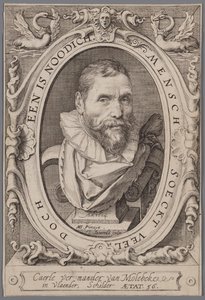
Karel van Mander
1548 - 1606 , Belgium
Quick Facts
- Artistic Movement Or Style: Northern Mannerism
- Artists Or Movements Influenced By This Artist:
- Hendrick Goltzius
- Cornelis van Haarlem
- Artists Who Influenced This Artist:
- Lucas de Heere
- Pieter Vlerick
- Bartholomeus Spranger
- Date Of Birth: May 1548
- Date Of Death: September 2, 1606
- Full Name: Karel van Mander
- Nationality: Flemish
- Notable Artworks:
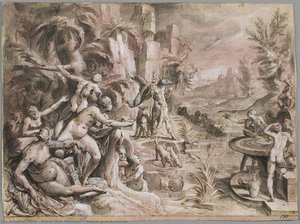
- Diana and Actaeon
- Allegory of Nature
- Garden of Love
- Before the Flood
- Place Of Birth: Meulebeke, Belgium
Related Articles
Van Gogh's Masterpieces: Explore 25 Iconic Paintings & Art for Your Home
Journey through Vincent van Gogh's 25 most iconic paintings! Explore 'Starry Night', 'Sunflowers,' and more—discover the stories, techniques & emotions behind these Post-Impressionist masterpieces. Find museum-quality art reproductions for your home at ArtsDot.com.

Rembrandt's Masterpieces: Explore 25 Iconic Paintings & Prints | ArtsDot
Journey through Rembrandt van Rijn's 25 most iconic paintings & etchings. Explore Dutch Golden Age masterpieces, dramatic chiaroscuro, and timeless portraits. Find museum-quality art reproductions to elevate your home decor on ArtsDot.com.

Early Netherlandish Masters: 10 Paintings That Revolutionized Art & Decor
Journey into the world of Early Netherlandish painting! Explore 10 masterpieces by Jan van Eyck, Rogier van der Weyden & more. Discover stunning detail, symbolism & Renaissance art for your home decor. Find museum-quality reproductions on ArtsDot.com
Early Netherlandish Masters: 10 Paintings That Revolutionized Art & Decor
Journey into the Early Netherlandish Renaissance! Explore 10 iconic paintings by Jan van Eyck, Rogier van der Weyden & more. Discover stunning detail, symbolism, and oil painting techniques. Find museum-quality art reproductions for your home at ArtsDot.com.

Oil on Canvas: A Historical & Technical Exploration of a Timeless Artistic Medium
Explore the rich history & enduring techniques of oil painting on canvas. Discover the science behind its longevity, conservation practices, and contemporary relevance. Expert insights for art enthusiasts.