 Send
Send Share
Share
 Details

 Download
 Similars
 Diaporama
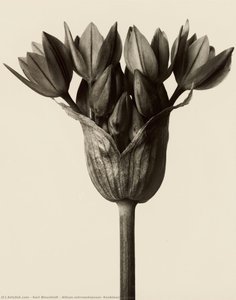
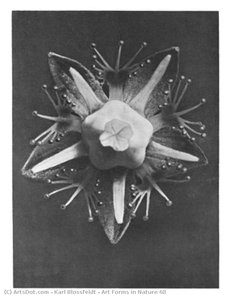
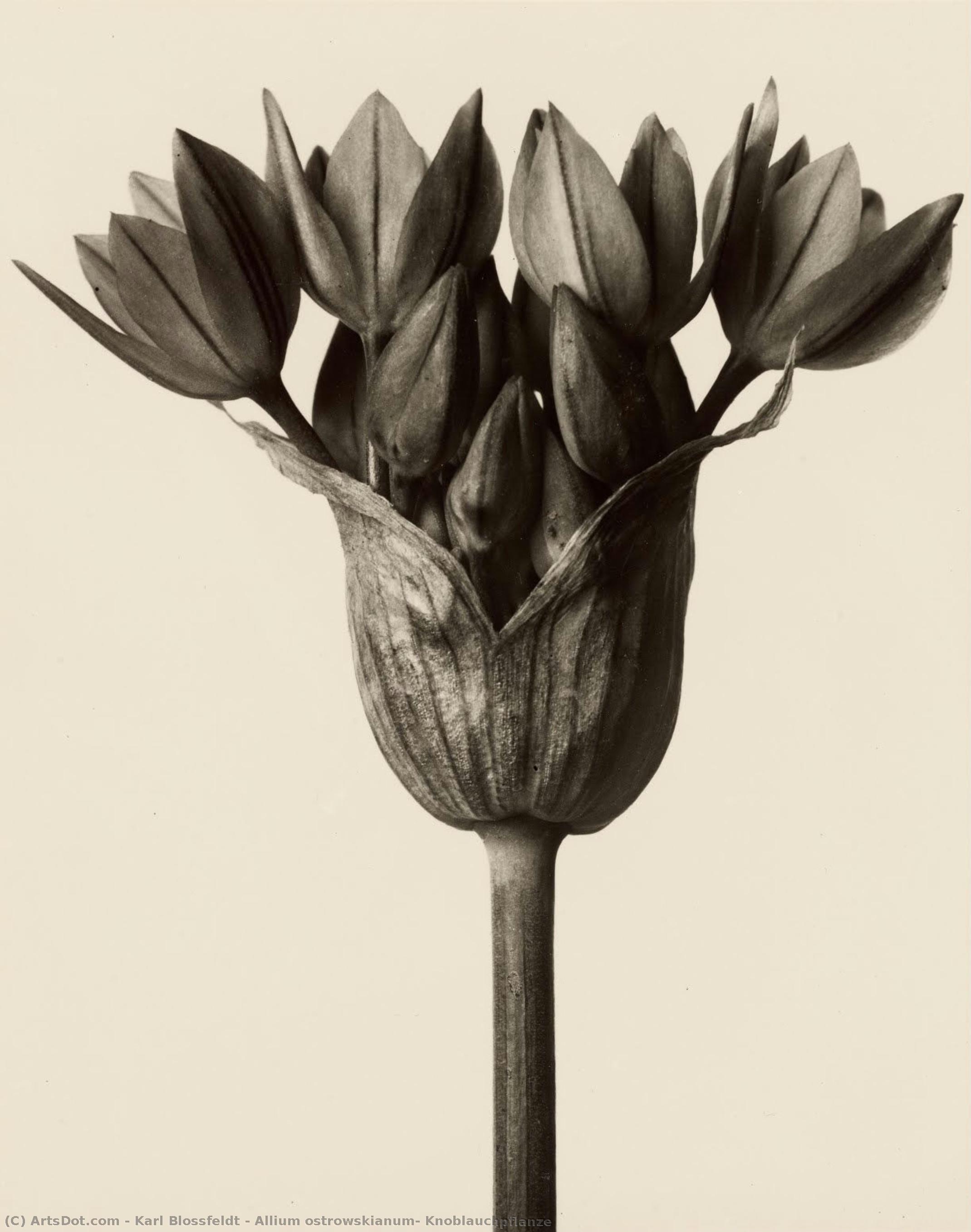
Allium ostrowskianum, Knoblauchpflanze
 Black and White Photography
- Photo
- Neue Sachlichkeit
 1928
1928 25.0 x 20.0 cm
 J. Paul Getty Museum
 Read More
Giclée / Art Print
Museum-quality giclée or canvas print with fast production and flexible finish options. ( Buy Hand Made Painting Buy Image)




































Pick from our preset sizes that match the artwork's original proportions.

You may enter your own dimensions to fit a specific frame or space. If your selected size does not match the original image's proportions, we will either crop the artwork or extend the image with a mirrored or solid-fill edge. A digital mockup will be sent for your approval before production begins.
Please note that the on-screen preview does not reflect the actual cropping or extension. Only the mockup will accurately show the final composition.
While custom sizes are available, we recommend selecting a dimension from the predefined list to preserve the original proportions.
Worldwide Delivery () in 2 weeks instead of standard 4/5 weeks. (25 August)

Free Worldwide Express Shipping

High-Quality Linen Canvas

Full Shipping Insurance

Customs Tax Refund Guarantee

True Color Matching Guarantee

60-Day Return Policy (Defects Only)

100% Money-Back Guarantee

Bulk Discount Offer
 Glass option is only available in size under 110 CM

Allium ostrowskianum, Knoblauchpflanze
Giclée / Art Print
Reproduction Size
-


Total Price
$ 63
Collectible Description
The Intimate Geometry of Nature: Blossfeldt's Botanical Vision
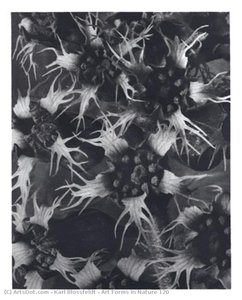
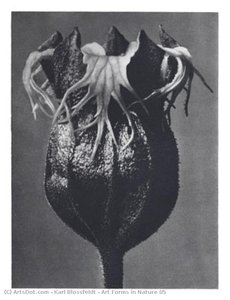
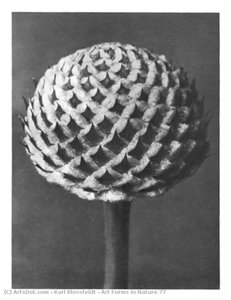
To gaze upon this study of Allium ostrowskianum, or the Knoblauchpflanze, is to step into the meticulous, almost scientific dreamscape of Karl Blossfeldt. This photograph from 1928 transcends simple botanical documentation; it is a profound meditation on structure, pattern, and the inherent artistry woven into the fabric of life itself. Blossfeldt, whose career bridged the late Victorian era with the burgeoning modernism, possessed an eye that saw beyond mere biology. He perceived architecture in the unfurling petal, and sculpture in the clustered bloom. The black and white medium is not a limitation, but rather a deliberate choice—a stripping away of ephemeral color to reveal the enduring, skeletal beauty beneath.
A Masterclass in Form and Abstraction
The composition centers around a magnificent, large purple flower, its form commanding immediate attention. Yet, it is the surrounding constellation of smaller blossoms that truly captivate the viewer's gaze. These subsidiary flowers are arranged with such careful placement—some nestled closely, others drifting into the periphery—that they create a palpable sense of depth upon the flat plane of the photograph. Blossfeldt’s technique here is revolutionary; he elevates the commonplace specimen to the status of high art. The resulting image possesses an almost sculptural quality, inviting one to trace the delicate curves and repeating geometries with the eye. It speaks to a disciplined aesthetic sensibility, suggesting that true beauty often resides in adherence to perfect, natural laws.
Historical Echoes: Between Science and Surrealism
Emerging from the early 20th century, this work sits at a fascinating crossroads. While rooted in the empirical observation championed by scientific illustration, Blossfeldt’s output flirted dangerously close to the surreal. His fascination with natural forms led him to create images that felt both utterly real and profoundly imagined—a precursor to much of the Surrealist movement. For the collector or designer, this context is vital: owning a reproduction of this piece means acquiring not just a photograph, but a touchstone from an era when art was actively questioning the boundaries between documentation and pure artistic interpretation. It whispers of intellectual rigor paired with untamed natural wonder.
Symbolism and Emotional Resonance for the Modern Space
The symbolism inherent in such flora is rich. The allium, often associated with resilience and strength, combined with the stark elegance of black and white photography, lends the piece an air of timeless gravitas. It does not shout for attention; rather, it invites quiet contemplation. For an interior space, this artwork acts as a sophisticated anchor. It suggests an appreciation for enduring quality over fleeting trendiness. Whether placed above a console table or within a gallery setting, its restrained drama adds an intellectual depth, transforming a mere wall into a curated dialogue between human artistry and the persistent perfection of the natural world.
Related Artworks



Artist Biography
Karl Blossfeldt: Pioneer of Botanical Surrealism
Karl Blossfeldt (1865 – 1932) stands as a singular figure in the history of photography and sculpture, recognized primarily for his groundbreaking approach to botanical representation. Born in Schlēde, Germany, Blossfeldt’s artistic vision was profoundly shaped by his father's unwavering fascination with the natural world—a connection that would become the cornerstone of Blossfeldt’s own creative endeavors. He wasn’t merely documenting plants; he sought to distill their essence, capturing them in meticulously crafted black and white images that transcended mere observation and ventured into realms of abstraction and psychological exploration.- Early Life & Education: Blossfeldt pursued formal studies initially focusing on architecture but quickly gravitated towards sculpture, honing his skills under the tutelage of Wilhelm Trübschenitsch. This formative period instilled in him a disciplined aesthetic sensibility that would permeate his subsequent artistic pursuits.
- The Birth of Botanical Surrealism: Blossfeldt’s seminal work, ‘Urformen der Kunst’ (Forms of Art), published in 1929, revolutionized photographic practice. Rejecting conventional compositional techniques, he employed a technique known as “photogram,” where objects were placed directly onto photographic paper and exposed to light without any camera lens involved. This method yielded astonishing results—images that seemed to emerge from the darkness itself, revealing intricate textures and forms with unparalleled clarity.
- Influences & Artistic Style: Blossfeldt’s aesthetic sensibilities drew heavily from German Expressionism, particularly the works of Ernst Ludwig Kirchner and Erich Heckel. These artists shared a preoccupation with portraying inner emotional states through distorted imagery—a stylistic impulse that Blossfeldt skillfully adapted to his botanical subjects. He aimed not just to depict plants objectively but to convey their inherent beauty and power, capturing them in ways that evoked feelings of awe and wonder.
- Notable Achievements: Blossfeldt’s photographic explorations yielded a vast portfolio of images documenting diverse plant species—from ferns and mosses to orchids and cacti—each presented with meticulous detail and artistic consideration. His sculptures, often inspired by botanical forms, further solidified his reputation as a visionary artist who seamlessly blended observation and imagination.
- Legacy & Historical Significance: Blossfeldt’s pioneering technique continues to inspire photographers today, demonstrating the transformative potential of challenging conventional photographic conventions. More importantly, he established a new paradigm for artistic representation—one that prioritized abstraction and psychological depth alongside visual accuracy. His work remains an enduring testament to the power of art to illuminate the hidden beauty of the natural world and to provoke contemplation on fundamental questions about perception and experience.
Exploring ‘Urformen der Kunst’ & Photogram Technique
Blossfeldt's 'Urformen der Kunst' wasn’t simply a collection of photographs; it was a deliberate manifesto—a rejection of academic photography in favor of an approach that prioritized capturing the raw essence of botanical forms. The photogram technique itself involved placing plant specimens onto photographic paper and exposing them to light without using a camera lens. This method created images where the textures and contours of the plants were revealed through latent impressions formed by ultraviolet radiation—a process that yielded strikingly surreal results. Blossfeldt’s meticulous attention to detail and his willingness to experiment with innovative methods cemented his place as one of the most influential artists of the Weimar Republic.Connections to MoMA & Artistic Recognition
Karl Blossfeldt's work gained international acclaim, culminating in a solo exhibition at MoMA in 2004. The museum recognized Blossfeldt’s contribution to modern art and showcased his photographic prints alongside sculptural creations—demonstrating the breadth of his artistic vision. As evidenced by the museum’s catalog entry, Blossfeldt’s influence extended beyond photography into sculpture, reflecting a broader engagement with exploring natural forms through various mediums.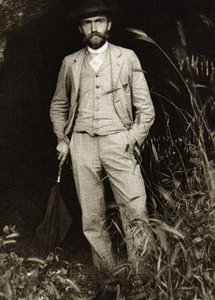
Karl Blossfeldt
1865 - 1932 , Germany
Quick Facts
- Artistic Movement Or Style: German Expressionism
- Date Of Birth: 1865
- Full Name: Karl Blossfeldt
- Nationality: German
- Notable Artworks:
- Art Forms in Nature 105
- Art Forms in Nature 57
- Art Forms in Nature 109
- Place Of Birth: Schlēde, Germany
Related Articles
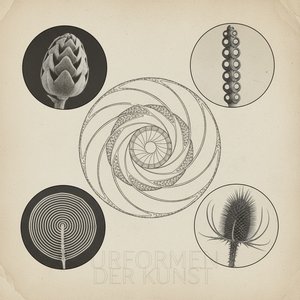
Karl Blossfeldt's 'Urformen der Kunst': Pioneering Botanical Photomicrography & Aesthetic Form
Explore Karl Blossfeldt's groundbreaking *Urformen der Kunst* & pioneering botanical photography. Discover the aesthetic power of nature, New Objectivity influences, and his lasting impact on modern art. Learn about collecting key works.

Dark Masterpieces: 10 Iconic Paintings Dominated by Black Tones |
Explore 10 iconic paintings dominated by black tones, from Rembrandt’s chiaroscuro to Goya's dark expressions. Discover the stories behind these masterpieces & find museum-quality art reproductions for your home at .

Victorian Botanical Painting: Science, Art & Aesthetic Sensibility
Explore the exquisite world of Victorian botanical art! Discover the science & artistry behind stunning floral illustrations by Gould, Muckley & more. Learn about collecting, value & investment at ArtsDot.
The Flourishing Canvas: A Historical Journey Through Botanical Illustration
Explore the captivating history of botanical illustration! Discover renowned artists like Robert Havell & Mary Walcott, learn about techniques, and find museum-quality art at ArtsDot.com.
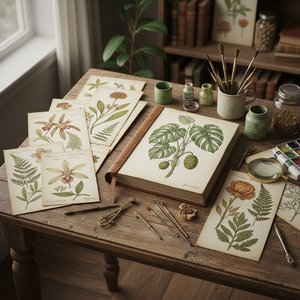
The Flourishing Canvas: A Historical & Artistic Exploration of Botanical Illustration
Explore the rich history of botanical illustration! Discover key artists like Havell & Barraband, learn about scientific accuracy & aesthetic beauty. Shop museum-quality reproductions at ArtsDot.