 Send
Send Share
Share
 Details

 Download
 Similars
 Diaporama
Karl Fabergé bell push
 Enamel
- Decor
- Art Nouveau
 1900
1900- 19th Century
 22.0 x 5.0 cm
 Palácio Nacional da Ajuda
 Read More
Giclée / Art Print
Museum-quality giclée or canvas print with fast production and flexible finish options. ( Buy Hand Made Painting Buy Image)




































Pick from our preset sizes that match the artwork's original proportions.

You may enter your own dimensions to fit a specific frame or space. If your selected size does not match the original image's proportions, we will either crop the artwork or extend the image with a mirrored or solid-fill edge. A digital mockup will be sent for your approval before production begins.
Please note that the on-screen preview does not reflect the actual cropping or extension. Only the mockup will accurately show the final composition.
While custom sizes are available, we recommend selecting a dimension from the predefined list to preserve the original proportions.
Worldwide Delivery () in 2 weeks instead of standard 4/5 weeks. (25 August)

Free Worldwide Express Shipping

High-Quality Linen Canvas

Full Shipping Insurance

Customs Tax Refund Guarantee

True Color Matching Guarantee

60-Day Return Policy (Defects Only)

100% Money-Back Guarantee

Bulk Discount Offer
 Glass option is only available in size under 110 CM

Karl Fabergé bell push
Giclée / Art Print
Reproduction Size
-


Total Price
$ 63
Collectible Description
A Symphony of Gold and Azure: The Radiance of the Fabergé Bell Push
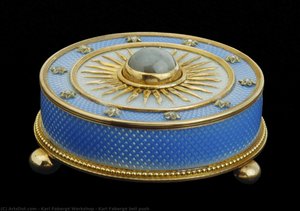
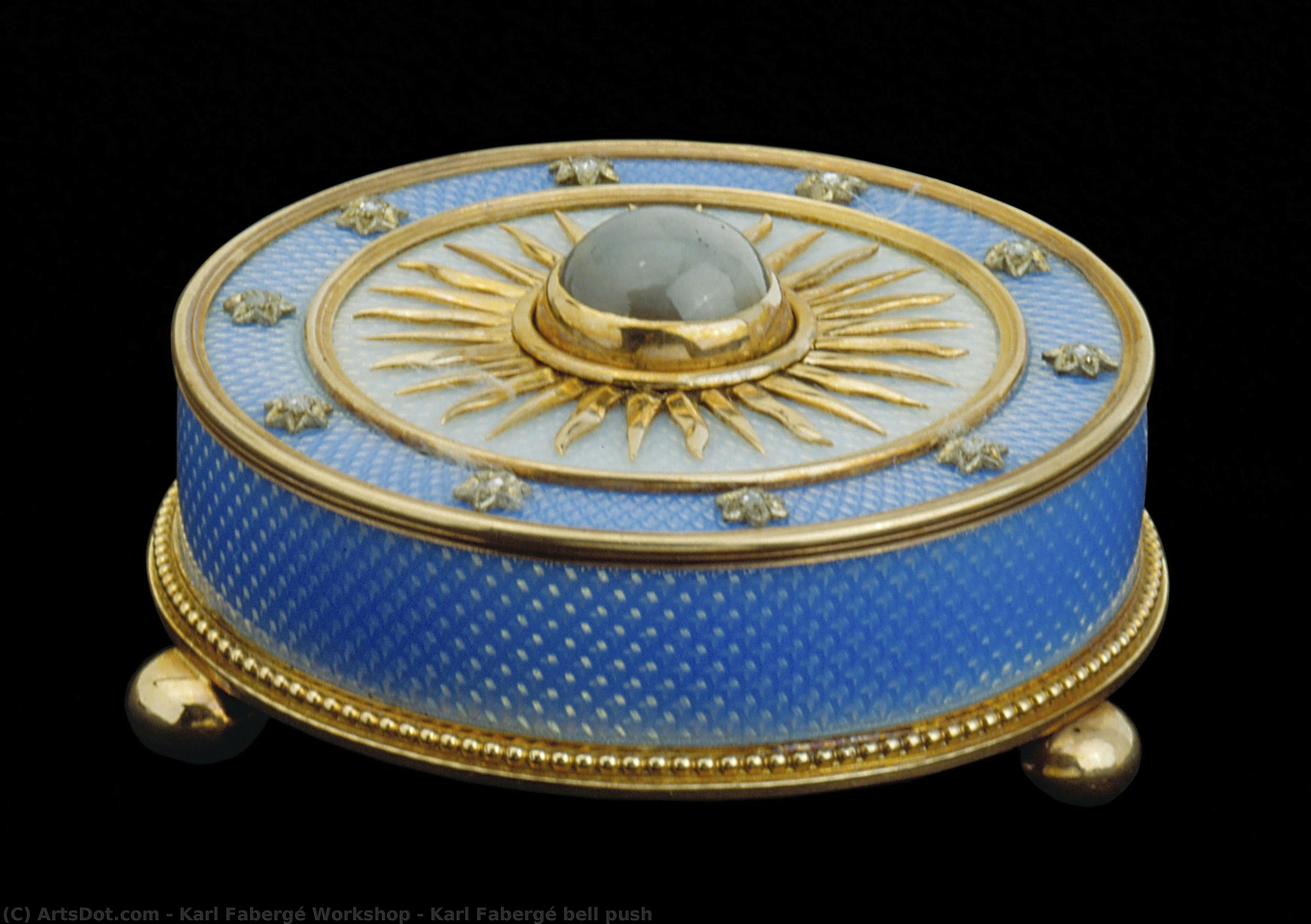
In the twilight of the Russian Imperial era, few names evoked more immediate prestige than the Karl Fabergé Workshop. To touch a piece from this legendary atelier was to engage with the very heartbeat of Saint Petersburg’s golden age. This exquisite bell push, dating from approximately 1900, serves as a breathtaking testament to that era's unparalleled mastery of decorative arts. At first glance, the object captivates with its vibrant interplay of deep azure and luminous gold, a color palette that suggests both the infinite sky and the sun-drenched splendor of a royal palace. It is not merely a functional household object; it is a miniature masterpiece designed to transform a mundane domestic gesture into an act of ritualistic beauty.
The craftsmanship displayed in this piece highlights the workshop's revolutionary approach to enamel and precious metalwork. The central motif—a radiant sunburst—is meticulously rendered, acting as a focal point that draws the eye inward toward a brilliant yellow core. Surrounding this solar emblem is a constellation of diamonds, their sharp, crystalline brilliance contrasting against the smooth, translucent layers of colored enamel. This technique, which required the painstaking application of multiple glass-like layers to metal, allows for a depth of color that seems to glow from within. The gold rim provides a structured, opulent frame, ensuring that every facet of the design is anchored by a sense of weight and permanence.
Symbolism and the Art of Imperial Living
Beyond its physical splendor, the bell push carries profound symbolic weight. The sun, an ancient symbol of life, power, and divine authority, was a recurring motif in the high-society aesthetics of the late 19th century. In the context of a grand estate, this sun design would have served as a constant, subtle reminder of light and vitality within the home. The inclusion of diamonds—symbols of purity and invincibility—further elevates the object from a mere tool to a talisman of status. For the collector or the interior designer, such a piece represents more than just luxury; it embodies an era where even the smallest utilitarian item was treated with the reverence of fine art.
Integrating a high-quality reproduction of this bell push into a contemporary space offers a unique opportunity to bridge the gap between history and modern elegance. Whether placed within a curated collection of period artifacts or used as a striking accent in a sophisticated, neo-classical interior, the piece commands attention. It invites the observer to slow down and appreciate the intricate details that define true luxury. For those seeking to infuse their surroundings with a sense of timelessness and grandeur, this work from the Fabergé legacy provides an unparalleled source of inspiration, echoing the opulence of a lost world through its enduring brilliance.
Related Artworks




Artist Biography
The Golden Legacy of the Karl Fabergé Workshop
The story of the Karl Fabergé workshop is one of unparalleled opulence, a glittering chronicle of craftsmanship that defined the aesthetic zenith of Imperial Russia. Founded in 1842 by Gustav Fabergé, a skilled jeweler hailing from the Baltic region, the workshop began as a modest enterprise of fine metalwork. However, it was under the visionary stewardship of his son, Carl Fabergé, who assumed leadership in 1882, that the atelier transformed into a global symbol of prestige and artistic innovation. The workshop did not merely create jewelry; it crafted miniature worlds of wonder, blending technical mastery with a profound sense of imperial grandeur that captured the imagination of the Romanov dynasty.
The ascent of the workshop was inextricably linked to its relationship with the Russian Imperial Court. In 1885, Carl Fabergé achieved the ultimate distinction by becoming the official jeweler to the Russian court. This appointment allowed the workshop to push the boundaries of what was possible in decorative arts, serving as a primary purveyor of exquisite treasures to the Tsar and his family. The artistry of the workshop was characterized by an almost magical ability to breathe life into precious metals and gemstones, creating objects that were as much mechanical marvels as they were visual delights.
Mastery of Enamel and Artistic Innovation
At the heart of the workshop's enduring fame lies its revolutionary approach to technique, most notably its mastery of guilloché enamel. This painstaking process involved engraving intricate, repetitive patterns onto metal surfaces—often gold or silver—and then covering them with multiple translucent layers of colored glass. When light struck these surfaces, it danced through the enamel to illuminate the underlying patterns, creating a luminous, ethereal glow that became the hallmark of the Fabergé style. This technique allowed for a level of detail and depth that was previously unseen in the world of luxury goods.
Beyond the brilliance of enamel, the workshop's repertoire was vast and varied, encompassing:
- Exquisite Jewelry: Ornate necklaces, brooches, and tiaras that utilized the finest diamonds and precious stones.
- Silverware and Decorative Objects: Masterpieces of goldsmithing that served as both functional items and sculptural art.
- The Imperial Eggs: The most legendary of all creations, these objects were designed as Easter gifts for the Russian Imperial family, each containing a hidden surprise of immense complexity.
The Imperial Eggs and Historical Significance
No discussion of the Karl Fabergé workshop is complete without mentioning the Fabergé eggs, perhaps the most recognizable icons of luxury in human history. These were not merely ornaments but narrative masterpieces. The Imperial Coronation Egg, created in 1897 to commemorate the coronation of Nicholas II, stands as a monumental achievement of symbolic storytelling. Similarly, the Lilies of the Valley Egg, produced in 1899, showcases the workshop's ability to capture the delicate, fleeting beauty of nature through meticulous craftsmanship and soft, pastel enameling.
The workshop's journey was tragically interrupted by the tides of history. Following the Russian Revolution, the workshop was nationalized by the Bolsheviks in 1918. For decades under Soviet rule, the true essence of the Fabergé name faced suppression, until the atelier finally closed its doors in 1956. Yet, the spirit of the workshop proved indestructible. The revival of the Fabergé name in the 1990s allowed a new generation to reconnect with this legacy of timeless elegance. Today, the workshop remains a symbol of an era where art and luxury were indistinguishable, leaving behind a heritage that continues to inspire awe and reverence in the hearts of collectors and art lovers worldwide.
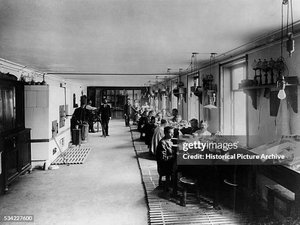
karl fabergé workshop
1842 - 1918 , Russia
Quick Facts
- Artistic Movement Or Style: Art Nouveau
- Artists Who Influenced This Artist:
- Gustav Kirchhoff
- Andreas Spiegel
- Date Of Birth: May 18 [May 30, New Style], 1846
- Full Name: Karl Gustavovich Fabergé
- Nationality: Russian
- Notable Artworks:
- Fabergé Eggs
- Imperial Coronation Egg
- Lilies of the Valley Egg
- Place Of Birth: Saint Petersburg, Russia
Related Articles
Slate Blue Masterpieces: 10 Iconic Paintings & Timeless Home Decor Ideas
Immerse yourself in the captivating world of slate blue! Explore 10 iconic paintings by Monet, Van Gogh & Renoir. Discover their stories, techniques & find museum-quality art reproductions for your home at .
The Allure of Azure: Exploring the Symbolic & Aesthetic Depths of Blue in Art History
Explore the rich history of blue in art! Discover its symbolism, from ancient pigments to modern masterpieces by Kandinsky & Seurat. Uncover the psychological impact and cultural meanings behind this captivating hue.
Golden Glow: How to Use Metallic Gold Artworks to Elevate Your Home Decor with Timeless Luxury
Discover how to elevate your home with the timeless elegance of metallic gold artworks. From sculptural metal pieces to gilded oil paintings, learn expert interior design tips for integrating luxurious gold accents into your space with sophistication and grace.
The Allure of Gold in Art History: Symbolism, Technique & Cultural Significance
Explore the rich history of gold in art! Discover symbolism, techniques & cultural significance from ancient civilizations to Klimt's masterpieces. Expert insights for collectors at ArtsDot.

Golden Masterpieces: 10 Paintings That Define Art History | ArtsDot
Explore 10 breathtaking paintings where gold leaf shines! From Klimt to Byzantine icons, discover art history’s most gilded masterpieces. Find museum-quality reproductions & elevate your home decor with ArtsDot. Explore the full collection online.