 Preview
 Send
Send Share
Share
 Details

 Download
 Similars
 X-Ray
X-Ray Diaporama
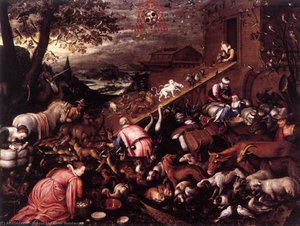
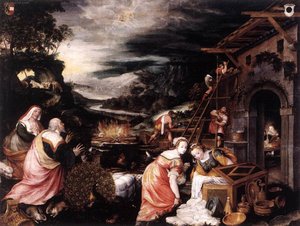
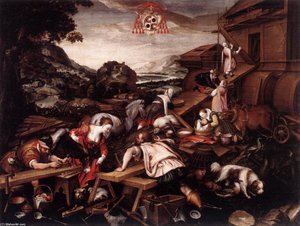
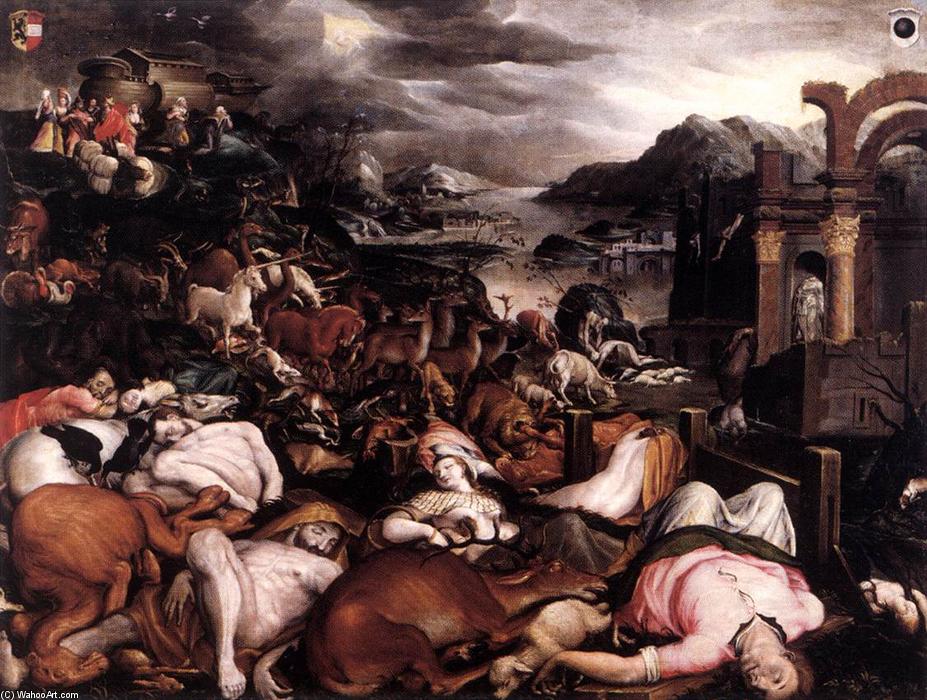
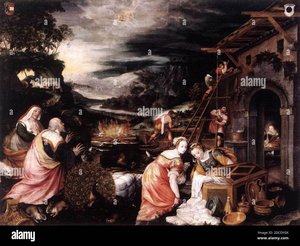
Noah's Ark Cycle: 4. Leaving the Ark
 1588
1588 128.0 x 164.0 cm
 Residenzgalerie
 Read More
Hand Made Oil Reproduction
Hand-painted oil on canvas in your size and frame, made to order by our artists. ( Buy Print Buy Image)




































Pick from our preset sizes that match the artwork's original proportions.

You may enter your own dimensions to fit a specific frame or space. If your selected size does not match the original image's proportions, we will either crop the artwork or extend the painting with additional hand-painted elements. A digital mockup will be sent for your approval before production begins.
Please note that the on-screen preview does not reflect the actual cropping or extension. Only the mockup will accurately show the final composition.
While custom sizes are available, we recommend selecting a dimension from the predefined list to preserve the original proportions.
After order, ArtsDot.com team will email client for instructions and provide a mockup preview
Worldwide Delivery () in 3/4 weeks instead of standard 5 weeks. (17 August). No compromise on quality.

Free Worldwide Express Shipping

High-Quality Linen Canvas

Full Shipping Insurance

Customs Tax Refund Guarantee

True Color Matching Guarantee

60-Day Return Policy (Defects Only)

100% Money-Back Guarantee

Bulk Discount Offer
 Glass option is only available in size under 110 CM

Noah's Ark Cycle: 4. Leaving the Ark
Reproduction Medium
Reproduction Size
-


Total Price
$ 263
Related Artworks
Artist Biography
The Precision of a Renaissance Master
In the twilight of the sixteenth century, as the intellectual currents of Humanism swept across the European continent, the art of printmaking underwent a profound transformation. At the heart of this movement stood Kaspar the Elder Memberger, a master whose name became synonymous with the meticulous elegance of German Renaissance engraving. Born in the historic city of Konstanz around 1555, Memberger emerged from a landscape where the precision of scientific observation began to merge with the soulful depth of classical idealism. His life and work serve as a testament to an era when the copper plate became a window into the human psyche, capturing not just the likeness of his subjects, but their very essence through the delicate dance of light and shadow.
The foundations of Memberger’s extraordinary skill were laid during his formative years in Basel. It was here, under the watchful eye and rigorous guidance of the esteemed Johann Rudolf Boecklin, that the young artist learned to translate the three-dimensional world into the intricate language of lines. This apprenticeship was more than a mere technical training; it was an immersion into the allegorical traditions and landscape mastery that defined the era. From Boeck_lin, Memberger inherited a profound respect for anatomical accuracy and a command of perspective, elements that would later allow him to breathe life into the cold metal of his engraving tools.
Technique and the Art of the Burin
To observe a work by Memberger is to witness a masterclass in technical discipline. While many of his contemporaries focused on the broader strokes of painting, Memberger found his true calling in the intimate, demanding realm of printmaking. He possessed an uncanny ability to manipulate the burin and experiment with early mezzotint techniques, pushing the boundaries of what could be achieved on a copper surface. His mastery lay in his capacity for tonal variation; through a sophisticated network of cross-hatching and fine incisions, he could simulate the soft texture of velvet, the cold sheen of armor, or the subtle warmth of human skin.
This technical prowess was never an end in itself, but rather a means to achieve a higher level of psychological realism. His engravings were not mere reproductions of existing paintings but were independent artistic visions. By controlling the density of his lines, he could direct the viewer's eye through a composition, creating a sense of depth and atmosphere that felt almost cinematic. This ability to evoke texture and light made his prints highly sought after by collectors who craved the tactile reality that only a master engraver could provide.
Legacy of the Portraitist
The historical significance of Kaspar the Elder Memberger is perhaps most visible in his celebrated portraiture. Serving a prestigious clientele of noble families across Switzerland and Germany, he became a chronicler of the era's social and political elite. His portraits are characterized by a dignified stillness, a quality that reflects the humanist preoccupation with the individual's place within the cosmos. In these works, one finds a remarkable balance between the external trappings of status—the intricate lace, the heavy drapery, and the ornate jewelry—and an internal, contemplative depth.
Memberger’s contribution to the graphic arts helped bridge the gap between the late Middle Ages and the burgeoning Baroque period. His work ensured that the meticulous detail of the Renaissance was preserved and disseminated through the medium of print, allowing his vision to reach far beyond the confines of a single court or cathedral. Today, we look back at Memberger not just as a skilled craftsman, but as a pivotal figure who helped define the visual language of an age, leaving behind a legacy of precision, grace, and enduring human connection.
kaspar the elder memberger
1555 - 1618 , Germany
Quick Facts
- Artistic Movement Or Style: Renaissance Prints
- Artists Or Movements Influenced By This Artist: ['']
- Artists Who Influenced This Artist: ['']
- Date Of Birth: ca. 1555
- Date Of Death: 1618
- Full Name: Kaspar the Elder Memberger
- Nationality: German
- Notable Artworks: ['Annunciation']
- Place Of Birth: Konstanz, Germany