

 Preview
 Send
Send Share
Share
 Details

 Download
 Similars
 X-Ray
X-Ray Diaporama
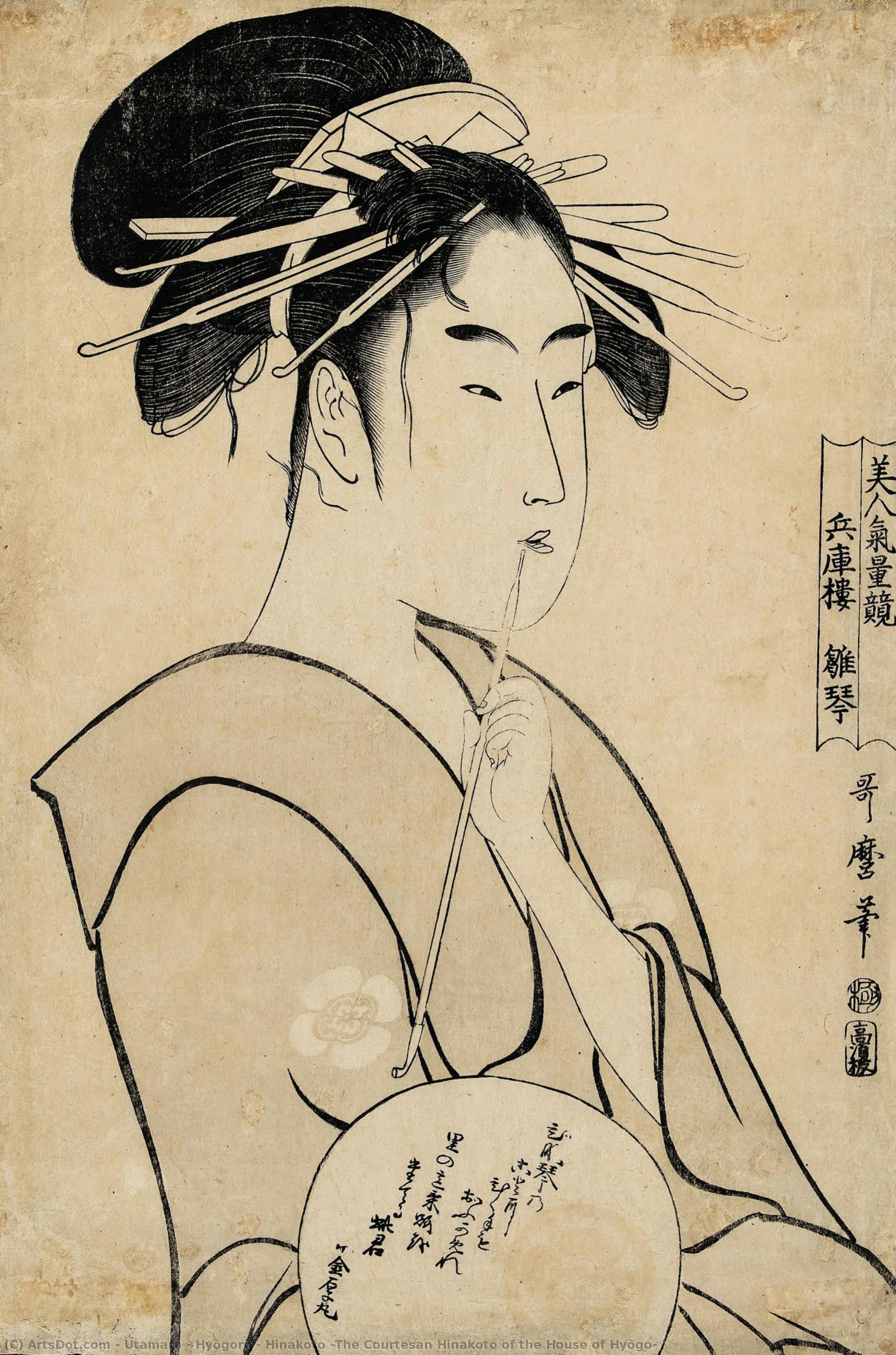
Hyōgorō / Hinakoto (The Courtesan Hinakoto of the House of Hyōgo)


 Read More
Purchase a high-resolution, enhanced digital image, far superior to the online preview.
Each file is meticulously prepared by our in-house specialists using advanced tools and expert manual retouching. We ensure every image has exceptional clarity, precise color accuracy, and fine detail.
The final file is delivered via email within 72 hours, optimized for immediate use in professional, editorial, and print environments. This is the same quality trusted by top-tier design studios, publishers, and galleries.
Digital Image
Download a high-resolution file for personal display, printing, and creative projects. ( Buy Print Buy Hand Made Painting)
Included in Every Digital Image Order
Expert Digital Delivery, Guaranteed
When you choose ArtsDot.com, you're not just getting an image - you're receiving a professionally enhanced digital artwork, crafted with precision and backed by a satisfaction guarantee. Here's everything that comes with your order, automatically:

Fast Email Delivery
Your high-resolution digital image file will be emailed to you within 72 hours of ordering - ready for immediate use.

AI-Enhanced Digital File
Your artwork is professionally optimized using advanced AI tools and manual editing, ensuring maximum detail, clarity, and color accuracy.

Free Lifetime Re-Delivery
Accidentally deleted or lost your file? No worries - we'll resend it to you anytime, free of charge.

No Import Fees - Ever
Enjoy your artwork instantly with zero customs, duties, or delivery fees - digital downloads are always tax-free.

Color Accuracy Guarantee
We ensure your digital image reflects the original colors as closely as possible using professional tools and color management.

100-Day Satisfaction Guarantee
If you're not satisfied with your digital image, we'll revise it or refund 100% within 100 days - no questions asked.

100% Money-Back Guarantee
Not satisfied? Get a full refund within 100 days of receiving your digital file - no questions asked.

Bulk Order Discounts
Buy 3 images, save 10% - Buy 5, save 15% - Buy 10+, save 20%. Great for creative projects, galleries, and agencies.
A Portrait of Refined Elegance: Unveiling Kitagawa Utamaro’s *Bijin-ga*
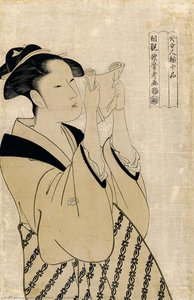
Kitagawa Utamaro's “Hyōgorō / Hinakoto (The Courtesan Hinakoto of the House of Hyōgo)” is more than just a woodblock print; it’s a window into the vibrant, complex world of Edo period Japan. Created around 1795, this exquisite *bijin-ga* – a genre dedicated to depicting beautiful women – stands as a testament to Utamaro's unparalleled skill in capturing not only physical beauty but also an elusive sense of inner grace and composure. The image presents a bust portrait of Hinakoto, a courtesan from the esteemed House of Hyōgo, rendered with a meticulous attention to detail that elevates this print beyond mere representation into a profound study of human expression.
Utamaro’s genius lies in his ability to distill the essence of his subject. He eschews the traditional group portraits favored by many of his contemporaries, instead focusing entirely on Hinakoto's upper body and face. This deliberate framing draws our attention to her serene gaze, a subtle hint of melancholy beneath a carefully constructed façade of composure. The composition is remarkably balanced, with the vertical column of Japanese text – likely detailing Hinakoto’s status and lineage – providing a grounding element while the subject dominates the frame. The strategically placed seals or stamps at the bottom, hallmarks of patronage and approval, subtly reinforce her position within the social hierarchy.
The Language of Line: Technique and Craftsmanship
The print’s monochromatic palette—primarily shades of brown and beige punctuated by black outlines—is a hallmark of Utamaro's style. He masterfully employs *hatching* – delicate, closely spaced lines – to create subtle gradations of tone and texture, lending depth and volume to the fabric of her kimono and the flowing strands of her hair. The strong, defined lines that outline the figure, clothing details, and facial features contribute to a graphic quality characteristic of ukiyo-e prints, yet they are executed with an astonishing level of refinement. The artist’s control over line is truly remarkable; it's not merely about outlining but about conveying form, texture, and even emotion through the precise application of these simple marks.
Utamaro’s use of *kawanami-e* techniques—a style emphasizing delicate details and subtle expressions—is particularly evident in Hinakoto’s face. The slight curve of her lips, the delicate shading around her eyes, and the suggestion of a wistful expression all contribute to a portrait that feels remarkably alive. The print was created using the traditional woodblock method: a design was meticulously carved into a wooden block, inked, and then pressed onto paper. Multiple blocks were likely used for different colors, although this particular example is primarily monochromatic, showcasing Utamaro’s mastery of tonal variation.
Symbolism and Context: A Glimpse into Edo Society
“Hyōgorō / Hinakoto” offers a fascinating glimpse into the world of Edo period courtesans. These women occupied a unique position in society, navigating a complex web of social expectations and artistic patronage. The print reflects this duality – portraying Hinakoto as both an object of beauty and a figure of considerable status. The presence of the seals suggests that the work was commissioned by a wealthy patron, likely a member of the merchant class or a high-ranking official who appreciated Utamaro’s artistry.
Beyond its aesthetic qualities, the print is deeply rooted in Japanese culture and symbolism. The courtesans themselves were often associated with themes of beauty, transience, and fleeting pleasure – concepts that resonated powerfully within the *ukiyo-e* tradition. The careful attention to detail—the elaborate hairstyle, the intricate kimono, the subtle gestures—all contribute to a sense of refined elegance and understated sophistication. Utamaro’s work is not simply a portrait; it's a carefully constructed narrative about beauty, status, and the complexities of life in Edo Japan.
A Legacy Enduring: Inspiration for Artists Across Cultures
Kitagawa Utamaro’s “Hyōgorō / Hinakoto” is celebrated not only for its artistic merit but also for its influence on Western art. The print's emphasis on partial views, the use of light and shadow, and the focus on everyday subjects resonated deeply with Impressionist painters like Monet and Cassatt, who were captivated by the beauty and subtlety of *ukiyo-e* prints. Utamaro’s work helped to pave the way for a greater appreciation of Japanese art in Europe, solidifying his place as one of the most important artists of the Edo period.
Related Artworks
![Untitled [uwaki No Sō (the Fickle Onethe Fickle One)] — Kitagawa Utamaro, Impressionistic Style](/media/artworks/images-thumb/46/8e/468eafb3b6da18ad90b6e962513246d1.jpg)
Artist Biography
Kitagawa Utamaro: A Master of Bijin-ga
- Born: Tokyo, Japan (1753)
- Died: 1806
Kitagawa Utamaro was a Japanese artist renowned for his contributions to *ukiyo-e*, particularly his depictions of beautiful women (*bijin-ga*). He stands as one of the most celebrated designers of woodblock prints and paintings from the Edo period, leaving an enduring legacy on both Japanese art and Western Impressionism.
Early Life and Training
- Little is definitively known about Utamaro's early life. It’s believed he was born Kitagawa Ichitarō around 1753, though his birthplace remains uncertain with various locations suggested including Kyoto, Osaka, Yoshiwara (Edo), and Kawagoe.
- He came under the tutelage of Toriyama Sekien, a practitioner of *ukiyo-e* who also trained in the upper-class Kanō school of painting. Sekien recognized Utamaro's talent and fostered his artistic development.
- Utamaro’s first known published work appeared around 1770, an illustration for a haikai poetry anthology. He later worked under the name Kitagawa Toyoaki, illustrating popular literature and occasionally producing portraits of kabuki actors.
Rise to Prominence: The Bijin-ga Master
- In 1782, Utamaro joined forces with publisher Tsutaya Jūzaburō, marking a pivotal moment in his career. This partnership led to the creation of groundbreaking works and solidified his reputation.
- Utamaro’s signature style emerged in the early 1790s: portraits of women with exaggerated, elongated features. These *bijin-ga* became immensely popular, establishing him as a leading figure in the art world.
- He innovated within the genre by focusing on single figures and capturing intimate moments, moving away from traditional group depictions. His attention to detail in portraying fabrics, hairstyles, and expressions was exceptional.
- Utamaro produced over 2000 known prints throughout his career, demonstrating remarkable productivity and artistic versatility.
Influences and Artistic Development
- Kiyonaga: Utamaro was influenced by Torii Kiyonaga, a pre-eminent portraitist of beauties in the 1780s, adopting and refining the graceful aesthetic established by Kiyonaga.
- Shunshō: He drew inspiration from Katsukawa Shunshō, who introduced the *ōkubi-e* ("large-headed picture") style, which Utamaro adapted for his portraits of women.
- European Impressionism: Utamaro’s work significantly impacted European Impressionist painters like Monet and Cassatt. His use of partial views, emphasis on light and shade, and focus on everyday subjects resonated with these artists, who sought to emulate his techniques.
Later Life, Controversy, and Legacy
- In 1804, Utamaro faced legal trouble for creating prints depicting Toyotomi Hideyoshi, a sensitive subject due to its political implications. He was arrested and manacled for fifty days.
- He died two years later in 1806, leaving behind a rich artistic legacy.
- Utamaro’s work gained widespread recognition in Europe during the mid-nineteenth century, particularly in France, where it fueled the Japonism movement and profoundly influenced Western art.
- His *bijin-ga* remain iconic representations of Edo period beauty and continue to be celebrated for their elegance, artistry, and cultural significance.
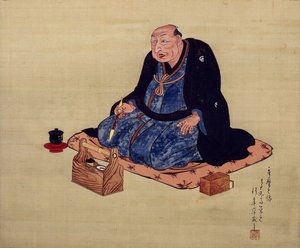
Kitagawa Utamaro
1753 - 1806 , Japan
Quick Facts
- Artistic Movement Or Style: Ukiyo-e
- Artists Or Movements Influenced By This Artist:
- Impressionists
- Toulouse-Lautrec
- Artists Who Influenced This Artist:
- Kiyonaga
- Shunshō
- Date Of Birth: 1753
- Date Of Death: 1806
- Full Name: Kitagawa Utamaro
- Nationality: Japanese
- Notable Artworks:
- Utamaro Okita
- Fantastic travels of a playboy
- Place Of Birth: Tokyo, Japan