 Preview
 Send
Send Share
Share
 Details

 Download
 Similars
 X-Ray
X-Ray Diaporama
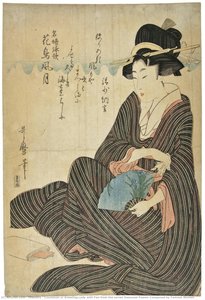
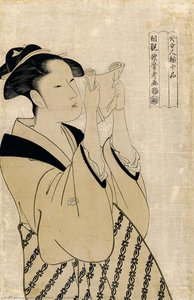
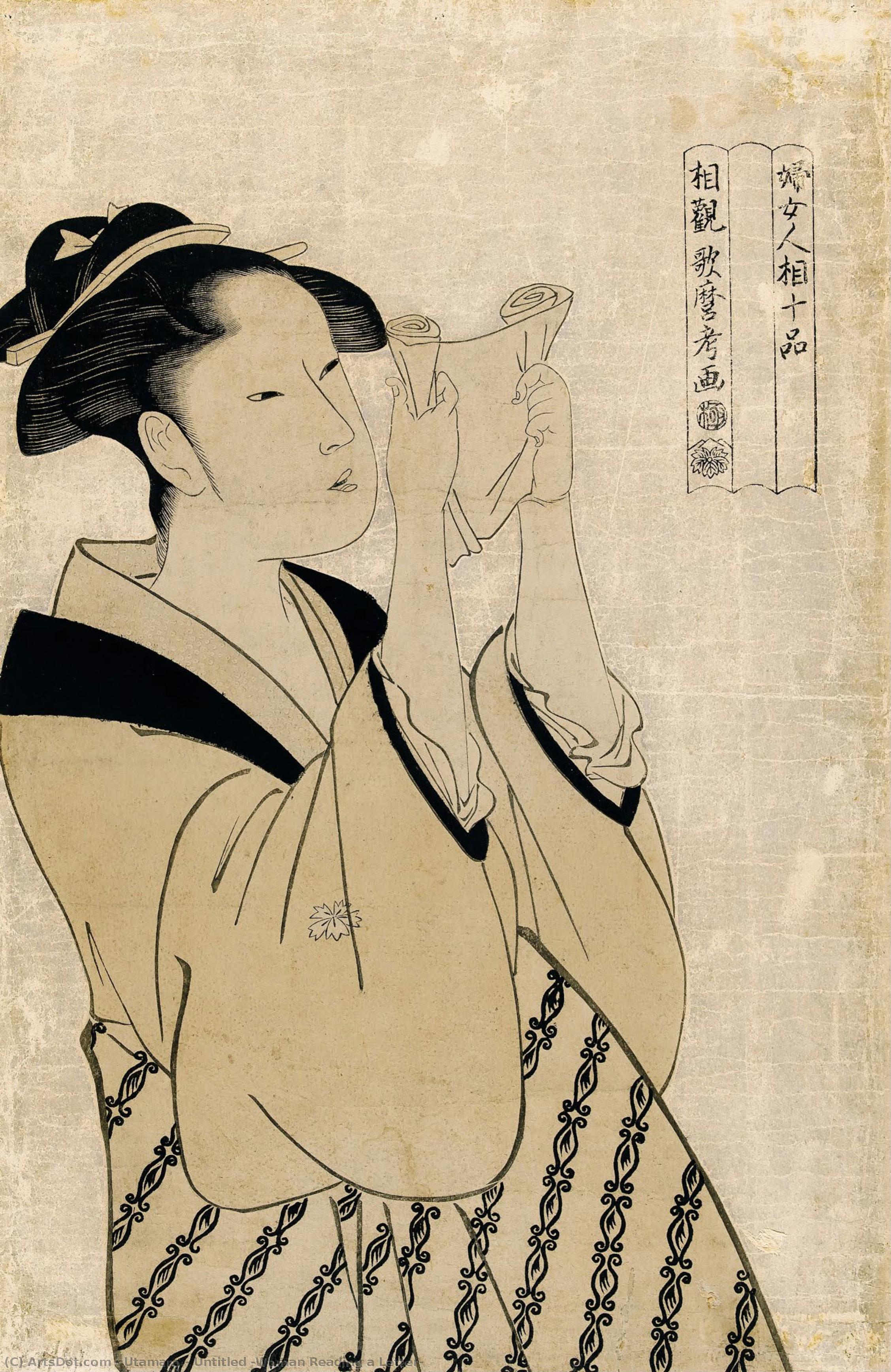
Untitled (Woman Reading a Letter)


 Read More
Hand Made Oil Reproduction
Hand-painted oil on canvas in your size and frame, made to order by our artists. ( Buy Print Buy Image)




P118B $10

P118H $10

P118W $10

P438Z $10

P508JH $12

P508YH $12

P805H $10

P805Z $10

P919BZ $10

P919G $10

P919XJ $10

P959ZH $10

P968JZ $12

W106C $8

W218G $10

W218JH $8

W218Y $10

W307PJ $10

W316G $10

W316PJ $8

W316Y $10

W398PJ $8

W4111J $10

W500HY $15

W500JH $15

W692G $12

W849H $8

W940BG $15

W953PJ $8




Pick from our preset sizes that match the artwork's original proportions.

You may enter your own dimensions to fit a specific frame or space. If your selected size does not match the original image's proportions, we will either crop the artwork or extend the painting with additional hand-painted elements. A digital mockup will be sent for your approval before production begins.
Please note that the on-screen preview does not reflect the actual cropping or extension. Only the mockup will accurately show the final composition.
While custom sizes are available, we recommend selecting a dimension from the predefined list to preserve the original proportions.
After order, ArtsDot.com team will email client for instructions and provide a mockup preview
Worldwide Delivery () in 3/4 weeks instead of standard 5 weeks. (23 August). No compromise on quality.

Free Worldwide Express Shipping

High-Quality Linen Canvas

Full Shipping Insurance

Customs Tax Refund Guarantee

True Color Matching Guarantee

60-Day Return Policy (Defects Only)

100% Money-Back Guarantee

Bulk Discount Offer
 Glass option is only available in size under 110 CM

Untitled (Woman Reading a Letter)
Reproduction Medium
Reproduction Size
-


Total Price
$ 263
Artwork Description
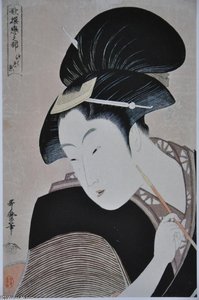
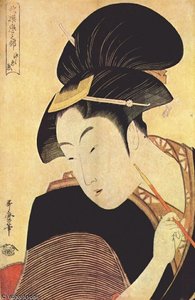
A Moment of Quiet Contemplation: Unveiling Kitagawa Utamaro’s “Untitled (Woman Reading a Letter)”
Kitagawa Utamaro’s “Untitled (Woman Reading a Letter),” a cornerstone of Ukiyo-e art, transcends the simple depiction of a woman absorbed in her reading. It's a profound meditation on solitude, emotion, and the subtle complexities of human experience – a window into the heart of Edo period Japan. Created around 1790, this monochrome woodblock print, rendered with exquisite detail and a masterful understanding of light and shadow, stands as a testament to Utamaro’s unparalleled ability to capture the essence of his subjects.
The image immediately draws the eye to the central figure, a woman poised in a moment of quiet introspection. Her posture is relaxed yet alert, her hand gently holding a letter – an object laden with unspoken possibilities and hidden emotions. Utamaro’s genius lies not just in capturing her physical likeness but in conveying the palpable sense of her inner world. The slight tilt of her head, the subtle curve of her lips, all speak volumes about her thoughts and feelings. The composition is carefully balanced, utilizing a vertical format that emphasizes the formality of the scene while simultaneously creating an intimate connection with the viewer.
The Artistry of Ukiyo-e: Technique and Materials
“Untitled (Woman Reading a Letter)” exemplifies the meticulous techniques of Ukiyo-e printing. The image was created using multiple woodblocks, each meticulously carved to produce a distinct color or tonal value. Utamaro’s masterful use of line work is particularly striking – delicate, precise lines define every contour of the woman's face and clothing, creating a sense of movement and texture. The subtle gradations in tone, achieved through careful layering of ink, add depth and realism to the scene. The paper itself, likely Japanese handmade was chosen for its quality and ability to absorb the rich inks.
The process involved carving an image into a wooden block, applying ink to the surface, and then pressing it onto paper using a hand-operated printing press. This painstaking method resulted in prints of exceptional clarity and detail, prized by collectors and admired for their artistic merit. The monochrome palette, while seemingly simple, is incredibly effective in conveying mood and atmosphere – the muted browns and creams evoke a sense of serenity and contemplation.
A Portrait of an Era: Historical Context and Symbolism
Created during the Edo period (1603-1868), “Untitled (Woman Reading a Letter)” reflects the social and cultural values of the time. Ukiyo-e art, meaning "pictures of the floating world," captured scenes from everyday life – courtesans, actors, festivals, and landscapes – offering a glimpse into the pleasures and entertainments enjoyed by the common people. The act of reading a letter in this context is significant; it represents communication, connection, and the potential for romance or intrigue. The woman’s serene expression suggests a quiet confidence and inner strength.
Furthermore, Utamaro's focus on portraying women – particularly their beauty and emotional depth – was revolutionary for his time. He elevated the status of female subjects in art, challenging traditional artistic conventions and paving the way for future generations of artists. The image’s composition also subtly references classical Japanese aesthetics, with its emphasis on balance, harmony, and the appreciation of natural beauty.
An Enduring Legacy: Influence and Inspiration
Kitagawa Utamaro's “Untitled (Woman Reading a Letter)” is more than just a beautiful print; it’s a cultural artifact that continues to resonate with viewers today. Its influence can be seen in the work of Western Impressionist painters, who were captivated by Ukiyo-e’s innovative use of color, line, and perspective. The print's evocative atmosphere and emotional depth have ensured its place as one of the most celebrated works of Japanese art.
Reproductions of this iconic image offer a unique opportunity to bring Utamaro’s artistic vision into your home or office – a timeless reminder of the beauty, serenity, and quiet contemplation that can be found in the simplest of moments.
Related Artworks
![Untitled [uwaki No Sō (the Fickle Onethe Fickle One)] — Kitagawa Utamaro, Impressionistic Style](/media/artworks/images-thumb/46/8e/468eafb3b6da18ad90b6e962513246d1.jpg)
Artist Biography
Kitagawa Utamaro: A Master of Bijin-ga
- Born: Tokyo, Japan (1753)
- Died: 1806
Kitagawa Utamaro was a Japanese artist renowned for his contributions to *ukiyo-e*, particularly his depictions of beautiful women (*bijin-ga*). He stands as one of the most celebrated designers of woodblock prints and paintings from the Edo period, leaving an enduring legacy on both Japanese art and Western Impressionism.
Early Life and Training
- Little is definitively known about Utamaro's early life. It’s believed he was born Kitagawa Ichitarō around 1753, though his birthplace remains uncertain with various locations suggested including Kyoto, Osaka, Yoshiwara (Edo), and Kawagoe.
- He came under the tutelage of Toriyama Sekien, a practitioner of *ukiyo-e* who also trained in the upper-class Kanō school of painting. Sekien recognized Utamaro's talent and fostered his artistic development.
- Utamaro’s first known published work appeared around 1770, an illustration for a haikai poetry anthology. He later worked under the name Kitagawa Toyoaki, illustrating popular literature and occasionally producing portraits of kabuki actors.
Rise to Prominence: The Bijin-ga Master
- In 1782, Utamaro joined forces with publisher Tsutaya Jūzaburō, marking a pivotal moment in his career. This partnership led to the creation of groundbreaking works and solidified his reputation.
- Utamaro’s signature style emerged in the early 1790s: portraits of women with exaggerated, elongated features. These *bijin-ga* became immensely popular, establishing him as a leading figure in the art world.
- He innovated within the genre by focusing on single figures and capturing intimate moments, moving away from traditional group depictions. His attention to detail in portraying fabrics, hairstyles, and expressions was exceptional.
- Utamaro produced over 2000 known prints throughout his career, demonstrating remarkable productivity and artistic versatility.
Influences and Artistic Development
- Kiyonaga: Utamaro was influenced by Torii Kiyonaga, a pre-eminent portraitist of beauties in the 1780s, adopting and refining the graceful aesthetic established by Kiyonaga.
- Shunshō: He drew inspiration from Katsukawa Shunshō, who introduced the *ōkubi-e* ("large-headed picture") style, which Utamaro adapted for his portraits of women.
- European Impressionism: Utamaro’s work significantly impacted European Impressionist painters like Monet and Cassatt. His use of partial views, emphasis on light and shade, and focus on everyday subjects resonated with these artists, who sought to emulate his techniques.
Later Life, Controversy, and Legacy
- In 1804, Utamaro faced legal trouble for creating prints depicting Toyotomi Hideyoshi, a sensitive subject due to its political implications. He was arrested and manacled for fifty days.
- He died two years later in 1806, leaving behind a rich artistic legacy.
- Utamaro’s work gained widespread recognition in Europe during the mid-nineteenth century, particularly in France, where it fueled the Japonism movement and profoundly influenced Western art.
- His *bijin-ga* remain iconic representations of Edo period beauty and continue to be celebrated for their elegance, artistry, and cultural significance.
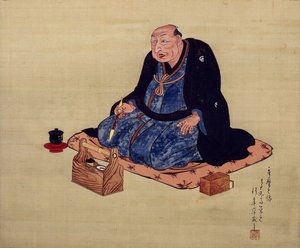
Kitagawa Utamaro
1753 - 1806 , Japan
Quick Facts
- Artistic Movement Or Style: Ukiyo-e
- Artists Or Movements Influenced By This Artist:
- Impressionists
- Toulouse-Lautrec
- Artists Who Influenced This Artist:
- Kiyonaga
- Shunshō
- Date Of Birth: 1753
- Date Of Death: 1806
- Full Name: Kitagawa Utamaro
- Nationality: Japanese
- Notable Artworks:
- Utamaro Okita
- Fantastic travels of a playboy
- Place Of Birth: Tokyo, Japan
Related Articles

Hokusai's Masterpieces: 25 Iconic Prints & Paintings for Art Lovers | ArtsDot
Journey through Katsushika Hokusai’s 25 most iconic artworks, including *The Great Wave*. Explore the ukiyo-e master's history, style & timeless Japanese woodblock prints. Find museum-quality reproductions for your home at ArtsDot.com.
The Enduring Legacy of Woodblock Printmaking: Technique, History & Artistic Expression
Explore the rich history of woodblock printmaking – from ancient techniques to Ukiyo-e masterpieces. Discover expert insights on collecting, preserving & appreciating this enduring art form.
Japonisme: How Japanese Woodblock Prints Revolutionized Western Art
Explore the profound impact of Japonisme on Western art. Discover how Japanese ukiyo-e woodblock prints revolutionized perspective, color, and composition for masters like Monet and Van Gogh, forever changing the course of modern art history.
Ukiyo-e: Exploring Japan's Floating World & Enduring Artistic Legacy
Explore the captivating world of Ukiyo-e – Japan's iconic woodblock prints! Discover masters like Hokusai & Hiroshige, learn about Edo period culture, and find expert art collecting guidance at ArtsDot.
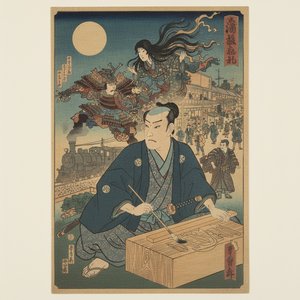
Tsukioka Yoshitoshi: A Master of Ukiyo-e's Final Flourish – Narrative, Innovation, and the Meiji Transition
Explore the life & art of Tsukioka Yoshitoshi, the last great master of ukiyo-e woodblock printing. Discover his dramatic warrior prints, innovative series like 'One Hundred Aspects of the Moon,' and legacy reflecting Japan's Meiji transition.