 Preview
 Send
Send Share
Share
 Details

 Download
 Similars
 X-Ray
X-Ray Diaporama
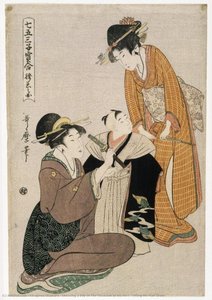
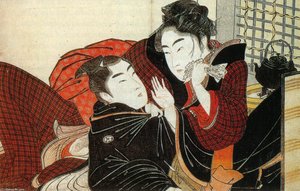
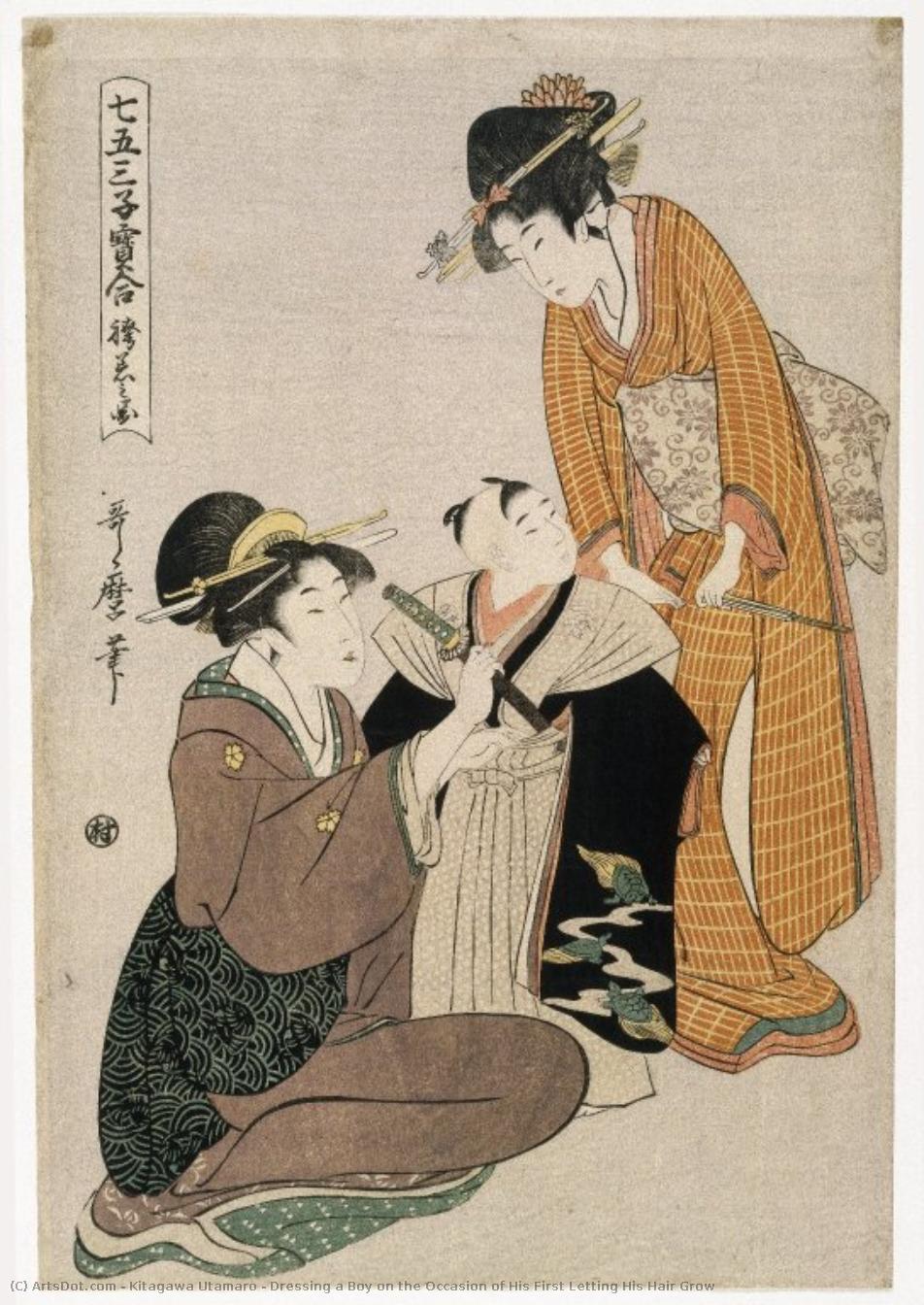
Dressing a Boy on the Occasion of His First Letting His Hair Grow
 Acrylic On Canvas
- WallArt
- Ukiyo-e
 1795
1795 39.0 x 27.0 cm
 Brooklyn Museum
 Read More
Hand Made Oil Reproduction
Hand-painted oil on canvas in your size and frame, made to order by our artists. ( Buy Print Buy Image)




P118B $10

P118H $10

P118W $10

P438Z $10

P508JH $12

P508YH $12

P805H $10

P805Z $10

P919BZ $10

P919G $10

P919XJ $10

P959ZH $10

P968JZ $12

W106C $8

W218G $10

W218JH $8

W218Y $10

W307PJ $10

W316G $10

W316PJ $8

W316Y $10

W398PJ $8

W4111J $10

W500HY $15

W500JH $15

W692G $12

W849H $8

W940BG $15

W953PJ $8




Pick from our preset sizes that match the artwork's original proportions.

You may enter your own dimensions to fit a specific frame or space. If your selected size does not match the original image's proportions, we will either crop the artwork or extend the painting with additional hand-painted elements. A digital mockup will be sent for your approval before production begins.
Please note that the on-screen preview does not reflect the actual cropping or extension. Only the mockup will accurately show the final composition.
While custom sizes are available, we recommend selecting a dimension from the predefined list to preserve the original proportions.
After order, ArtsDot.com team will email client for instructions and provide a mockup preview
Worldwide Delivery () in 3/4 weeks instead of standard 5 weeks. (30 August). No compromise on quality.

Free Worldwide Express Shipping

High-Quality Linen Canvas

Full Shipping Insurance

Customs Tax Refund Guarantee

True Color Matching Guarantee

60-Day Return Policy (Defects Only)

100% Money-Back Guarantee

Bulk Discount Offer
 Glass option is only available in size under 110 CM

Dressing a Boy on the Occasion of His First Letting His Hair Grow
Reproduction Medium
Reproduction Size
-


Total Price
$ 263
A Moment of Tender Care: Kitagawa Utamaro’s “Dressing a Boy on the Occasion of His First Letting His Hair Grow”
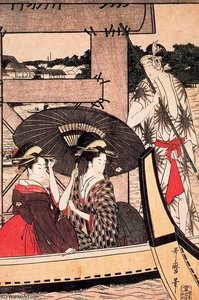
Kitagawa Utamaro's "Dressing a Boy on the Occasion of His First Letting His Hair Grow," painted in 1795, is more than just a charming depiction of childhood; it’s a poignant window into Edo-period Japanese society and a testament to the enduring power of familial ritual. This exquisite woodblock print, now housed within the Brooklyn Museum, captures a deeply intimate scene—a young boy undergoing a significant rite of passage, guided by the gentle ministrations of two women. Utamaro's masterful use of color, line, and composition elevates this everyday moment into an artwork brimming with quiet dignity and understated emotion.
The print’s aesthetic is firmly rooted in the *bijin-ga* tradition – a genre dedicated to portraying beautiful women, particularly courtesans and noblewomen. However, Utamaro transcends mere portraiture here. He imbues the scene with a profound sense of humanity, focusing not on external beauty but on the quiet connection between generations and the sanctity of familial care. The boy, dressed in simple yet elegant attire, is positioned centrally, his expression serene and receptive. His posture suggests vulnerability and trust, while the women surrounding him exude warmth and nurturing instinct.
The Art of Ukiyo-e: Technique and Composition
Utamaro’s skill as a woodblock printer is immediately apparent in the print's remarkable detail and subtle gradations of color. The *nishiki-e* technique, utilizing multiple blocks for each color, allowed for an astonishing level of realism and richness previously unseen in Japanese art. Note the delicate rendering of the fabrics—the flowing kimono sleeves, the intricate patterns on the boy’s garment, and the soft folds of the women's robes—all achieved through meticulous carving and precise printing. The use of mica dust to create shimmering highlights adds a layer of visual texture, particularly noticeable in the background, subtly suggesting the opulence of the setting without distracting from the central figures.
Compositionally, Utamaro employs a carefully balanced arrangement. The three figures are positioned within a shallow space, creating a sense of intimacy and immediacy. The diagonal lines formed by the women’s arms and gestures draw the viewer's eye towards the boy, while the verticality of his posture anchors him in the scene. The background is deliberately simple, allowing the focus to remain firmly on the interaction between the individuals. This restraint further emphasizes the emotional core of the artwork.
Symbolism and Cultural Context
Beyond its aesthetic beauty, “Dressing a Boy on the Occasion of His First Letting His Hair Grow” carries significant cultural weight. The ritual depicted—the ceremonial dressing for allowing a boy’s hair to grow—represented a crucial step in his transition from childhood to manhood. It signified his acceptance into adult society and marked the beginning of his responsibilities as a man. The presence of two women, likely his caretakers or perhaps his mother, underscores the importance of female guidance and nurturing within Japanese family life.
Furthermore, the print reflects the Edo period’s emphasis on tradition and social hierarchy. The boy's attire and the women’s clothing are indicative of their respective social standing. The scene itself is a microcosm of Edo society—a quiet moment of domesticity amidst the bustling city life. It speaks to the values of family, respect for elders, and the continuity of cultural practices.
A Timeless Reflection: Emotional Impact
Despite its historical context, “Dressing a Boy on the Occasion of His First Letting His Hair Grow” continues to resonate with viewers today. The artwork’s quiet intimacy, gentle emotion, and masterful technique evoke feelings of warmth, tenderness, and nostalgia. It's a reminder of the simple joys of family life and the enduring power of human connection. Reproductions of this iconic print offer a beautiful way to bring a touch of Japanese artistry and cultural heritage into any space, inviting contemplation and appreciation for the beauty of everyday moments.
Related Artworks
![Untitled [uwaki No Sō (the Fickle Onethe Fickle One)] — Kitagawa Utamaro, Impressionistic Style](/media/artworks/images-thumb/46/8e/468eafb3b6da18ad90b6e962513246d1.jpg)
Artist Biography
Kitagawa Utamaro: A Master of Bijin-ga
- Born: Tokyo, Japan (1753)
- Died: 1806
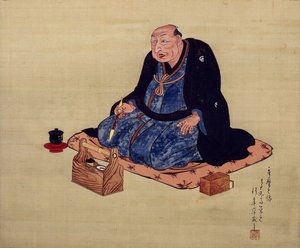
Kitagawa Utamaro was a Japanese artist renowned for his contributions to *ukiyo-e*, particularly his depictions of beautiful women (*bijin-ga*). He stands as one of the most celebrated designers of woodblock prints and paintings from the Edo period, leaving an enduring legacy on both Japanese art and Western Impressionism.
Early Life and Training
- Little is definitively known about Utamaro's early life. It’s believed he was born Kitagawa Ichitarō around 1753, though his birthplace remains uncertain with various locations suggested including Kyoto, Osaka, Yoshiwara (Edo), and Kawagoe.
- He came under the tutelage of Toriyama Sekien, a practitioner of *ukiyo-e* who also trained in the upper-class Kanō school of painting. Sekien recognized Utamaro's talent and fostered his artistic development.
- Utamaro’s first known published work appeared around 1770, an illustration for a haikai poetry anthology. He later worked under the name Kitagawa Toyoaki, illustrating popular literature and occasionally producing portraits of kabuki actors.
Rise to Prominence: The Bijin-ga Master
- In 1782, Utamaro joined forces with publisher Tsutaya Jūzaburō, marking a pivotal moment in his career. This partnership led to the creation of groundbreaking works and solidified his reputation.
- Utamaro’s signature style emerged in the early 1790s: portraits of women with exaggerated, elongated features. These *bijin-ga* became immensely popular, establishing him as a leading figure in the art world.
- He innovated within the genre by focusing on single figures and capturing intimate moments, moving away from traditional group depictions. His attention to detail in portraying fabrics, hairstyles, and expressions was exceptional.
- Utamaro produced over 2000 known prints throughout his career, demonstrating remarkable productivity and artistic versatility.
Influences and Artistic Development
- Kiyonaga: Utamaro was influenced by Torii Kiyonaga, a pre-eminent portraitist of beauties in the 1780s, adopting and refining the graceful aesthetic established by Kiyonaga.
- Shunshō: He drew inspiration from Katsukawa Shunshō, who introduced the *ōkubi-e* ("large-headed picture") style, which Utamaro adapted for his portraits of women.
- European Impressionism: Utamaro’s work significantly impacted European Impressionist painters like Monet and Cassatt. His use of partial views, emphasis on light and shade, and focus on everyday subjects resonated with these artists, who sought to emulate his techniques.
Later Life, Controversy, and Legacy
- In 1804, Utamaro faced legal trouble for creating prints depicting Toyotomi Hideyoshi, a sensitive subject due to its political implications. He was arrested and manacled for fifty days.
- He died two years later in 1806, leaving behind a rich artistic legacy.
- Utamaro’s work gained widespread recognition in Europe during the mid-nineteenth century, particularly in France, where it fueled the Japonism movement and profoundly influenced Western art.
- His *bijin-ga* remain iconic representations of Edo period beauty and continue to be celebrated for their elegance, artistry, and cultural significance.
Kitagawa Utamaro
1753 - 1806 , Japan
Quick Facts
- Artistic Movement Or Style: Ukiyo-e
- Artists Or Movements Influenced By This Artist:
- Impressionists
- Toulouse-Lautrec
- Artists Who Influenced This Artist:
- Kiyonaga
- Shunshō
- Date Of Birth: 1753
- Date Of Death: 1806
- Full Name: Kitagawa Utamaro
- Nationality: Japanese
- Notable Artworks:
- Utamaro Okita
- Fantastic travels of a playboy
- Place Of Birth: Tokyo, Japan
Related Articles

Hokusai's Masterpieces: 25 Iconic Prints & Paintings for Art Lovers | ArtsDot
Journey through Katsushika Hokusai’s 25 most iconic artworks, including *The Great Wave*. Explore the ukiyo-e master's history, style & timeless Japanese woodblock prints. Find museum-quality reproductions for your home at ArtsDot.com.
Japonisme: How Japanese Woodblock Prints Revolutionized Western Art
Explore the profound impact of Japonisme on Western art. Discover how Japanese ukiyo-e woodblock prints revolutionized perspective, color, and composition for masters like Monet and Van Gogh, forever changing the course of modern art history.
Suzuki Harunobu: Pioneering Ukiyo-e & the Refinement of Edo Period Printmaking
Discover the revolutionary world of Suzuki Harunobu, a pioneer of ukiyo-e printmaking. Explore his exquisite nishiki-e techniques, diverse subjects & lasting impact on Japanese art history. Learn more at ArtsDot.
The Enduring Legacy of Woodblock Printmaking: Technique, History & Artistic Expression
Explore the rich history of woodblock printmaking – from ancient techniques to Ukiyo-e masterpieces. Discover expert insights on collecting, preserving & appreciating this enduring art form.
Utagawa Kuniyoshi: A Master of Japanese Ukiyo-e – Narrative Innovation & the Fusion of Tradition with Popular Culture
Explore the captivating world of Utagawa Kuniyoshi, a master of Japanese ukiyo-e woodblock prints. Discover his innovative warrior scenes, vibrant landscapes & lasting legacy in 19th-century art history.