 Preview
 Send
Send Share
Share
 Details

 Download
 Similars
 X-Ray
X-Ray Diaporama
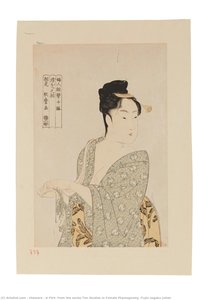
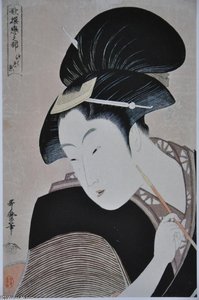
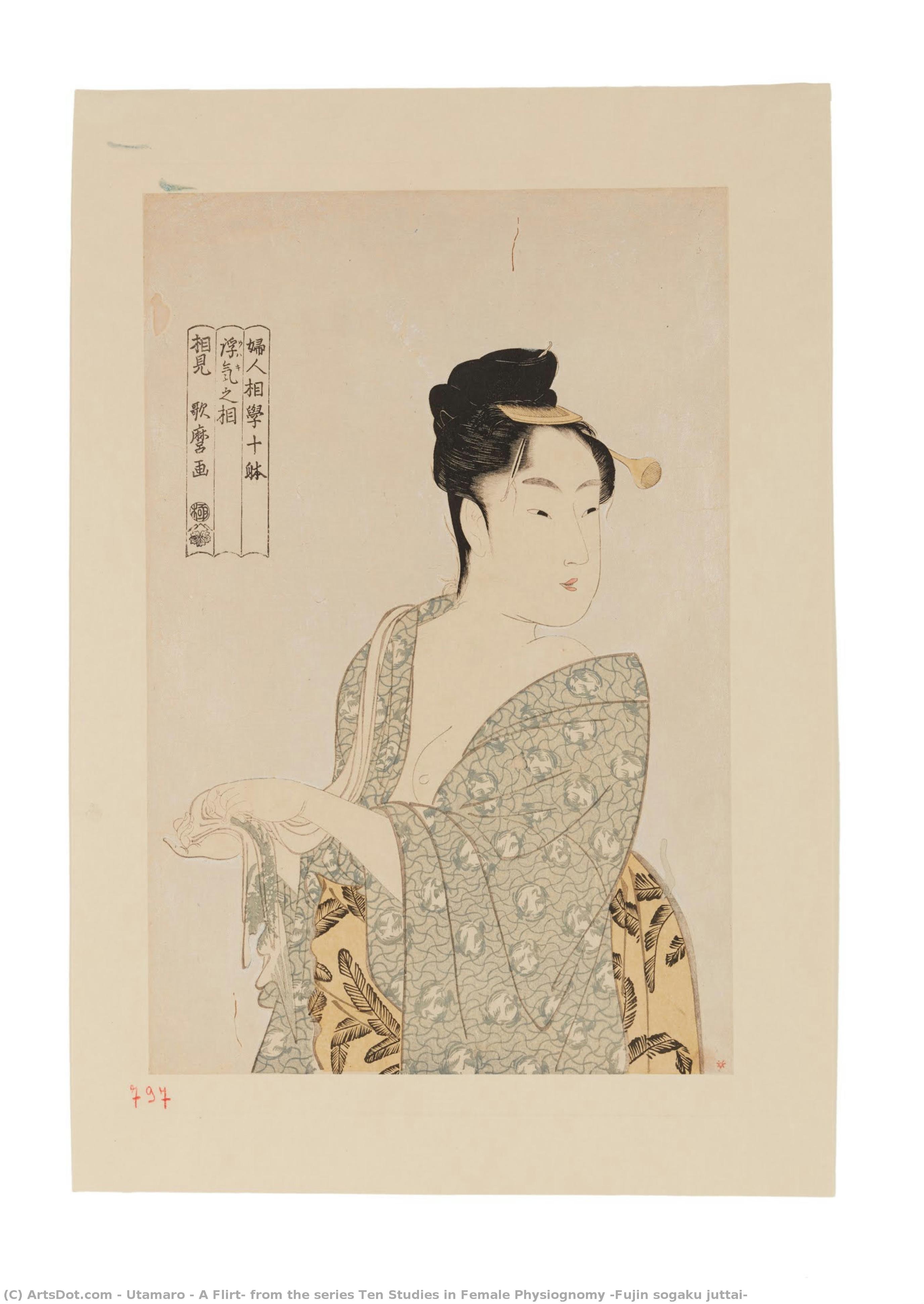
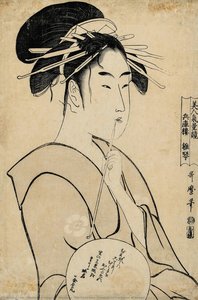
A Flirt, from the series Ten Studies in Female Physiognomy (Fujin sogaku juttai)


 Read More
Hand Made Oil Reproduction
Hand-painted oil on canvas in your size and frame, made to order by our artists. ( Buy Print Buy Image)




P118B $10

P118H $10

P118W $10

P438Z $10

P508JH $12

P508YH $12

P805H $10

P805Z $10

P919BZ $10

P919G $10

P919XJ $10

P959ZH $10

P968JZ $12

W106C $8

W218G $10

W218JH $8

W218Y $10

W307PJ $10

W316G $10

W316PJ $8

W316Y $10

W398PJ $8

W4111J $10

W500HY $15

W500JH $15

W692G $12

W849H $8

W940BG $15

W953PJ $8




Pick from our preset sizes that match the artwork's original proportions.

You may enter your own dimensions to fit a specific frame or space. If your selected size does not match the original image's proportions, we will either crop the artwork or extend the painting with additional hand-painted elements. A digital mockup will be sent for your approval before production begins.
Please note that the on-screen preview does not reflect the actual cropping or extension. Only the mockup will accurately show the final composition.
While custom sizes are available, we recommend selecting a dimension from the predefined list to preserve the original proportions.
After order, ArtsDot.com team will email client for instructions and provide a mockup preview
Worldwide Delivery () in 3/4 weeks instead of standard 5 weeks. (27 August). No compromise on quality.

Free Worldwide Express Shipping

High-Quality Linen Canvas

Full Shipping Insurance

Customs Tax Refund Guarantee

True Color Matching Guarantee

60-Day Return Policy (Defects Only)

100% Money-Back Guarantee

Bulk Discount Offer
 Glass option is only available in size under 110 CM

A Flirt, from the series Ten Studies in Female Physiognomy (Fujin sogaku juttai)
Reproduction Medium
Reproduction Size
-


Total Price
$ 263
A Portrait of Grace: Kitagawa Utamaro’s “A Flirt”
Kitagawa Utamaro's "A Flirt," from the series Ten Studies in Female Physiognomy (Fujin sogaku juttai), stands as a cornerstone of Edo-period bijin-ga artistry—a genre dedicated to portraying beautiful women with remarkable sensitivity and psychological depth. Published around 1792–93 by Tsutaya Jūzaburō, this woodblock print transcends mere visual representation; it embodies the spirit of its time and continues to resonate with audiences today thanks to Utamaro’s masterful command of technique and his profound understanding of human emotion. The image captures a young woman gazing intently outwards, her posture conveying both vulnerability and subtle defiance—a captivating glimpse into the complexities of female characterization that distinguishes Utamaro's work from earlier depictions.Composition and Technique: Mastering Illusion
Utamaro’s genius lies in his ability to convey emotion through meticulously crafted visual elements. The print is vertically oriented, prioritizing the woman’s face and upper torso—a deliberate choice reflecting the prevailing aesthetic conventions of the era where portraiture focused on conveying inner character rather than simply documenting physical appearance. Fine lines delineate facial features with exquisite precision, capturing nuances of expression that invite contemplation. Curved lines contribute to the graceful depiction of her form, mirroring the idealized beauty standards prevalent during Edo Japan. Crucially, Utamaro employed kirazuri—the application of mica dust—to create a shimmering background effect, adding an ethereal quality to the scene and elevating it beyond mere realism. This technique, combined with multiple woodblocks used for different colors, demonstrates Utamaro’s technical prowess and his commitment to achieving visual splendor.Historical Context: Edo Japan's Aesthetic Sensibilities
“A Flirt” emerged during a period of significant social and cultural transformation in Japan—the Edo Period (1615–1868). This era witnessed the rise of urban centers like Tokyo and Osaka, fueled by economic growth and facilitated by advancements in printing technology. The pleasure districts flourished, attracting artists, actors, and courtesans who shaped artistic trends and influenced popular culture. Bijin-ga prints served as a conduit for disseminating these cultural influences, reflecting both idealized notions of beauty and astute observations of human behavior. Utamaro’s series was particularly notable for its exploration of psychological states—a departure from earlier portraiture that prioritized formal elegance over nuanced emotion. The print's subtle gaze speaks to the spirit of the time, capturing a moment of quiet contemplation amidst the bustling urban landscape.Symbolism and Emotional Resonance: Beyond Surface Beauty
More than just aesthetically pleasing, “A Flirt” carries symbolic weight—a testament to Utamaro’s artistic vision. The woman's posture suggests both confidence and apprehension, hinting at the challenges faced by women navigating social expectations during Edo Japan. Her gaze directs attention outwards, conveying a desire for connection and engagement with the world beyond her immediate surroundings. The shimmering kirazuri background symbolizes refinement and aspiration—a visual metaphor for the idealized beauty standards of the period. Utamaro’s masterful use of color—soft greens, pinks, and creams accented by yellow and brown—creates a harmonious palette that enhances the emotional impact of the image. Ultimately, “A Flirt” invites viewers to contemplate themes of femininity, desire, and introspection—a timeless exploration of human psychology that continues to captivate audiences centuries later.Influence on Impressionism: A Legacy Enduring Through Time
The influence of Utamaro’s work extends far beyond Japan's borders, notably impacting the burgeoning Impressionist movement in France during the late 19th century. Artists like Claude Monet and Edgar Degas were drawn to Utamaro’s innovative compositional techniques—particularly his focus on capturing fleeting moments of emotion and atmosphere—and his masterful use of color—a bold departure from academic conventions. Utamaro's exploration of psychological states paved the way for Impressionists to prioritize subjective experience over objective representation, establishing a pivotal connection between Japanese art and Western artistic innovation. “A Flirt” remains an enduring emblem of artistic excellence—a testament to Utamaro’s genius and his lasting contribution to the history of visual culture.Related Artworks
![Untitled [uwaki No Sō (the Fickle Onethe Fickle One)] — Kitagawa Utamaro, Impressionistic Style](/media/artworks/images-thumb/46/8e/468eafb3b6da18ad90b6e962513246d1.jpg)
Artist Biography
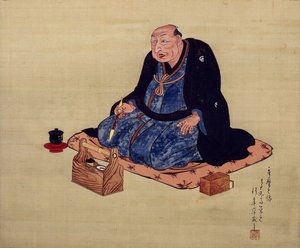
Kitagawa Utamaro: A Master of Bijin-ga
- Born: Tokyo, Japan (1753)
- Died: 1806
Kitagawa Utamaro was a Japanese artist renowned for his contributions to *ukiyo-e*, particularly his depictions of beautiful women (*bijin-ga*). He stands as one of the most celebrated designers of woodblock prints and paintings from the Edo period, leaving an enduring legacy on both Japanese art and Western Impressionism.
Early Life and Training
- Little is definitively known about Utamaro's early life. It’s believed he was born Kitagawa Ichitarō around 1753, though his birthplace remains uncertain with various locations suggested including Kyoto, Osaka, Yoshiwara (Edo), and Kawagoe.
- He came under the tutelage of Toriyama Sekien, a practitioner of *ukiyo-e* who also trained in the upper-class Kanō school of painting. Sekien recognized Utamaro's talent and fostered his artistic development.
- Utamaro’s first known published work appeared around 1770, an illustration for a haikai poetry anthology. He later worked under the name Kitagawa Toyoaki, illustrating popular literature and occasionally producing portraits of kabuki actors.
Rise to Prominence: The Bijin-ga Master
- In 1782, Utamaro joined forces with publisher Tsutaya Jūzaburō, marking a pivotal moment in his career. This partnership led to the creation of groundbreaking works and solidified his reputation.
- Utamaro’s signature style emerged in the early 1790s: portraits of women with exaggerated, elongated features. These *bijin-ga* became immensely popular, establishing him as a leading figure in the art world.
- He innovated within the genre by focusing on single figures and capturing intimate moments, moving away from traditional group depictions. His attention to detail in portraying fabrics, hairstyles, and expressions was exceptional.
- Utamaro produced over 2000 known prints throughout his career, demonstrating remarkable productivity and artistic versatility.
Influences and Artistic Development
- Kiyonaga: Utamaro was influenced by Torii Kiyonaga, a pre-eminent portraitist of beauties in the 1780s, adopting and refining the graceful aesthetic established by Kiyonaga.
- Shunshō: He drew inspiration from Katsukawa Shunshō, who introduced the *ōkubi-e* ("large-headed picture") style, which Utamaro adapted for his portraits of women.
- European Impressionism: Utamaro’s work significantly impacted European Impressionist painters like Monet and Cassatt. His use of partial views, emphasis on light and shade, and focus on everyday subjects resonated with these artists, who sought to emulate his techniques.
Later Life, Controversy, and Legacy
- In 1804, Utamaro faced legal trouble for creating prints depicting Toyotomi Hideyoshi, a sensitive subject due to its political implications. He was arrested and manacled for fifty days.
- He died two years later in 1806, leaving behind a rich artistic legacy.
- Utamaro’s work gained widespread recognition in Europe during the mid-nineteenth century, particularly in France, where it fueled the Japonism movement and profoundly influenced Western art.
- His *bijin-ga* remain iconic representations of Edo period beauty and continue to be celebrated for their elegance, artistry, and cultural significance.
Kitagawa Utamaro
1753 - 1806 , Japan
Quick Facts
- Artistic Movement Or Style: Ukiyo-e
- Artists Or Movements Influenced By This Artist:
- Impressionists
- Toulouse-Lautrec
- Artists Who Influenced This Artist:
- Kiyonaga
- Shunshō
- Date Of Birth: 1753
- Date Of Death: 1806
- Full Name: Kitagawa Utamaro
- Nationality: Japanese
- Notable Artworks:
- Utamaro Okita
- Fantastic travels of a playboy
- Place Of Birth: Tokyo, Japan
Related Articles

Hokusai's Masterpieces: 25 Iconic Prints & Paintings for Art Lovers | ArtsDot
Journey through Katsushika Hokusai’s 25 most iconic artworks, including *The Great Wave*. Explore the ukiyo-e master's history, style & timeless Japanese woodblock prints. Find museum-quality reproductions for your home at ArtsDot.com.
Ukiyo-e: Exploring Japan's Floating World & Enduring Artistic Legacy
Explore the captivating world of Ukiyo-e – Japan's iconic woodblock prints! Discover masters like Hokusai & Hiroshige, learn about Edo period culture, and find expert art collecting guidance at ArtsDot.
Suzuki Harunobu: Pioneering Ukiyo-e & the Refinement of Edo Period Printmaking
Discover the revolutionary world of Suzuki Harunobu, a pioneer of ukiyo-e printmaking. Explore his exquisite nishiki-e techniques, diverse subjects & lasting impact on Japanese art history. Learn more at ArtsDot.
The Enduring Legacy of Woodblock Printmaking: Technique, History & Artistic Expression
Explore the rich history of woodblock printmaking – from ancient techniques to Ukiyo-e masterpieces. Discover expert insights on collecting, preserving & appreciating this enduring art form.
Tsukioka Yoshitoshi: A Master of Ukiyo-e's Final Flourish – Narrative, Innovation, and the Meiji Transition
Explore the life & art of Tsukioka Yoshitoshi, the last great master of ukiyo-e woodblock printing. Discover his dramatic warrior prints, innovative series like 'One Hundred Aspects of the Moon,' and legacy reflecting Japan's Meiji transition.