 Preview
 Send
Send Share
Share
 Details

 Download
 Similars
 X-Ray
X-Ray Diaporama
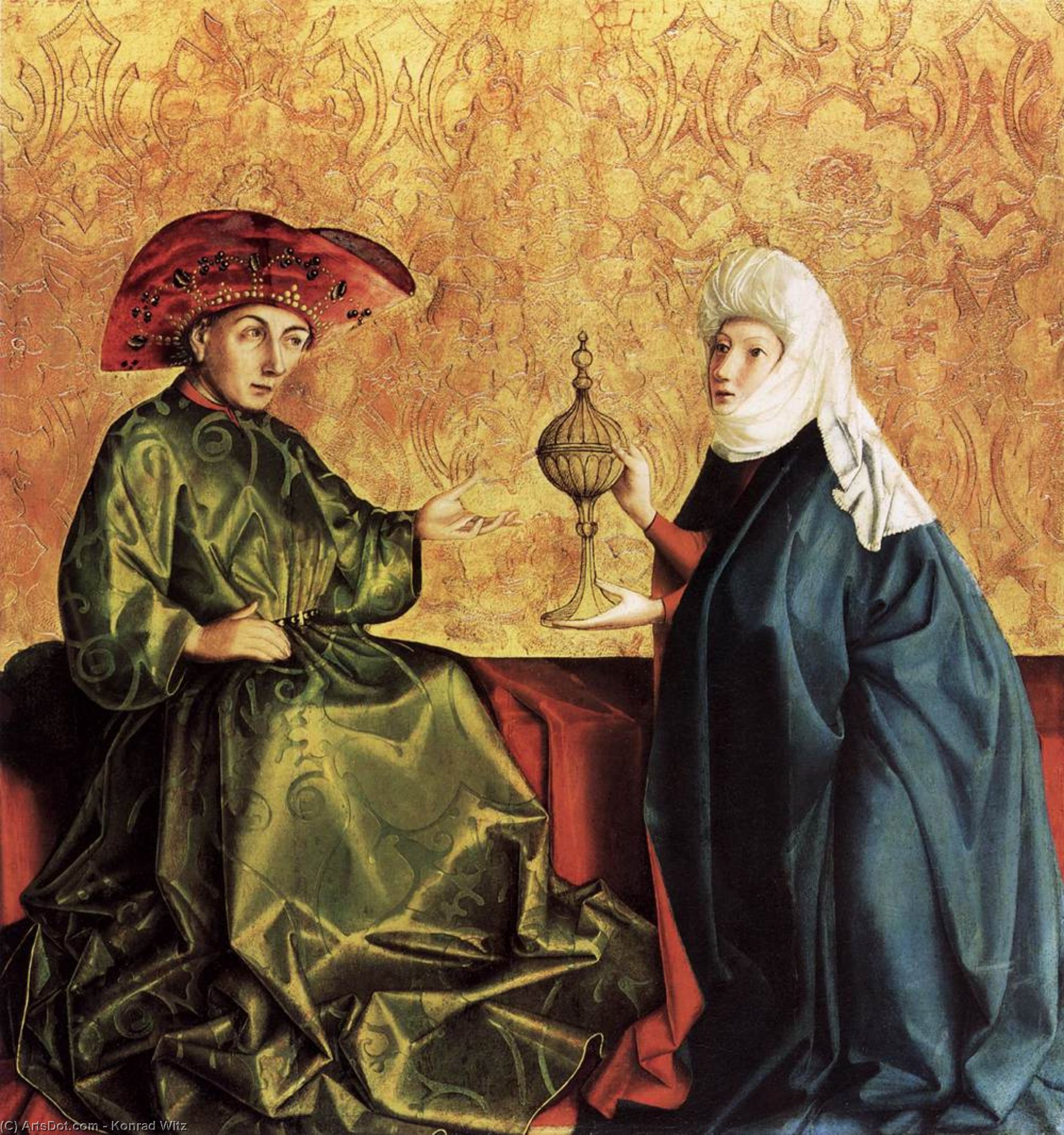
King Solomon and the Queen of Sheba
 Acrylic On Canvas
- WallArt
- Northern Renaissance
 1435
1435 84.0 x 79.0 cm
 Staatliche Museen
 Read More
Giclée / Art Print
Museum-quality giclée or canvas print with fast production and flexible finish options. ( Buy Hand Made Painting Buy Image)




P118B $10

P118H $10

P118W $10

P438Z $10

P508JH $12

P508YH $12

P805H $10

P805Z $10

P919BZ $10

P919G $10

P919XJ $10

P959ZH $10

P968JZ $12

W106C $8

W218G $10

W218JH $8

W218Y $10

W307PJ $10

W316G $10

W316PJ $8

W316Y $10

W398PJ $8

W4111J $10

W500HY $15

W500JH $15

W692G $12

W849H $8

W940BG $15

W953PJ $8




Pick from our preset sizes that match the artwork's original proportions.

You may enter your own dimensions to fit a specific frame or space. If your selected size does not match the original image's proportions, we will either crop the artwork or extend the image with a mirrored or solid-fill edge. A digital mockup will be sent for your approval before production begins.
Please note that the on-screen preview does not reflect the actual cropping or extension. Only the mockup will accurately show the final composition.
While custom sizes are available, we recommend selecting a dimension from the predefined list to preserve the original proportions.
Worldwide Delivery () in 2 weeks instead of standard 4/5 weeks. (26 August)

Free Worldwide Express Shipping

High-Quality Linen Canvas

Full Shipping Insurance

Customs Tax Refund Guarantee

True Color Matching Guarantee

60-Day Return Policy (Defects Only)

100% Money-Back Guarantee

Bulk Discount Offer
 Glass option is only available in size under 110 CM

King Solomon and the Queen of Sheba
Giclée / Art Print
Reproduction Size
-


Total Price
$ 63
Collectible Description
The Majesty of Solomon: A Renaissance Vision
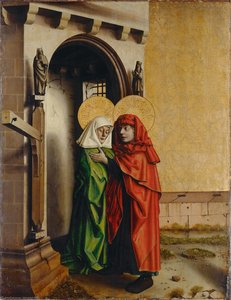
Konrad Witz’s “King Solomon and the Queen of Sheba” is not merely a depiction of an ancient biblical narrative; it's a profound meditation on power, wisdom, and the allure of the exotic. Painted in 1435 during the flourishing of Northern Renaissance art in Basel, Switzerland, this panel—part of the ambitious Heilspiegel Altarpiece—offers a glimpse into a world where religious piety intertwined with burgeoning humanist ideals. Witz, a pioneer recognized for his groundbreaking landscape depictions, elevates the story beyond simple chronology, imbuing it with an atmosphere of opulent grandeur and subtle psychological depth.
The scene unfolds within a richly ornamented interior, dominated by a commanding gold background—a technique borrowed from Byzantine iconography but masterfully adapted by Witz. This shimmering backdrop isn’t simply decorative; it serves to amplify the figures themselves, casting them in an almost ethereal light. The use of cast shadows and carefully rendered textures – particularly evident in Solomon's robes and the Queen’s elaborate headdress – demonstrates Witz’s meticulous attention to detail and his commitment to creating a tangible sense of realism within a stylized framework. Notice how the artist uses subtle color variations—the deep blues, vibrant reds, and earthy greens—to establish a clear hierarchy, emphasizing Solomon’s regal bearing while simultaneously highlighting the Queen's exotic beauty.
A Story of Diplomacy and Desire
The narrative itself is a complex tapestry woven from biblical accounts. The story centers on King Solomon’s legendary diplomatic mission to the Queen of Sheba, a figure shrouded in mystery and often interpreted as representing foreign wisdom and wealth. Witz doesn't shy away from the sensual elements of the tale—the Queen’s arrival with her caravan laden with gifts, the lavish banquet, and ultimately, the burgeoning romance between the two rulers. However, this is not a simple love story; it’s a carefully constructed allegory about the dangers of unchecked desire and the potential for corruption within power. The panel subtly hints at the political machinations at play—the Queen's initial intentions to test Solomon’s wisdom, his subsequent bewitchment, and the ensuing disruption of his reign.
The composition is deliberately balanced, reflecting the equilibrium between diplomacy and temptation. Solomon, seated on a chair with hands folded in a gesture of contemplative authority, embodies regal dignity. The Queen stands beside him, holding a small object—its nature intentionally ambiguous, perhaps symbolizing a precious gift or a token of her affection. Her posture suggests both confidence and vulnerability, capturing the essence of a powerful woman navigating a complex political landscape. The inclusion of a dining table in the background, adorned with a vase, subtly references the lavish feasts that characterized Solomon’s court—a symbol of wealth, abundance, and ultimately, excess.
The Legacy of Witz: A Pioneer of Landscape
While “King Solomon and the Queen of Sheba” is celebrated for its masterful depiction of human figures and its opulent setting, it's also significant for Witz’s pioneering approach to landscape. As scholars have noted, this panel represents one of the earliest examples of a faithful topographical scene in Western painting—a crucial step towards the development of landscape as an independent genre. The background isn’t merely a backdrop; it’s a carefully constructed representation of space, imbued with depth and perspective. Witz's understanding of light and shadow, combined with his keen observation of nature, elevates this panel beyond a simple narrative illustration to a sophisticated work of art that anticipates the innovations of later Renaissance masters.
Konrad Witz’s “King Solomon and the Queen of Sheba” is more than just a beautiful painting; it's a window into a pivotal moment in European art history. It speaks to the enduring fascination with biblical stories, the complexities of human relationships, and the power of visual representation to convey profound ideas. Reproductions offer an opportunity to appreciate Witz’s artistic genius and bring this captivating scene into your own home or office—a testament to the timeless beauty and intellectual richness of Northern Renaissance art.
Related Artworks









Artist Biography
The Dawn of Realism: The Life and Legacy of Konrad Witz
In the shifting landscape of fifteenth-century European art, few figures cast as long a shadow over the transition from Gothic tradition to Renaissance naturalism as Konrad Witz. Born around 1400 in the German region of Rottenburg am Neckar, Witz emerged as a visionary whose brushwork began to peel away the stylized abstractions of the Middle Ages to reveal the breathing, textured world beneath. While much of his early life remains shrouded in the mists of history, his presence in Basel, Switzerland, is well-documented, marking him as a master who flourished within the prestigious guild systems of the era. His journey was one of profound technical evolution, moving from the rigid formalities of late Gothic art toward an unprecedented devotion to topographical accuracy and emotional depth.
The true genius of Witz lies in his ability to marry sacred narrative with the tangible reality of the physical world. He is most celebrated for his pioneering role in landscape painting, a feat epitomized by his masterpiece, Miraculous Draught of Fishes. In this work, scholars identify one of the earliest instances of a faithful, identifiable topographical scene in Western art. Rather than presenting a generic, symbolic backdrop, Witz captured the specific essence of a place, inviting the viewer to step into a recognizable environment. This innovation transformed the landscape from a mere stage for religious drama into a living protagonist, capable of conveying atmosphere, light, and depth.
Masterworks of Devotion and Detail
Witz’s oeuvre is characterized by a breathtaking duality: the ability to execute monumental, complex altarpieces while maintaining an intimate, poignant touch in smaller devotional scenes. His Heilspiegel Altarpiece stands as a towering achievement of his career, showcasing the meticulous craftsmanship required for high-level ecclesiastical commissions. Through intricately carved panels and vibrant frescoes, Witz wove together biblical narratives and saintly figures with a level of detail that commanded reverence. This work serves as a testament to his mastery of the late Gothic style, even as he began to experiment with the burgeoning realism that would define the coming century.
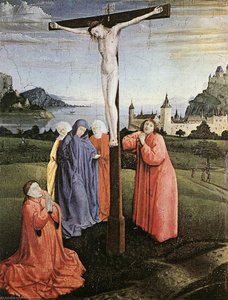
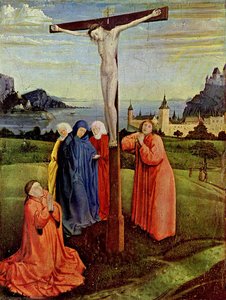
Beyond the grand scale of altarpieces, Witz’s talent for capturing human emotion is profoundly evident in works such as Christ on the Cross. Here, the artist blends Gothic drama with an early, raw realism, using subtle shading and expressive gestures to evoke a deep sense of pathos. Similarly, his depiction of King Solomon and the Queen of Sheba demonstrates his capacity for storytelling through rich detail and landscape innovation, illustrating biblical grandeur through a lens of Renaissance artistry. Whether painting the quiet sorrow of a saint or the majestic encounter of monarchs, Witz utilized light and form to bridge the gap between the divine and the human experience.
Historical Significance and Artistic Evolution
The historical importance of Konrad Witz cannot be overstated; he acted as a vital conduit between two eras. His development represents the slow, deliberate movement away from the symbolic language of the 14th century toward the observational science of the Renaissance. By integrating recognizable landscapes and naturalistic textures into religious iconography, he paved the way for future generations of Northern European painters to explore the beauty of the natural world.
His enduring legacy is found in the following artistic milestones:
- Landscape Innovation: The introduction of topographical accuracy, making the environment a central element of narrative painting.
- Technical Mastery: The seamless blending of late Gothic decorative elegance with early Renaissance naturalism and light manipulation.
- Emotional Depth: A shift toward more humanized, expressive depictions of biblical figures, fostering a deeper emotional connection with the viewer.
Though his life was relatively short, ending around 1446, the impact of Konrad Witz remains etched in the foundations of Western painting. He taught the eye to look closer at the earth and the sky, finding the sacred within the very details of the world we inhabit.

Konrad Witz
1400 - 1446 , Germany
Quick Facts
- Artistic Movement Or Style: Late Gothic Realism
- Date Of Birth: c. 1400
- Date Of Death: 1446
- Full Name: Konrad Witz
- Nationality: German
- Notable Artworks:
- The Miraculous Draught of Fishes
- Heilspiegel Altarpiece
- Altarpiece of the Virgin
- St. Peter Altarpiece
- Ambraser Hofjagdspiel
- Place Of Birth: Rottweil, Germany
Related Articles

Charles Bird King: Capturing Native American Dignity Through Portraiture & Cultural Exchange
Explore the captivating portraits of Charles Bird King, renowned for his depictions of Native American leaders. Discover the historical context, artistic techniques, and collecting value of these significant 19th-century artworks.

The Majesty of Representation: Exploring Regal Imagery in Art History
Explore the captivating history of royal portraiture with ArtsDot. Discover the symbolism, artistry, and enduring legacy of regal imagery in art. Expert insights for collectors & enthusiasts.

Bronze Age to Modern Masters: 10 Sculptures That Redefined Art | ArtsDot
Journey through art history with 10 legendary bronze sculptures – from Michelangelo's David to Rodin’s Thinker. Explore the stories, techniques & timeless beauty of these masterpieces. Find museum-quality reproductions & elevate your home decor on ArtsDot.com.

Gunning King: Narrative & Technique in Contemporary Figurative Painting
Explore the captivating world of contemporary figurative painting. Discover key artists, techniques & collecting insights. Expert analysis for discerning art lovers. ArtsDot.