

 Preview
 Send
Send Share
Share
 Details

 Download
 Similars
 X-Ray
X-Ray Diaporama
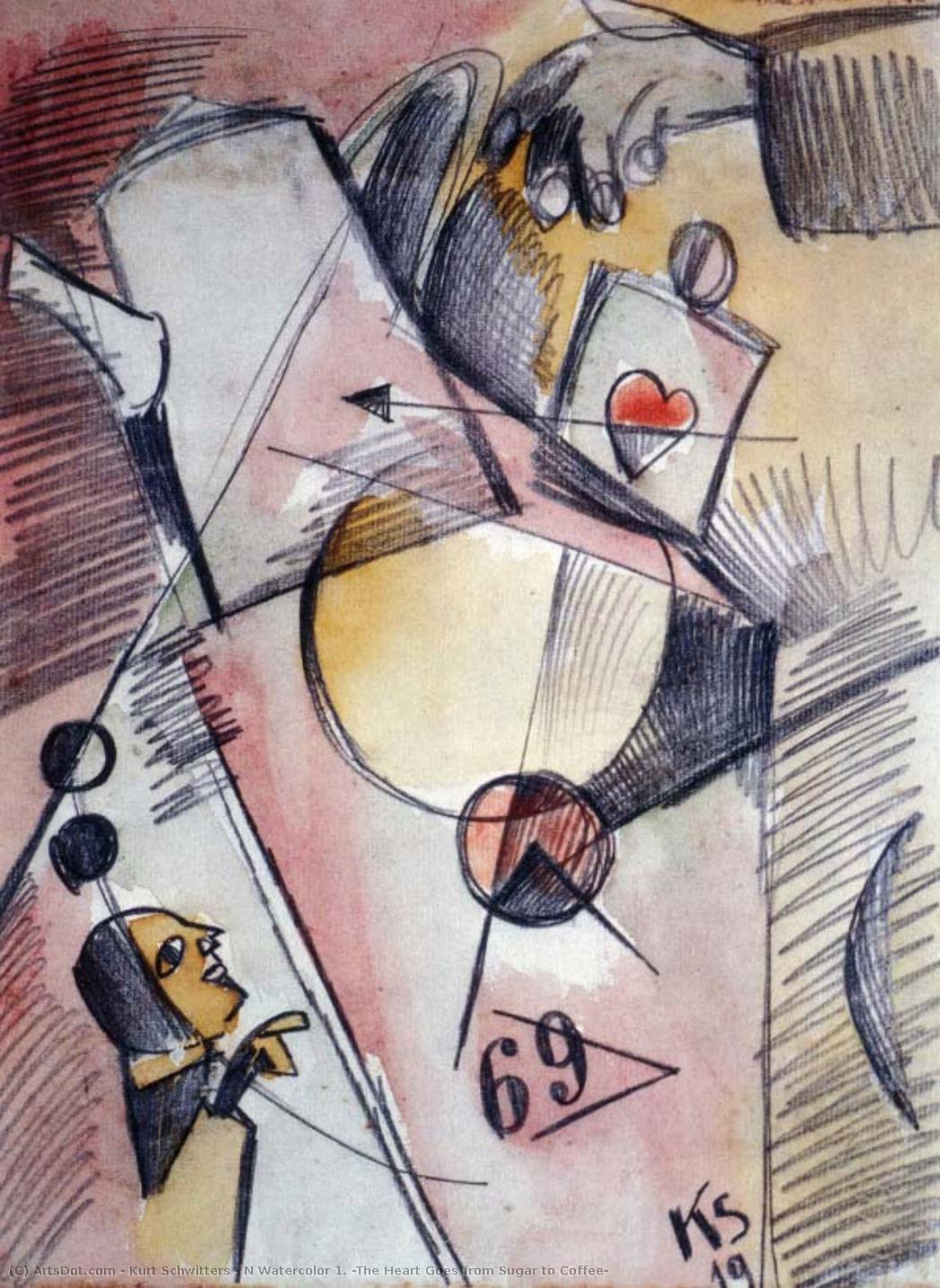
N Watercolor 1. (The Heart Goes from Sugar to Coffee)


 Read More
Purchase a high-resolution, enhanced digital image, far superior to the online preview.
Each file is meticulously prepared by our in-house specialists using advanced tools and expert manual retouching. We ensure every image has exceptional clarity, precise color accuracy, and fine detail.
The final file is delivered via email within 72 hours, optimized for immediate use in professional, editorial, and print environments. This is the same quality trusted by top-tier design studios, publishers, and galleries.
Digital Image
Download a high-resolution file for personal display, printing, and creative projects. ( Buy Print Buy Hand Made Painting)
Included in Every Digital Image Order
Expert Digital Delivery, Guaranteed
When you choose ArtsDot.com, you're not just getting an image - you're receiving a professionally enhanced digital artwork, crafted with precision and backed by a satisfaction guarantee. Here's everything that comes with your order, automatically:

Fast Email Delivery
Your high-resolution digital image file will be emailed to you within 72 hours of ordering - ready for immediate use.

AI-Enhanced Digital File
Your artwork is professionally optimized using advanced AI tools and manual editing, ensuring maximum detail, clarity, and color accuracy.

Free Lifetime Re-Delivery
Accidentally deleted or lost your file? No worries - we'll resend it to you anytime, free of charge.

No Import Fees - Ever
Enjoy your artwork instantly with zero customs, duties, or delivery fees - digital downloads are always tax-free.

Color Accuracy Guarantee
We ensure your digital image reflects the original colors as closely as possible using professional tools and color management.

60-Day Satisfaction Guarantee
If you're not satisfied with your digital image, we'll revise it or refund 100% within 60 days - no questions asked.

100% Money-Back Guarantee
Not satisfied? Get a full refund within 60 days of receiving your digital file - no questions asked.

Bulk Order Discounts
Buy 3 images, save 10% - Buy 5, save 15% - Buy 10+, save 20%. Great for creative projects, galleries, and agencies.
Kurt Schwitters’ “N Watercolor 1. (The Heart Goes from Sugar to Coffee)” – A Fragmented Reflection of Dadaist Vision
“N Watercolor 1. (The Heart Goes from Sugar to Coffee),” created in 1919 by Kurt Schwitters, stands as a cornerstone of Dadaism—a movement born from the disillusionment and outrage following World War I—and embodies Schwitters’s singular approach to artistic expression: Merz. This watercolor on paper is more than just an image; it's a deliberate dismantling of conventional aesthetics, prioritizing process over product and embracing chance alongside meticulous planning. The artwork resides within the Museum of Modern Art’s collection (53.1985), offering visitors a glimpse into the turbulent intellectual landscape of its time.Composition and Visual Language: Chaos Embraced
The composition defies traditional perspective, rejecting any attempt to impose spatial order upon the canvas. Instead, Schwitters presents a deliberately fractured panorama—a collage-like assemblage of geometric shapes (primarily triangles and rectangles) interwoven with organic forms reminiscent of abstracted figures or objects. Angular lines dominate, creating dynamic movement and disrupting any sense of stillness. These intersecting lines don’t merely define shapes; they actively contribute to the overall feeling of instability and disorientation, mirroring the anxieties prevalent during the war years. The absence of a central focal point compels the viewer's gaze to wander across the surface, encountering disparate elements in an unpredictable sequence—a characteristic tactic employed by Dada artists to challenge established norms.Color Palette and Texture: Subtle Shifts Amidst Neutral Ground
Despite its energetic dynamism, the color palette is remarkably restrained. A pale beige serves as a grounding backdrop, providing a neutral counterpoint to the splashes of crimson red, vibrant yellow, and earthy brown that punctuate the composition. Washes of watercolor create delicate gradations and textures—soft blends juxtaposed with darker lines offering visual contrast. These subtle tonal variations aren’t merely decorative; they subtly underscore the artwork's emotional resonance, hinting at underlying tensions between optimism and despair. The artist’s hand is evident in every stroke, conveying a palpable sense of immediacy and spontaneity.Symbolism: Heart Shape and Fragmented Narrative
The inclusion of a stylized heart shape—a prominent element within the watercolor—introduces an unexpected layer of sentimentality into this otherwise aggressively abstract piece. This symbol speaks to themes of love, vulnerability, and emotional connection—concepts antithetical to the nihilistic pronouncements of Dadaism yet harmoniously integrated into Schwitters’s visual vocabulary. The overall artwork can be interpreted as a fragmented representation of experience—a deliberate rejection of linear storytelling in favor of conveying complex emotions through non-representational forms. Each element contributes to a larger narrative, albeit one that remains elusive and open to multiple interpretations.Schwitters' Merz Style: A Legacy of Experimentation
“N Watercolor 1. (The Heart Goes from Sugar to Coffee)” exemplifies Schwitters’s Merz style—a groundbreaking aesthetic rooted in Dada’s rejection of artistic conventions. This approach prioritizes chance encounters and spontaneous combinations, resulting in artworks that defy categorization and challenge viewers to reconsider their assumptions about artmaking. Executed on paper with watercolor, the medium itself lends itself beautifully to textural variations—soft gradients alongside bold lines creating a tactile quality that reflects Schwitters's fascination with materiality. It’s a testament to his unwavering belief in artistic freedom and innovation—a legacy that continues to inspire artists today.Related Artworks

Artist Biography
Kurt Schwitters: A Life in Merz
Early Life and Education
- Born: June 20, 1887, in Hanover, Germany.
- Schwitters was the only child of Eduard and Henriette Schwitters. His father co-owned a ladies' clothing shop.
- The family’s financial situation improved after selling the business in 1898, allowing them to live off rental income from properties they acquired.
- He studied art at the Dresden Academy from 1909-1915 alongside artists like Otto Dix and George Grosz, though he seemingly remained unaware of their work at the time.
- Schwitters suffered his first epileptic seizure in 1901, which later exempted him from military service for a period during World War I.
Artistic Development and the Birth of Merz
- Initially, Schwitters worked in a post-impressionist style. His early work reflected this influence.
- The devastation of World War I profoundly impacted his artistic direction. He felt traditional academic training was irrelevant in the face of societal collapse.
- “In the war, things were in terrible turmoil…everything had broken down and new things had to be made out of the fragments; and this is Merz.”
- Around 1918, he began creating abstract collages using found objects – scraps of paper, tickets, and other discarded materials.
- The term “Merz” itself came from a fragment of text (“Commerz und Privatbank”) cut from an advertisement and incorporated into one of his early works, *Das Merzbild* (1918-19).
Key Works and Artistic Styles
- Merz Pictures: These collages are arguably Schwitters’ most famous contribution. They represent a radical departure from traditional art, embracing chance and the aesthetics of everyday life.
- Merzbau: A monumental architectural construction within his home in Hanover, continuously evolving over decades. It was a three-dimensional embodiment of Merz principles – a labyrinthine space filled with niches, grottoes, and found objects.
- Assemblage & Installation Art: Schwitters pioneered these forms, blurring the boundaries between painting, sculpture, and architecture.
- He also worked in poetry, sound, graphic design, and typography, exploring a wide range of artistic media.
Influences and Connections
- Early influences included post-impressionism, but he quickly moved beyond these conventions.
- He came into contact with members of the Berlin avant-garde – Raoul Hausmann, Hannah Höch, and Hans Arp – through Herwarth Walden’s *Der Sturm* gallery.
- While associated with Dadaism, Schwitters maintained a distinct artistic identity. He was initially rejected by some Dadaists for his ties to expressionism.
Later Life and Legacy
- Facing increasing persecution under the Nazi regime due to his “degenerate art,” Schwitters fled Germany in 1937.
- He spent time in Norway and England, continuing to create Merz works despite challenging circumstances. He was briefly interned as an enemy alien during World War II.
- Died: January 8, 1948, in Ambleside, England.
- Kurt Schwitters’ work profoundly influenced subsequent generations of artists, particularly those involved in Pop Art, Minimalism, and Conceptual Art.
- His innovative use of found objects and his exploration of the relationship between art and everyday life continue to resonate with contemporary audiences.
Historical Significance
- Schwitters’ Merz aesthetic challenged traditional notions of artistic beauty and authorship.
- He expanded the definition of art by incorporating non-art materials and blurring the lines between different disciplines.
- His work remains a powerful testament to the creative potential of fragmentation, reconstruction, and the embrace of chance.
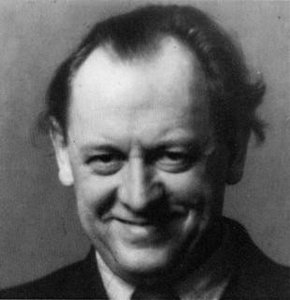
kurt schwitters
1887 - 1948
Quick Facts
- Birth Date: June 20, 1887
- Birth Place: Hanover, Germany
- Death Date: 1948
- Movement:
- Dadaism
- Constructivism
- Surrealism
- Merz
- Name: Kurt Schwitters
- Nationality: German
- Notable Works:
- Merz pictures
- Merzbau

