 Preview
 Send
Send Share
Share
 Details

 Download
 Similars
 X-Ray
X-Ray Diaporama
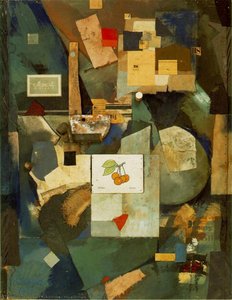
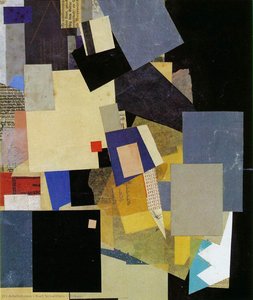
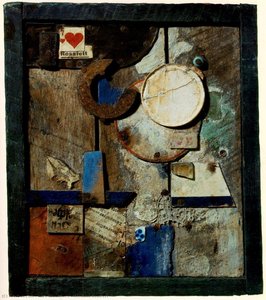
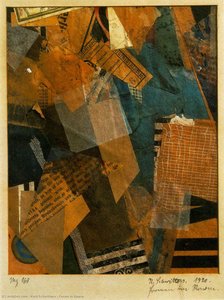
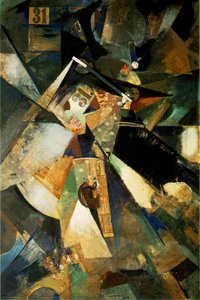
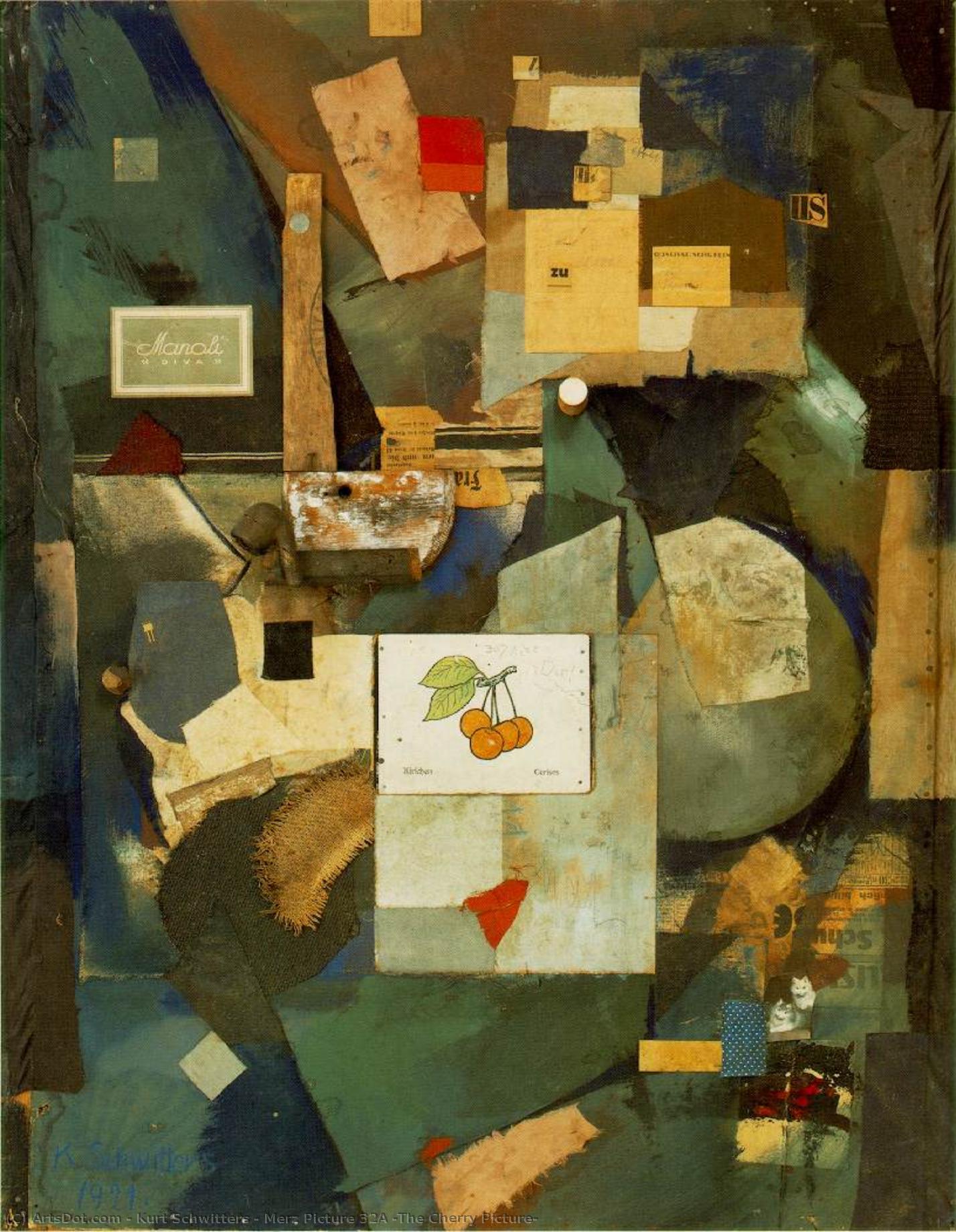
Merz Picture 32A (The Cherry Picture)


 Read More
Hand Made Oil Reproduction
Hand-painted oil on canvas in your size and frame, made to order by our artists. ( Buy Print Buy Image)




P118B $10

P118H $10

P118W $10

P438Z $10

P508JH $12

P508YH $12

P805H $10

P805Z $10

P919BZ $10

P919G $10

P919XJ $10

P959ZH $10

P968JZ $12

W106C $8

W218G $10

W218JH $8

W218Y $10

W307PJ $10

W316G $10

W316PJ $8

W316Y $10

W398PJ $8

W4111J $10

W500HY $15

W500JH $15

W692G $12

W849H $8

W940BG $15

W953PJ $8




Pick from our preset sizes that match the artwork's original proportions.

You may enter your own dimensions to fit a specific frame or space. If your selected size does not match the original image's proportions, we will either crop the artwork or extend the painting with additional hand-painted elements. A digital mockup will be sent for your approval before production begins.
Please note that the on-screen preview does not reflect the actual cropping or extension. Only the mockup will accurately show the final composition.
While custom sizes are available, we recommend selecting a dimension from the predefined list to preserve the original proportions.
After order, ArtsDot.com team will email client for instructions and provide a mockup preview
Worldwide Delivery () in 3/4 weeks instead of standard 5 weeks. (17 August). No compromise on quality.

Free Worldwide Express Shipping

High-Quality Linen Canvas

Full Shipping Insurance

Customs Tax Refund Guarantee

True Color Matching Guarantee

60-Day Return Policy (Defects Only)

100% Money-Back Guarantee

Bulk Discount Offer
 Glass option is only available in size under 110 CM

Merz Picture 32A (The Cherry Picture)
Reproduction Medium
Reproduction Size
-


Total Price
$ 263
Artwork Description
Kurt Schwitters’ Merz Picture 32A: The Cherry Picture – A Fragmented Symphony of Color and Texture
Kurt Schwitters' "Merz Picture 32A: The Cherry Picture," completed in 1921, stands as a cornerstone of Dadaism and a testament to the artist’s revolutionary approach to artistic expression. More than just a collage—a term Schwitters himself coined from a scrap of text—it embodies his profound belief that art could emerge from any material, transforming discarded fragments into a powerful visual statement. Examining this artwork reveals not only Schwitters' technical prowess but also his intellectual engagement with the anxieties and aspirations of the postwar era.The Genesis of Merz: Dada’s Response to Destruction
Born in Hanover in 1887, Kurt Schwitters experienced firsthand the devastation wrought by World War I. Traditional academic training seemed utterly inadequate against the backdrop of societal collapse, prompting him to abandon established conventions and embrace a radically new aesthetic philosophy. Influenced heavily by Jean Arp's pioneering explorations into abstraction—specifically his use of chance and geometric forms—Schwitters conceived Merz as an antidote to the prevailing order. As he famously declared, “Everything had broken down in any case and new things had to be made out of the fragments; and this is Merz.” This ethos underpinned his entire artistic practice, rejecting representational imagery for a focus on materiality and process.A Collage Constructed from Found Objects: Technique and Composition
The execution of "Merz Picture 32A" exemplifies Schwitters’s innovative technique. He meticulously assembled disparate materials—paper scraps bearing handwritten text and images, fabric remnants, wood fragments, cork, and even a small pipe—onto a painted board using glue and nails. This layering process wasn't merely decorative; it was deliberate – a conscious effort to capture the essence of the fragmented world around him. The composition itself is strikingly asymmetrical, prioritizing texture and color over spatial coherence. Schwitters’s careful arrangement of elements creates an illusion of depth while simultaneously conveying a sense of dynamism and spontaneity. Dominant hues of blues and greens mingle with muted browns and blacks, punctuated by flashes of red and yellow—a palette that reflects both the melancholic mood of the period and Schwitters' fascination with color theory.Symbolism Within Chaos: The Cherry Motif and Beyond
The title "The Cherry Picture" derives from a small drawing of cherries affixed to the canvas – a seemingly simple detail laden with symbolic significance. Schwitters’s use of cherry imagery harkens back to classical mythology, referencing Aphrodite—the goddess of love and beauty—and suggesting an aspiration for harmony amidst disorder. The inclusion of text fragments—such as “Ich liebe dir!” (“I love you!”)—further underscores the artwork's emotional core. These handwritten words convey a personal yearning for connection and intimacy, mirroring Schwitters’s own experiences as a father grappling with loss. Moreover, the overall collage embodies the Dadaist impulse to challenge conventional notions of art and beauty—to find meaning in unexpected juxtapositions and to embrace the inherent absurdity of existence.Legacy and Influence: A Pioneer of Installation Art
“Merz Picture 32A” solidified Schwitters’s position as a visionary artist who anticipated the rise of installation art decades before its formal emergence. His belief that art could transcend traditional boundaries—that it could inhabit space itself—anticipates many contemporary artistic practices. Today, this artwork continues to inspire artists and collectors alike, serving as a poignant reminder of Dadaism's radical rejection of established norms and its unwavering commitment to exploring the transformative potential of materiality and chance. Its enduring appeal lies in its ability to provoke contemplation about art’s role in confronting trauma and celebrating beauty—themes that resonate powerfully across generations.Related Artworks

Artist Biography
Kurt Schwitters: A Life in Merz
Early Life and Education
- Born: June 20, 1887, in Hanover, Germany.
- Schwitters was the only child of Eduard and Henriette Schwitters. His father co-owned a ladies' clothing shop.
- The family’s financial situation improved after selling the business in 1898, allowing them to live off rental income from properties they acquired.
- He studied art at the Dresden Academy from 1909-1915 alongside artists like Otto Dix and George Grosz, though he seemingly remained unaware of their work at the time.
- Schwitters suffered his first epileptic seizure in 1901, which later exempted him from military service for a period during World War I.
Artistic Development and the Birth of Merz
- Initially, Schwitters worked in a post-impressionist style. His early work reflected this influence.
- The devastation of World War I profoundly impacted his artistic direction. He felt traditional academic training was irrelevant in the face of societal collapse.
- “In the war, things were in terrible turmoil…everything had broken down and new things had to be made out of the fragments; and this is Merz.”
- Around 1918, he began creating abstract collages using found objects – scraps of paper, tickets, and other discarded materials.
- The term “Merz” itself came from a fragment of text (“Commerz und Privatbank”) cut from an advertisement and incorporated into one of his early works, *Das Merzbild* (1918-19).
Key Works and Artistic Styles
- Merz Pictures: These collages are arguably Schwitters’ most famous contribution. They represent a radical departure from traditional art, embracing chance and the aesthetics of everyday life.
- Merzbau: A monumental architectural construction within his home in Hanover, continuously evolving over decades. It was a three-dimensional embodiment of Merz principles – a labyrinthine space filled with niches, grottoes, and found objects.
- Assemblage & Installation Art: Schwitters pioneered these forms, blurring the boundaries between painting, sculpture, and architecture.
- He also worked in poetry, sound, graphic design, and typography, exploring a wide range of artistic media.
Influences and Connections
- Early influences included post-impressionism, but he quickly moved beyond these conventions.
- He came into contact with members of the Berlin avant-garde – Raoul Hausmann, Hannah Höch, and Hans Arp – through Herwarth Walden’s *Der Sturm* gallery.
- While associated with Dadaism, Schwitters maintained a distinct artistic identity. He was initially rejected by some Dadaists for his ties to expressionism.
Later Life and Legacy
- Facing increasing persecution under the Nazi regime due to his “degenerate art,” Schwitters fled Germany in 1937.
- He spent time in Norway and England, continuing to create Merz works despite challenging circumstances. He was briefly interned as an enemy alien during World War II.
- Died: January 8, 1948, in Ambleside, England.
- Kurt Schwitters’ work profoundly influenced subsequent generations of artists, particularly those involved in Pop Art, Minimalism, and Conceptual Art.
- His innovative use of found objects and his exploration of the relationship between art and everyday life continue to resonate with contemporary audiences.
Historical Significance
- Schwitters’ Merz aesthetic challenged traditional notions of artistic beauty and authorship.
- He expanded the definition of art by incorporating non-art materials and blurring the lines between different disciplines.
- His work remains a powerful testament to the creative potential of fragmentation, reconstruction, and the embrace of chance.
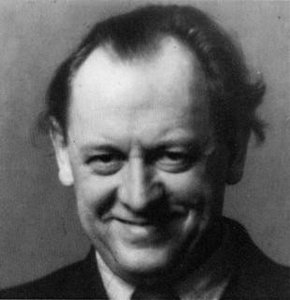
kurt schwitters
1887 - 1948
Quick Facts
- Birth Date: June 20, 1887
- Birth Place: Hanover, Germany
- Death Date: 1948
- Movement:
- Dadaism
- Constructivism
- Surrealism
- Merz
- Name: Kurt Schwitters
- Nationality: German
- Notable Works:
- Merz pictures
- Merzbau
Related Articles
Met Museum's 25 Masterpieces: Art History & Decor Inspiration | ArtsDot
Journey through 25 iconic artworks at the Metropolitan Museum of Art! Explore Van Gogh, Monet, Rembrandt & more. Discover art history, inspiring stories, and museum-quality reproductions to elevate your home decor. Explore the full collection on ArtsDot.com.

Dada: A Revolution of Anti-Art & the Rejection of Reason in Early 20th Century Aesthetics
Explore the revolutionary Dada art movement! Discover its origins, key artists like Duchamp & Arp, and lasting impact on modern art. A deep dive into anti-art & challenging conventions.
Art Brut: Unveiling the Raw Power of Outsider Art & Its Enduring Legacy
Explore the fascinating world of Art Brut – from Dubuffet's origins to its lasting impact on contemporary art. Discover key artists, characteristics & how to collect this powerful form of self-taught expression.
Whistler's Masterpieces: Explore 25 Iconic Paintings & Aesthetic Art for Your Home
Journey through 25 iconic James Abbott McNeill Whistler paintings! Explore his masterpieces of Aestheticism, from 'Nocturne in Black and Gold' to captivating portraits. Find museum-quality art reproductions & elevate your home decor with ArtsDot.com. Discover the full collection online.

Dadaism: A Rebellion Against Reason – Exploring the Origins, Characteristics, and Enduring Legacy of an Anti-Art Movement
Explore the revolutionary Dada art movement! Discover its origins in WWI, key artists like Duchamp & Höch, core principles, and lasting impact on modern and contemporary art. A comprehensive guide for enthusiasts.