 Preview
 Send
Send Share
Share
 Details

 Download
 Similars
 X-Ray
X-Ray Diaporama
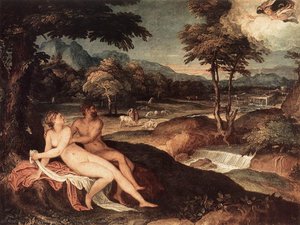
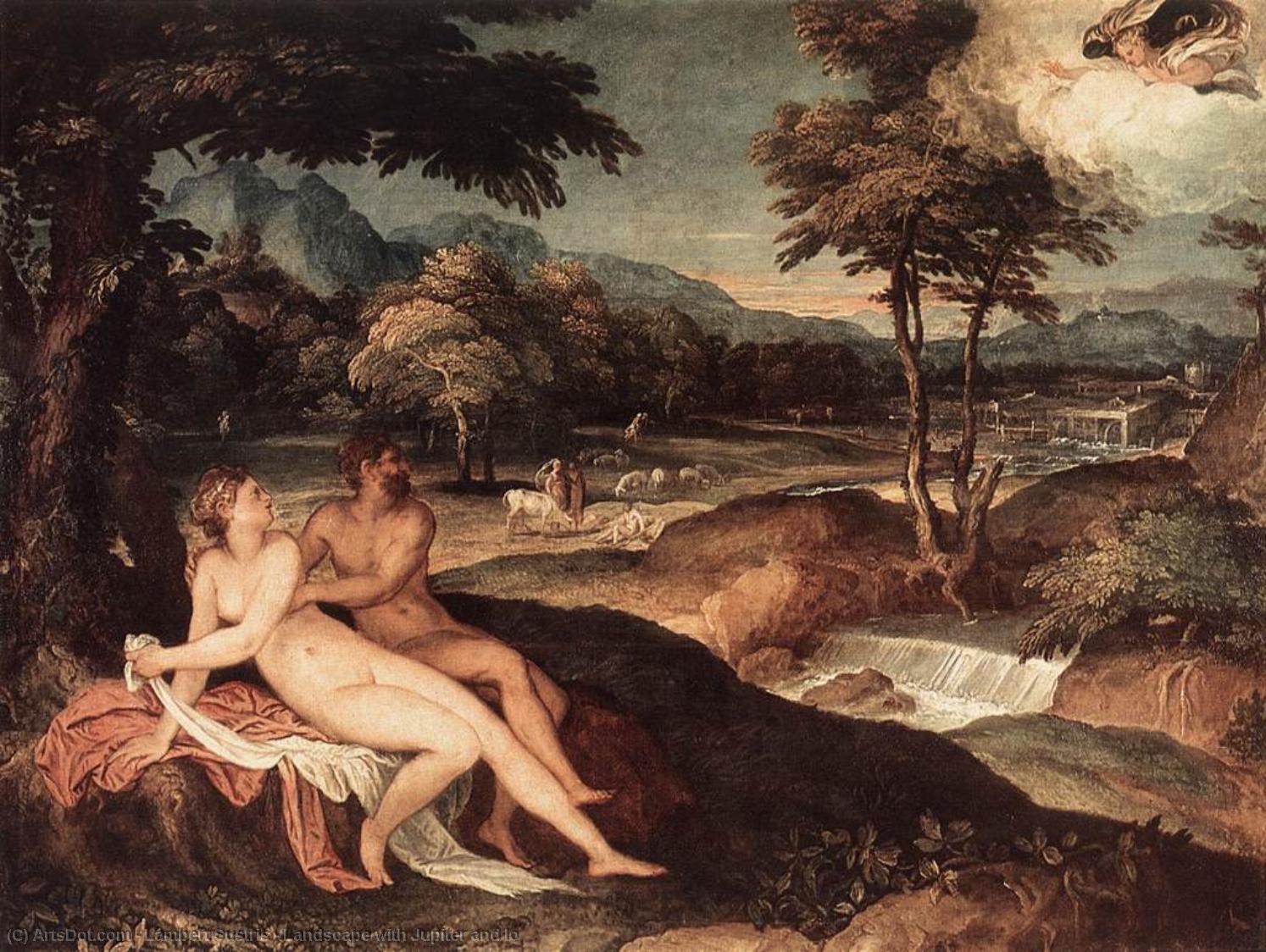
Landscape with Jupiter and Io
 Oil On Canvas
- WallArt
- High Renaissance
 1557
1557- Renaissance
 206.0 x 275.0 cm
 Hermitage Museum
 Read More
Hand Made Oil Reproduction
Hand-painted oil on canvas in your size and frame, made to order by our artists. ( Buy Print Buy Image)




P118B $10

P118H $10

P118W $10

P438Z $10

P508JH $12

P508YH $12

P805H $10

P805Z $10

P919BZ $10

P919G $10

P919XJ $10

P959ZH $10

P968JZ $12

W106C $8

W218G $10

W218JH $8

W218Y $10

W307PJ $10

W316G $10

W316PJ $8

W316Y $10

W398PJ $8

W4111J $10

W500HY $15

W500JH $15

W692G $12

W849H $8

W940BG $15

W953PJ $8




Pick from our preset sizes that match the artwork's original proportions.

You may enter your own dimensions to fit a specific frame or space. If your selected size does not match the original image's proportions, we will either crop the artwork or extend the painting with additional hand-painted elements. A digital mockup will be sent for your approval before production begins.
Please note that the on-screen preview does not reflect the actual cropping or extension. Only the mockup will accurately show the final composition.
While custom sizes are available, we recommend selecting a dimension from the predefined list to preserve the original proportions.
After order, ArtsDot.com team will email client for instructions and provide a mockup preview
Worldwide Delivery () in 3/4 weeks instead of standard 5 weeks. (16 August). No compromise on quality.

Free Worldwide Express Shipping

High-Quality Linen Canvas

Full Shipping Insurance

Customs Tax Refund Guarantee

True Color Matching Guarantee

60-Day Return Policy (Defects Only)

100% Money-Back Guarantee

Bulk Discount Offer
 Glass option is only available in size under 110 CM

Landscape with Jupiter and Io
Reproduction Medium
Reproduction Size
-


Total Price
$ 263
Artwork Description
A Venetian Dreamscape: Unveiling Lambert Sustris's Landscape with Jupiter and Io
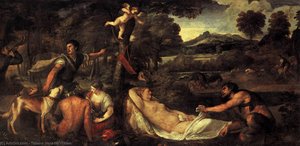
To gaze upon this magnificent canvas is to step directly into the sun-drenched, myth-laden heart of the High Renaissance. Lambert Sustris’s Landscape with Jupiter and Io, painted in 1557, is far more than a mere depiction of nature; it is an opulent tapestry woven from classical mythology, sensual repose, and the vibrant chromatic spirit of Venice. The scene unfolds as a pastoral idyll, yet beneath the surface tranquility lies the charged energy of divine encounter. Sustris, deeply influenced by the luminous palette and masterful composition of Titian, transports us to a moment suspended between dream and reality, where gods and mortals mingle in an embrace of natural beauty.
Mythology and Sensuality: The Heart of the Narrative
At the core of the painting lies the captivating narrative involving Jupiter and Io. Their depiction—reclining together amidst the verdant woods—speaks volumes about divine passion and earthly pleasure. This intimacy, rendered with such palpable grace, invites contemplation on the nature of desire as both sublime and natural. The surrounding landscape is populated by life in its most abundant forms: placid cows graze near the left edge, while two sturdy horses anchor the composition toward the right. These animals are not mere props; they ground the celestial drama in a tangible, fertile world. They serve to heighten the sense of timelessness, suggesting that the divine union occurring here is as perennial and cyclical as the seasons themselves.
Mastery of Color and Light: Sustris's Technique
Sustris’s technique here showcases his profound connection to Venetian colorism. One can almost feel the rich impasto beneath the surface, observing how light seems to filter through the dense foliage, illuminating the figures with a warm, golden glow characteristic of the Italian masters. The handling of flesh tones is exquisite, achieving a softness that belies the drama of the subject matter. This masterful use of color—the deep emeralds contrasting against sun-bleached skin and earthy browns—gives the entire piece an unparalleled depth, making it a breathtaking study in pictorial harmony.
Historical Echoes and Enduring Appeal
Painted during a period when classical learning and artistic patronage flourished, this work embodies the Renaissance fascination with reconciling pagan mythology with Christian ideals. For the modern collector or designer, owning a reproduction of this piece is acquiring not just art, but a piece of cultural history. It speaks to an era that celebrated human experience—both its divine potential and its earthly pleasures—with unparalleled artistic fervor. The scale of 206 x 275 cm ensures that it commands attention, transforming any grand hall or gallery into a space imbued with mythic grandeur.
Bringing the Myth Home
To incorporate this artwork into your living space is to invite an atmosphere of sophisticated romance and timeless elegance. It functions as a magnificent focal point, drawing the eye into its lush depths while simultaneously elevating the perceived value and narrative richness of the room itself. Whether you are seeking a piece that whispers tales of ancient gods or one that simply radiates unparalleled warmth and artistry, Landscape with Jupiter and Io remains an enduring masterpiece of decorative art.
Related Artworks



Artist Biography
Lambert Sustris: A Circle of Venetian Influence
Lambert Sustris (c. 1520 – after 1584) stands as a pivotal figure within the artistic milieu of Antwerp and Venice during the High Renaissance, representing a crucial link between Titian’s workshop and subsequent generations of Flemish painters. Born in Amsterdam, his early life remains shrouded in relative obscurity, though he swiftly established himself as a talented artist operating primarily in Italy – specifically Venice – where he honed his skills under the tutelage of the celebrated master Titian. This formative association profoundly shaped Sustris's artistic vision, imbuing it with Venetian color palettes and compositional strategies that would define his oeuvre.- Early Career & Venetian Patronage: Sustris began his artistic journey assisting Titian in Venice around 1540, immersing himself in the vibrant artistic culture of the Serenissima Republic. He quickly gained recognition for his meticulous draftsmanship and ability to execute complex commissions, securing patronage from prominent families like the Fugger banking household in Augsburg.
- Style & Technique: Sustris’s distinctive style is characterized by a masterful blending of Venetian realism with Northern Mannerist sensibilities. His paintings demonstrate an exceptional command of color – particularly luminous reds and golds – mirroring Titian's groundbreaking use of pigment—and meticulous attention to detail, reflecting the influence of Venetian artistic conventions.
- Notable Works: Sustris’s output includes iconic depictions such as ‘Woman with Mirror,’ ‘Nessus & Deianira,’ and ‘Venus and Cupid,’ each showcasing his exceptional skill in portraying human emotion and capturing atmospheric effects. These works exemplify the “circle of Sustris,” a group of paintings produced by artists trained under Titian who continued to develop Sustris’s stylistic approach.
- Legacy & Influence: Sustris's legacy extends beyond his individual masterpieces, impacting the artistic trajectory of Antwerp and influencing subsequent Flemish painters. His work served as an inspiration for artists like Anthony van Dyck, demonstrating the enduring power of Venetian art traditions in shaping Northern European painting during the Baroque period.
The Circle of Sustris: Titian’s Artistic Legacy
Lambert Sustris's artistic development was inextricably linked to Titian’s workshop, establishing him as a central conduit for Venetian artistic innovation into the Flemish realm. The “circle of Sustris” comprised a cohort of artists who diligently studied Titian’s techniques and stylistic preferences—resulting in remarkably consistent visual language across multiple canvases. This collaborative effort ensured that Venetian color theory, compositional dynamism, and psychological depth permeated Northern European painting.- Shared Artistic Vision: Artists associated with Sustris meticulously replicated Titian's masterful use of glazing techniques – creating luminous surfaces and conveying subtle tonal variations—a hallmark of Venetian painting.
- Compositional Considerations: Furthermore, Sustris’s paintings adopted Venetian compositional strategies prioritizing dramatic lighting and spatial depth, mirroring Titian’s penchant for theatrical staging within his artworks.
- Psychological Depth: The circle's artists excelled at portraying human emotion with nuanced sensitivity—reflecting Titian’s profound understanding of the human psyche and translating it into visual representations that resonated deeply with viewers.
Exploring Sustris’s Oeuvre: Venetian Echoes in Antwerp
Lambert Sustris’s artistic activity extended beyond Venice, finding considerable success in Antwerp—a thriving center for Flemish art during the Renaissance and Baroque eras. His presence in Antwerp solidified his reputation as a skilled painter and decorator, attracting commissions from wealthy patrons eager to adorn their residences with opulent artworks. The influence of Venetian aesthetics is palpable throughout Sustris’s Antwerp productions, demonstrating the pervasive reach of Venetian artistic traditions across Europe.- Decorative Projects: Sustris undertook ambitious decorative undertakings—primarily murals—transforming aristocratic interiors into breathtaking spaces adorned with vibrant colors and intricate designs—reflecting Venetian grandeur and sophistication.
- Religious Paintings: He produced numerous religious paintings—often commissioned for churches—capturing biblical narratives with meticulous detail and conveying spiritual fervor through masterful use of color and light—echoing the stylistic conventions prevalent in Venetian devotional art.
Lambert Sustris & The Louvre Collection
The J. Paul Getty Museum holds a significant representation of Lambert Sustris’s artistic output, showcasing his mastery of Venetian painting techniques and contributing to scholarly understanding of the “circle of Sustris.” His paintings—particularly ‘Woman with Mirror,’ ‘Nessus & Deianira,’ and ‘Venus and Cupid’—remain treasured specimens of Renaissance portraiture and mythological narrative—demonstrating Sustris's ability to synthesize Venetian artistic ideals with Northern Mannerist sensibilities. The Louvre Museum houses several Sustris canvases, furthering the dissemination of his artwork and bolstering its historical significance.Concluding Remarks: A Lasting Impression
Lambert Sustris’s contribution to Renaissance art transcends mere stylistic imitation; he embodies a crucial transmission of Venetian artistic heritage into Northern Europe—leaving an indelible mark on subsequent generations of Flemish painters. His unwavering dedication to mastering Titian's techniques and his masterful execution of complex commissions cemented his position as one of the foremost artists of his time—ensuring that Sustris’s legacy continues to inspire admiration for centuries to come.
lambert sustris
1520 - 1584 , Netherlands
Quick Facts
- Artistic Movement Or Style: Renaissance Art
- Artists Or Movements Influenced By This Artist: ['Venetian Painting']
- Artists Who Influenced This Artist: ['Titian']
- Date Of Birth: Amsterdam, Netherlands (1520)
- Full Name: Lambert Sustris
- Nationality: Dutch
- Notable Artworks:
- Woman with Mirror
- Nessus & Deianira
- Place Of Birth: Amsterdam
Related Articles

Beyond the Horizon: 10 Landscape Masterpieces for Your Home Decor
Journey through 10 breathtaking landscape paintings by Monet, Van Gogh & more! Explore iconic artworks, artistic techniques & find inspiration for your home decor. Museum-quality reproductions at ArtsDot.com. Discover all masterpieces on ArtsDot.com

Romantic Landscapes: 10 Masterpieces for Your Home | ArtsDot
Journey through 10 Romantic landscape masterpieces by Friedrich, Turner & Cole. Explore emotional art, sublime nature scenes & iconic 19th-century paintings. Find museum-quality reproductions for your home at ArtsDot.com – discover the full collection online!

John Constable's Masterpieces: Explore 25 Iconic Landscapes for Your Home
Journey through John Constable's 25 most celebrated landscapes. Explore Romanticism, Dedham Vale & his masterful use of light in iconic paintings like 'Hay Wain'. Find museum-quality art reproductions and elevate your home decor on ArtsDot.com.

Impressionistic Landscapes: 10 Masterpieces That Changed Art & Decor
Journey into the heart of Impressionism! Explore 10 masterpieces by Monet, Renoir & Degas that revolutionized landscape art. Discover their stories, techniques & find museum-quality reproductions to elevate your home decor on ArtsDot.com.

Evocations of Place: A Historical Journey Through Landscape Art
Explore the rich history of landscape art with ArtsDot. Discover renowned artists, movements like Impressionism & Romanticism, and expert guidance for collecting timeless pieces. Find your perfect serene escape today!