 Preview
 Send
Send Share
Share
 Details

 Download
 Similars
 X-Ray
X-Ray Diaporama
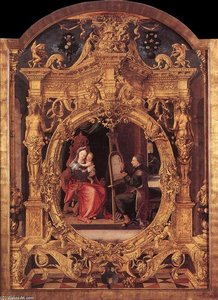
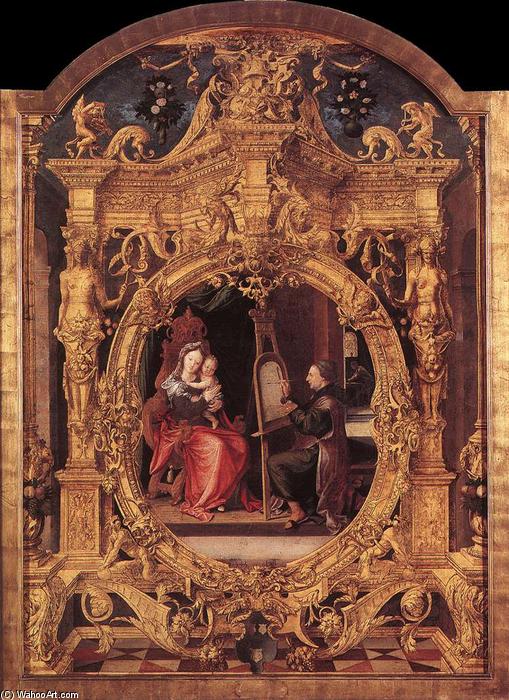
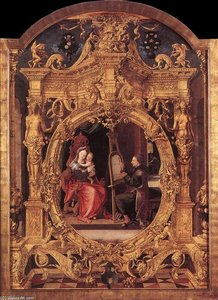
St Luke Painting the Virgin's Portrait
 1545
1545 144.0 x 103.0 cm
 Groeninge Museum
 Read More
Hand Made Oil Reproduction
Hand-painted oil on canvas in your size and frame, made to order by our artists. ( Buy Print Buy Image)




































Pick from our preset sizes that match the artwork's original proportions.

You may enter your own dimensions to fit a specific frame or space. If your selected size does not match the original image's proportions, we will either crop the artwork or extend the painting with additional hand-painted elements. A digital mockup will be sent for your approval before production begins.
Please note that the on-screen preview does not reflect the actual cropping or extension. Only the mockup will accurately show the final composition.
While custom sizes are available, we recommend selecting a dimension from the predefined list to preserve the original proportions.
After order, ArtsDot.com team will email client for instructions and provide a mockup preview
Worldwide Delivery () in 3/4 weeks instead of standard 5 weeks. (29 August). No compromise on quality.

Free Worldwide Express Shipping

High-Quality Linen Canvas

Full Shipping Insurance

Customs Tax Refund Guarantee

True Color Matching Guarantee

60-Day Return Policy (Defects Only)

100% Money-Back Guarantee

Bulk Discount Offer
 Glass option is only available in size under 110 CM

St Luke Painting the Virgin's Portrait
Reproduction Medium
Reproduction Size
-


Total Price
$ 263
Related Artworks
Artist Biography
The Enigmatic Legacy of Lanceloot Blondeel
To wander through the historical corridors of Flemish art is to encounter the evocative presence of Lanceloot Blondeel, a master whose name remains whispered with reverence among connoisseurs. Born in 1498 in the quiet Belgian town of Poperinge, Blondeel’s life was shaped by the profound shifts of the sixteenth century. As the Reformation began to reshape the religious and artistic landscape of Europe, Blondeel established himself not merely as a painter, but as a polymath of the Renaissance spirit. His career, centered in the vibrant city of Bruges, saw him flourish as an architect, city planner, surveyor, and cartographer, embodying the era's thirst for both aesthetic beauty and structural precision.
Blondeel’s artistic journey was deeply rooted in the traditions of his homeland. Having entered the prestigious Guild of Saint Luke in 1519, he became a cornerstone of the Bruges art scene. His early development was marked by a rigorous training that allowed him to master the complexities of his medium. Perhaps most significantly, his influence extended through generations; he trained the talented Pieter Pourbus, who would eventually marry Blondeel’s daughter, Anna, and carry the torch of his atelier into the future. This lineage ensured that the meticulous techniques and stylistic nuances developed in Blondeel's workshop would continue to define Flemish art for decades.
A Tapestry of Devotion and Design
While many remember him for his visual artistry, Blondeel’s true genius lay in his ability to blend the sacred with the structural. His oeuvre is a remarkable testament to versatility. While he is celebrated for his paintings—often commissioned religious works for local churches that breathed life into the spiritual devotion of the era—his hand was equally present in the design of sculptures, tapestries, and even intricate jewelry. One of his most profound historical contributions occurred in 1550, when he joined forces with Jan van Scorel to undertake the monumental task of restoring the legendary Ghent Altarpiece by Jan van Eyck. This undertaking placed him at the very heart of Flemish artistic heritage, tasked with preserving one of the world's greatest masterpieces.
Beyond the canvas, Blondeel’s vision transformed the physical landscape of his time. His architectural ambitions were nothing short of grand. Under the commission of Charles V, the Holy Roman Emperor, he designed triumphal arches inspired by the classical Roman style, bringing a sense of imperial majesty to the region. His civic-mindedness was equally evident in his work as a surveyor and city planner; he even designed a canal intended to link Bruges to the sea, a feat of engineering that promised to revitalize the city's trade and prosperity. This rare combination of artistic delicacy and civil engineering prowess marks him as a true Renaissance man.
Symbolism and the Flemish Spirit
The essence of Blondeel’s work lies in its ability to evoke emotion through subtle mastery. Whether he was rendering the solemnity of a religious triptych or the architectural grandeur of a monument, his work often carried deep symbolic weight. His paintings frequently utilized chiaroscuro—the dramatic interplay of light and shadow—to create depth and a sense of divine presence. In his landscapes and portraits, one can observe a serene aesthetic that avoids the overwhelming opulence of later Baroque styles, opting instead for a delicate touch that captures the quiet beauty of the natural world.
As we reflect on his life, which concluded in Bruges in 1561, we see an artist who was much more than a mere painter. He was a builder of worlds, both visual and physical. His legacy is found not only in the surviving canvases that grace museum walls but in the very bones of the cities he helped shape. Through his work, the spirit of the Flemish Renaissance continues to resonate, reminding us of a time when art, science, and civic duty were inextricably woven into a single, magnificent tapestry of human achievement.
lanceloot blondeel
1498 - 1561 , Belgium
Quick Facts
- Artistic Movement Or Style: Romanticism
- Artists Or Movements Influenced By This Artist: ['Eugène Delacroix']
- Artists Who Influenced This Artist:
- Jan Vermeer
- Rembrandt
- Date Of Birth: 1498
- Full Name: lanceloot blondeel
- Nationality: Belgian
- Notable Artworks:
- Dreamscape Serenade
- Whispering Pines
- Place Of Birth: Poperinge, Belgium