

 Preview
 Send
Send Share
Share
 Details

 Download
 Similars
 X-Ray
X-Ray Diaporama
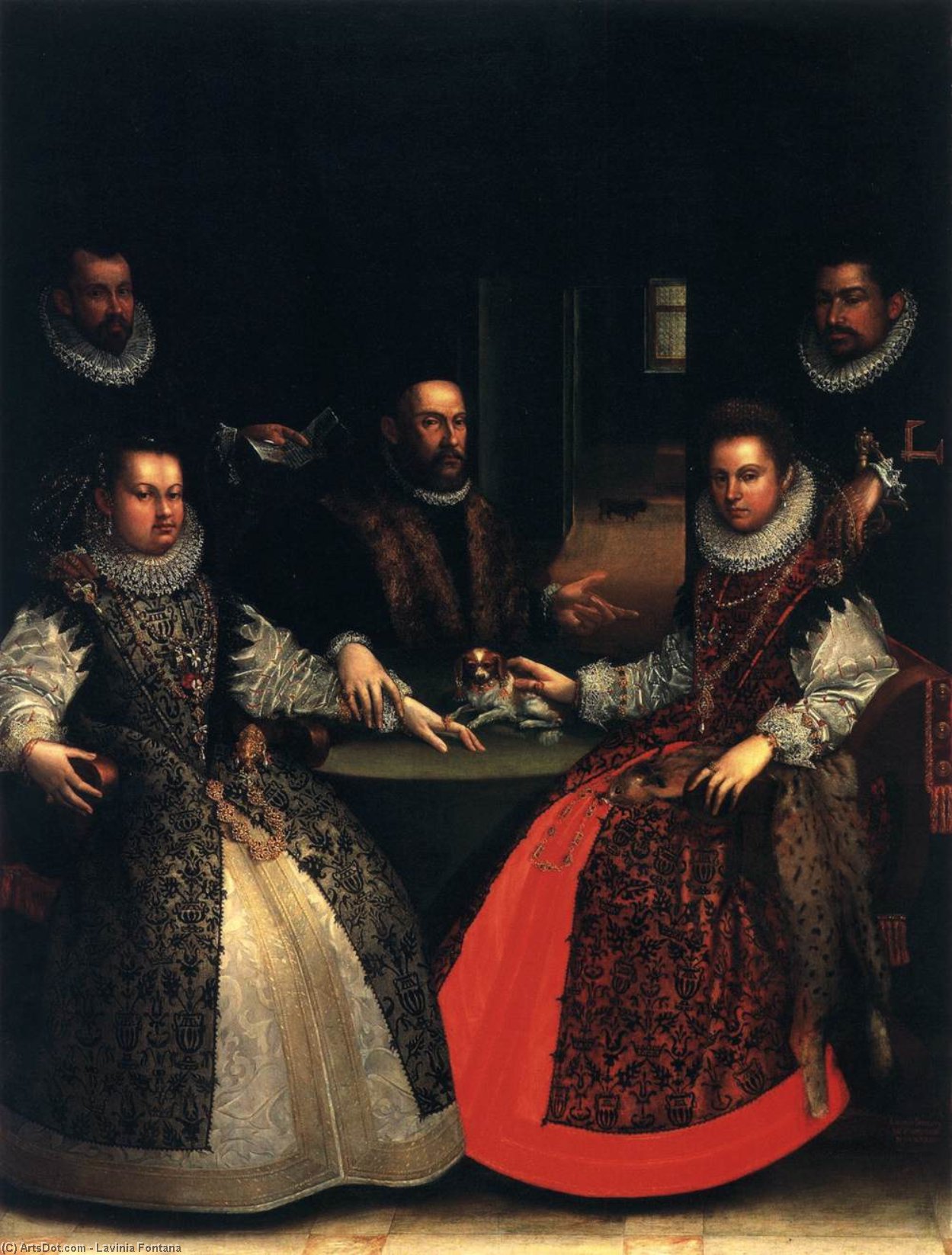
Portrait of the Gozzadini Family
 Oil On Canvas
- WallArt
- Mannerist Portraiture
 1584
1584 253.0 x 191.0 cm
 Pinacoteca Nazionale
 Read More
Purchase a high-resolution, enhanced digital image, far superior to the online preview.
Each file is meticulously prepared by our in-house specialists using advanced tools and expert manual retouching. We ensure every image has exceptional clarity, precise color accuracy, and fine detail.
The final file is delivered via email within 72 hours, optimized for immediate use in professional, editorial, and print environments. This is the same quality trusted by top-tier design studios, publishers, and galleries.
Digital Image
Download a high-resolution file for personal display, printing, and creative projects. ( Buy Print Buy Hand Made Painting)
Included in Every Digital Image Order
Expert Digital Delivery, Guaranteed
When you choose ArtsDot.com, you're not just getting an image - you're receiving a professionally enhanced digital artwork, crafted with precision and backed by a satisfaction guarantee. Here's everything that comes with your order, automatically:

Fast Email Delivery
Your high-resolution digital image file will be emailed to you within 72 hours of ordering - ready for immediate use.

AI-Enhanced Digital File
Your artwork is professionally optimized using advanced AI tools and manual editing, ensuring maximum detail, clarity, and color accuracy.

Free Lifetime Re-Delivery
Accidentally deleted or lost your file? No worries - we'll resend it to you anytime, free of charge.

No Import Fees - Ever
Enjoy your artwork instantly with zero customs, duties, or delivery fees - digital downloads are always tax-free.

Color Accuracy Guarantee
We ensure your digital image reflects the original colors as closely as possible using professional tools and color management.

60-Day Satisfaction Guarantee
If you're not satisfied with your digital image, we'll revise it or refund 100% within 60 days - no questions asked.

100% Money-Back Guarantee
Not satisfied? Get a full refund within 60 days of receiving your digital file - no questions asked.

Bulk Order Discounts
Buy 3 images, save 10% - Buy 5, save 15% - Buy 10+, save 20%. Great for creative projects, galleries, and agencies.
A Glimpse into Noble Life: The Gozzadini Family Portrait
Lavinia Fontana’s 1584 “Portrait of the Gozzadini Family” is more than just a depiction of six individuals seated around a table; it's a meticulously crafted window into the social dynamics, familial tensions, and aspirations of a prominent Bolognese family during the High Renaissance. Hanging within the Pinacoteca Nazionale in Bologna, this oil painting on canvas immediately commands attention with its rich palette, dramatic lighting, and the subtly complex relationships depicted within its frame. It’s a work that speaks volumes about wealth, status, and the intricate web of obligations and desires that defined aristocratic life.
The scene unfolds within a dimly lit interior, dominated by a dark wooden table – a focal point that anchors the composition. Senator Ulisse Gozzadini, the patriarch, sits centrally, radiating authority despite his deceased status; his ghostly presence is subtly evoked through the placement of his hand resting on his daughter’s arm. Flanking him are his daughters, Laudomia and Ginevra, dressed in opulent wedding attire – a visual testament to their recent unions and the family's continued prosperity. Their husbands, Camillo and Annibale, stand respectfully behind them, completing the tableau of familial unity. Yet, beneath this veneer of harmony lies an undercurrent of rivalry and unspoken anxieties, carefully conveyed through subtle gestures and compositional choices.
The Language of Mannerism: Style and Technique
Fontana’s masterful command of Renaissance techniques is evident in every brushstroke. The painting exemplifies the stylistic nuances of Mannerism, a movement that favored elongated figures, complex compositions, and an emphasis on emotional expression over strict realism. Notice how the figures are rendered with a deliberate sense of formality – their poses are stiff and controlled, reflecting the rigid social conventions of the era. The artist’s use of *sfumato*, a technique pioneered by Leonardo da Vinci, creates soft transitions between light and shadow, lending an ethereal quality to the scene. The meticulous detail in rendering fabrics—the intricate folds of the ruffs, the shimmering textures of the gowns—demonstrates Fontana's exceptional skill and patience.
The color palette is dominated by deep browns, reds, creams, and golds – a luxurious combination that speaks to the family’s wealth and status. The vibrant red of Laudomia’s gown immediately draws the eye, while the muted tones of the other figures create a sense of balance and harmony. Fontana skillfully employs light to sculpt the forms of her subjects, highlighting their faces and creating a dramatic interplay between light and shadow. This masterful use of chiaroscuro not only adds depth and volume but also subtly conveys the emotional weight of the scene.
Symbolism and Hidden Meanings
Beyond its surface appearance, the “Portrait of the Gozzadini Family” is laden with symbolism. The presence of two dogs – one black and one small – serves as a poignant reminder of the deceased patriarch’s legacy and the family's commitment to upholding his memory. The placement of Laudomia’s hand on her father’s arm, coupled with the fact that he was already dead at the time of painting, suggests a complex relationship built on duty, obligation, and perhaps even unspoken resentment. The paper in Annibale’s hand is interpreted as a reference to his control over the family's finances, hinting at potential conflicts and power struggles.
Furthermore, the choice of clothing—the elaborate wedding attire—symbolizes not just marital status but also the family’s social standing and its desire to perpetuate its lineage. The painting can be read as a carefully constructed statement about the Gozzadini family's wealth, influence, and aspirations – a visual declaration of their place within Bolognese society. Lavinia Fontana cleverly used this portrait to convey more than just a simple depiction of a family; she created a narrative rich in social commentary and psychological insight.
A Legacy Preserved: Historical Context and Enduring Appeal
Lavinia Fontana’s “Portrait of the Gozzadini Family” is not merely a beautiful work of art; it's a significant historical document. As one of the few female artists to achieve recognition during the Renaissance, Fontana challenged societal norms and paved the way for future generations of women in the arts. The painting offers a rare glimpse into the lives of wealthy Italian families during the 16th century – their social customs, familial dynamics, and aspirations. Today, this masterpiece continues to captivate viewers with its exquisite detail, evocative symbolism, and profound insights into human nature. Reproductions of this iconic portrait remain highly sought after by collectors and interior designers alike, offering a timeless reminder of the beauty and complexity of Renaissance art.
Related Artworks

Artist Biography
A Bolognese Trailblazer: The Life and Art of Lavinia Fontana
Lavinia Fontana, born in Bologna in 1552, emerged as a remarkable figure during the Renaissance—a period often celebrated for its male masters. Yet, Fontana carved her own path, becoming not only a successful artist but also a pioneer who challenged societal norms and redefined the role of women in the art world. Her story is one of talent nurtured within a family of artists, dedication to craft, and an unwavering ability to secure recognition in a field historically dominated by men. Her father, Prospero Fontana, a respected painter himself, provided her initial training, recognizing and fostering her innate artistic abilities. This familial foundation was crucial, allowing Lavinia access to the skills and connections necessary to begin her career at a time when formal art education for women was virtually nonexistent. Early works like “Monkey Child” (1575), though now lost, signaled the emergence of a unique talent, quickly followed by pieces demonstrating a growing mastery of technique and composition, such as "Christ with the Symbols of the Passion" (1576).Elegance, Innovation, and the Bolognese Style
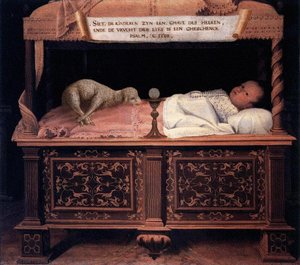
Fontana’s artistic style initially mirrored that of her father, steeped in the traditions of the School of Bologna. However, she soon began to absorb influences from other prominent artists, notably Denis Calvaert, whose school in Bologna was a hub of artistic innovation. This exposure led to an evolution in her work, incorporating elements of the Carracciesque style—characterized by its dramatic compositions and vibrant coloring—and a quasi-Venetian richness that added depth and luminosity to her paintings. She quickly became renowned for her portraits, particularly those of the upper-class women of Bologna. These were not merely likenesses; they were celebrations of wealth, status, and feminine grace. Fontana possessed an exceptional ability to capture both the physical appearance and the inner character of her sitters, forging unusually warm relationships with many of her female clients. Her portraits are notable for their meticulous attention to detail—the intricate embroidery on gowns, the shimmering pearls adorning necks, the subtle play of light across skin—all rendered with a remarkable degree of realism. Notable works like “Double Marriage Portrait” (also known as "Self-Portrait of Lavinia Fontana"), currently housed in the Zaragoza Museum, exemplify her skill and sophistication, offering a glimpse into the elegance of 16th-century society. Other significant pieces include “Venus and Cupid” (1592), a Baroque portrait brimming with symbolic beauty, and “Newborn Baby in a Crib” (1583), a poignant depiction of maternal tenderness and domestic life.Breaking Barriers: A Career Forged Against the Grain
Lavinia Fontana’s achievements extended far beyond her artistic skill; she was a true trailblazer, widely regarded as the first woman artist to operate independently within the established art world—outside the confines of a court or convent. This was an extraordinary feat in an era when women were largely excluded from professional life. Her success wasn't simply about talent; it was also about shrewd business acumen and the support of her husband, Paolo Zappi, who served as her agent and managed their growing family—they had eleven children together. The marriage agreement itself was unconventional, acknowledging Lavinia’s earning potential and negating the need for a traditional dowry. Her rising reputation eventually attracted the attention of powerful patrons, including Pope Gregory XIII and his family, leading to commissions for portraits of prominent individuals. This patronage propelled her career to new heights, culminating in her move to Rome in 1604 where she became a sought-after portraitist at the papal court. In 1611, she received further recognition with a bronze portrait medallion cast by Felice Antonio Casoni, and was elected into the Accademia di San Luca—an honor rarely bestowed upon women artists of the time.A Lasting Legacy: Challenging Conventions and Inspiring Future Generations
Lavinia Fontana’s legacy continues to resonate today, inspiring both artists and art lovers alike. Her work can be found in museums and collections around the world, serving as a testament to her enduring talent and historical significance. She not only demonstrated that women could achieve artistic excellence on par with their male counterparts but also paved the way for future generations of female artists to pursue their passions without societal constraints. While debate continues among art historians regarding whether she was truly among the first women to paint nudes—as evidenced in works like “Judith with the Head of Holofernes” (1600)—her willingness to explore a wider range of subjects, including mythological and religious themes, further solidified her position as a versatile and innovative artist. Fontana’s ability to balance a thriving artistic career with the demands of motherhood—raising eleven children while maintaining a rigorous painting schedule—is a testament to her resilience, dedication, and unwavering commitment to her craft. Her story serves as a powerful reminder that talent knows no gender and that perseverance can overcome even the most formidable obstacles. Lavinia Fontana’s impact extends beyond her paintings; she remains an icon of female empowerment in the art world.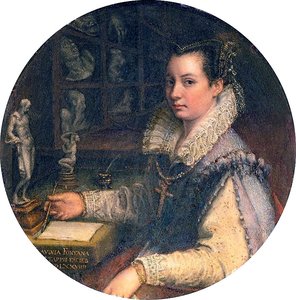
Lavinia Fontana
1552 - 1614 , Italy
Quick Facts
- Artistic Movement Or Style: Mannerism, Baroque
- Artists Who Influenced This Artist:
- Prospero Fontana
- Denis Calvaert
- Date Of Birth: August 24, 1552
- Date Of Death: 1614
- Full Name: Lavinia Fontana
- Nationality: Italian
- Notable Artworks:
- Double Marriage Portrait
- Venus and Cupid
- Newborn Baby in a Crib
- Judith with Holofernes
- Place Of Birth: Bologna, Italy

