 Preview
 Send
Send Share
Share
 Details

 Download
 Similars
 X-Ray
X-Ray Diaporama
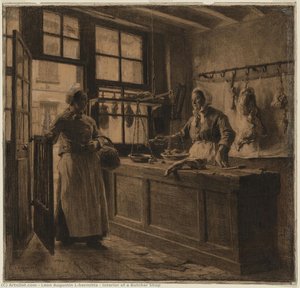
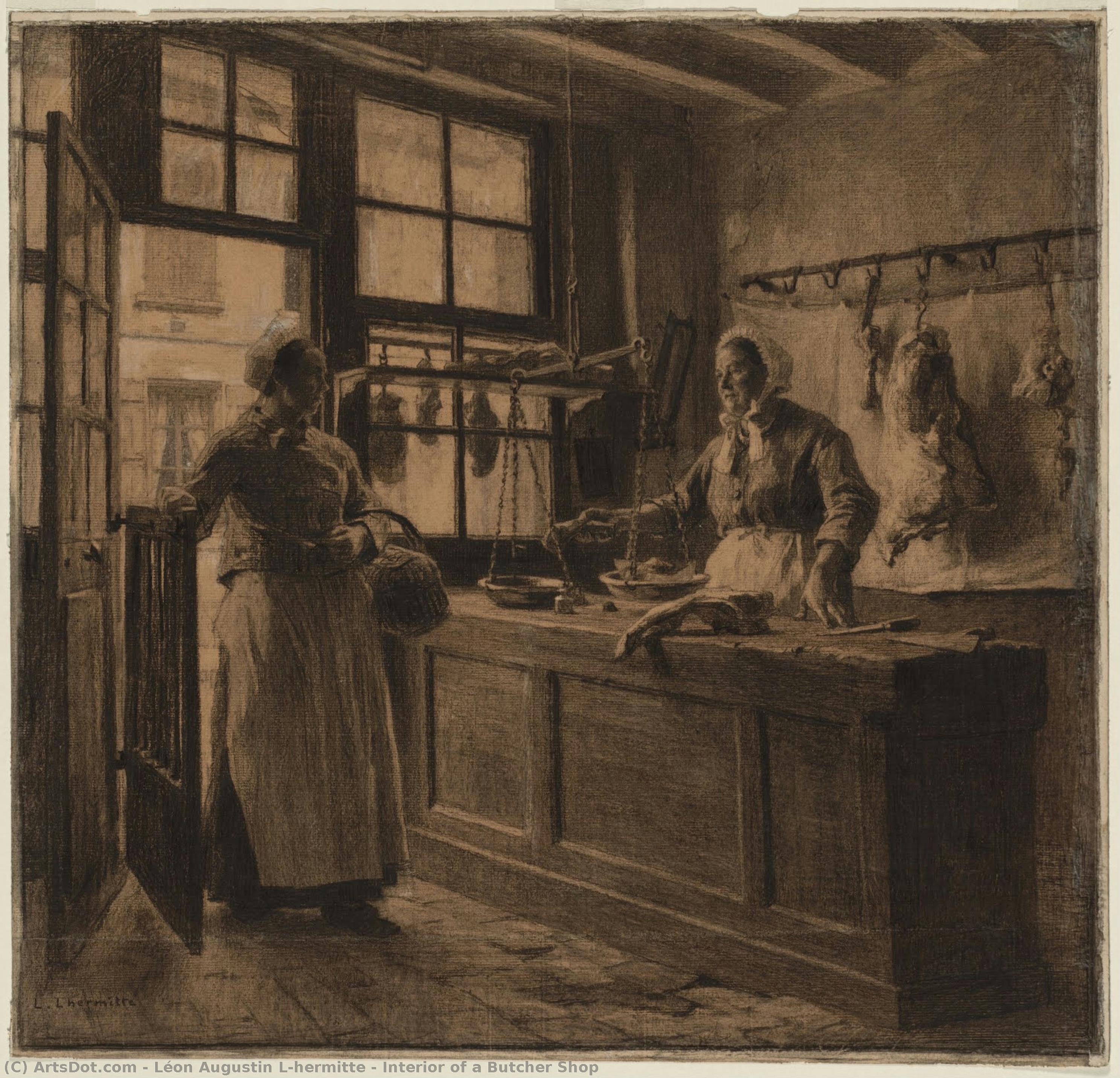
Interior of a Butcher Shop
 Acrylic
- WallArt
- Realist Painting
 1881
1881 55.0 x 57.0 cm
 Cleveland Museum of Art
 Read More
Hand Made Oil Reproduction
Hand-painted oil on canvas in your size and frame, made to order by our artists. ( Buy Print Buy Image)




P118B $10

P118H $10

P118W $10

P438Z $10

P508JH $12

P508YH $12

P805H $10

P805Z $10

P919BZ $10

P919G $10

P919XJ $10

P959ZH $10

P968JZ $12

W106C $8

W218G $10

W218JH $8

W218Y $10

W307PJ $10

W316G $10

W316PJ $8

W316Y $10

W398PJ $8

W4111J $10

W500HY $15

W500JH $15

W692G $12

W849H $8

W940BG $15

W953PJ $8




Pick from our preset sizes that match the artwork's original proportions.

You may enter your own dimensions to fit a specific frame or space. If your selected size does not match the original image's proportions, we will either crop the artwork or extend the painting with additional hand-painted elements. A digital mockup will be sent for your approval before production begins.
Please note that the on-screen preview does not reflect the actual cropping or extension. Only the mockup will accurately show the final composition.
While custom sizes are available, we recommend selecting a dimension from the predefined list to preserve the original proportions.
After order, ArtsDot.com team will email client for instructions and provide a mockup preview
Worldwide Delivery () in 3/4 weeks instead of standard 5 weeks. (16 August). No compromise on quality.

Free Worldwide Express Shipping

High-Quality Linen Canvas

Full Shipping Insurance

Customs Tax Refund Guarantee

True Color Matching Guarantee

60-Day Return Policy (Defects Only)

100% Money-Back Guarantee

Bulk Discount Offer
 Glass option is only available in size under 110 CM

Interior of a Butcher Shop
Reproduction Medium
Reproduction Size
-


Total Price
$ 263
Artwork Description
A Snapshot of Rural Life: Léon Augustin L'Hermitte’s “Interior of a Butcher Shop”
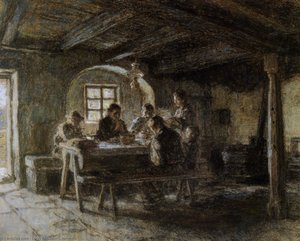
Léon Augustin L'Hermitte’s “Interior of a Butcher Shop,” painted in 1881, isn’t merely a depiction of a working-class scene; it’s a poignant meditation on community, labor, and the quiet dignity of everyday life. This evocative drawing, rendered in meticulous charcoal and subtly heightened with white chalk, transports us to a modest butcher shop nestled within the heart of rural France – a place where commerce intertwined seamlessly with social interaction. L'Hermitte, a devoted realist painter deeply rooted in the traditions of his Picardy homeland, masterfully captures the atmosphere of this particular space, imbuing it with a sense of warmth and authenticity rarely found in academic art of the period. The composition is deceptively simple: two men engaged in conversation dominate the foreground, their postures suggesting familiarity and perhaps even camaraderie. A central dining table, laden with bowls brimming with ingredients – hinting at shared meals and culinary discussions – anchors the scene, while a scattering of chairs invites viewers to imagine themselves as part of this intimate gathering.The Realist Vision: L'Hermitte’s Artistic Approach
L'Hermitte’s artistic philosophy centered on portraying the lives of ordinary people with unflinching honesty and empathy. He rejected the grand narratives and idealized subjects favored by many of his contemporaries, instead focusing on the realities of rural French life – the farmers, laborers, and artisans who formed the backbone of society. This commitment to realism is evident in every detail of “Interior of a Butcher Shop.” The figures are not presented as heroic or romanticized; they are simply men, caught in a moment of conversation within their daily routine. L'Hermitte’s technique—characterized by precise lines, subtle tonal variations, and a masterful use of light and shadow—creates a remarkably three-dimensional effect, drawing the viewer into the scene with an almost palpable sense of immediacy. The artist’s attention to detail extends beyond the figures themselves; he meticulously renders the textures of the wooden table, the worn surfaces of the chairs, and the rough-hewn walls of the shop, grounding the scene in a tangible reality.Symbolism and Social Commentary
Beyond its surface depiction of a butcher shop, “Interior of a Butcher Shop” carries deeper symbolic weight. The presence of the men engaged in conversation speaks to the importance of social connection within rural communities – a vital element often overlooked in depictions of agrarian life. The table laden with food symbolizes sustenance, shared experiences, and the bonds that tie people together. Furthermore, the butcher shop itself represents a crucial link between the land and its inhabitants, providing essential goods while serving as a gathering place for local residents. L'Hermitte’s choice to focus on this seemingly mundane setting is, in effect, a subtle commentary on the value of everyday life – suggesting that beauty and meaning can be found not in grand gestures or heroic deeds, but in the quiet rhythms of rural existence. The scene subtly critiques the growing industrialization of France at the time, highlighting the importance of preserving traditional ways of life and community values.A Window into the 19th Century: Historical Context
Painted in 1881, “Interior of a Butcher Shop” reflects the social and artistic currents of its era. The late 19th century witnessed a growing interest in realism as an alternative to academic art, with artists like L'Hermitte seeking to capture the lives of ordinary people with honesty and empathy. This movement was fueled by industrialization, urbanization, and the rise of socialist thought – all of which challenged traditional social hierarchies and sparked debates about the role of labor and community. The painting’s depiction of a rural butcher shop also aligns with the broader trend of documenting agricultural practices during this period, reflecting a growing awareness of the importance of food production and its connection to society. The work is considered part of the legacy of French Realism, alongside artists like Millet and Courbet, who similarly focused on depicting the lives of working-class people.Bringing L'Hermitte’s Vision Home: A Hand-Painted Reproduction
ArtsDot offers a stunning hand-painted reproduction of “Interior of a Butcher Shop,” meticulously crafted by our team of skilled artists to faithfully capture the essence and atmosphere of L'Hermitte’s original masterpiece. Unlike digital prints, this reproduction utilizes traditional painting techniques, resulting in unparalleled depth, texture, and color accuracy. The subtle nuances of charcoal and chalk are expertly recreated, ensuring that every detail – from the worn surfaces of the furniture to the expressions on the men’s faces – is rendered with exquisite precision. This artwork will not only grace your walls but also serve as a timeless reminder of L'Hermitte’s profound insights into human nature and rural life. Available in various sizes, this reproduction provides an authentic and captivating addition to any interior space, inviting viewers to step back in time and experience the quiet beauty of a bygone era.Related Artworks
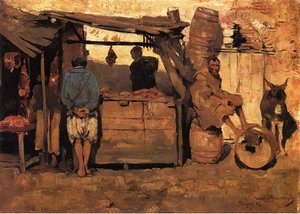
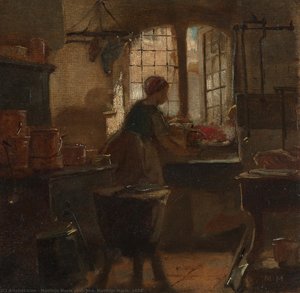
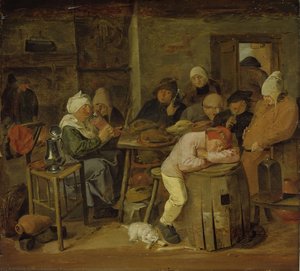
Artist Biography
Léon Augustin L'Hermitte: A Life Dedicated to Realism
Early Life and Training
Léon Augustin L'Hermitte, a prominent French realist painter and etcher, was born on July 31, 1844, in Mont-Saint-Père, France. His upbringing within the rural landscapes of Picardy profoundly shaped his artistic vision. Recognizing his talent, his father, a schoolteacher, provided early encouragement. L'Hermitte formally began his training at the Special School of Drawing and Mathematics (the “Petite École”) under Horace Lecoq de Boisbaudran, laying a strong foundation in draftsmanship. He continued his studies at the prestigious Paris School of Fine Arts.Rise to Prominence and Artistic Style
L'Hermitte’s breakthrough came with his debut at the Paris Salon in 1864, garnering initial recognition. His dedication to depicting rural life and the working class resonated with audiences and critics alike. He quickly established himself as a leading figure within the realist movement. His innovative use of pastels was particularly admired. In 1884, he was honored with the French Legion of Honour, followed by the Grand Prize at the Exposition Universelle in 1889 – testaments to his growing reputation and artistic merit. His style is characterized by a sensitive portrayal of everyday life, focusing on dignity and hardship within rural communities.Influences and Artistic Development
Jean-François Millet served as a significant influence on L'Hermitte’s work, particularly in his choice of subject matter and empathetic depiction of peasant life. L'Hermitte shared Millet’s commitment to portraying the realities of rural existence with honesty and respect. He also drew inspiration from the broader realist movement, seeking to represent the world as it was, without idealization or romanticism. His early training emphasized meticulous observation and technical skill, which he later applied to his distinctive pastel technique.Notable Works and Themes
- Interior of a Butcher Shop: A detailed depiction of working-class life, showcasing L'Hermitte’s mastery of composition and realism.
- The Gleaners (1887): Captures the essence of rural labor and the dignity of those who toiled in the fields.
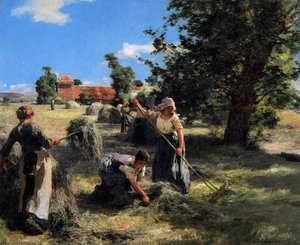
- La Fenaison: Illustrates a scene of haymaking, highlighting the communal aspects of agricultural work.
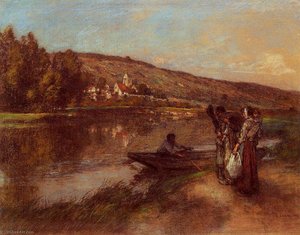
- Le Passeur: A poignant portrayal of a ferryman and his passengers.
- Pelerinage Pour L'Enfant Malade. Eglise De Plein-Pied, Bourges: Depicts a religious procession, showcasing the spiritual life of rural communities.
Legacy and Historical Significance
L'Hermitte’s contributions to the realist movement have secured his place in art history. His paintings are featured in prominent museums worldwide, including those in Amsterdam, Boston, Brussels, Cleveland, Philadelphia, and Washington D.C.. He was elected a full member of the Academy of Fine Arts in 1905, further solidifying his artistic standing. Vincent van Gogh himself praised L'Hermitte’s work for its beauty and emotional depth. L'Hermitte’s legacy lies in his ability to capture the essence of rural life with sensitivity and skill, offering a valuable glimpse into 19th-century French society. He died in 1925, leaving behind a body of work that continues to inspire and resonate with audiences today.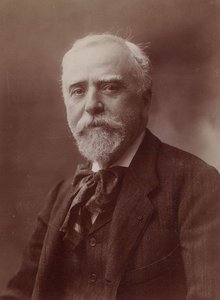
léon augustin l'hermitte
1844 - 1925 , France
Quick Facts
- Birth Date: July 31, 1844
- Birth Place: Mont-Saint-Père, France
- Death Date: 1925
- Influenced: Vincent van Gogh
- Influenced By: Jean-François Millet
- Movement: Realism
- Name: Léon Augustin L'Hermitte
- Nationality: French
- Notable Works:
- Interior of a butcher shop
- The gleaners
- La Fenaison
- Le Passeur
- Pelerinage Pour L'Enfant Malade
Related Articles
Romantic Realism's Finest: 10 Masterpieces for Your Home | ArtsDot
Explore 10 defining masterpieces of Romantic Realism! Discover Courbet, Millet & Daumier's powerful paintings—capturing emotion and social realities. Find museum-quality reproductions for your home at ArtsDot.com.
Léon Augustin L'Hermitte: Capturing the Soul of French Rural Life
Discover the captivating realist paintings of Léon Augustin L'Hermitte, masterfully depicting French rural life. Explore his technique, influences & legacy – a cornerstone of 19th-century art.
Academic Realism's Finest: 10 Masterpieces for Art Lovers & Home Decor
Explore 10 defining Academic Realism masterpieces by Bouguereau, Gérôme & Cabanel. Discover the stories behind these iconic paintings and bring timeless art into your home with museum-quality reproductions from ArtsDot.com. Explore the full collection online!
The Poetic Truth of Observation: Exploring 19th-Century Realism in Painting
Explore the captivating world of 19th-century Realism! Discover key artists like Courbet & Millet, masterpieces, and the powerful social commentary behind this influential art movement. Expert insights at ArtsDot.

The Nuances of Graphite: Exploring Emotional Depth & Technical Mastery in Pencil Drawing
Explore the captivating world of graphite drawing! Discover its rich history, master essential techniques like chiaroscuro, and learn how artists evoke emotion through this timeless medium. Expert insights for art enthusiasts.