 Preview
 Send
Send Share
Share
 Details

 Download
 Similars
 X-Ray
X-Ray Diaporama
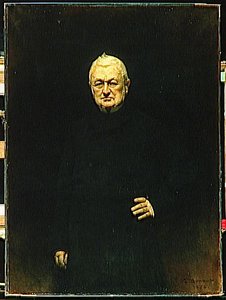
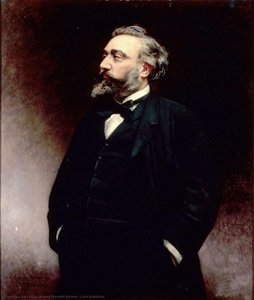
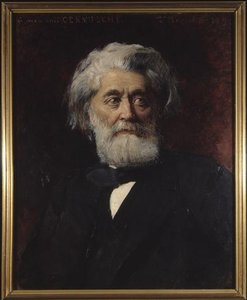
ADOLPHE THIERS


 Read More
Hand Made Oil Reproduction
Hand-painted oil on canvas in your size and frame, made to order by our artists. ( Buy Print Buy Image)




P118B $10

P118H $10

P118W $10

P438Z $10

P508JH $12

P508YH $12

P805H $10

P805Z $10

P919BZ $10

P919G $10

P919XJ $10

P959ZH $10

P968JZ $12

W106C $8

W218G $10

W218JH $8

W218Y $10

W307PJ $10

W316G $10

W316PJ $8

W316Y $10

W398PJ $8

W4111J $10

W500HY $15

W500JH $15

W692G $12

W849H $8

W940BG $15

W953PJ $8




Pick from our preset sizes that match the artwork's original proportions.

You may enter your own dimensions to fit a specific frame or space. If your selected size does not match the original image's proportions, we will either crop the artwork or extend the painting with additional hand-painted elements. A digital mockup will be sent for your approval before production begins.
Please note that the on-screen preview does not reflect the actual cropping or extension. Only the mockup will accurately show the final composition.
While custom sizes are available, we recommend selecting a dimension from the predefined list to preserve the original proportions.
After order, ArtsDot.com team will email client for instructions and provide a mockup preview
Worldwide Delivery () in 3/4 weeks instead of standard 5 weeks. (17 August). No compromise on quality.

Free Worldwide Express Shipping

High-Quality Linen Canvas

Full Shipping Insurance

Customs Tax Refund Guarantee

True Color Matching Guarantee

60-Day Return Policy (Defects Only)

100% Money-Back Guarantee

Bulk Discount Offer
 Glass option is only available in size under 110 CM

ADOLPHE THIERS
Reproduction Medium
Reproduction Size
-


Total Price
$ 263
Artwork Description
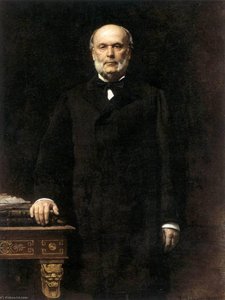
A Portrait of Statesmanship: Adolphe Thiers by Léon Bonnat
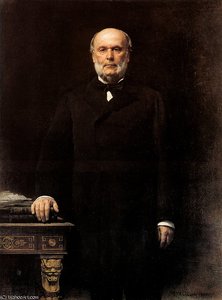
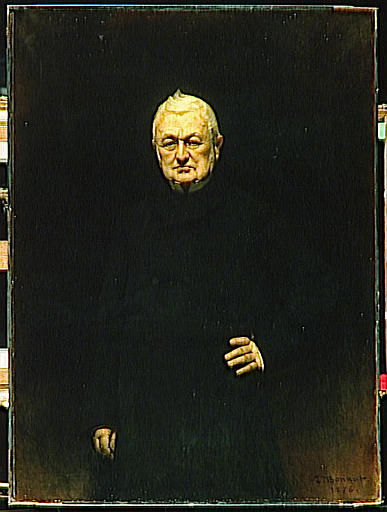
Léon Joseph Florentin Bonnat’s 1876 portrait of Adolphe Thiers is more than just a likeness; it's a carefully constructed tableau of power, dignity, and a subtle undercurrent of melancholy. Commissioned during the twilight years of the man who served as President of the Third Republic, this oil-on-canvas painting offers a profound glimpse into the character of a pivotal figure in French history, rendered with the meticulous realism and evocative atmosphere characteristic of Bonnat’s mature style.
Bonnat, deeply influenced by the Spanish masters – particularly Velázquez and Jusepe de Ribera – eschewed the prevailing academic trends of his time. He deliberately moved away from the overly polished and idealized portraits favored by artists like William-Adolphe Bouguereau, opting instead for a more direct engagement with his subject’s personality. This is immediately apparent in Thiers's gaze; it isn’t a vacant stare or a studied formality, but rather a quiet intensity that suggests both wisdom and the weight of responsibility. The artist masterfully captures this subtle nuance, inviting the viewer into a private moment of reflection.
The Language of Form and Shadow
Technically, Bonnat's approach is rooted in academic tradition, yet infused with a distinctly personal vision. He employs a carefully orchestrated palette dominated by deep browns, grays, and blacks – colors that immediately convey gravitas and authority. These dark tones are skillfully contrasted with subtle highlights on Thiers’s face and hands, drawing the eye to these points of focus and emphasizing his presence within the composition. The artist's brushwork is remarkably controlled, creating a sense of smooth transitions in skin textures and fabric folds. Notice how the meticulous rendering of the suit’s texture – the subtle variations in tone and direction – speaks volumes about Bonnat’s dedication to realism.
The painting’s composition adheres to a classic pyramidal structure, with Thiers positioned slightly off-center, creating a dynamic balance within the frame. The use of linear perspective is deliberately shallow, flattening the space and reinforcing the sense of formality and timelessness. There's no dramatic recession or attempt to create an illusion of depth; instead, Bonnat focuses on capturing the essence of the subject – his character and bearing – rather than a meticulously rendered spatial environment.
Symbolism and Historical Context
The portrait was painted during a turbulent period in French history. Thiers, having served as President from 1871 to 1873, navigated the aftermath of the Franco-Prussian War and the establishment of the Third Republic. His tenure was marked by political instability and social unrest, yet he remained a respected figure known for his integrity and commitment to republican ideals. Bonnat’s decision to portray Thiers in this somber, contemplative pose reflects the complex legacy of this statesman – acknowledging both his achievements and the challenges he faced.
The subtle hint of melancholy that permeates the portrait is particularly poignant. The downturned corners of Thiers' mouth, combined with the intensity of his gaze, suggest a weariness born of years spent in public service. It’s not a portrait of triumphant victory, but rather one of quiet reflection on a life dedicated to duty and responsibility. The choice of dark colors further amplifies this sense of introspection, creating an atmosphere of dignified sadness.
A Legacy of Realism
Léon Bonnat's portrait of Adolphe Thiers stands as a testament to his mastery of realism and his ability to capture the psychological depth of his subjects. It’s a painting that rewards careful observation, inviting viewers to contemplate not only the likeness of a historical figure but also the complexities of his character and the enduring legacy of his time. Reproductions of this work offer an exceptional opportunity to bring this powerful image into any setting, serving as both a conversation piece and a window into the heart of 19th-century France.
Related Artworks
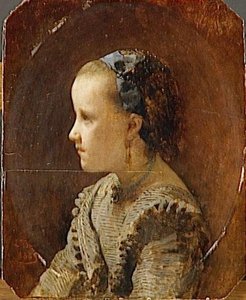
Artist Biography
Léon Joseph Florentin Bonnat: Life and Legacy
Early Life and Artistic Beginnings
Léon Joseph Florentin Bonnat was born in Bayonne, France, in 1833 and passed away in 1922. His early life took an interesting turn when his family moved to Madrid in 1846, where his father established a bookshop. This relocation proved pivotal for the young Bonnat’s artistic development. While assisting in the shop, he diligently copied engravings of works by Old Masters, fostering a deep passion for drawing and laying the foundation for his future career. He received formal training under Madrazo in Madrid before returning to Paris.Training and Influences
In Paris, Bonnat sought further refinement of his skills, studying under prominent history painters Paul Delaroche and Léon Cogniet. Despite several attempts, he was not immediately accepted into the prestigious École des Beaux-Arts through the Prix de Rome competition. However, a scholarship from Bayonne enabled him to spend three years in Rome (1858–60), an experience that profoundly shaped his artistic vision. During this period, he forged friendships with fellow artists like Edgar Degas, Gustave Moreau, and sculptor Henri Chapu. Bonnat’s style was heavily influenced by the Spanish masters – particularly Velázquez and Jusepe de Ribera – as well as artists like Titian and Van Dyck, whose works he meticulously studied in the Prado Museum.Artistic Development and Style
Bonnat quickly established himself as a leading portraitist in Paris, consistently receiving commissions. His portraits reflect the influence of his admired Spanish predecessors, characterized by realism, dramatic lighting, and psychological depth. He also explored religious themes and genre paintings depicting Italian peasants, and occasionally ventured into Orientalist scenes. Bonnat’s work is marked by a stark naturalism and a lack of excessive surface finish, qualities praised by critics like Théophile Gautier, who contrasted him favorably with the more polished style of Bouguereau.Major Achievements and Recognition
Bonnat achieved significant recognition throughout his career. He received a Medal of Honor in Paris in 1869 and was appointed Grand Officer of the Légion d'honneur. In 1882, he became a professor at the École des Beaux-Arts, where he mentored numerous aspiring artists, including John Singer Sargent, Toulouse-Lautrec, and Gustave Caillebotte. He eventually succeeded Paul Dubois as director of the École in 1905. Bonnat’s teaching philosophy emphasized simplicity, overall effect, and rigorous drawing skills. His most important works include religious paintings such as *Christ on the Cross*, *Job*, and *St Vincent taking the place of two galley slaves*.Historical Significance and Legacy
Bonnat occupied a unique position within the art world of his time, bridging the gap between academic painting and the emerging Impressionist movement. He was a member of the Institute, holding administrative power over the Academy and École des Beaux-Arts. Despite this affiliation with traditional institutions, he supported independent artists like Edgar Degas, Auguste Rodin, and even defended Gustave Courbet’s submissions to the Salon. In a testament to his gratitude for early support, Bonnat founded the Musée Bonnat in his hometown of Bayonne, housing an exceptional collection of Old Master drawings alongside his own works. His legacy endures through his paintings, his influential teaching career, and the museum he established, preserving artistic heritage for future generations.Notable Works
- Jacob Wrestling with the Angel
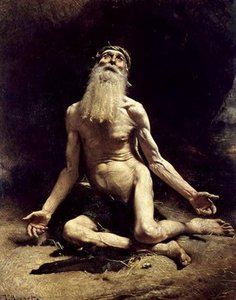
- Job
- Christ on the Cross
- Portrait of Prince Viacheslav Tenishev
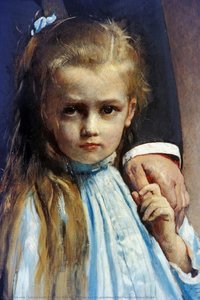
- Pasteur and his granddaughter Camille Vallery-Radot
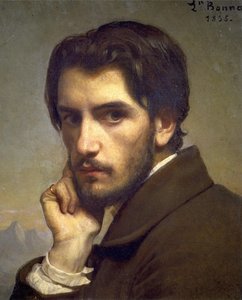
léon joseph florentin bonnat
1833 - 1922
Quick Facts
- Birth_Date: 1833
- Birth_Place: Bayonne, France
- Death_Date: 1922
- Influenced:
- John Singer Sargent
- Henri de Toulouse-Lautrec
- Influenced_By:
- Velázquez
- Jusepe de Ribera
- Titian
- Van Dyck
- Movement: Realism, Academic art
- Name: Léon Joseph Florentin Bonnat
- Nationality: French
- Notable_Works:
- Jacob Wrestling with the Angel
- Job
- Christ on the Cross
Related Articles
Léon Bonnat: Realism, Academic Mastery & the Depths of Portraiture
Explore the life & work of Léon Bonnat, a leading French Realist painter renowned for his masterful portraits and Spanish Baroque influence. Discover his academic legacy & pursuit of psychological depth in 19th-century art.
Academic Realism's Finest: 10 Masterpieces for Art Lovers & Home Decor
Explore 10 defining Academic Realism masterpieces by Bouguereau, Gérôme & Cabanel. Discover the stories behind these iconic paintings and bring timeless art into your home with museum-quality reproductions from ArtsDot.com. Explore the full collection online!
Academic Realism: Technique, History & Enduring Influence on Art
Explore the captivating world of Academic Realism! Discover key artists, techniques & its lasting impact on art history. Expert insights & high-quality reproductions at ArtsDot.
Romantic Realism's Finest: 10 Masterpieces for Your Home | ArtsDot
Explore 10 defining masterpieces of Romantic Realism! Discover Courbet, Millet & Daumier's powerful paintings—capturing emotion and social realities. Find museum-quality reproductions for your home at ArtsDot.com.

Academic Portraiture: Tradition, Technique & the Evolution of Representational Art
Explore the rich history & masterful techniques of academic portraiture. Discover iconic artists, learn about collecting, and commission a bespoke oil painting reproduction with ArtsDot.