 Preview
 Send
Send Share
Share
 Details

 Download
 Similars
 X-Ray
X-Ray Diaporama
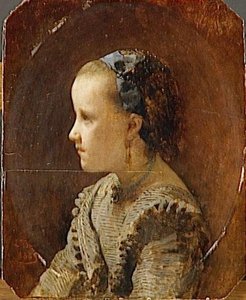
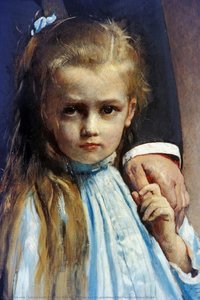
Portrait de fillette


 Read More
Hand Made Oil Reproduction
Hand-painted oil on canvas in your size and frame, made to order by our artists. ( Buy Print Buy Image)




P118B $10

P118H $10

P118W $10

P438Z $10

P508JH $12

P508YH $12

P805H $10

P805Z $10

P919BZ $10

P919G $10

P919XJ $10

P959ZH $10

P968JZ $12

W106C $8

W218G $10

W218JH $8

W218Y $10

W307PJ $10

W316G $10

W316PJ $8

W316Y $10

W398PJ $8

W4111J $10

W500HY $15

W500JH $15

W692G $12

W849H $8

W940BG $15

W953PJ $8




Pick from our preset sizes that match the artwork's original proportions.

You may enter your own dimensions to fit a specific frame or space. If your selected size does not match the original image's proportions, we will either crop the artwork or extend the painting with additional hand-painted elements. A digital mockup will be sent for your approval before production begins.
Please note that the on-screen preview does not reflect the actual cropping or extension. Only the mockup will accurately show the final composition.
While custom sizes are available, we recommend selecting a dimension from the predefined list to preserve the original proportions.
After order, ArtsDot.com team will email client for instructions and provide a mockup preview
Worldwide Delivery () in 3/4 weeks instead of standard 5 weeks. (17 August). No compromise on quality.

Free Worldwide Express Shipping

High-Quality Linen Canvas

Full Shipping Insurance

Customs Tax Refund Guarantee

True Color Matching Guarantee

60-Day Return Policy (Defects Only)

100% Money-Back Guarantee

Bulk Discount Offer
 Glass option is only available in size under 110 CM

Portrait de fillette
Reproduction Medium
Reproduction Size
-


Total Price
$ 263
Artwork Description
A Portrait Steeped in Tradition: Exploring Bonnat’s ‘Portrait de Fillette’
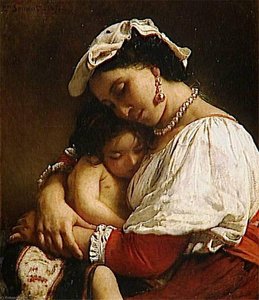
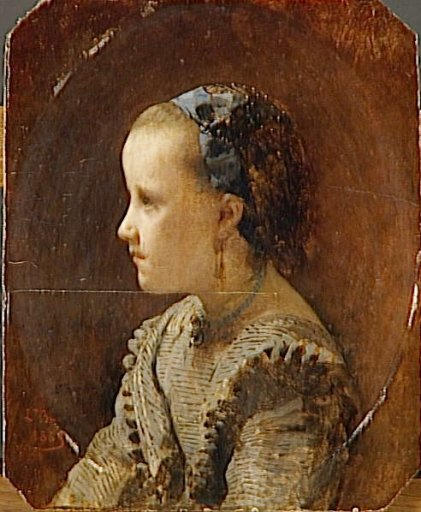
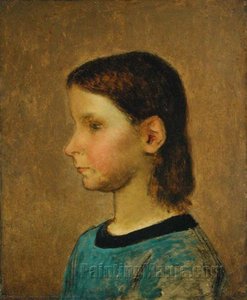
The artwork “Portrait de Fillette,” executed by Léon Joseph Florentin Bonnat, stands as a testament to the enduring influence of academic realism within 19th-century French art. More than just a depiction of a young girl, it embodies a stylistic ethos rooted in meticulous observation and idealized representation—a characteristic that continues to resonate with discerning audiences today. Examining its composition, color palette, technique, and biographical context unveils layers of artistic intention and emotional depth.Composition and Observation
Bonnat’s masterful approach begins with the framing of his subject. The portrait presents a young girl in profile, positioned centrally within the canvas—a deliberate choice that harkens back to the conventions of academic painting where idealized figures were rendered with exacting precision. Her gaze directs off-canvas, fostering a sense of contemplative stillness and inviting viewers into her inner world. This careful positioning underscores Bonnat’s commitment to capturing not merely appearance but also psychological nuance – a hallmark of his artistic philosophy.Color Palette and Mood
The subdued color palette—dominated by earthy browns, ochres, and muted reds—contributes significantly to the portrait's melancholic atmosphere. Subtle blues appear delicately woven into the headband and around the neck area, subtly enhancing the overall tonal harmony. These colors aren’t merely decorative; they reflect a broader artistic sensibility prevalent during Bonnat’s time – one that favored understated hues capable of conveying profound emotion. The palette speaks to a desire for capturing beauty in its quietest form.Technique and Material Considerations
Bonnat employed oil paints on canvas, utilizing a technique characterized by blended brushstrokes designed to achieve smooth transitions and create an illusion of palpable texture. Visible brushstrokes are skillfully integrated into the surface, hinting at the laborious process involved in crafting this artwork. The artist’s meticulous attention to detail—evident in the rendering of facial features and clothing—demonstrates Bonnat's dedication to faithfully reproducing reality through artistic skill. This technique aligns perfectly with the academic tradition, prioritizing accuracy and realism above stylistic embellishment.Historical Context and Artistic Legacy
Created during Bonnat’s formative years (1858-1861), “Portrait de Fillette” reflects the prevailing aesthetic values of its era—a period marked by a fervent belief in classical ideals and artistic excellence. Bonnat's rejection from the Prix de Rome competition fueled his determination to hone his craft independently, ultimately establishing himself as one celebrated portraitist known for capturing the dignity and grace of his subjects. His work exemplifies the enduring power of academic realism to convey timeless beauty and psychological insight.Symbolic Resonance and Emotional Impact
Beyond its formal qualities, “Portrait de Fillette” possesses a subtle symbolic resonance. The girl’s solemn gaze invites contemplation on themes of innocence, vulnerability, and inner reflection—elements that resonate deeply with viewers across generations. Bonnat's masterful execution elevates the portrait beyond mere likeness, transforming it into an evocative meditation on human emotion and experience. It serves as a poignant reminder of the beauty found in quiet observation and the enduring legacy of artistic tradition.Related Artworks
Artist Biography
Léon Joseph Florentin Bonnat: Life and Legacy
Early Life and Artistic Beginnings
Léon Joseph Florentin Bonnat was born in Bayonne, France, in 1833 and passed away in 1922. His early life took an interesting turn when his family moved to Madrid in 1846, where his father established a bookshop. This relocation proved pivotal for the young Bonnat’s artistic development. While assisting in the shop, he diligently copied engravings of works by Old Masters, fostering a deep passion for drawing and laying the foundation for his future career. He received formal training under Madrazo in Madrid before returning to Paris.Training and Influences
In Paris, Bonnat sought further refinement of his skills, studying under prominent history painters Paul Delaroche and Léon Cogniet. Despite several attempts, he was not immediately accepted into the prestigious École des Beaux-Arts through the Prix de Rome competition. However, a scholarship from Bayonne enabled him to spend three years in Rome (1858–60), an experience that profoundly shaped his artistic vision. During this period, he forged friendships with fellow artists like Edgar Degas, Gustave Moreau, and sculptor Henri Chapu. Bonnat’s style was heavily influenced by the Spanish masters – particularly Velázquez and Jusepe de Ribera – as well as artists like Titian and Van Dyck, whose works he meticulously studied in the Prado Museum.Artistic Development and Style
Bonnat quickly established himself as a leading portraitist in Paris, consistently receiving commissions. His portraits reflect the influence of his admired Spanish predecessors, characterized by realism, dramatic lighting, and psychological depth. He also explored religious themes and genre paintings depicting Italian peasants, and occasionally ventured into Orientalist scenes. Bonnat’s work is marked by a stark naturalism and a lack of excessive surface finish, qualities praised by critics like Théophile Gautier, who contrasted him favorably with the more polished style of Bouguereau.Major Achievements and Recognition
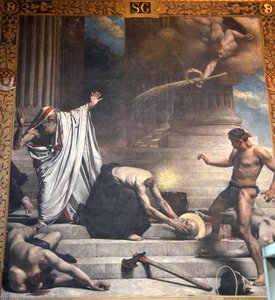
Bonnat achieved significant recognition throughout his career. He received a Medal of Honor in Paris in 1869 and was appointed Grand Officer of the Légion d'honneur. In 1882, he became a professor at the École des Beaux-Arts, where he mentored numerous aspiring artists, including John Singer Sargent, Toulouse-Lautrec, and Gustave Caillebotte. He eventually succeeded Paul Dubois as director of the École in 1905. Bonnat’s teaching philosophy emphasized simplicity, overall effect, and rigorous drawing skills. His most important works include religious paintings such as *Christ on the Cross*, *Job*, and *St Vincent taking the place of two galley slaves*.Historical Significance and Legacy
Bonnat occupied a unique position within the art world of his time, bridging the gap between academic painting and the emerging Impressionist movement. He was a member of the Institute, holding administrative power over the Academy and École des Beaux-Arts. Despite this affiliation with traditional institutions, he supported independent artists like Edgar Degas, Auguste Rodin, and even defended Gustave Courbet’s submissions to the Salon. In a testament to his gratitude for early support, Bonnat founded the Musée Bonnat in his hometown of Bayonne, housing an exceptional collection of Old Master drawings alongside his own works. His legacy endures through his paintings, his influential teaching career, and the museum he established, preserving artistic heritage for future generations.Notable Works
- Jacob Wrestling with the Angel
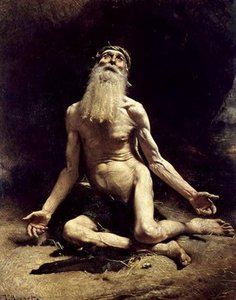
- Job
- Christ on the Cross
- Portrait of Prince Viacheslav Tenishev
- Pasteur and his granddaughter Camille Vallery-Radot
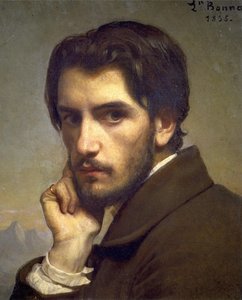
léon joseph florentin bonnat
1833 - 1922
Quick Facts
- Birth_Date: 1833
- Birth_Place: Bayonne, France
- Death_Date: 1922
- Influenced:
- John Singer Sargent
- Henri de Toulouse-Lautrec
- Influenced_By:
- Velázquez
- Jusepe de Ribera
- Titian
- Van Dyck
- Movement: Realism, Academic art
- Name: Léon Joseph Florentin Bonnat
- Nationality: French
- Notable_Works:
- Jacob Wrestling with the Angel
- Job
- Christ on the Cross
Related Articles
Academic Realism's Finest: 10 Masterpieces for Art Lovers & Home Decor
Explore 10 defining Academic Realism masterpieces by Bouguereau, Gérôme & Cabanel. Discover the stories behind these iconic paintings and bring timeless art into your home with museum-quality reproductions from ArtsDot.com. Explore the full collection online!
Earthy Hues & Masterpieces: Top 10 Paintings with 'Mushroom' Tones |
Explore 10 iconic paintings with captivating 'mushroom' tones! Discover Van Gogh, Monet & Rembrandt’s masterpieces—earthy palettes, rich history & artistic techniques. Find museum-quality art reproductions and curated decor ideas at
Academic Realism: Technique, History & Enduring Influence on Art
Explore the captivating world of Academic Realism! Discover key artists, techniques & its lasting impact on art history. Expert insights & high-quality reproductions at ArtsDot.
Sandstone & Sunlight: 10 Masterpieces of Earth-Toned Art |
Journey through 10 iconic paintings bathed in 'sand' tones – from Van Gogh to Monet. Explore the stories, techniques & warm palettes of these timeless masterpieces. Find museum-quality art reproductions at and bring classic beauty home.
Earthy Hues & Masterpieces: Top 10 Paintings Dominated by Clay Tones |
Explore 10 iconic paintings dominated by rich clay tones – from Rembrandt's warmth to Van Gogh’s earthy landscapes. Discover art history, techniques & find museum-quality reproductions at . Explore the full collection online!