 Preview
 Send
Send Share
Share
 Details

 Download
 Similars
 X-Ray
X-Ray Diaporama
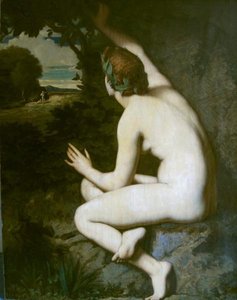
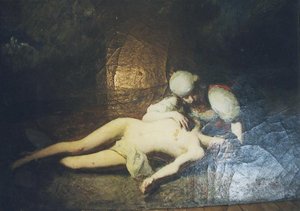
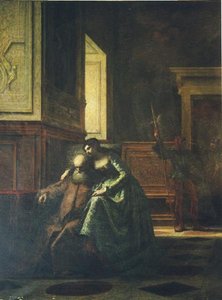
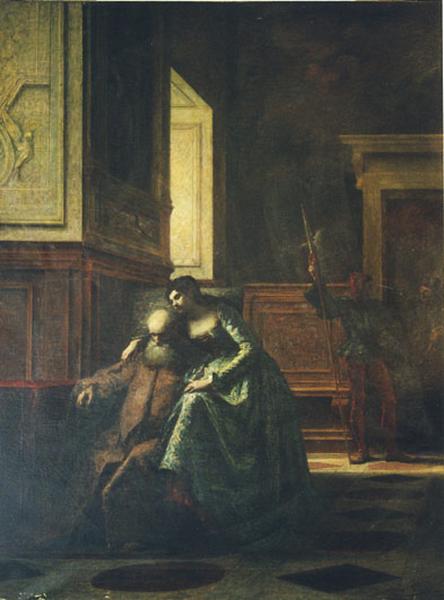
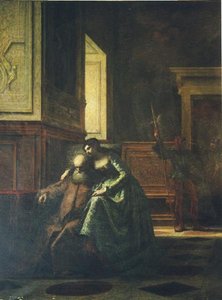
Le Doge Foscari consolé par sa fille

 Read More
Hand Made Oil Reproduction
Hand-painted oil on canvas in your size and frame, made to order by our artists. ( Buy Print Buy Image)




































Pick from our preset sizes that match the artwork's original proportions.

You may enter your own dimensions to fit a specific frame or space. If your selected size does not match the original image's proportions, we will either crop the artwork or extend the painting with additional hand-painted elements. A digital mockup will be sent for your approval before production begins.
Please note that the on-screen preview does not reflect the actual cropping or extension. Only the mockup will accurately show the final composition.
While custom sizes are available, we recommend selecting a dimension from the predefined list to preserve the original proportions.
After order, ArtsDot.com team will email client for instructions and provide a mockup preview
Worldwide Delivery () in 3/4 weeks instead of standard 5 weeks. (25 August). No compromise on quality.

Free Worldwide Express Shipping

High-Quality Linen Canvas

Full Shipping Insurance

Customs Tax Refund Guarantee

True Color Matching Guarantee

60-Day Return Policy (Defects Only)

100% Money-Back Guarantee

Bulk Discount Offer
 Glass option is only available in size under 110 CM

Le Doge Foscari consolé par sa fille
Reproduction Medium
Reproduction Size
-


Total Price
$ 288
Related Artworks

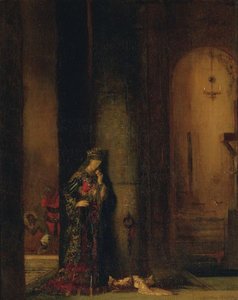
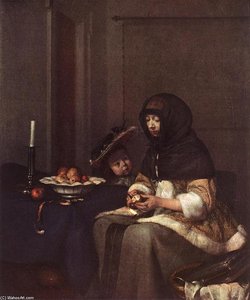
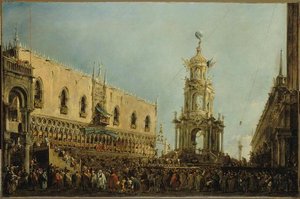
Artist Biography
The Early Years and Venetian Echoes
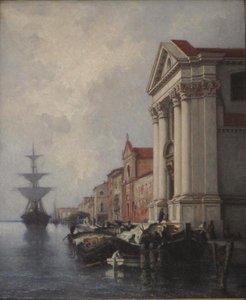
Léonce Cordier (1827-1905) wasn’t merely a painter; he was an explorer of the human spirit, meticulously documenting its myriad forms across continents. Born in Cambrai, France, his artistic journey began within the studio of François Rude, a master of grand historical sculpture – an influence that subtly shaped Cordier's own approach to portraiture and observation. However, it was his time spent in Venice during the 1850s that truly ignited his distinctive style and established him as a unique voice in French art. The city’s light, its crumbling palazzi, and the melancholic beauty of its canals provided an immediate and profound inspiration. His early Venetian sketches, characterized by loose brushstrokes and a delicate sensitivity to atmosphere, reveal a nascent talent for capturing not just appearances but also the emotional resonance of a place.
These formative years in Venice are particularly evident in his evocative depictions of the city’s architecture and its inhabitants. He wasn't interested in merely replicating scenes; he sought to convey a sense of memory, nostalgia, and perhaps even a quiet sorrow—a feeling that permeates many of his works. The influence of J.M.W. Turner is palpable here, particularly in Cordier’s use of light and color to create atmospheric effects, but Cordier's work possesses a distinctly French sensibility, imbued with a subtle lyricism.
The Ethnographic Quest: Africa and Beyond
Cordier’s artistic trajectory took an unexpected turn when he embarked on a systematic exploration of human diversity. Driven by a desire to understand the world through its people, he traveled extensively throughout North Africa, particularly Algeria, beginning in 1862. This wasn't simply a scientific expedition; it was a deeply personal and philosophical undertaking. He meticulously documented individuals from diverse ethnic groups – Nubians, Algerians, Sudanese, Egyptians, and many more—creating hundreds of portraits and studies that challenged prevailing notions of European superiority. His approach was revolutionary for its time, prioritizing artistic representation over colonial stereotypes.
The Emperor Napoleon III recognized the significance of Cordier’s work, commissioning a series of busts depicting individuals from various cultures. These commissions provided him with access to exotic materials – onyx, ivory, and precious stones—which he skillfully incorporated into his sculptures, further enhancing their visual richness and symbolic power. His travels weren't without controversy; some critics questioned the ethics of representing people as subjects for artistic study, but Cordier remained steadfast in his belief that art could foster understanding and empathy.
Technique and Style: Color, Texture, and Emotion
Cordier’s distinctive style is immediately recognizable by its masterful use of color. He was a pioneer in polychrome sculpture, experimenting with a dazzling array of materials – bronze, gilded bronze, silvered bronze, enamel, and paint—to create surfaces that shimmered and glowed. This technique wasn't merely decorative; it served to emphasize the individuality of each subject, highlighting their unique features and textures. His brushwork in his paintings is equally expressive, characterized by loose, fluid strokes that capture fleeting moments of light and emotion.
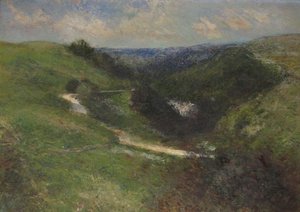
His landscapes, particularly those depicting the Italian countryside—the environs of Belluna, for example—are imbued with a sense of tranquility and beauty. He employed an Impressionistic approach, focusing on capturing the ephemeral qualities of nature rather than creating precise representations. The use of warm colors and atmospheric perspective creates a dreamlike quality, inviting the viewer to lose themselves in the scene.
Legacy and Significance
Léonce Cordier’s legacy extends far beyond his individual artworks. He was a visionary artist who challenged conventional artistic practices and promoted cross-cultural understanding. His meticulous documentation of human diversity served as an important counterpoint to the prevailing prejudices of his time, and his work continues to resonate with contemporary audiences interested in issues of identity, representation, and social justice. His portraits are not simply likenesses; they are windows into the souls of individuals from different cultures, inviting us to contemplate our shared humanity.
Today, Cordier’s works can be found in prestigious collections around the world, including the Musée d'Orsay in Paris and the Louvre Museum. His legacy as a pioneering artist and humanist endures, reminding us of the power of art to transcend boundaries and foster empathy.
Quick Facts
- Artistic Movement Or Style: Impressionism, Symbolism
- Artists Or Movements Influenced By This Artist: ['Symbolism']
- Artists Who Influenced This Artist: ['Nicolas Cordier']
- Date Of Death: Living
- Full Name: Léonce Cordier
- Nationality: French
- Notable Artworks:
- Le Baptistere de Padoue
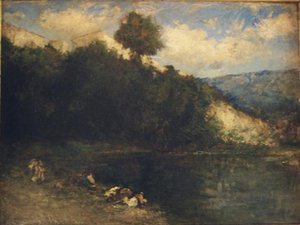
- Environs de Belluna
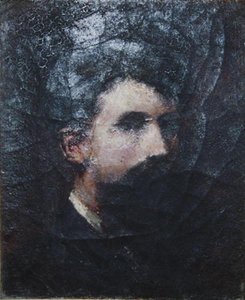
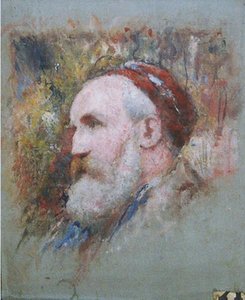
- Portrait esquisse du poète Auguste Cordier
- Place Of Birth: Cambrai, France
Related Articles

Baroque Drama: Bringing Opulence & Emotion into Contemporary Interiors
Explore the opulent world of Baroque interior design! Discover key elements, modern applications & how to bring dramatic elegance into your home with 's authentic reproductions.

The Enduring Power of Painting: A Historical & Contemporary Exploration of Form and Emotion
Explore the rich history & enduring techniques of oil painting with ArtsDot. Discover masterpieces, learn about art collecting, and find authentic handmade reproductions crafted by skilled artists.

The Dramatic Flourish: Exploring the Baroque Movement's Enduring Legacy in Art History
Explore the dramatic world of Baroque art! Discover iconic artists like Caravaggio & Rubens, defining techniques, and its lasting impact on art history. Expert insights for collectors & enthusiasts at ArtsDot.

The Enduring Legacy of Oil on Canvas: Technique, History & Aesthetic Impact
Explore the rich history & techniques of oil painting – from Renaissance masters to Impressionism. Discover pigments, layering methods, and why this timeless medium endures. Expert insights for artists & art enthusiasts.

Baroque Masterpieces: 10 Paintings That Defined an Era |
Journey through the drama & grandeur of Baroque art! Explore 10 masterpieces by Caravaggio, Rembrandt, Rubens & more. Discover stunning oil paintings, rich colors & timeless stories. Find museum-quality reproductions at .